Stored
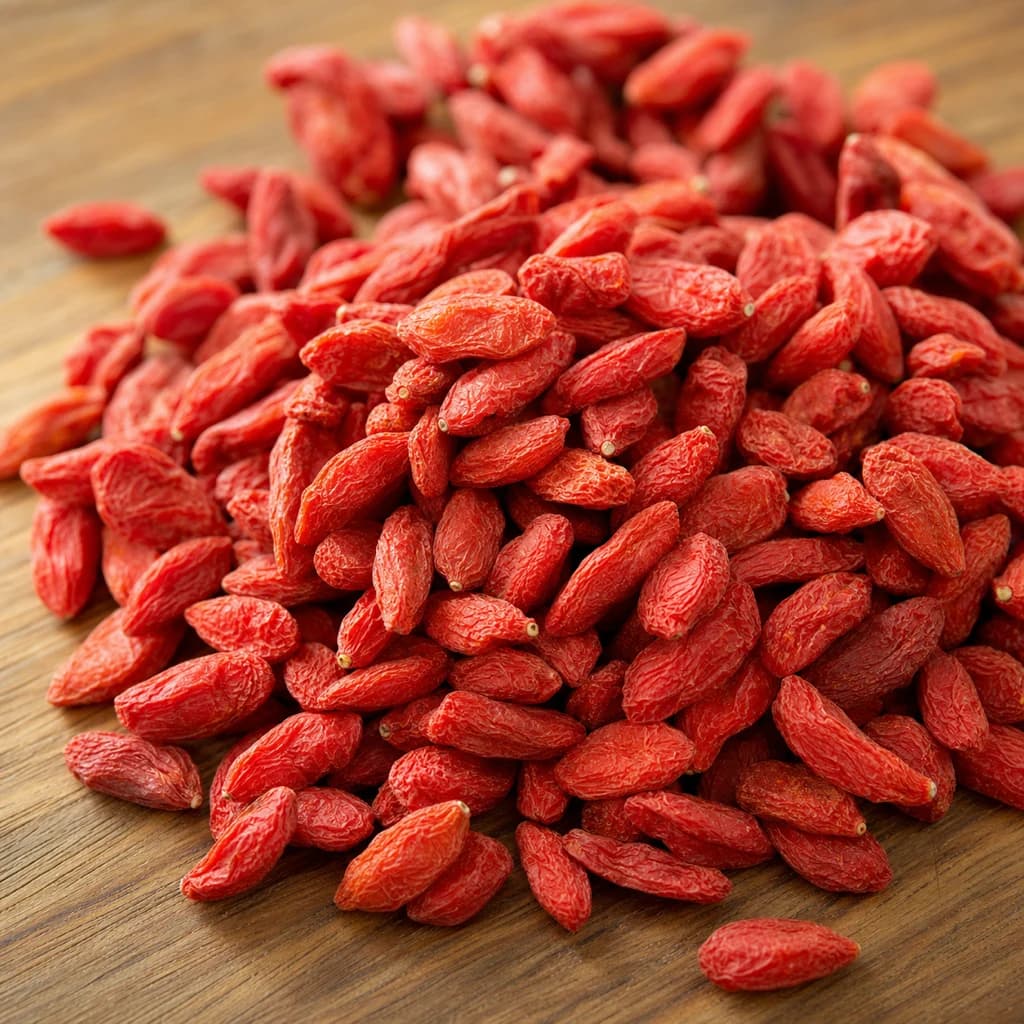
Dried goji berries: small, wrinkled, vivid red-orange ovals ready to use.
The dried form is how virtually all consumers encounter goji berries, making this the most essential teaching image.
Produce
Goji Berry
Small, chewy red-orange dried berry used in Chinese tonic soups, teas, and snacks.
Goji berries are small, slightly sweet and tangy red-orange berries, almost always sold dried. A fixture of Chinese cuisine and traditional medicine, they are simmered into tonic soups and herbal teas or eaten as a snack. They rehydrate and plump when cooked, releasing a mild fruity sweetness.
Goji berries (Lycium barbarum, Lycium chinense) are small, oblong dried fruits prized in Chinese cooking and traditional medicine for centuries. Sold almost exclusively in dried form—fresh goji spoils quickly and rarely reaches export markets—they range from bright red-orange to dark purple-black depending on variety. Their flavor is distinctively sweet-tart with a mild vegetable undertone that becomes more pronounced when rehydrated. The texture is firm and slightly sticky when dry, turning plump and springy after soaking in warm water for 15–30 minutes.
The finest goji come from Ningxia Hui Autonomous Region in north-central China, where they are cultivated as a regional treasure alongside ginseng and cordyceps. Ningxia dominates commercial production, though goji is also grown in other Chinese provinces. In traditional Chinese medicine, goji is classified as a yin-tonifying herb believed to nourish the liver and kidney meridians and benefit the eyes—a heritage that fueled their modern "superfood" popularity in Western markets. Yet beyond the health claims, goji earns its place in the kitchen through genuine culinary merit: vibrant color, pleasant chew, and a flavor that bridges sweet and savory with unusual grace.
Goji behave differently depending on whether they are used dried or rehydrated. Dried berries added to hot liquids soften but can turn mushy if cooked too long, so timing matters. The soaking liquid itself carries released sugars and nutrients—worth straining into soups, teas, or braises rather than discarding. Quality varies enormously; premium goji should be bright and slightly sticky, not dull or hard, with a clean fruity aroma rather than a musty one.
- Measured in
- g
- Storage
- Pantry
Types & varieties
Grown in Ningxia Hui Autonomous Region; considered the gold standard—large, bright red, balanced sweet-tart flavor; most exported to Western markets
Grown at high altitude in Tibet and Nepal; smaller and darker than Ningxia; may vary in flavor intensity
Similar to Tibetan; collected from wild or semi-wild plants in Himalayan foothills
Distinct species; deep purple-black when dried; more intensely bitter-sweet; used in teas and traditional medicine, not as a direct culinary substitute for red goji
Rare; less common in culinary use; primarily a medicinal product
Selecting and Storing Goji
Quality dried goji should be bright red-orange, not brown or faded, and slightly sticky to the touch. A useful test: good goji will float briefly when dropped in water, then sink as it rehydrates. Avoid berries that are dull, hard, or smell musty. Many commercial brands add sulfites as a preservative—check the label if you have sensitivity. Store opened packages in an airtight container in the refrigerator or freezer; the natural fat content makes goji prone to rancidity at room temperature. Properly stored, they keep 12–24 months.
- Look for bright red-orange color, not faded brown
- Test by dropping in water: good goji floats briefly then sinks
- Refrigerate after opening to prevent rancidity
- Check for sulfite-free varieties if sensitive
Common uses
Tips & pitfalls
- Rinse dried goji briefly before use to remove surface dust or debris.
- Rehydrate in warm water 15–30 minutes until plump; use the soaking liquid as a flavor base for soups, teas, or braises—it contains released sugars and nutrients.
- Add dried goji late in cooking (last 5–15 minutes) to prevent them from becoming mushy or losing too much color.
- For maximum nutrition retention, avoid prolonged boiling; brief rehydration at moderate temperatures preserves heat-sensitive compounds.
- Store in an airtight container in the refrigerator or freezer if you use them infrequently; fat content makes them prone to rancidity.
- In savory dishes, balance goji's sweetness with savory umami—soy sauce, fermented black beans, or stock.
- Do not substitute black goji for red goji in sweet applications; black goji has a much more bitter, intense profile.
- If a recipe calls for a specific weight of fresh berries and you have only dried, rehydrate first, then measure; dried goji are roughly 3–4 times lighter by weight when rehydrated.
- Pair with ginger in teas or soups to mellow goji's natural vegetable note.
- Check for sulfite-free varieties if you have sensitivity; premium brands are often sulfite-free.
Nutrition
Energy
1460 kJ · per 100 g
Where the calories come from
Protein
14.3g
29% DV
Carbs
77.1g
28% DV
Fat
0.4g
1% DV
Fiber
13g
46% DV
Sugars
45.6g
of which
Sodium
298mg
13% DV
Source · USDA FoodData Central · approx. Goji berries, dried
View on FDC →In the shops
Matched grocery products
No matched grocery products for Goji Berry yet.
Good to know
- Origin
- China (Ningxia region considered premium); also grown in other Chinese provinces
- Botanical Names
- Lycium barbarum (most common commercial); Lycium chinense
- Color
- Bright red-orange; black goji is dark purple-black
- Flavor
- Sweet and slightly tart with mild vegetable undertone; more pronounced after rehydration
- Texture
- Chewy when dried; plump and springy when rehydrated (15–30 minutes in warm water)
- Form
- Always sold dried; also juice, powder, extracts
- Shelf Life
- 12–24 months sealed; refrigerate after opening to prevent rancidity
- Key Nutrients
- High in vitamin A (beta-carotene), vitamin C, iron, zinc, antioxidants (polysaccharides, carotenoids)
Substitutes
- Dried Cranberries — Similar chewiness and tartness; significantly sweeter, so reduce any added sugar in the recipe
- Dried Tart Cherries — Comparable texture; more acidic and less sweet; good for savory and sweet applications alike
- Dried Mulberries (White or Black) — Mildly sweet, similar chewiness; lower tartness; works in sweet dishes and teas
- Dried Currants (Zante) — Very small, chewy; neutral sweetness; good for baking and grain dishes; lacks goji's visual appeal
- Dried Barberries — Tart, small, chewy; common in Persian cuisine; more intensely sour than goji
- Raisins (Golden or Dark) — Softer texture, more jammy sweetness; acceptable in baked goods and grain bowls but not a close flavor match
Pairs with
Also called
枸杞 · Wolfberry · Gou Qi Zi
Appears in these dishes

Related
Tomato
Juicy, sun-sweet fruit for sauces, salads, and slow-cooked depth
Yellow Onion
The aromatic backbone of soups, sofritos, and braises
Garlic
Pungent cloves that perfume nearly every savory dish
Lemon
Bright, acidic citrus that wakes up almost any dish
Potato
Humble, hearty staple — roast, mash, fry, or boil
Carrot
Sweet, crunchy root — raw, roasted, or the base of a sofrito
Cucumber
Cool, crisp, and watery — for salads, pickles, and tzatziki

Lettuce
Crisp leaves for salads, wraps, and a fresh crunch