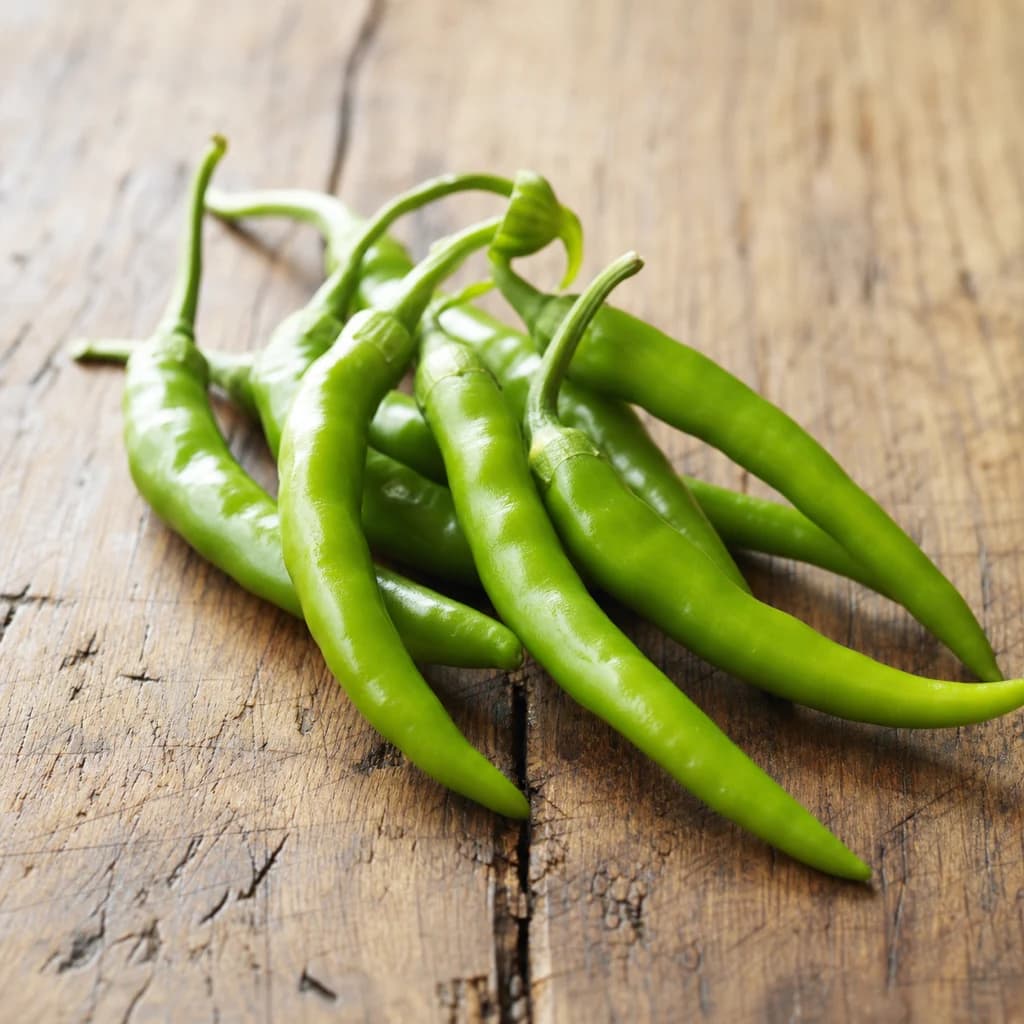
Natural form
Fresh guindilla peppers: long, slender green Basque chilis in their natural unprocessed state.
Shows the reader the raw vegetable — its distinctive long, narrow shape, vivid green color, and scale — so it is immediately recognizable at a market or before pickling.
Produce
Guindilla Pepper
Slender Basque chili, usually pickled in vinegar for pintxos like the Gilda.
The guindilla is a long, thin green chili from Spain's Basque Country, most often sold pickled in vinegar. It is mildly spicy with a bright, tangy bite and is a star of pintxos, especially the Gilda skewer with olives and anchovies. Fresh guindillas are also dried for use as a gentle dried chili.
The guindilla is the slender, slightly curved chili that defines Basque pintxo culture. Typically sold pickled in a sharp wine-vinegar escabeche, it measures 5–10 cm and ripens from bright green to deep red, with the red stage offering subtly sweeter, more developed flavor. Its heat registers between 500 and 2,500 Scoville units—genuinely mild, more a whisper than a bite—and its thin flesh absorbs the pickling liquid readily, making each pepper a concentrated burst of salt, acid, and faint vegetal warmth. While fresh guindillas appear at market in late summer, the pickled form is what you will encounter in nearly every pintxo bar, both because it travels well and because the escabeche deepens the pepper's character over weeks or months. In Basque cooking, it is never merely a garnish; it is a structural element, anchoring the Gilda skewer and providing the acidic counterpoint that ties together rich olives, cured anchovies, and crusty bread.
- Measured in
- piece
- Storage
- Pantry
Types & varieties
Unripe green stage; the most common form sold fresh and for pickling. Mild with bright, slightly vegetal flavor.
Fully ripened red stage; sweeter and slightly more intense than green. The escabeche takes on richer tones when made with red peppers.
The pickled escabeche version—the standard presentation in pintxo bars and the form most cooks outside Spain will encounter.
Not a variety but a specific pinned presentation: pickled guindilla + olive + anchovy fillet on a toothpick, named after the 1946 film.
The Guindilla in Basque Food Culture
No ingredient carries more cultural weight in a single bite than the guindilla does in the Gilda. The skewer—pepper, olive, anchovy—is the first thing a bartender places before you in San Sebastián, and it functions as both greeting and manifesto: briny, acidic, a little oily, and deeply savory in under three ingredients. The guindilla's role is precise. It is not a supporting actor; it is the structural spine that holds the Gilda together. Without it, you have an olive and an anchovy. With it, you have a statement about Basque restraint, about flavor built from contrast rather than richness.
The name 'guindilla' itself is borrowed from Basque, which borrowed 'guinda' (sour cherry) from Spanish—likely for the pepper's curved shape and the way it hangs on the plant. This linguistic history reflects the pepper's deep local roots: it is not an import but a native, developed and selected over generations for the specific shape, wall thickness, and mildness that make it ideal for both pickling and quick frying.
- In San Sebastián pintxo bars, pickled guindillas are often served loose in small dishes, not as part of a composed plate—diners spear them individually as bar snacks with beer or txakoli
- Txakoli, the slightly sparkling Basque white wine, is the traditional drink alongside guindillas; its natural acidity mirrors the escabeche vinegar
- The Gilda skewer is traditionally eaten in one bite, held by the toothpick and lowered directly into the mouth—no fork needed
Buying and Storing Guindillas
The pickled form is far more reliable to source than fresh, and in most markets outside Spain it is the only form available. When purchasing pickled guindillas, examine them through the glass: the flesh should be firm and intact, not collapsed or mushy. Cloudy vinegar or peppers that have lost their vibrant color have been sitting too long. A good escabeche is bright and clear, and the peppers retain their slight curve. Fresh guindillas should be glossy, taut-skinned, and snap when bent rather than bending limply. Refrigerate fresh peppers and use within a week or two; pickled peppers in a sealed jar keep for six months or more in the refrigerator.
- Avoid jars with any signs of bulging lids or off smells—these indicate spoilage, not just age
- If your pickled guindillas taste flat or overly sour, drain them and cover with fresh good-quality wine vinegar for 24 hours before serving
- For frying, fresh is preferable; pickled guindillas will fry up soft and watery rather than blistering cleanly
Common uses
Tips & pitfalls
- True Basque guindillas are characteristically mild—expect gentle warmth at most. A very hot pepper of similar slender, curved shape is mislabeled or a different variety
- When buying pickled guindillas, choose those with firm, intact flesh; mushy or collapsed peppers indicate overpickling and will taste flat
- For homemade escabeche, a 1:1 ratio of wine vinegar to water with olive oil, bay, garlic, and salt produces traditional results in about 2 weeks
- Fresh guindillas should have glossy, taut skin and no soft spots—reject any that bend without snapping back
- Avoid overcooking fresh guindillas when frying; 30–60 seconds per side is enough to blister and char the skin slightly without making the flesh limp
- If using pickled guindillas in a cooked dish, add them in the last 5 minutes—they are already tender and will disintegrate if cooked further
- Store homemade escabeche in the refrigerator and consume within 3 months for best flavor and texture
- The curved shape is functionally useful for the Gilda skewer—use a cocktail spear to thread them lengthwise so the curve cradles the olive and anchovy
Nutrition
Energy
121 kJ · per 100 g
Where the calories come from
Protein
0.9g
2% DV
Carbs
6.5g
2% DV
Fat
0.4g
0% DV
Fiber
2.8g
10% DV
Sugars
4.1g
of which
Sodium
3mg
0% DV
Source · USDA FoodData Central · approx. Peppers, jalapeno, raw
View on FDC →In the shops
Matched grocery products
No matched grocery products for Guindilla Pepper yet.
Good to know
- Origin
- Basque Country, Spain
- Heat Level
- 500–2,500 Scoville Heat Units (very mild)
- Color
- Green (unripe) to red (ripe)
- Shape
- Slender, slightly curved, tapered; 5–10 cm long
- Primary Preparation
- Pickled in vinegar (escabeche)
- Peak Season
- Late summer through early autumn (fresh); year-round (pickled)
- Shelf Life
- 1–2 weeks refrigerated (fresh); 6+ months (pickled in sealed jar)
- Also Known As
- Pimiento de Guindilla Vasca; PIP in some non-Spanish markets, though technically distinct
Substitutes
- Padrón Pepper — Similar thin walls and mild heat; lacks the pronounced curve but works well for both frying and pickling. Often easier to source fresh outside Spain.
- Shishito Pepper — Comparable mildness and thin flesh; slightly wider but interchangeable in most applications, especially for quick-frying.
- Banana Pepper — Milder and straighter; acceptable in salads, sandwiches, and pintxo-style skewers where the characteristic curved shape is not essential.
- Italian Frying Pepper — Similar elongated shape and mild flavor; better suited for sautéed preparations than for pickling, where the flesh tends to stay firmer.
Pairs with
Also called
Basque Pepper · Piparra
Related
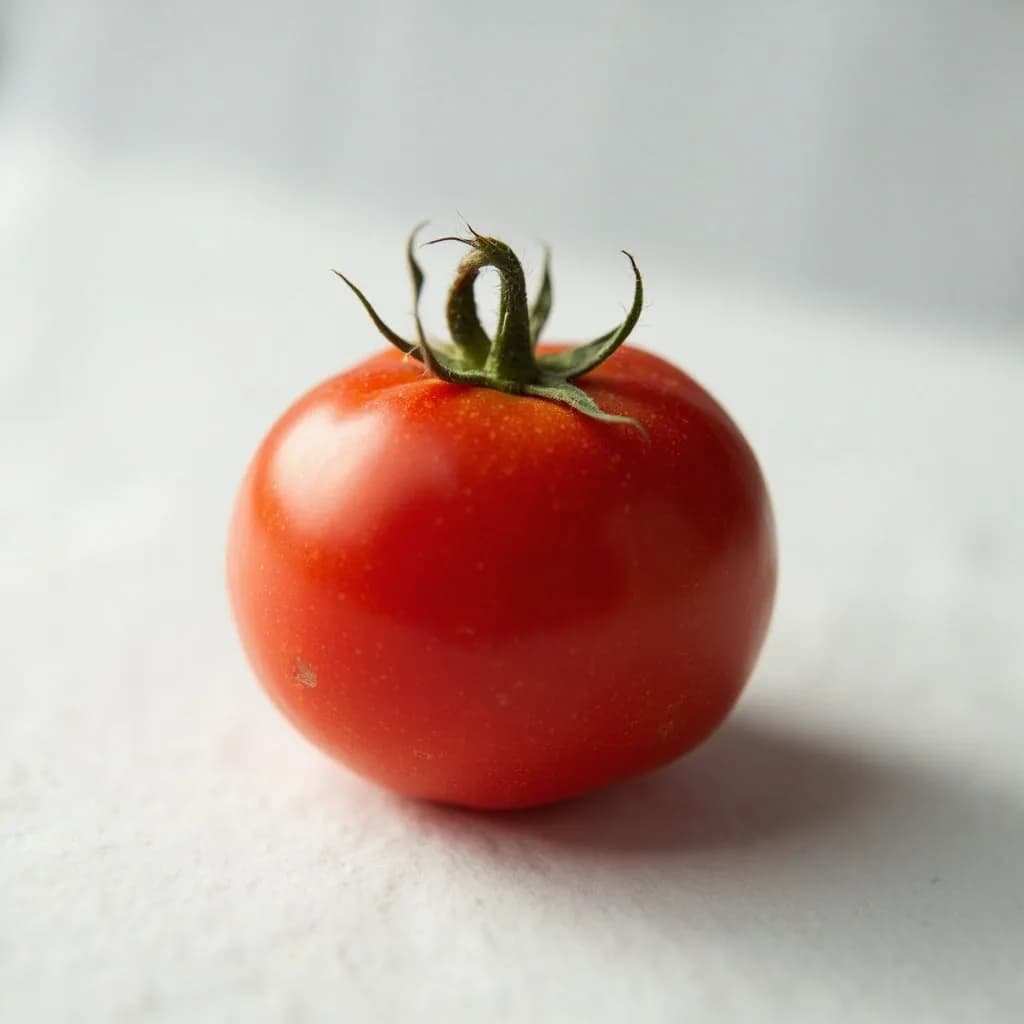
Tomato
Juicy, sun-sweet fruit for sauces, salads, and slow-cooked depth
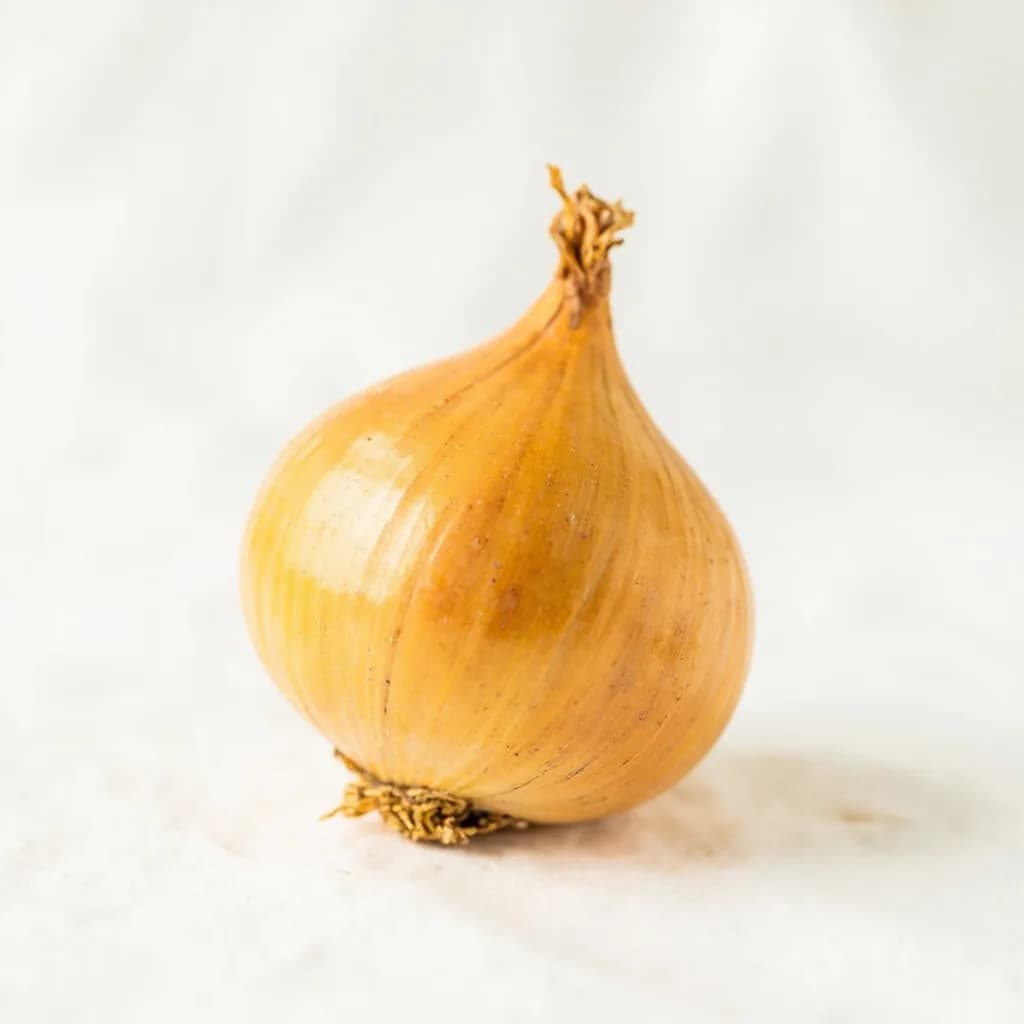
Yellow Onion
The aromatic backbone of soups, sofritos, and braises
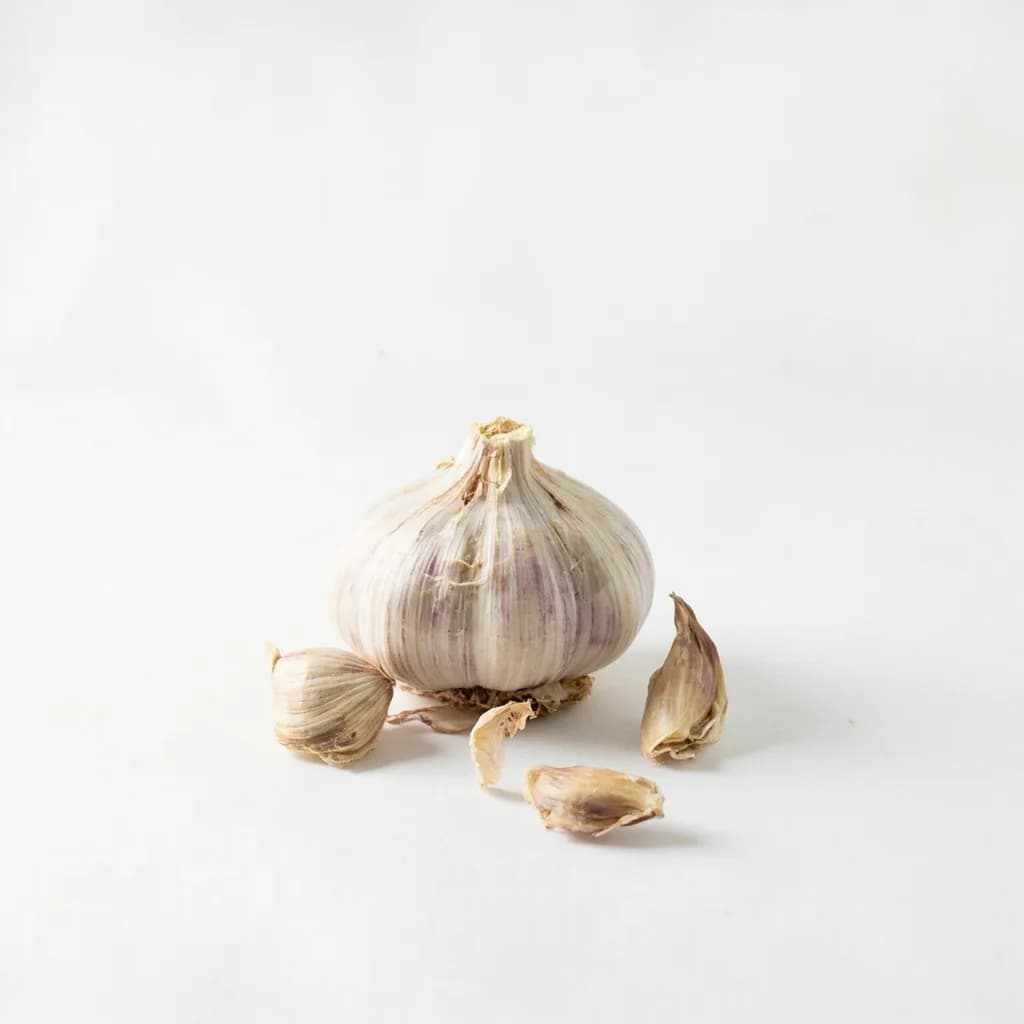
Garlic
Pungent cloves that perfume nearly every savory dish
Lemon
Bright, acidic citrus that wakes up almost any dish
Potato
Humble, hearty staple — roast, mash, fry, or boil
Carrot
Sweet, crunchy root — raw, roasted, or the base of a sofrito
Cucumber
Cool, crisp, and watery — for salads, pickles, and tzatziki

Lettuce
Crisp leaves for salads, wraps, and a fresh crunch