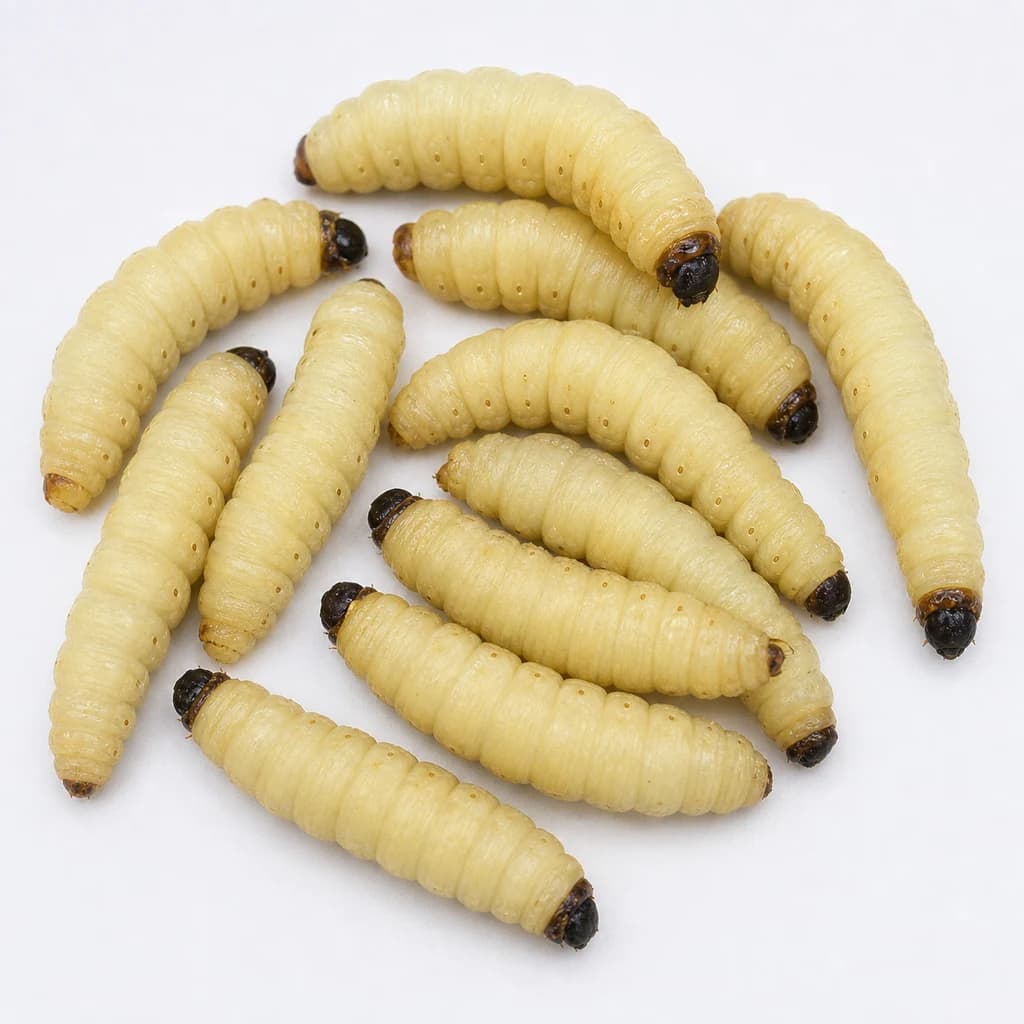
Natural form
Raw maguey worm larvae: pale, segmented caterpillars harvested from agave plant roots.
Shows the insect in its unprocessed state so readers can recognize the raw ingredient before any cooking transformation.
Proteins
Maguey Worm
Edible caterpillar that lives in agave plants, fried as a crunchy Mexican delicacy.
The maguey worm is the larva of a moth that feeds on agave (maguey) plants, prized as a delicacy in central Mexico. It is typically toasted or fried until crisp and eaten in tacos, with guacamole, or ground into salt. It has a nutty, earthy flavor and is the famous worm sometimes found in bottles of mezcal.
The maguey worm is not a worm at all but the larva of a moth in the Cossidae family—specifically Comadia redtenbacheri (white) or Megastes macleayi (red)—that burrows into the heart of agave plants. Native to Oaxaca and surrounding mezcal-producing states, the worm is an obligate inhabitant of Agave tequilana, Agave angustifolia, and related species, feeding on the starchy piña during the agave's 8-to-12-year growth cycle. Its presence in a mezcal bottle was historically a sign of authenticity: the spirit was made from real agave, and the worm served as proof that no artificial sugars or flavorings had been used. This ecological connection ties the worm tightly to mezcal culture, where it has become an iconic garnish and bar snack—though the practice of bottling it became standardized largely through commercialization in the late 20th century.
Culinary behavior sets the maguey worm apart from other protein ingredients. When fried at proper temperature (180–190 °C), the worms develop a satisfying crispness in 30–60 seconds, their natural fats rendering to eliminate the need for additional oil. The white variety offers a cleaner, more tender bite with subtle earthiness; the red variety delivers a stronger, rustier flavor with a slightly bitter edge. Both are remarkably protein-dense—approximately 35–40% protein by dry weight—making them not merely a novelty garnish but a legitimate protein source in traditional Oaxacan cooking. In tacos, eggs, and pozole, the worm's umami richness and crispy texture hold up well against bold companions.
Supply remains inherently inconsistent because the worms are collected wild during the agave jima harvest (October through March), not raised commercially. This seasonality affects availability in both Mexican markets and international specialty stores, where dried and canned versions are the norm. For cooks, understanding the difference between fresh and dried preparations is essential: dried worms can be fried directly for extra-crispy results or briefly rehydrated for a plumper texture, while fresh worms require purging (fasting 24 hours or a salted-water bath) to clear the digestive tract before cooking. Conservation concerns have emerged around overharvesting of wild agave for mezcal, which indirectly pressures worm populations—a reminder that this ingredient carries ecological stakes beyond its culinary appeal.
- Measured in
- g
- Storage
- Fridge
Types & varieties
Comadia redtenbacheri. The more commonly eaten variety; creamy-white to pale beige with faint segmentation. Considered the premium eating worm—tender body, cleaner flavor, subtler earthiness.
Megastes macleayi. Rusty reddish-brown color; slightly stronger, earthier flavor with a hint of bitterness. Higher pigment and fat content make it the preferred choice for grinding into worm salt.
Colloquial term for worms found in pulque (fermented agave sap); same species as the white and red worms, but raised on a different host plant diet, producing a subtly distinct flavor.
Why the Worm Matters in Mezcal Culture
The maguey worm's role in mezcal is rooted in authenticity, not aesthetics. In traditional mezcal production, the moth larvae naturally infest agave plants during their final years of growth. When the piña is harvested and distilled, any worms caught in the process would sometimes end up in the bottle. Early producers left them in as proof that the spirit came from real agave—no shortcuts, no added sugars or flavorings. The worm became a mark of quality and a symbol of Oaxacan terroir.
Over time, this ecological marker transformed into a commercial ritual. Producers began deliberately sealing worms into bottles as a marketing device, and mezcalerías standardized the practice of serving worms as a rim garnish alongside sal de gusano (worm salt) and an orange wedge. Today, the worm is inseparable from the mezcal experience in tourist-facing establishments, even though its presence in a bottle tells you little about distillation quality. The worm's symbolic weight, however, remains real—and it is this cultural charge that makes the ingredient compelling beyond its flavor alone.
- The worm originally indicated a mezcal was made from real agave, not artificial sugars or flavorings
- Commercial bottling of worms became widespread in the late 20th century as a marketing practice
- Sal de gusano is made from ground dried worms, salt, and dried chili—used to rim glasses and season food
Common uses
Tips & pitfalls
- Always pat fresh worms completely dry before frying; any internal moisture causes violent splattering and prevents the exterior from crisping
- Fry at 180–190 °C for 30–60 seconds only; overcooking turns them tough and unpleasantly bitter
- Purge fresh worms by fasting them for 24 hours on a plain surface, or briefly soak in salted water, to clear the digestive tract before cooking
- Use the red worm specifically when making sal de gusano—its higher fat content helps the salt and chili adhere to the rim
- Dried worms can be fried directly from dry for maximum crispness, or rehydrated in warm water for a plumper, less intense result
- The worm's natural fat content is high enough that additional oil is rarely needed when frying—just ensure the pan is hot enough
- Never microwave worms; the method produces rubbery, unevenly cooked results with no crispiness
- In tacos and quesadillas, chop fried worms roughly rather than serving whole—better texture distribution and easier eating
- If sourcing fresh worms, buy from reputable markets and use them within 1–2 days; freeze immediately if you cannot cook them right away
Nutrition
Nutrition
No USDA FoodData Central match for Maguey Worm yet. We surface a per-100 g profile once a generic whole-food entry is matched and verified.
In the shops
Matched grocery products
No matched grocery products for Maguey Worm yet.
Good to know
- Scientific names
- Comadia redtenbacheri (white worm); Megastes macleayi (red worm)
- Origin
- Mexico — native to Oaxaca and surrounding states in the agave heartland
- Host plant
- Agave tequilana, Agave angustifolia, and related species used for mezcal and pulque
- Typical size
- 2–3 cm (approximately 1 inch) in length
- Flavor (fried)
- Earthy and umami-rich; nutty, slightly meaty; often compared to toasted corn or sautéed mushrooms
- Protein content
- Approximately 35–40% protein by dry weight
- Harvest season
- October through March, during the agave jima (piña harvest)
- Storage (dried)
- Airtight container, refrigerated, up to 6 months
Substitutes
- Chapulines (grasshoppers) — Closest textural substitute; more widely available outside Mexico. Frying method is identical. Flavor differs—nutty-sesame rather than earthy—so adjust seasoning accordingly.
- Dried shrimp — Provides similar umami depth and crispy fried texture. Not entomological, but an acceptable alternative in mezcal bar settings for guests uncomfortable with insects.
- Ancho chili flakes — Best substitute for the role of worm salt in cocktails; does not replicate texture but delivers comparable earthiness and color to the rim garnish.
Pairs with
Also called
Gusano de Maguey · Agave Worm
Related

Egg
The kitchen's everything ingredient — bind, leaven, enrich, or fry

Chicken Breast
Lean, quick-cooking white meat for everyday dinners

Ground Beef
Versatile minced beef for burgers, ragù, tacos, and meatballs

Pork Loin
Lean, tender roasting cut that stays juicy with care

Salmon
Rich, rosy fish that roasts, grills, or cures beautifully

Egg White
Pure protein that whips to airy peaks for meringue and more

Egg Yolk
Rich, golden yolk for custards, mayonnaise, and pasta

Quail Egg
Tiny, speckled eggs for garnishing and elegant bites