Varieties
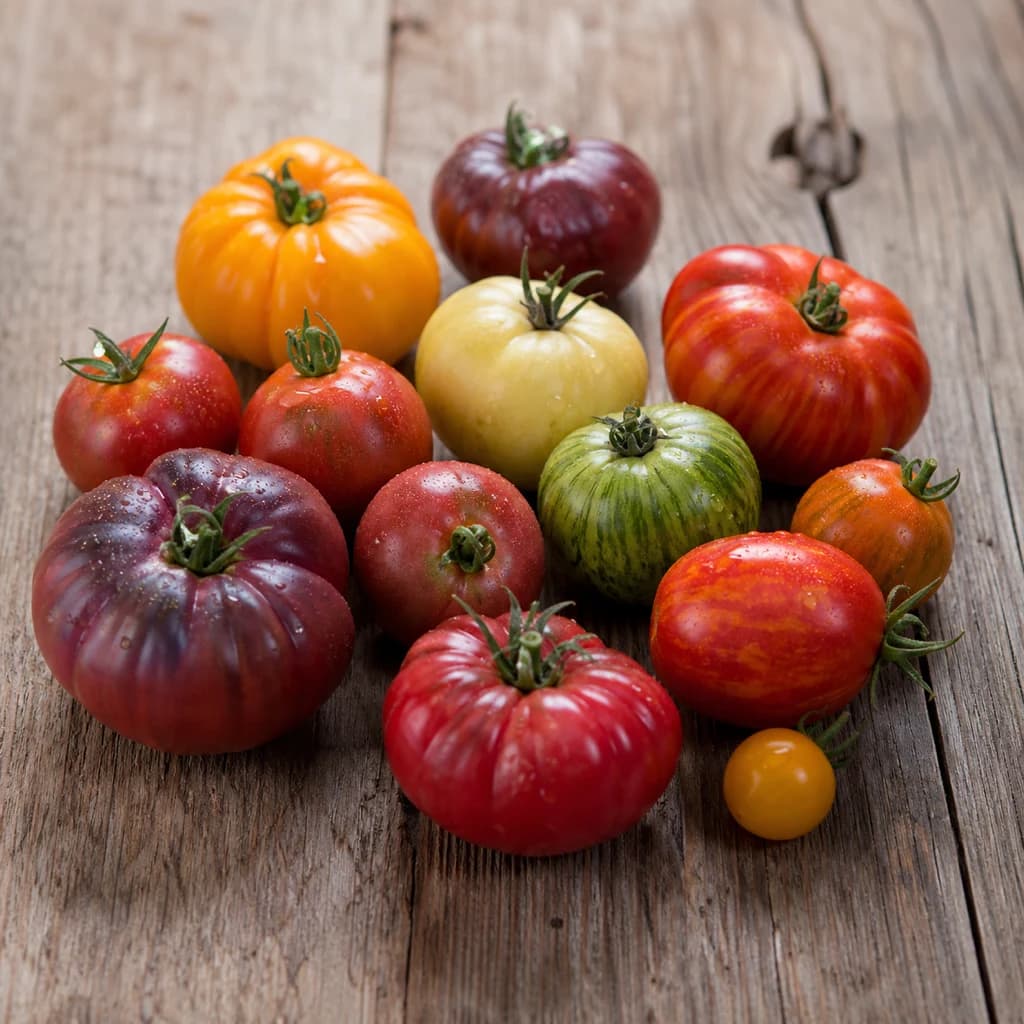
A dozen heirloom tomato varieties showing the full spectrum of colors, shapes, and sizes.
Displaying multiple distinct cultivars side by side on one surface immediately communicates that heirloom tomatoes are not a single type but a diverse family of open-pollinated varieties.
Produce
Heirloom Tomato
Open-pollinated tomato varieties prized for deep flavor and unusual colors.
Heirloom tomatoes are traditional open-pollinated varieties grown for flavor rather than shipping durability, coming in colors from deep purple to green-striped and yellow. They are juicy, complex and often less acidic, ideal eaten raw in salads, sliced with salt and olive oil, or in fresh sauces. Their irregular shapes and thin skins make them best for immediate use.
Heirloom tomatoes are open-pollinated varieties that have been grown from saved seed for at least 40–50 years, passed down through families or preserved by seed-saving communities. Unlike F1 hybrids, heirlooms breed true from seed, meaning each generation maintains the distinct characteristics of its parent plant. The term carries no legal weight—it describes a philosophy of cultivation rather than a regulated category. Many heirlooms predate industrial agriculture: Cherokee Purple traces to pre-1890 Tennessee, Costoluto Genovese is a classic Italian variety, and Mortgage Lifter originated in 1930s Appalachia.
Heirlooms were largely abandoned by commercial growers because their thin skins and fragile flesh bruise easily, ship poorly, and spoil quickly—all the opposite of what a grocery supply chain demands. In exchange for that difficulty, you get dramatically superior flavor: lower acidity than commercial varieties, higher perceived sweetness, and complex taste profiles that range from smoky and rich (Cherokee Purple) to bright and tart (Green Zebra) to intensely salty (Black Krim). These tomatoes were bred for the table, not for the truck bed.
Because heirlooms lack the selective breeding improvements that gave commercial tomatoes thick skins and uniform shape, they require more careful handling. They crack at the crown if stored improperly, lose flavor irreversibly if chilled, and degrade within days of peak ripeness. This is not a flaw—it is the cost of exceptional quality. The payoff is a tomato that tastes like something rather than a mealy, pink-tinged vehicle for salt.
- Measured in
- piece
- Storage
- Pantry
Types & varieties
Pink-red, large beefsteak; rich, intense flavor; potato-leaf foliage; most recognized heirloom
Dusky rose-brown, medium-large; rich, sweet, smoky; Tennessee origin, pre-1890
Green with dark stripes when ripe; bright, tart-sweet; holds shape well when cooked
Dark red-brown, medium; intense, slightly salty, smoky; from Crimean peninsula
Deeply ribbed red; meaty; good for sauce and roasting; classic Italian variety
Large yellow-orange; mild, low acid, meaty; 1930s Appalachian variety
Bicolor yellow with red streaks; sweet, mild; large beefsteak type
Green when ripe; spicy, sweet, fruity; large, prone to cracking
Bicolor yellow with red marbling; sweet, mild; very large, from West Virginia
Pear-shaped, dark mahogany; complex, sweet; holds shape better than most when cooked
Conical, pointed base; meaty, few seeds; good for sauce and canning
Creamy white; very mild, low acid; unusual and rare
Buying and Selecting
Not every tomato sold as heirloom is worth the premium. Supermarket heirlooms are often underripe (picked green for shipping), have been chilled during transit, or are mislabeled hybrids. Smell is your best indicator: a ripe heirloom emits a distinct fragrance at the stem scar. Press gently near the stem—slight give means readiness. Avoid any with soft spots, heavy cracking at the crown, or mushy patches. For cooking applications that require structure (slicing, stuffing), choose firmer varieties like Japanese Black Trifele or Oxheart Pink. For raw eating where you want maximum juice and burst, choose fully ripe Brandywine or Cherokee Purple.
- Smell the stem scar before buying—it should be fragrant
- Avoid any tomato that has been stored cold or shows condensation inside packaging
- Choose by intended use: firm types for cooking, soft types for raw eating
- Look for vivid color consistent with the variety (green zebras should have yellow stripes, not pale green)
- Blemishes and catfacing (rough scarring near the stem) are cosmetic and do not affect flavor
Ripening and Maturation
Green heirloom varieties (Green Zebra, Aunt Ruby's German Green) ripen to full flavor while still green—this is varietal, not a sign of immaturity. Test for ripeness by feel (slight softness near the stem) and scent rather than color alone. If you buy slightly underripe heirlooms, ripen them stem-side down on a room-temperature counter away from direct sunlight. A paper bag speeds the process by trapping ethylene gas. Never rush ripeness by refrigeration.
- Green varieties are ripe at green—test by feel and smell, not color
- Ripen stem-side down on the counter, never in the refrigerator
- Place in a paper bag to accelerate ripening with trapped ethylene
- Fully ripe heirlooms smell intensely aromatic at the stem scar
- Underripe heirlooms will not develop the same complexity even if they soften
Common uses
Tips & pitfalls
- Never refrigerate: cold below 55°F destroys cell walls and mutes flavor irreversibly
- Store stem-side down to prevent cracking at the crown
- Ripen on a counter; a ripe heirloom smells fragrant at the stem scar
- Handle gently—press gently with thumb at stem; slight give indicates ripeness
- Salt sliced tomatoes 5–10 minutes before serving to draw out juices and intensify flavor
- Let come to full room temperature (at least 30 minutes) before eating raw
- Cut with a serrated knife or very sharp smooth blade to minimize crushing
- For sauce, cook low and slow to concentrate flavor without losing brightness
- Green heirloom varieties (Zebra, German Green) are ripe—test by feel and scent, not color
- Wash just before using; excess moisture promotes spoilage
- Remove the core with a small sharp cut, angling the knife inward—cutting minimizes waste more reliably than scooping
- Do not buy from refrigerated display cases—damage is already done even if the tomato looks fine
Nutrition
Energy
63 kJ · per 100 g
Where the calories come from
Protein
1g
2% DV
Carbs
3g
1% DV
Fat
0.3g
0% DV
Fiber
0.7g
3% DV
Sodium
23mg
1% DV
Source · USDA FoodData Central · approx. Tomatoes, yellow, raw
View on FDC →In the shops
Matched grocery products
 €2.62
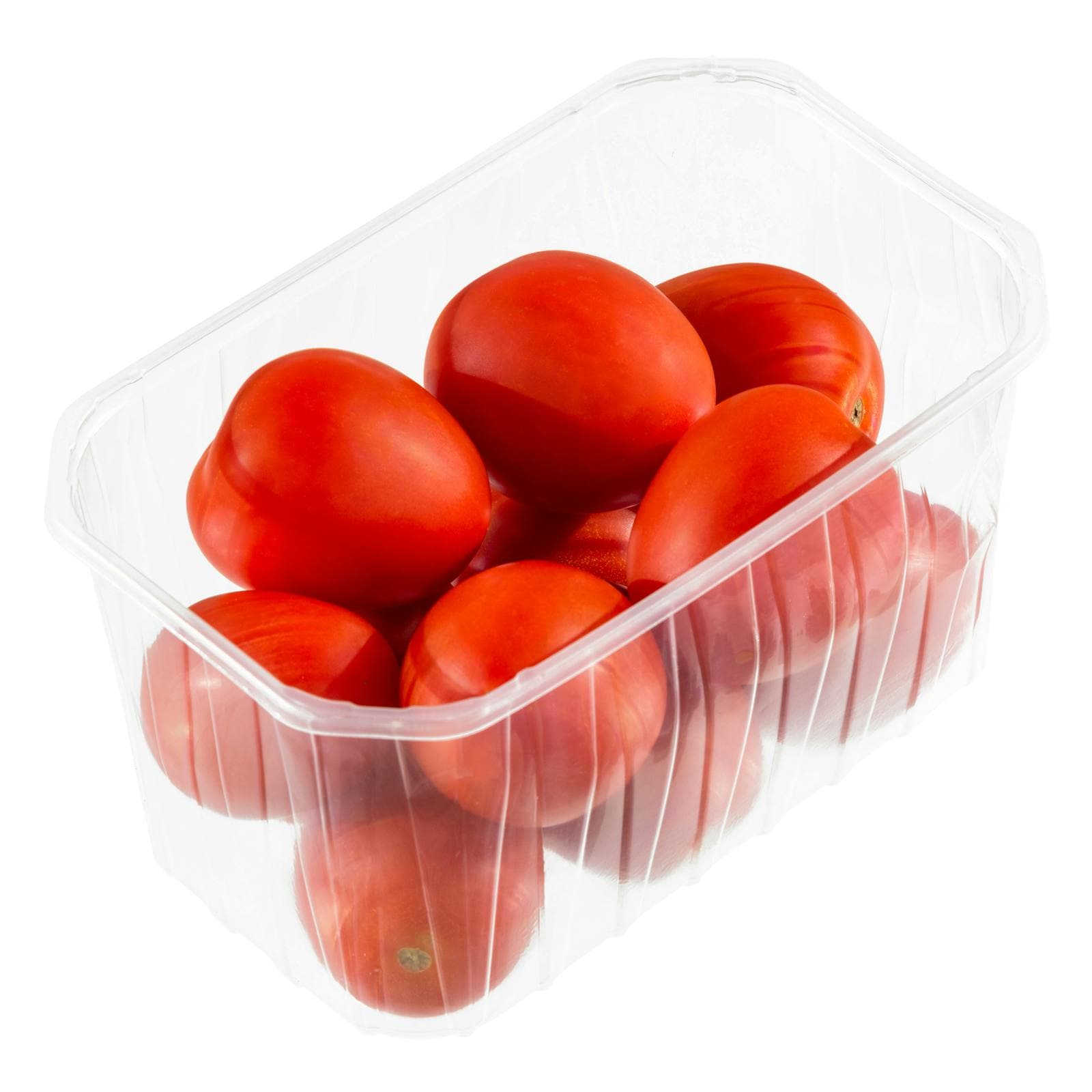
€2.62Pear Tomatoes
1.14 kg · Mercadona
 €1.49
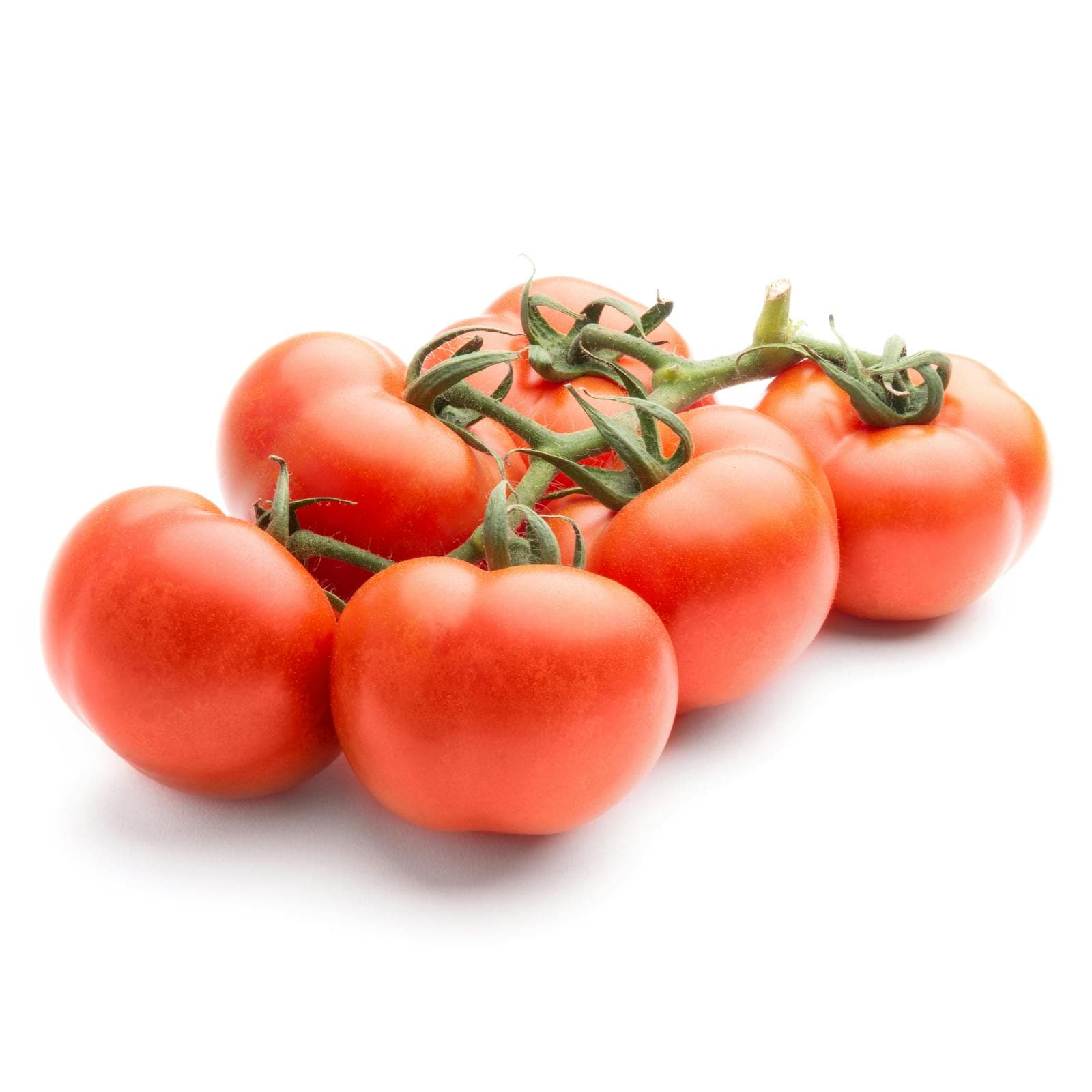
€1.49Truss Tomatoes
550 g · Mercadona
 €2.60
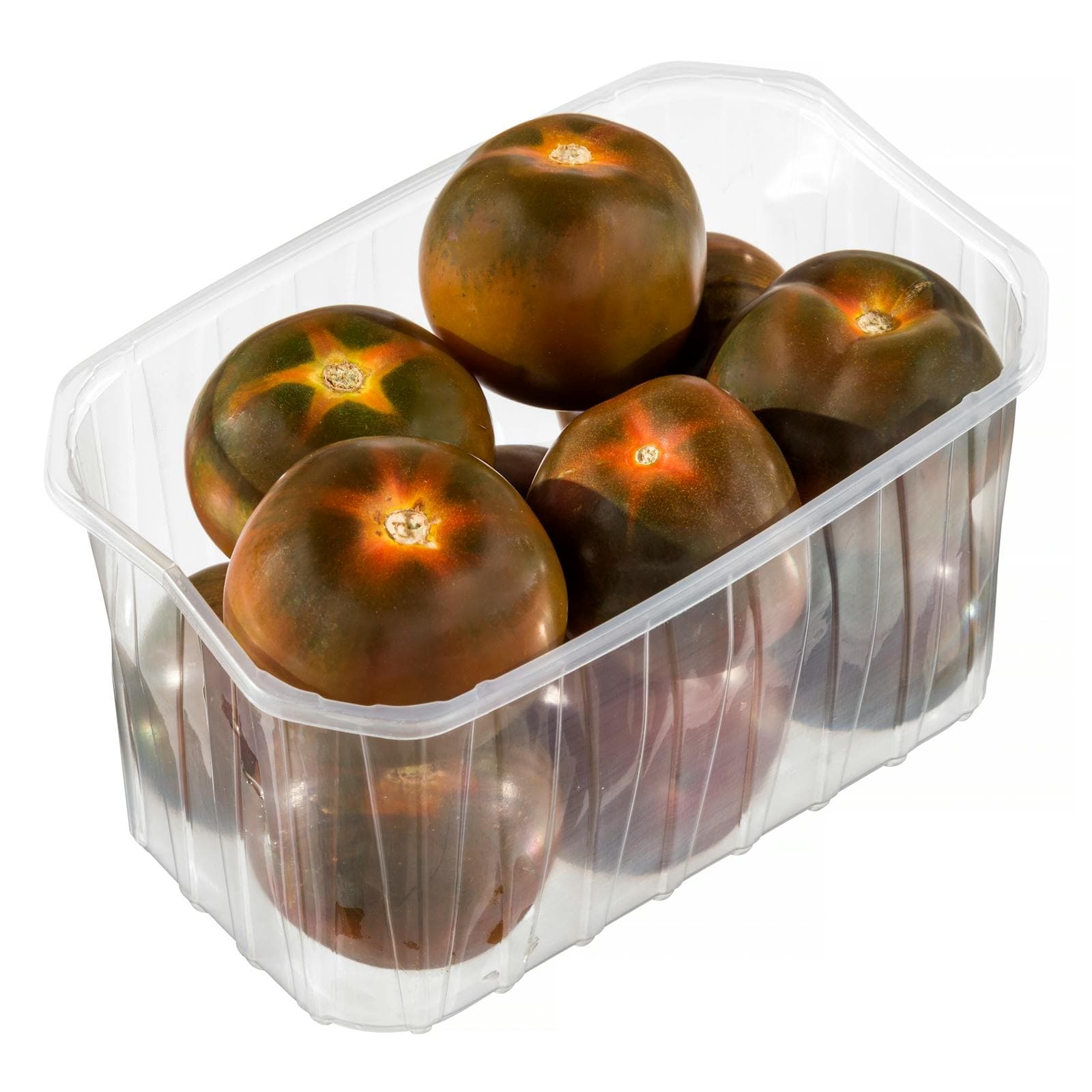
€2.60Black Tomatoes
1 kg · Mercadona
 €0.29
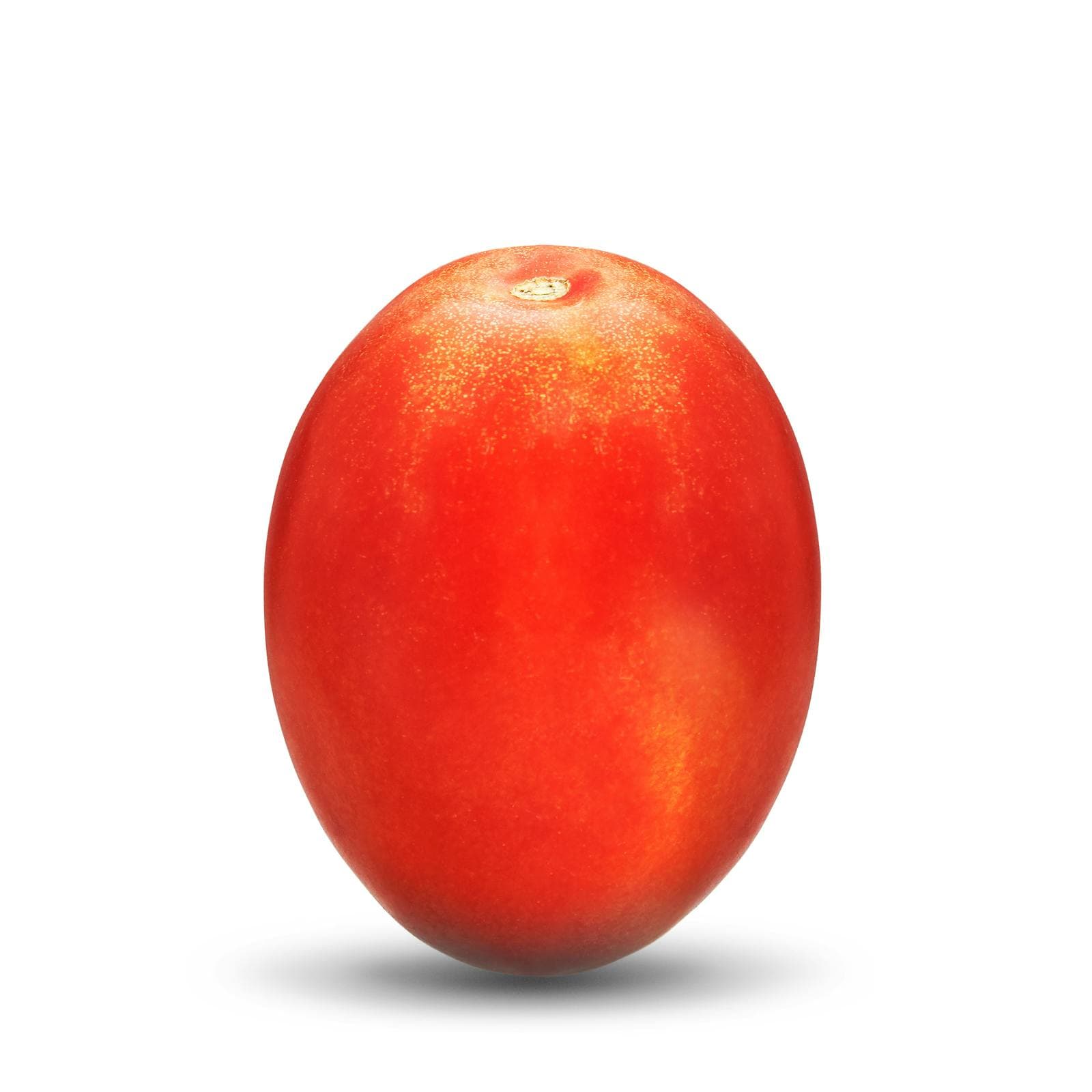
€0.29Plum Tomato
130 g · Mercadona
 €1.07
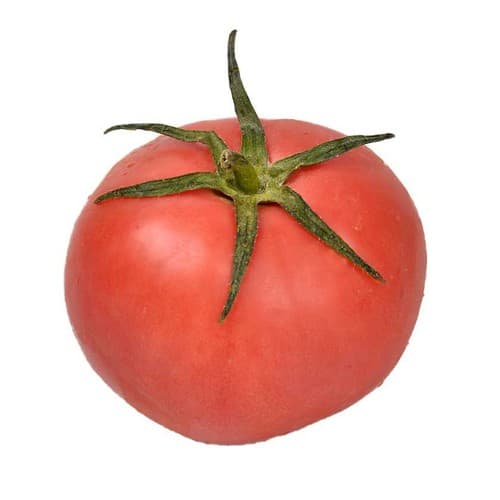
€1.07Pink Tomato
ud · Bonpreu
 €1.16
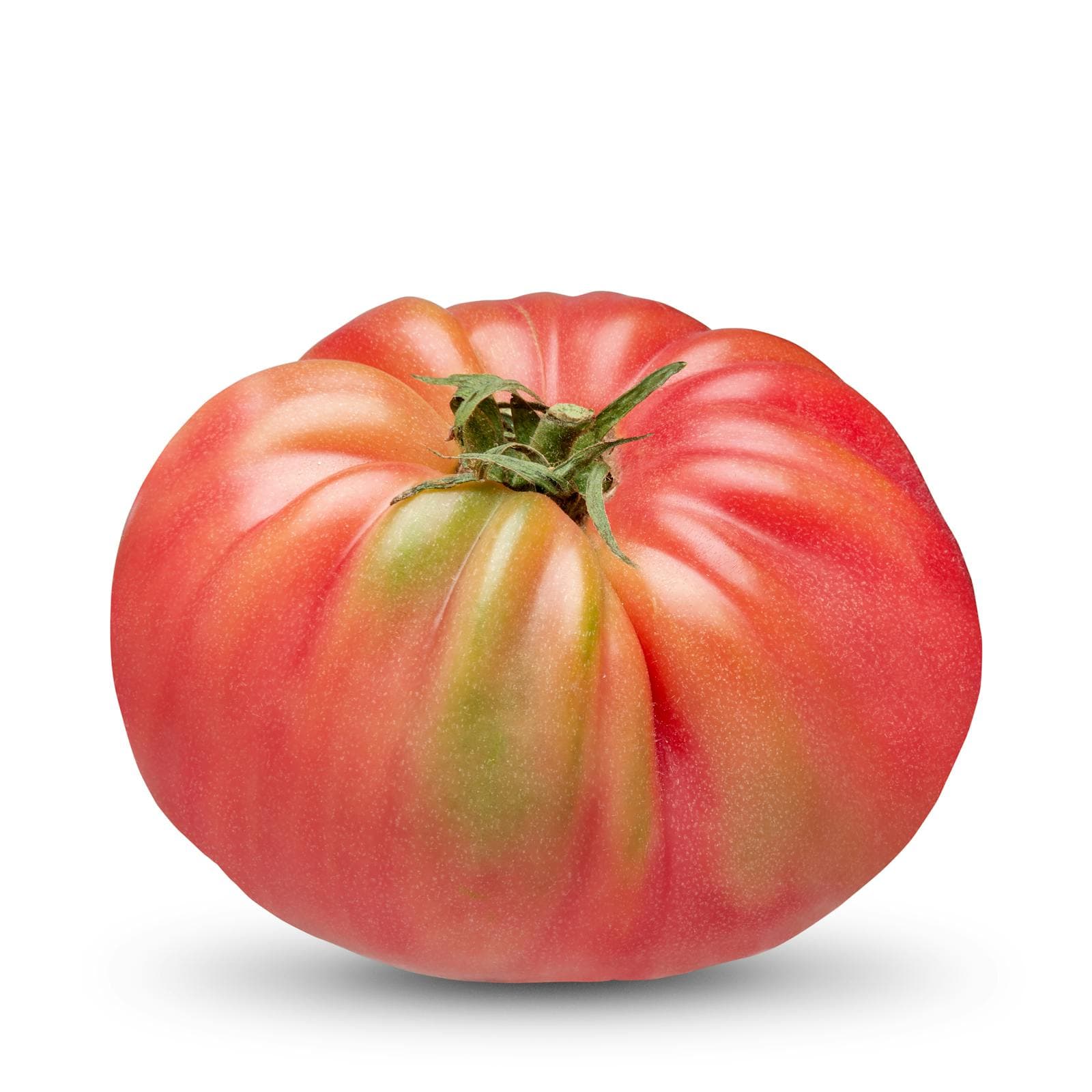
€1.16Pink Tomato
340 g · Mercadona
Good to know
- Origin
- Americas (Peru/Ecuador region); cultivated varieties passed down for 50+ years, many from Italy, Germany, and the American South
- Season
- Summer; peak harvest July through September in Northern Hemisphere
- Pollination
- Open-pollinated (insect or wind); seeds saved and passed down maintain variety characteristics
- Color Range
- Red, pink, yellow, orange, green, purple/black, white, striped, bicolor
- Flavor
- More complex and sweeter than commercial varieties; lower acid; varies by variety (smoky, fruity, tangy, rich)
- Texture
- Thinner skin, more fragile flesh, more juice and gel than hybrids; prone to cracking
- Storage
- Room temperature only; refrigeration destroys texture and flavor within hours
- Shelf Life
- 3–7 days at room temperature; use within 1–2 days of peak ripeness
Substitutes
- Vine-ripened hothouse tomato — Acceptable but less complex; look for actual scent and slight softness at the stem
- Farmers market tomato (any variety) — Often grown for flavor over shipping; may be heirloom or open-pollinated
- Beefsteak tomato — Firmer and less flavorful; better than supermarket standard varieties
Pairs with
Also called
Heritage Tomato
Appears in these dishes
Related
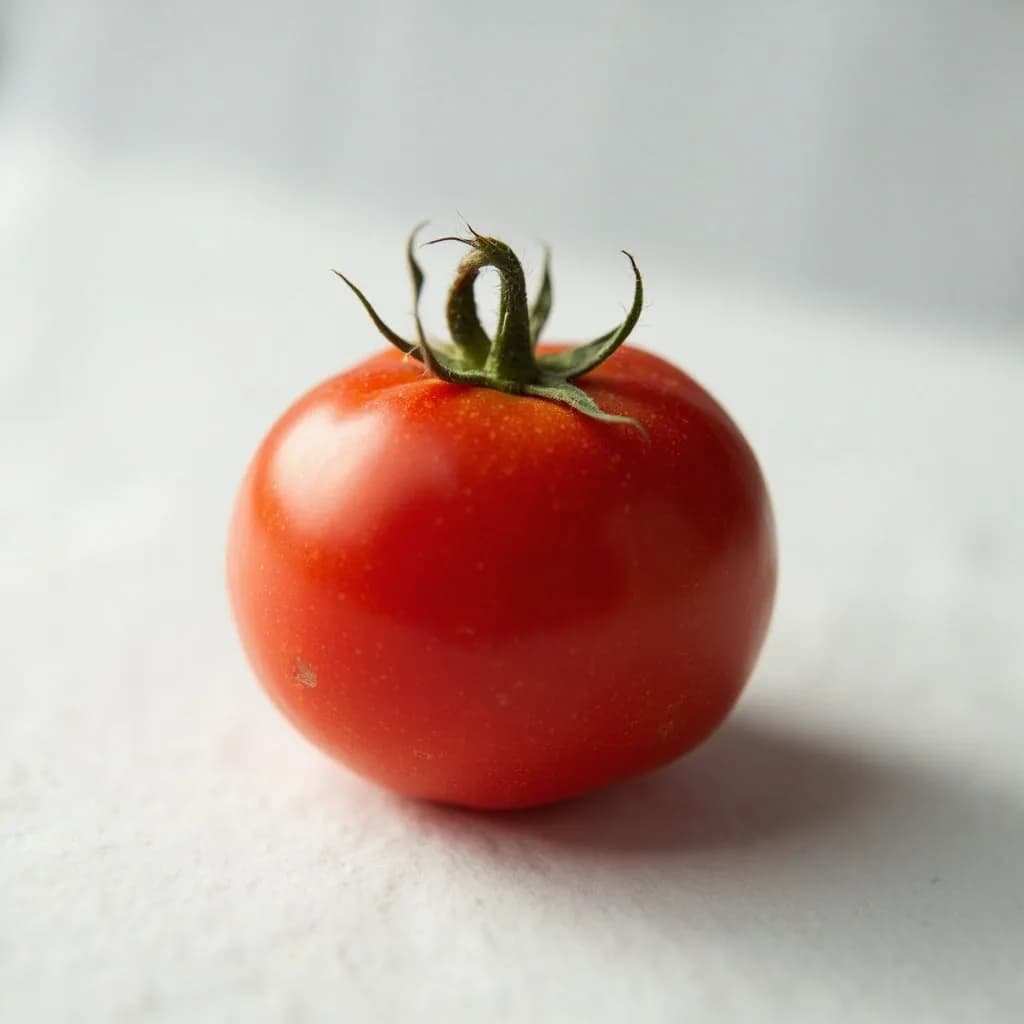
Tomato
Juicy, sun-sweet fruit for sauces, salads, and slow-cooked depth
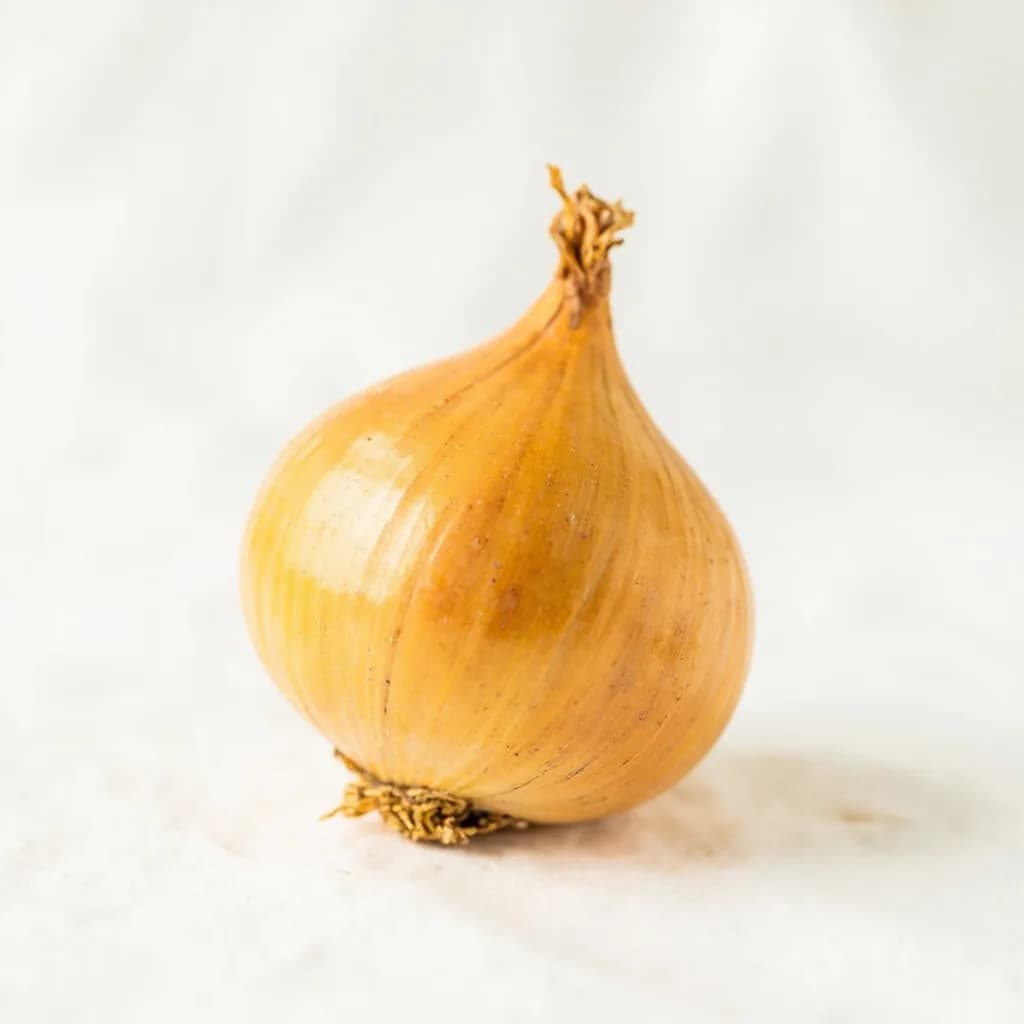
Yellow Onion
The aromatic backbone of soups, sofritos, and braises
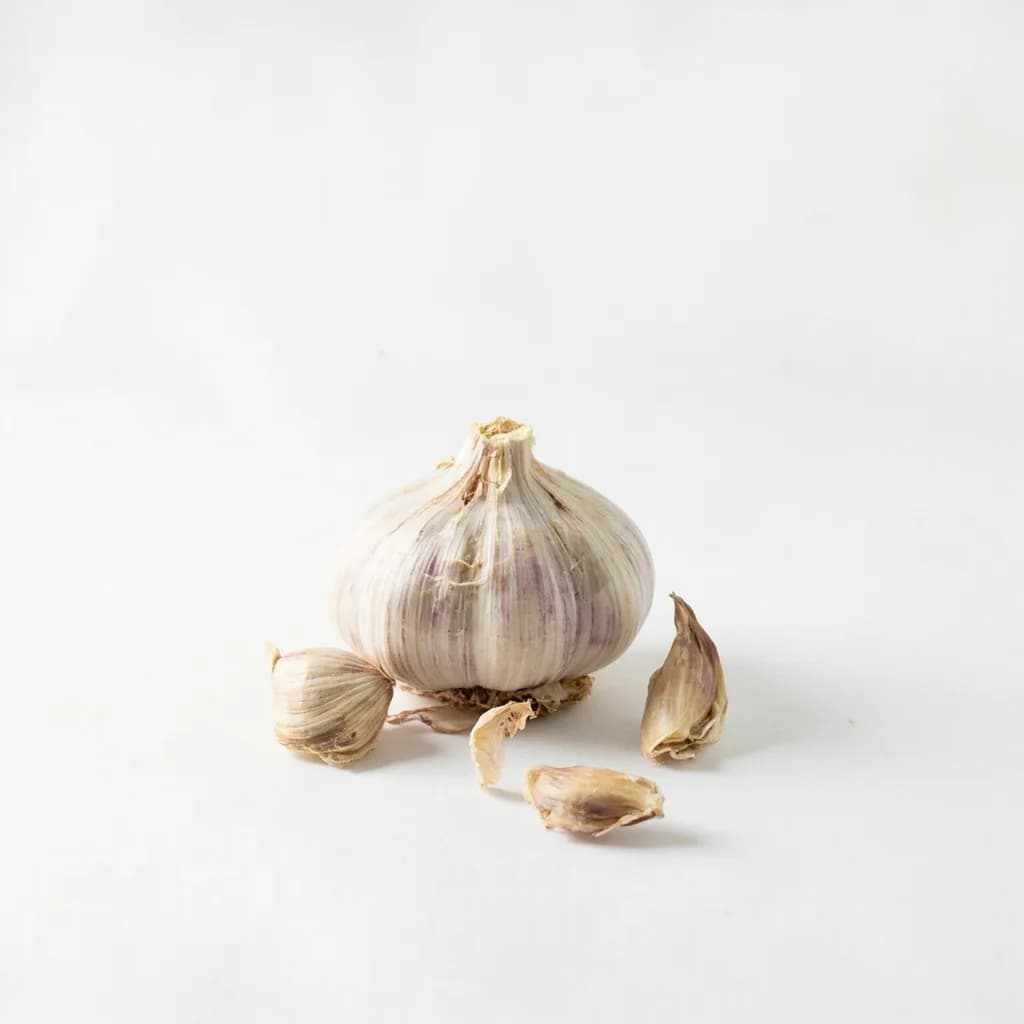
Garlic
Pungent cloves that perfume nearly every savory dish
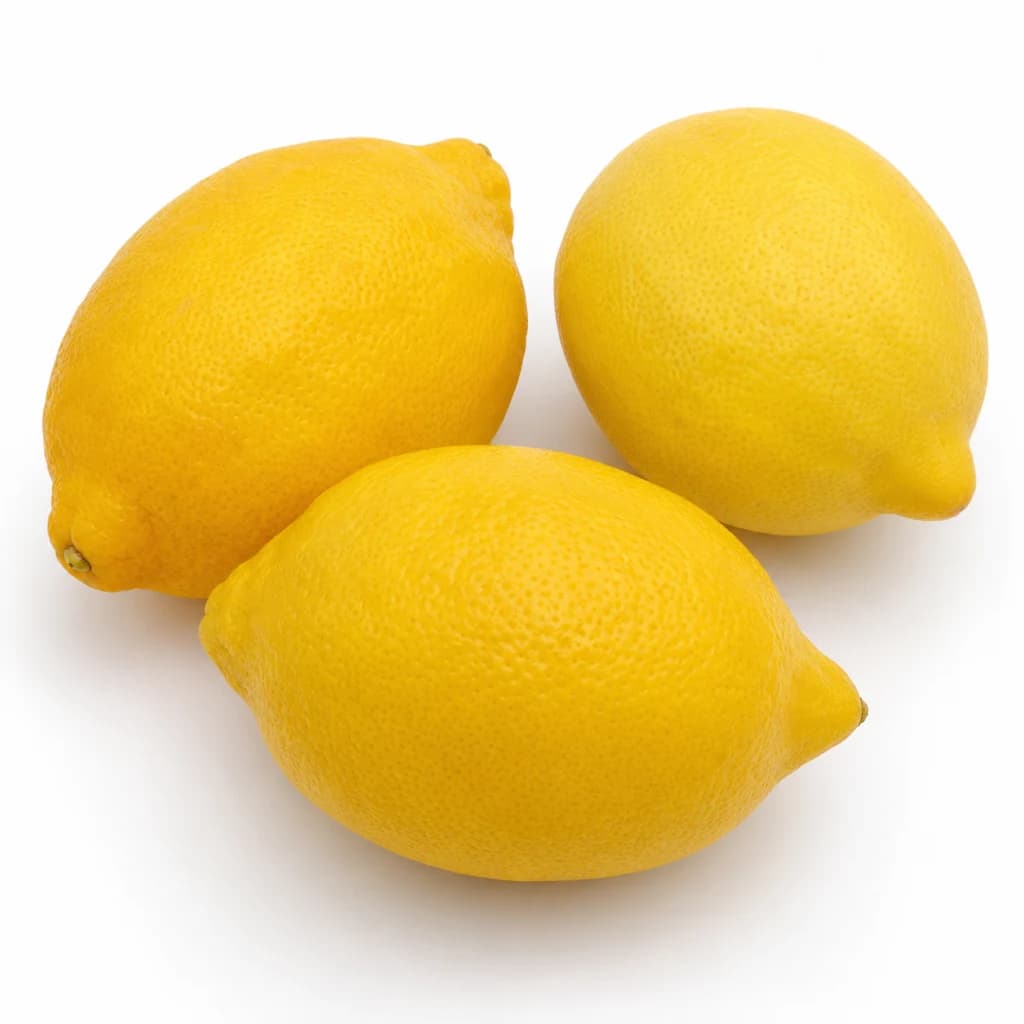
Lemon
Bright, acidic citrus that wakes up almost any dish
Potato
Humble, hearty staple — roast, mash, fry, or boil
Carrot
Sweet, crunchy root — raw, roasted, or the base of a sofrito
Cucumber
Cool, crisp, and watery — for salads, pickles, and tzatziki

Lettuce
Crisp leaves for salads, wraps, and a fresh crunch