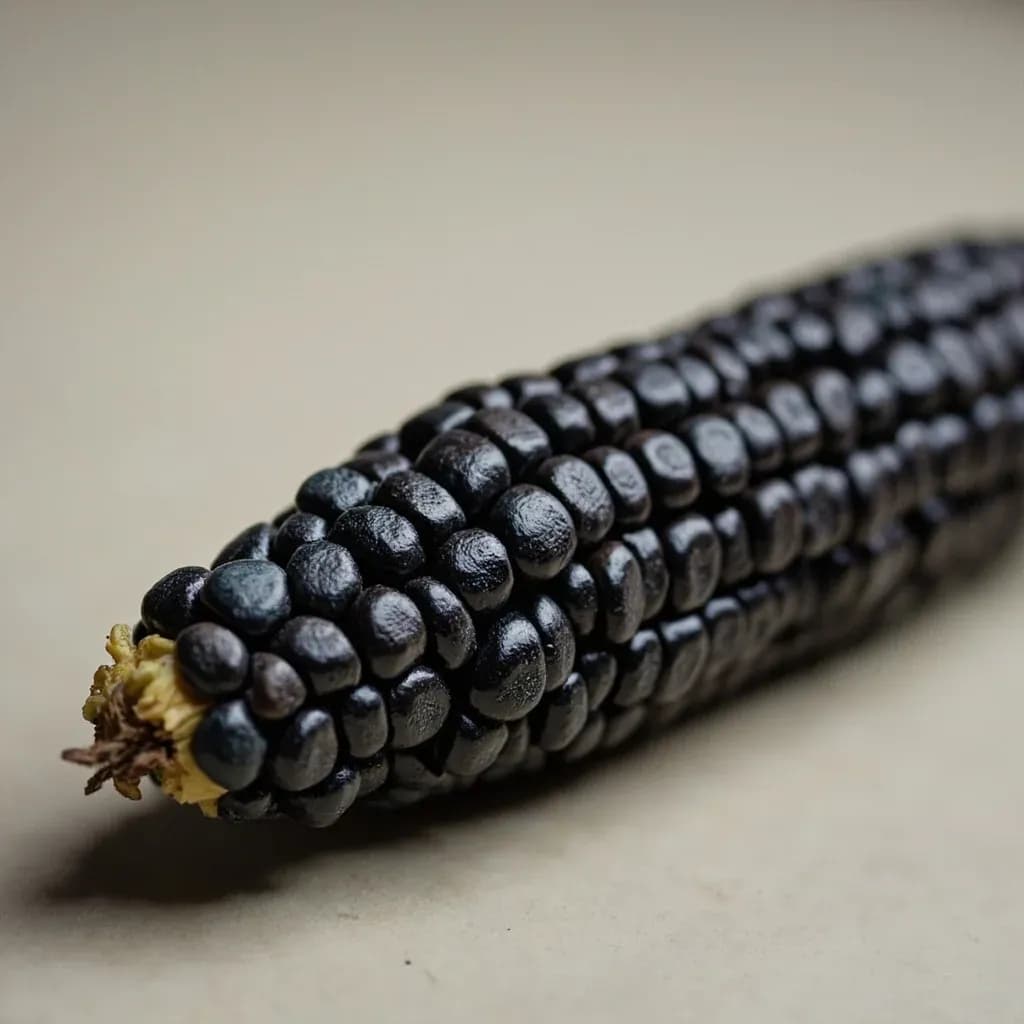
Produce
Huitlacoche (Corn Smut)
Earthy black corn fungus, the Mexican truffle, used in quesadillas and soups.
Huitlacoche is a fungus that grows on ears of corn, swelling the kernels into soft, blue-black galls with a deep, earthy, mushroom-like flavor. Prized in Mexican cuisine as the so-called Mexican truffle, it is sauteed with onion, garlic, and epazote to fill quesadillas, tacos, and soups. Once cooked it turns inky and silky, lending a smoky, umami richness.
Huitlacoche is the common name for Ustilago maydis, a parasitic fungus that infects corn kernels and causes them to form swollen, tumor-like galls. Rather than being a sign of spoiled corn, these dark gray to blue-black galls are a prized delicacy in Mexican cuisine, valued since pre-Columbian times for their complex, earthy flavor that blends corn sweetness with mushroom-like umami depth. The Nahuatl name translates roughly to "raven's excrement"—an unglamorous origin that belies the fungus's reputation as the "Mexican truffle" in contemporary culinary circles. While commercially cultivated huitlacoche in Mexico is sometimes called "jólmido" or "huitlacol" depending on the region, the fungus remains deeply rooted in the cuisine of Oaxaca and the central highlands, where farmers have long understood that an infected ear of corn, though lower in grain yield, commands far higher market value than healthy corn. The galls develop during the growing season, typically late summer through early fall, reaching their peak when they are firm and moist with a grayish-blue coloration. Once harvested, huitlacoche must always be cooked before consumption—never eaten raw—and it behaves unlike any other ingredient in the kitchen, releasing a dark, ink-like liquid when heated that enriches sauces and soups with its concentrated flavor.
- Measured in
- g
- Storage
- Fridge
Types & varieties
Harvested from infected corn in late summer; preferred for superior texture and concentrated flavor
Individually quick frozen; common in restaurants; thaw before cooking and pat dry
Widely available year-round; drain and rinse thoroughly before using to reduce sodium and brine flavor
The Fungus and Its Cultivation
Ustilago maydis infects corn through the silk or damaged tissue of the husk, redirecting the plant's growth hormones to produce the edible galls instead of normal kernels. In traditional Mexican agriculture, farmers in regions like Oaxaca and the central highlands sometimes leave corn deliberately infected, understanding that the economic value of the fungus exceeds the lost grain. The galls begin pale and soft, gradually darkening to their characteristic blue-gray-black color as they mature and the spores develop within. For the best eating quality, harvest huitlacoche while the galls are still moist and slightly firm—once they begin to dry out or split open, texture and flavor deteriorate significantly.
- Commercial huitlacoche farms in Mexico inoculate corn intentionally to ensure consistent supply
- The fungus thrives in humid conditions; late summer thunderstorm seasons often produce the best harvests
- Unlike harmful corn diseases, Ustilago maydis poses no danger to humans when properly cooked
Cooking Behavior and Characteristics
Huitlacoche behaves uniquely in the pan. As it heats, the galls release a dark, viscous liquid—this is completely normal and desirable, as it contains concentrated flavor compounds. A light sauté in butter or oil for 2–4 minutes is sufficient to develop the umami character without toughening the texture. Extended cooking causes the fungus to become mealy and the flavor turns bitter, a common mistake among those unfamiliar with the ingredient. The texture, even when cooked properly, is softer and more yielding than most vegetables, with a slight chew that disappears if overdone.
- The released dark liquid integrates into sauces and soups—do not discard it
- Fresh huitlacoche intensifies in flavor when cooked; canned versions are milder and saltier
- The fungus absorbs neighboring flavors readily, making it versatile across cuisines
Common uses
Tips & pitfalls
- Select fresh huitlacoche with firm, moist, grayish-blue to black galls; avoid specimens that are dried out, mushy, or have split open
- Sauté fresh huitlacoche in butter or oil over medium heat for 2–4 minutes—this develops the umami character without making it mealy
- When using canned huitlacoche, drain and rinse thoroughly to remove excessive brine flavor, then taste and adjust seasoning before adding to dishes
- Freeze excess fresh huitlacoche by spreading it on a tray in a single layer until frozen solid, then transfer to freezer bags for convenient portioning
- If foraging wild corn smut, confirm proper identification and ensure the corn was not treated with pesticides, fungicides, or herbicides
- The dark liquid released during cooking is normal and desirable—incorporate it into your dish rather than draining it off
- If huitlacoche tastes bitter, it is likely old or has been cooked too long; fresh, properly cooked huitlacoche should taste earthy and sweet, not bitter
- Pair fresh huitlacoche with epazote, hoja santa, or cilantro when preparing Mexican-style dishes for authentic flavor profiles
- When substituting canned for fresh in recipes, reduce added salt and expect a milder, less complex flavor—season more aggressively if needed
Nutrition
Nutrition
No USDA FoodData Central match for Huitlacoche (Corn Smut) yet. We surface a per-100 g profile once a generic whole-food entry is matched and verified.
In the shops
Matched grocery products
No matched grocery products for Huitlacoche (Corn Smut) yet.
Good to know
- Scientific Name
- Ustilago maydis
- Origin
- Mexico, consumed since pre-Columbian times
- Season
- Late summer to early fall (August–September in Northern Hemisphere)
- Flavor Profile
- Earthy, umami-rich; combines mushroom-like depth with subtle corn sweetness
- Fresh Storage
- Refrigerate and use within 1–2 days; freezes well for up to 3 months
- Yield
- 1 medium infected ear yields approximately 60–90g usable huitlacoche
- Preparation
- Must be cooked before consumption; never eaten raw
- Protein Note
- Higher in lysine and tryptophan than regular corn grain
Substitutes
- Portobello or Cremini Mushrooms — Best textural substitute; use slightly higher heat and season generously with salt and umami boosters to approximate the earthiness
- Dried Porcini (rehydrated) — Good umami match but different texture; soak in warm water 20 minutes before using, reserve the soaking liquid as a flavor base
- Black Trumpet Mushrooms — Similar earthy, forest-floor flavor profile; sauté separately in butter before adding to dishes
- Canned or Frozen Huitlacoche — Direct substitutes for fresh when unavailable, but adjust seasoning—canned versions are typically saltier and less potent
Pairs with
Also called
Corn Smut · Cuitlacoche · Mexican Truffle
Related
Tomato
Juicy, sun-sweet fruit for sauces, salads, and slow-cooked depth
Yellow Onion
The aromatic backbone of soups, sofritos, and braises
Garlic
Pungent cloves that perfume nearly every savory dish
Lemon
Bright, acidic citrus that wakes up almost any dish
Potato
Humble, hearty staple — roast, mash, fry, or boil
Carrot
Sweet, crunchy root — raw, roasted, or the base of a sofrito
Cucumber
Cool, crisp, and watery — for salads, pickles, and tzatziki

Lettuce
Crisp leaves for salads, wraps, and a fresh crunch