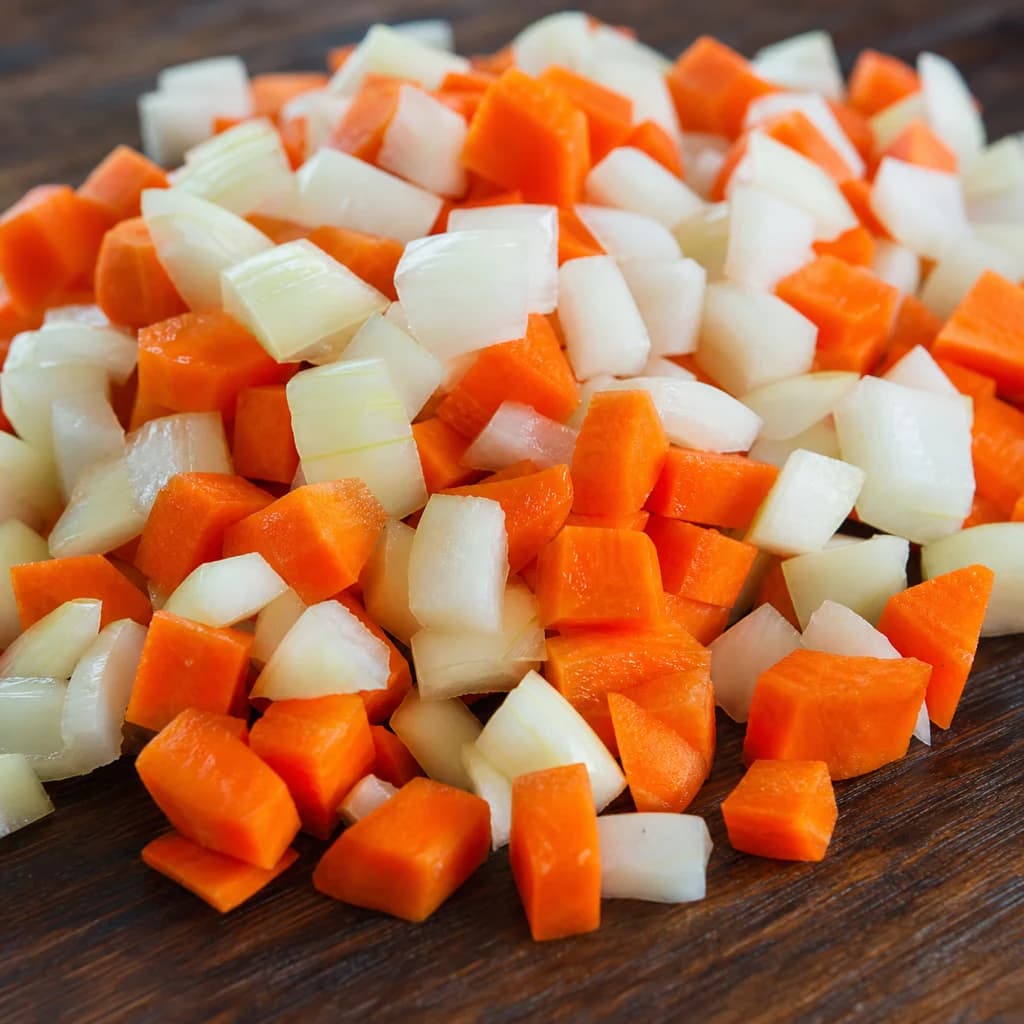
Natural form
Diced carrots and onions mixed together, ready to boil for hutspot mash.
Shows the raw convenience mix as sold — the defining form of this product — so readers immediately recognize what they are buying.
Produce
Carrot-Onion Mash Mix (Hutspot)
Dutch pre-cut carrot and onion mix for the classic hutspot mash.
Hutspotgroente is a Dutch convenience mix of diced carrot and onion sold ready to boil for hutspot, a traditional mash of carrots, onions, and potatoes. The vegetables are simmered until soft, then mashed together, often served with braised meat. The blend saves the chopping for this comforting winter dish.
Hutspot is the pre-cut carrot-and-onion mix at the heart of one of the Netherlands' most beloved comfort dishes. The name derives from the Dutch words for "pot" and "hot," referring to the vessel in which the vegetables are cooked alongside potatoes, then mashed together. While the finished dish carries the name, the commercial product sold as "hutspot" is specifically the vegetable base—diced carrots and onions, usually in equal proportion by weight. This pre-cut convenience reflects a centuries-old culinary tradition made accessible for the modern kitchen, without compromising the dish's cultural significance. The vegetables are cut to 1–2 cm pieces, a size that holds its shape during cooking rather than dissolving into mush, giving the final mash a rustic, textured character. In Dutch supermarkets, potatoes are almost always sold separately, allowing home cooks to select their preferred variety. The mix is most commonly available fresh in the produce section, though frozen steam-bag versions exist. October through March marks the traditional season, when Dutch cooks turn most often to this warming, economical dish. It is deeply woven into Dutch culinary identity, particularly associated with Leiden, where the Leiden coat of arms bears a cooking pot commemorating the legend of hutspot's discovery after the Spanish siege of 1573–1574.
- Measured in
- g
- Storage
- Fridge
Types & varieties
Carrots and onions only, sold in Dutch supermarkets for home preparation with potatoes
Some brands include pre-cut potatoes; reduces preparation time significantly but limits variety choice
May include parsley root (petroselinum) for additional earthy depth beneath the carrot sweetness
Regional versions add diced celery root, kale, or Savoy cabbage for heartier, more complex results
Belgian equivalent; similar carrot-onion base often with leeks or curly kale, prepared with butter rather than water
Hutspot versus Stamppot
These terms are often used interchangeably outside the Netherlands, but they describe distinct preparations. Hutspot refers specifically to the carrot-onion-potato mash originating from the Leiden legend—a particular dish with a defined composition. Stamppot is the broader Dutch category of mashed vegetable dishes, of which hutspot is one member. Other stamppot varieties include boerenkool stamppot (with curly kale), andijviestamppot (with endive), and zuurkoolstamppot (with sauerkraut). When purchasing the commercial mix, the name on the package matters: "Hutspot" means carrots and onions only; "Stamppot" mixes typically already contain the leafy green or other vegetable component.
- Hutspot = carrots + onions + potatoes (a specific dish)
- Stamppot = any mashed vegetable dish with potatoes (a category)
- Commercial "hutspot" mix = carrots and onions only, potatoes separate
- Commercial "stamppot" mix = often includes kale or other vegetable
Selecting and Storing the Mix
When purchasing pre-cut hutspot mix, the single most important check is whether the product is genuinely fresh-cut or frozen-then-thawed. This distinction determines cooking behavior and final texture. Frozen-then-thawed vegetables release excess moisture during cooking, leading to a waterlogged mash and muted carrot flavor. Fresh-cut pieces should feel firm and snap slightly when bent; thawed vegetables will be pliable and may show ice crystals or a wet, slick surface. Smell is another indicator—fresh mix smells clean and vegetal; thawed product may smell of stale water or show signs of fermentation at the edges. Store fresh mix in its original packaging for up to 3 days, pressing excess air out before closing. For longer storage, flash-freeze on a sheet pan in a single layer, then transfer to a freezer bag—label with the date. Frozen mix will keep 10–12 months before noticeable quality decline.
- Firm, snapping pieces indicate fresh-cut; pliable, wet surfaces indicate previous freezing
- Store fresh mix 2–3 days maximum; freeze for up to 12 months
- Avoid mixes with off smells or brown discoloration at edges
- Press air from original packaging before refrigerating
Common uses
Tips & pitfalls
- Plan 600–800 g of floury potatoes (Bintje, Agata, or similar) per 500 g of hutspot mix for correct proportions
- Choose floury potatoes that break down easily when boiled—waxy varieties (like Nicola) leave a gluey texture
- Sauté the onion-heavy portion first in butter before adding liquid; this builds the sweet foundation the dish depends on
- Do not over-mash: a rustic, slightly lumpy texture is traditional and desirable
- Add a bay leaf and a few peppercorns to the cooking water for subtle aromatic depth
- Common mistake: under-seasoning—the natural sweetness of cooked carrots requires generous salt and fresh nutmeg to balance
- When buying pre-cut, check for consistent dice size; uneven pieces lead to some carrots still firm while others are mushy
- Verify the mix is fresh-cut rather than frozen-then-thawed, as texture and flavor degrade noticeably
- Leftover hutspot can be formed into patties and pan-fried in butter until crispy—a traditional way to stretch leftovers
Nutrition
Energy
3607 kJ · per 100 g
Where the calories come from
Protein
0g
0% DV
Carbs
0g
0% DV
Fat
100g
128% DV
Fiber
0g
0% DV
Sugars
0g
of which
Sodium
0mg
0% DV
Source · USDA FoodData Central · approx. Vegetable oil, palm kernel
View on FDC →In the shops
Matched grocery products
No matched grocery products for Carrot-Onion Mash Mix (Hutspot) yet.
Good to know
- Origin
- Netherlands, with documented roots dating to at least the 16th century
- Regional Significance
- Particularly associated with Leiden; the city coat of arms features a cooking pot commemorating the Siege of Leiden (1573–1574)
- Typical Composition
- Pre-diced carrots and onions in a 1:1 ratio by weight
- Dice Size
- 1–2 cm cubes for carrots; onions cut slightly larger to account for shrinkage during cooking
- Peak Season
- Autumn through early spring (October–March)
- Shelf Life (fresh)
- 2–3 days refrigerated in original packaging
- Shelf Life (frozen)
- Up to 12 months if properly wrapped to prevent freezer burn
- Format
- Fresh pre-cut in produce section, or frozen steam bags; potatoes typically sold separately
Substitutes
- Fresh carrots and onions, diced — Home-diced 1–2 cm pieces replicate the commercial cut; use 2 medium carrots and 1 large onion per 250 g of commercial mix
- Frozen carrot and onion mix — Often sold as 'roasting vegetables' or 'soup mix'; acceptable but expect slightly softer texture after cooking
- Classic mirepoix — 2:1 onion-to-carrot ratio; more onion-forward, so add extra carrots to approximate hutspot balance
- Soffritto or Cajun trinity — Italian or Louisiana equivalents use celery as the third component; omit celery and adjust proportions
Also called
Hutspotgroente · Carrot-Onion Mash Mix · Hutspot Vegetables
Related
Tomato
Juicy, sun-sweet fruit for sauces, salads, and slow-cooked depth
Yellow Onion
The aromatic backbone of soups, sofritos, and braises
Garlic
Pungent cloves that perfume nearly every savory dish
Lemon
Bright, acidic citrus that wakes up almost any dish
Potato
Humble, hearty staple — roast, mash, fry, or boil
Carrot
Sweet, crunchy root — raw, roasted, or the base of a sofrito
Cucumber
Cool, crisp, and watery — for salads, pickles, and tzatziki

Lettuce
Crisp leaves for salads, wraps, and a fresh crunch