Stored
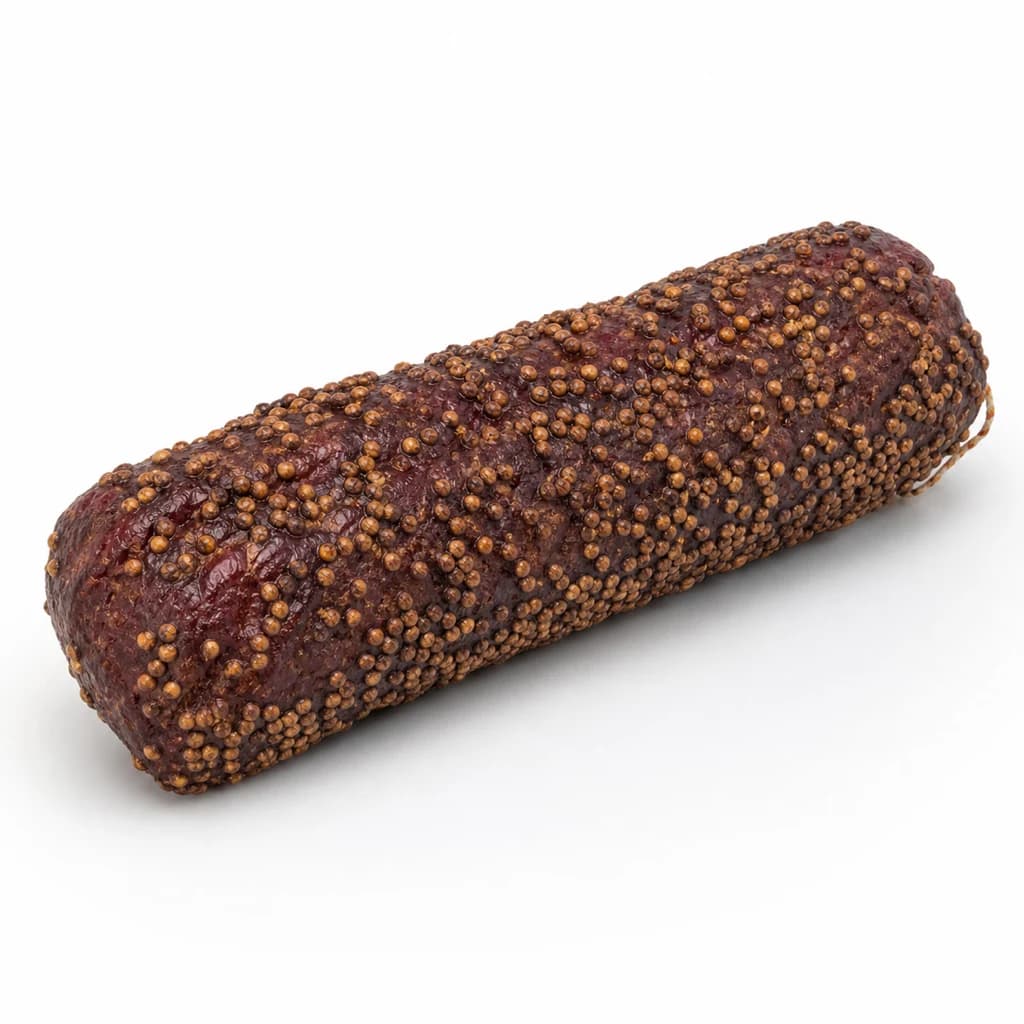
Whole lountza log: wine-cured pork loin coated in crushed coriander seed before slicing.
Shows the intact cured product so readers recognize lountza in its uncut, market-ready state.
Proteins
Lountza (Smoked Pork Loin)
Cypriot wine-marinated, coriander-spiced smoked pork loin, sliced and pan-fried or grilled.
Lountza is a Cypriot specialty of pork loin marinated in red wine, then dry-cured and lightly smoked, often rolled in crushed coriander seed. It is sliced and griddled or fried, frequently served with halloumi in a sandwich. The cure gives it a winey, aromatic flavor with a tender bite.
Lountza is Cyprus's most celebrated cured pork product—a lean pork loin that undergoes a dual transformation: wet-curing in local wine (traditionally Commandaria or Maratheftiko) followed by smoking over native pine, oak, or cypress wood. The result is a fully cooked, ready-to-use protein with a deep mahogany exterior, a rosy-pink interior, and a complex flavor profile where sweet wine notes, earthy coriander, and resonant wood smoke interweave. Unlike air-dried hams such as prosciutto or the paprika-laden Hungarian szalonna, lountza is cooked during processing and requires only brief reheating or browning to develop texture and aroma. The PDO designation Lountza Troodonia protects the mountain-region production around Troodos, where small producers cure loins for up to two weeks in wine baths spiked with crushed coriander seed and other spices, then smoke them slowly in traditional kilns using natural drafts. Industrial versions, made with liquid smoke and shortened cure times, sacrifice the coriander-forward complexity and the subtle sweetness that distinguishes the real product. In Cypriot cuisine, lountza is not an afterthought—it is a centerpiece of the meze spread, a protein that anchors sandwiches, and a quick-cooking main when sliced into medallions and seared.
- Measured in
- g
- Storage
- Fridge
Types & varieties
Mountain-region product with stricter production standards; longest cure times, strongest smoke, most complex spice profile
Tends toward sweeter wine cure; slightly milder smoke and a rounder, less assertively herbal character
Up to two-week cure in wine, natural smoking in traditional kilns; pronounced coriander and wine sweetness
Shorter cure, liquid smoke often used; blander flavor, less defined spice character
The Wine Cure: What Makes Lountza Distinctive
The wet-curing step in Cypriot wine is the defining characteristic that separates lountza from other European smoked pork loins. The acid and sugar in wine—particularly the honeyed Commandaria—penetrate the muscle fibers during the cure, imparting a subtle sweetness that persists through the smoking process. This is not incidental: the wine effectively predates the meat, beginning the flavor development before the smoke ever touches it. When sourcing lountza, note that industrial products often use wine concentrates or shortened cures, which produces a pale imitation. True lountza should smell of wine and smoke in equal measure when you unwrap it; if it smells primarily of smoke with little fruit or sweetness beneath, you are dealing with a lower-grade product.
- True lountza has a complex aroma: wine, smoke, and spice layered together, not smoke alone
- Industrial versions often use liquid smoke, which produces flat, one-dimensional flavor
- The wine cure contributes sweetness that balances the lean pork's mild flavor; this is absent in non-wine-cured smoked loins
Lountza in the Meze Spread
Understanding how lountza functions in Cypriot meze is essential for proper preparation and service. In the meze context, lountza is typically served either raw (thinly sliced, at room temperature) or barely seared—just kissed by heat to warm the exterior while keeping the interior soft. The lean character of pork loin means that aggressive cooking dries it quickly; restraint is the governing principle. When presenting lountza as part of a spread, allow sliced pieces to reach room temperature for 20 minutes before serving—this softens the texture and releases the aromatics. Do not overload the plate: unlike sausages or cured whole muscles, lountza is a refined component, not a filling protein. A few carefully arranged slices alongside olives, tahini, and fresh fruit convey more authenticity than an overloaded plate.
- Serve raw lountza at room temperature, never cold from the refrigerator, for best texture and aroma
- For seared presentations, 1–2 minutes per side over high heat is sufficient; rest 2 minutes before slicing
- In meze spreads, lountza is a supporting element alongside multiple small dishes, not a dominant centerpiece
Common uses
Tips & pitfalls
- Slice against the grain and thin (3–5mm) for meze use—this prevents the lean meat from feeling dry and fibrous
- When pan-frying, high heat and minimal time (1–2 minutes per side) is sufficient—overcooking dries it out and tightens the texture
- For grilling, a quick char over hot coals is ideal; rest 2 minutes before slicing to allow juices to redistribute
- If slicing raw for meze, bring to room temperature 20 minutes before serving to improve texture and aroma
- Look for firm texture, deep mahogany exterior, and a smoky-meaty aroma without sourness or ammonia notes—these indicate freshness
- To test freshness: press the surface—fresh lountza rebounds; older product feels tacky or sticky
- Avoid lountza with pale or uneven coloration in the interior, which suggests uneven cure or short smoking time
- Store unwrapped lountza in a sealed container with a paper towel to absorb excess moisture and prevent spoilage
Nutrition
Nutrition
No USDA FoodData Central match for Lountza (Smoked Pork Loin) yet. We surface a per-100 g profile once a generic whole-food entry is matched and verified.
In the shops
Matched grocery products
No matched grocery products for Lountza (Smoked Pork Loin) yet.
Good to know
- Origin
- Cyprus, Troodos mountain region; Protected Designation of Origin product (Lountza Troodonia)
- Primary Protein
- Pork loin—lean muscle, not shoulder or belly; under 5% fat typical
- Key Preparation
- Wet-cured in Cypriot wine (Commandaria or local red), rubbed with coriander seed, smoked over pine, oak, or cypress at temperatures that cook the meat through
- Etymology
- From Greek "louto" (to wash/cleanse), referencing the wine curing bath
- Form Sold
- Whole unsliced loins (300–600g); sliced to order or pre-packaged medallions
- Color
- Deep rose to dark red-brown exterior; pink to tan interior
- Precooked
- Yes—curing and smoking cook the loin through; requires only reheating or browning
- Shelf Life
- Refrigerated, tightly wrapped: 2–3 weeks; freeze for longer storage
Substitutes
- Smoked Pork Loin (German/European style) — Similar lean texture and smoke character; generally lacks the wine-cure sweetness and coriander spice profile
- Lomo Ibérico — Spanish cured pork loin with comparable texture; uses paprika and garlic rather than coriander and wine cure
- Coppa di Parma — Italian cured pork shoulder; thin-sliced applications are similar but product is air-cured, not smoked, and lacks wine influence
- Canadian Bacon — Wet-cured and smoked pork loin; acceptable substitute in fried applications but has notably different flavor profile without wine or coriander
Pairs with
Also called
Cypriot Smoked Pork Loin
Related

Egg
The kitchen's everything ingredient — bind, leaven, enrich, or fry
Chicken Breast
Lean, quick-cooking white meat for everyday dinners

Ground Beef
Versatile minced beef for burgers, ragù, tacos, and meatballs
Pork Loin
Lean, tender roasting cut that stays juicy with care
Salmon
Rich, rosy fish that roasts, grills, or cures beautifully

Egg White
Pure protein that whips to airy peaks for meringue and more

Egg Yolk
Rich, golden yolk for custards, mayonnaise, and pasta

Quail Egg
Tiny, speckled eggs for garnishing and elegant bites