Proteins
Maine (American) Lobster
Cold-water lobster with sweet claw and tail meat. Boil or steam whole for lobster rolls and bisque; reserve the shells for a rich stock.
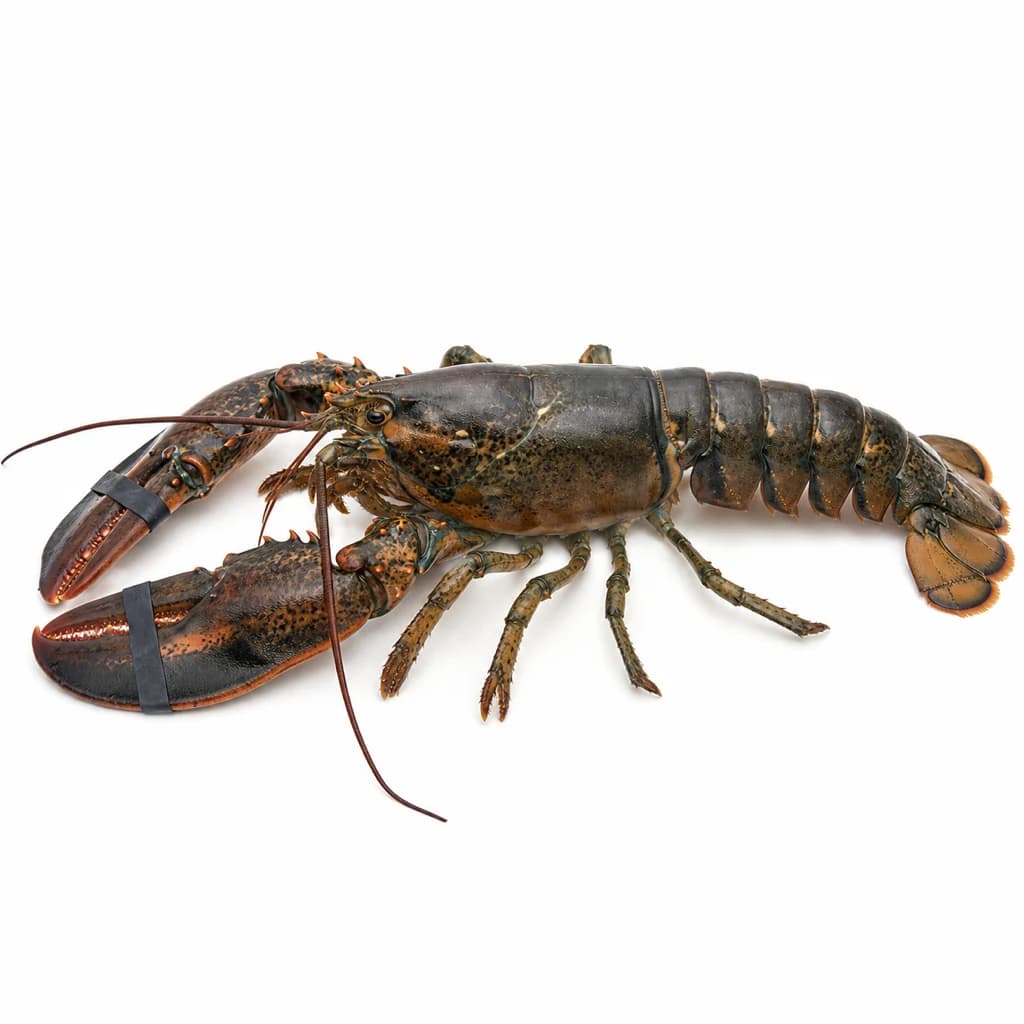
Maine lobster — Homarus americanus — is the cold-water clawed lobster of the North Atlantic, caught from Labrador south to Cape Hatteras and most heavily concentrated in the Gulf of Maine, the Bay of Fundy, and Atlantic Canada. Cold water is the key to its reputation: it slows the animal's metabolism, concentrating flavor and producing the firm, sweet flesh that distinguishes it from warm-water spiny lobsters. Two large front claws and a substantial tail give the cook two distinct textures — delicate, sweet knuckle and claw meat and a meatier, fuller-bodied tail — and both are exceptionally tender when handled correctly.
In the kitchen, lobster behaves like a delicate protein with a narrow margin for error. The muscle fibers seize within seconds of overcooking, turning tender flesh rubbery and making claw meat nearly impossible to extract cleanly. Live, active animals are essential; any lobster that has died before the pot will spoil quickly and should be discarded. Beyond the meat, two prized offal parts — the green tomalley (hepatopancreas) and the red coral (roe of a mature female) — are whisked into compound butters, sauces, and spreads for color and depth. The shells themselves are the foundation of the richly flavored stock that underwrites bisque, risotto, and chowder.
The fishery is among the most tightly regulated in the world, with size limits, v-notched breeding-female protection, escape vents on traps, and limited entry licensing; it was the first lobster fishery to earn Marine Stewardship Council certification, in 1999. Almost all market supply is wild-caught — commercial aquaculture remains experimental — and the classic market grades run from small "chickens" (about 1 lb) up to jumbo "selects" (over 2½ lb), with a 1¼–1½ lb lobster being the per-person sweet spot for a whole-lobster dinner.
- Measured in
- g
- Storage
- Refrigerate
Allergens
Find it in
Types & varieties
Fully calcified shell with more meat per pound and better shipping tolerance; slightly more mineral and less sweet than soft-shell, but the standard year-round market lobster.
Recently molted, paper-thin shell; noticeably sweeter and more tender, but yields about 20% less meat and bruises easily. Traditional summer lobster, best cooked the day of purchase.
Missing one or both claws; identical flavor at a lower price, ideal for picking, bisque, and pasta where the claw shape doesn't matter.
Carry green or red roe externally under the tail; the roe is a prized delicacy for compound butters and finishing sauces.
Lobsters missing one claw that compensate with an oversized crusher claw on the remaining side; market term for an unusually large, meaty single claw.
Hard-Shell vs. Soft-Shell
The hard- vs. soft-shell distinction is the single most important variable when buying and cooking Maine lobster, and it is purely about molt timing. A hard-shell has a fully calcified, rigid carapace packed with meat; it ships well, holds up to boiling, and yields more meat per pound. A soft-shell has just shed and is still growing into its new shell — the carapace is pliable, almost papery, and the meat has a higher water content, making it sweeter and more tender but lower yielding and easily bruised in transit.
Cook both the same way (live, in salted boiling water or a steamer), but expect roughly a 20% yield drop on soft-shells and a slightly shorter cook time. Soft-shells are at their peak from roughly June through August, when the sweet flavor and tender texture justify either the premium in some markets or the discount in others. For shipped or restaurant supply, hard-shells are the practical default.
- Hard-shells: more meat, better shipping, slightly less sweet, available year-round.
- Soft-shells: sweeter, more tender, ~20% less meat, bruise easily, June–August peak.
- Soft-shells cook slightly faster; check doneness by pulling an antenna — it should release cleanly when the meat is ready.
Working with Tomalley and Coral
The hepatopancreas (called tomalley when green, and the same organ packed with orange-red roe in a mature female) is the most flavorful offal in the crustacean world. Both are edible and prized, but they also concentrate any environmental toxins the lobster has been exposed to, so many guides recommend restraint during red-tide events. In a clean, healthy animal, they are a gift to the cook: whisked into warm butter, they color it sunset-orange and add a deep, savory richness that plain butter cannot reach.
- Strain tomalley through a fine sieve into warm compound butter for lobster toast, scrambled eggs, or a finishing sauce.
- Fold coral into softened butter with a squeeze of lemon and a pinch of cayenne for a classic lobster butter.
- Reserve a small spoon of coral to swirl into a finished bisque or beurre blanc just before serving — the color and flavor are the signature of a great lobster dish.
Building a Lobster Stock
Roasted shells are what separate a competent lobster dish from a great one. The shells hold much of the lobster's savor, and a quick roast in a hot oven drives off raw seafood notes and concentrates what remains. Build the stock on a classic French crustacean base: roasted shells sweated with mirepoix, deglazed with white wine, and simmered with tomato, thyme, bay, and peppercorns until deeply flavored.
- Split and roast shells at 400°F for 12–15 minutes until fragrant and lightly browned.
- Sweat with equal parts onion, carrot, and celery; add a splash of brandy or cognac and flame off.
- Cover with cold water, add a parmesan rind if you have one, and simmer 45–60 minutes; strain and reduce to taste.
- Freeze the stock in 1-cup portions — it is the backbone of bisque, risotto, chowder, and any sauce meant to taste of lobster.
Common uses
Tips & pitfalls
- Buy lobsters alive and active. A sluggish animal, or one with a tail that hangs limp and feels mushy when squeezed, has likely died and will spoil quickly — cook only vigorous, defensive animals.
- Cook live lobsters the same day you buy them. If you must hold them overnight, keep them cold (38–45°F), dark, and moist with damp newspaper or seaweed, belly-up so the tail curls naturally; never submerge in fresh water or seal them in plastic.
- Salt the cooking water generously — it should taste like seawater — to season the meat and discourage a watery, flat flavor. A handful of sea salt per gallon is a good starting point.
- Steam rather than boil when you want the cleanest, most concentrated claw flavor and the best presentation; boil when you are making a broth or cooking in batches. Add lobsters to already-vigorous water so they die quickly and don't cook in slowly warming liquid.
- Time lobsters precisely: about 8 minutes for 1 lb, 10–12 minutes for 1½ lb, scaling up roughly 3 minutes per additional pound. Overcooking is the single biggest mistake — meat turns rubbery and the claw muscles seize against the shell.
- Plunge cooked lobsters into an ice bath for 1–2 minutes after draining. This stops carryover cooking, firms the meat just enough for picking, and loosens it from the shell.
- Crack claws with the flat of a heavy chef's knife — a single firm whack along the knuckle joint separates the pieces intact. A nutcracker mangles the meat and drives shell fragments into it.
- Save every shell, knuckle, head, and any tomalley or coral. Roasted shells give bisque and sauce its backbone, and a small amount of coral or tomalley whisked into finished butter adds color and a savory roundness that plain butter cannot reach.
Nutrition
Nutrition
No USDA FoodData Central match for Maine (American) Lobster yet. We surface a per-100 g profile once a generic whole-food entry is matched and verified.
In the shops
Matched grocery products
 €4.29
€4.29Lobster Pearls
CATALIMENT · kg · Bonpreu
 €21.99
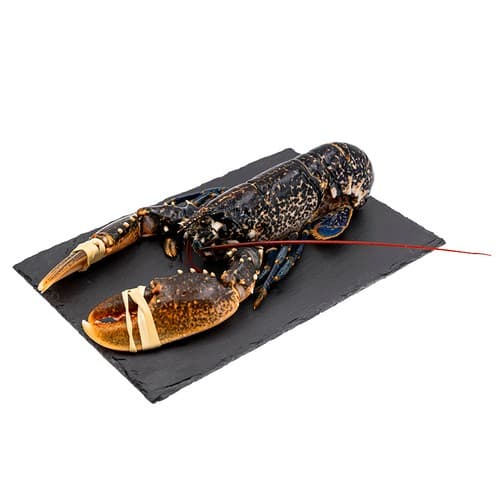
Blue Lobster (unit)
Bonpreu
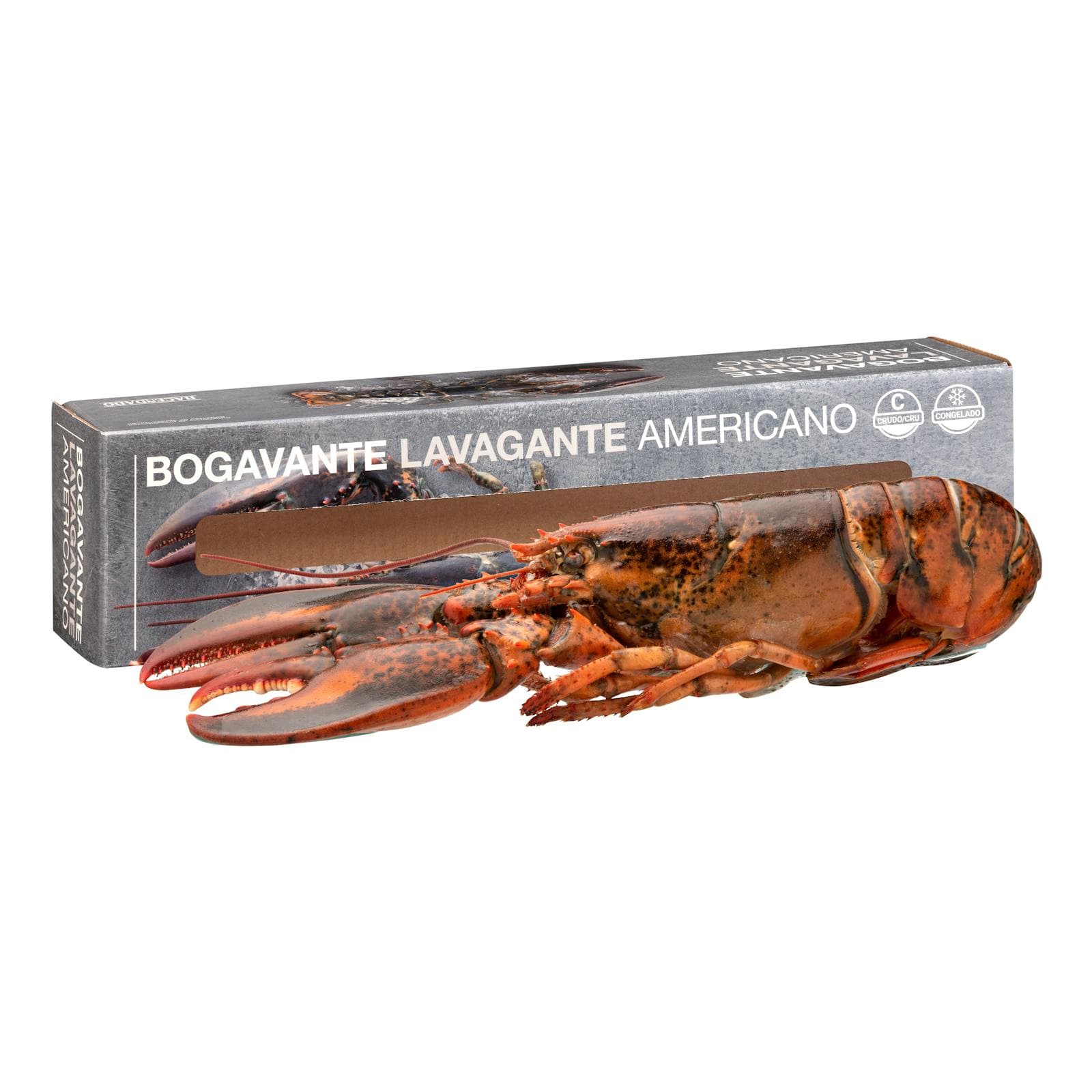 €14.85
Medium Raw American Lobster
Hacendado · kg · Mercadona
Good to know
- Scientific name
- Homarus americanus
- Habitat
- North Atlantic, from Labrador south to Cape Hatteras; concentrated in the Gulf of Maine and Atlantic Canada
- Water temperature
- Thrives in 45–55°F (7–13°C); cold water is what makes the meat sweet and firm
- Live color
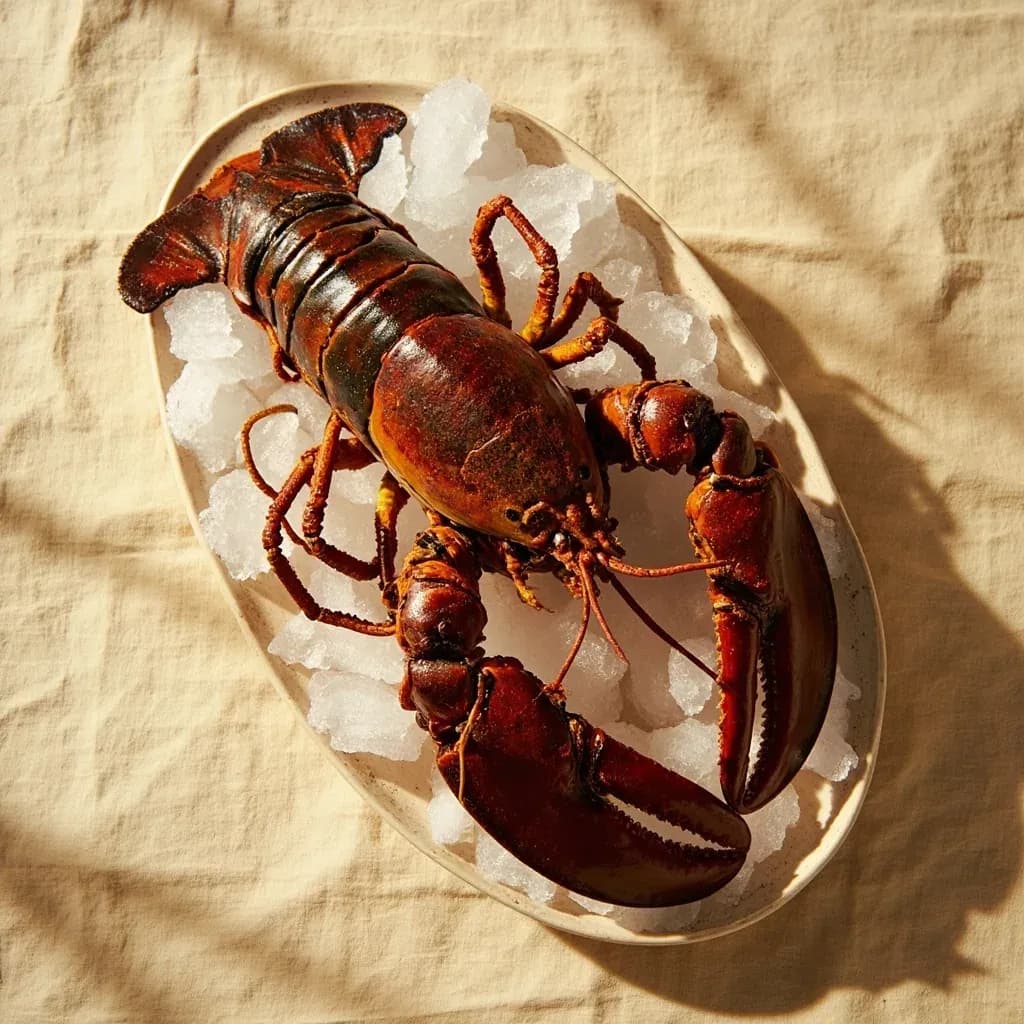
- Dark blue-green to brownish; turns bright red-orange when cooked
- Market sizes
- Chickens (~1 lb), quarters (~1¼ lb), halves (~1½ lb), deuces (~2 lb), selects (2½+ lb)
- Yield
- About 20–25% edible meat by weight; a 1½ lb lobster yields roughly ¼–⅓ lb meat
- Cooking time (boil, 1¼–1½ lb)
- 8–10 minutes from a rolling boil
- Legal minimum
- 3¼ inches carapace length in Maine; sublegal lobsters must be released
- Storage (live)
- 38–45°F, damp newspaper or seaweed, belly-up; never in fresh water or sealed plastic
- MSC certification
- First lobster fishery certified sustainable by the Marine Stewardship Council, 1999
Substitutes
- Spiny (rock) lobster — Tail-only, no claws; firmer texture and slightly sweeter flavor. Works well grilled or in tails, but lacks the sweet claw meat that defines a lobster roll or a traditional bisque.
- Langoustines (Nephrops norvegicus) — European clawed crustacean with a similar sweet, delicate flavor; excellent in bisque and pasta but much smaller and lower yielding.
- Crayfish — Closest flavor and texture profile in miniature; ideal for étouffée, salads, and bisques when budget or availability rules out lobster.
- Large shell-on shrimp — Stand-in for pasta and bisque; roast the shells to make a quick stock that approximates the depth of lobster shell stock.
- Dried porcini and cremini mushrooms — For vegetarian bisque, rehydrated porcini liquid and roasted cremini give an earthy, umami-rich body that approximates the savory depth of lobster stock.
Pairs with
Also called
American lobster · Atlantic lobster · true lobster · homard