Produce
Stink Bean (Petai)
Bright green, pungent Southeast Asian bean stir-fried with sambal and shrimp.
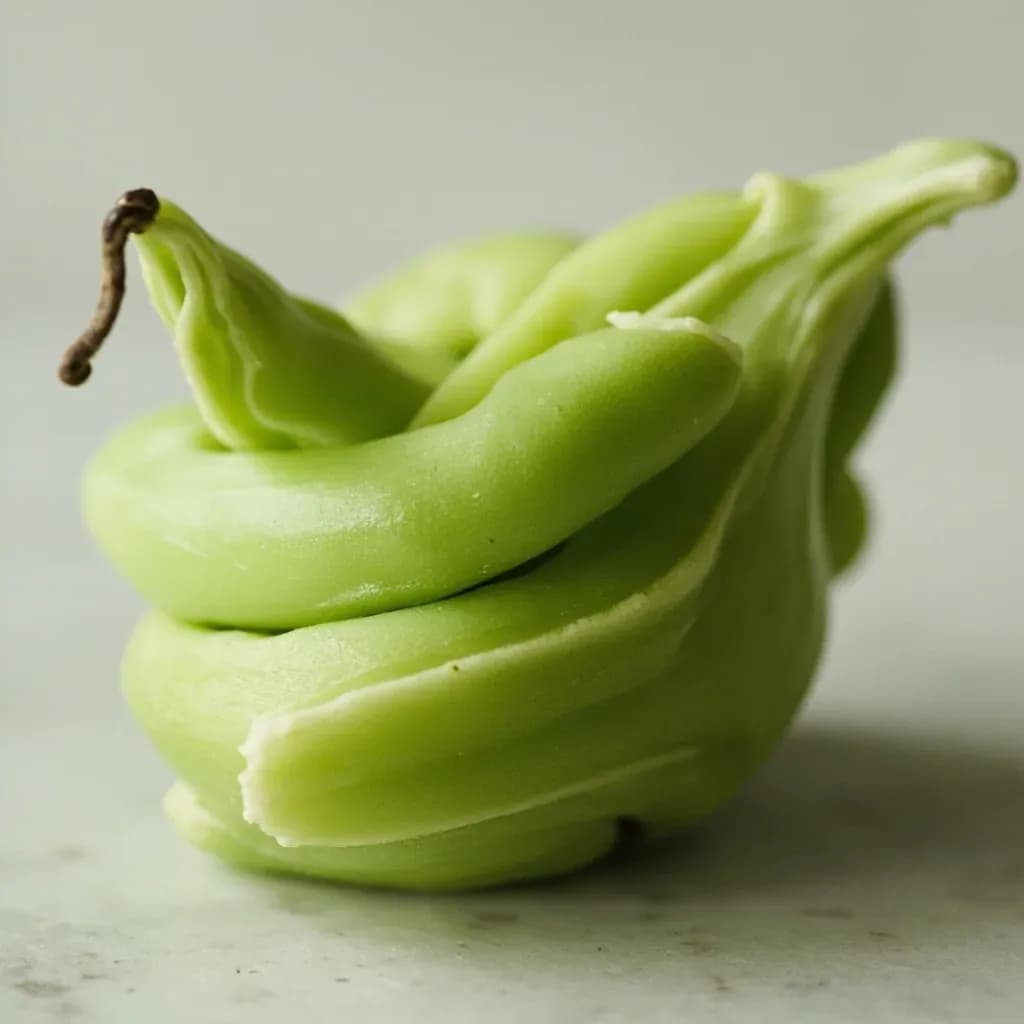
Petai, or stink bean, is a bright green legume from a long twisted pod, eaten across Southeast Asia and known for its powerful smell and bitter, garlicky flavor. The beans are stir-fried with sambal, shrimp, and chili, added to curries, or eaten raw with chili dip. The aroma lingers strongly, much like asparagus, which is part of its appeal.
Petai (Parkia speciosa), known throughout Southeast Asia by names including sataw in Thailand and kupang in the Philippines, is a flat, pale-green legume pod that grows on tall trees of the Fabaceae family. Inside each 20–30 cm pod, 8–12 dark-green to black seeds sit in a single file row. The beans are the ingredient; the fibrous pod is inedible. What makes petai distinctive — and polarizing — is its pungent, sulfurous aroma, which comes from the same family of compounds (cysteine sulfoxides) responsible for garlic's bite and durian's notorious smell. That raw aroma is pronounced when pods are split, but it softens dramatically once the beans hit a hot wok or boiling liquid. To cooks across Malaysia, Indonesia, Thailand, and the Philippines, that smell is not a flaw; it is the point. Petai's assertive, slightly bitter flavor holds its own against bold sambals, coconut milk, and braised proteins, and it brings a firm, almost creamy texture when cooked correctly.
The bean is available year-round, with peak harvests during rainy seasons in Peninsular Malaysia, Sumatra, Java, and southern Thailand. At Asian markets, you will find petai sold in bundles of whole pods or already shelled into small, bite-sized segments. Whole pods keep 2–3 days refrigerated in a paper bag; shelled beans oxidize fast and should reach the wok within 30 minutes or be submerged in acidulated water (a squeeze of lime in cold water) until cooking. For longer storage, blanch shelled beans for one minute, cool in ice water, and freeze flat in airtight bags — they hold well for up to three months and can go straight from frozen into a stir-fry.
Petai appears across a wide sweep of regional cuisines: in Malaysian sambal belacan stir-fries with prawns, in Thai kaeng sataw curries with coconut milk and squid, in Indonesian gulai preparations with fish and tamarind, in Filipino Visayan dishes, and in fresh Thai salads where barely blanched beans contribute crunch and bite alongside lime and chilies. Its versatility within these cuisines — from a high-heat 2-minute wok toss to a slow simmer in coconut braise — makes it one of Southeast Asia's most interesting market ingredients.
- Measured in
- g
- Storage
- Fridge
Types & varieties
Harvested immature; lighter color, more tender texture, milder flavor. Preferred for quick stir-fries and salads.
Fully developed; darker beans, more intense pungency and bitterness. Better suited to long-simmered curries and braises where depth of flavor matters.
Foraged from forest trees; reportedly larger and more aromatic than cultivated varieties. Seasonal and regionally specific.
Thai name, may refer to Parkia speciosa or the related Parkia javanica. Standard variety in Thai markets; used in curries and stir-fries throughout southern Thailand.
Buying and selecting petai
Look for pods with bright, uniform pale-green skin. Avoid pods that are yellowing, wilted, or excessively dry — these indicate age, and the beans inside will be tough and less flavorful. When you press gently on a fresh pod, you should feel the individual beans giving slight resistance through the skin. If buying pre-shelled beans, choose those with a vivid dark-green color; brown or dull beans are past their best. For Thai preparations calling for sataw, buy fresh product the same day you cook it — canned sataw, while serviceable in a pinch, sacrifices the tender-crisp texture that defines good petai.
- Choose firm, bright-green pods; reject yellowing or dry-looking ones
- Pre-shelled beans should be vivid dark green, not brown or dull
- For Thai dishes, buy fresh sataw the day of cooking; canned lacks texture
- In Malaysian and Indonesian markets, arrive early for the best selection
Oxidation and timing
Once shelled, petai beans begin to oxidize within minutes, turning from vivid green to olive or brownish. This is not dangerous, but it dulls the color and compromises texture. Work quickly: have your wok or pot hot and your aromatics prepped before you split the pods. If you must delay cooking, submerge shelled beans in cold acidulated water (plain water with a generous squeeze of lime juice) for up to an hour. This buys time without ruining quality, though freshly shelled beans cooked immediately will always produce the best result.
- Shell beans only when everything else is ready to cook
- Delay? Submerge in acidulated water (water + lime juice) for up to 1 hour
- Frozen blanched beans skip the oxidation problem entirely
Common uses
Tips & pitfalls
- Split pods just before cooking — not an hour ahead. Exposure to air accelerates both pungency loss and color fading.
- Do not overcook. Petai should retain a slight firmness and vibrant green. Soggy, mushy petai is the single most common preparation mistake. A minute or two in a hot wok is usually enough for fresh beans.
- The strong raw smell is normal and expected. The sulfur compounds (cysteine sulfoxides) that cause it are the same family found in garlic. The aroma dissipates considerably during cooking — trust the process.
- Store whole pods in a single layer in paper bags inside the refrigerator crisper. Paper absorbs excess moisture that would otherwise speed spoilage. Plastic bags trap humidity and cause the pods to rot.
- For the freezer: blanch shelled beans 1 minute in boiling salted water, transfer immediately to an ice bath, drain, and freeze flat in airtight bags. Frozen petai goes straight from bag to wok with no thawing needed.
- Never discard the beans and eat the pod. The pod is fibrous and inedible; the beans are the ingredient. This sounds obvious, but it is a genuine confusion for first-time buyers who do not realize the pod resembles a green bean but is not one.
- If you are sensitive to sulfur compounds or cooking for guests who may be put off by the aroma, blanch fresh beans in lightly salted boiling water with a pinch of baking soda for 1–2 minutes before stir-frying. This reduces odor noticeably without destroying texture.
- Pair petai with strongly flavored ingredients — bold proteins, fermented shrimp paste, chilies, coconut milk. Its assertiveness needs partners that can match it. Milder supporting actors will get overwhelmed.
Nutrition
Energy
130 kJ · per 100 g
Where the calories come from
Protein
1.8g
4% DV
Carbs
7.1g
3% DV
Fat
0.1g
0% DV
Fiber
3.4g
12% DV
Sugars
3.3g
of which
Sodium
6mg
0% DV
Source · USDA FoodData Central · approx. Beans, snap, yellow, raw
View on FDC →In the shops
Matched grocery products
No matched grocery products for Stink Bean (Petai) yet.
Good to know
- Scientific name
- Parkia speciosa
- Family
- Fabaceae (Leguminosae)
- Origin
- Southeast Asia — Malaysia, Indonesia, Thailand, Philippines, Myanmar
- Season
- Year-round; peak during rainy periods by region
- Flavor profile
- Pungent, slightly bitter, sulfurous and garlicky when raw; aroma and bitterness soften markedly with cooking
- Form
- Long flat pods (20–30 cm) containing 8–12 seeds in a single row; pods inedible, beans are the ingredient
- Yield
- Approx. 150–180 g shelled beans per 250 g whole pod
- Shelf life
- 2–3 days refrigerated in paper bag; 3 months frozen blanched
- Difficulty
- Easy — minimal prep, 2–4 minutes cook time for fresh beans
Substitutes
- Green beans — Closest textural substitute. To approximate petai's flavor, add minced garlic and a pinch of dried shrimp paste to the cooking fat before adding the beans.
- Fava beans — Similar flat shape and firm texture when cooked. Use in equal proportion. Lacks petai's pungency but works as a structural substitute in stir-fries.
- Winged beans (kacang botor) — Firm bite and mild flavor make this acceptable in Malaysian-style stir-fries. Not a flavor match, but close enough in texture for quick-cooked preparations.
- Lima beans — Substitute only in slow-cooked soups and stews where extended cooking softens them. Unsuitable for quick stir-frying where petai's firm texture is essential.
Pairs with
Also called
Stink Bean · Sator · Bitter Bean · Parkia
Related
Tomato
Juicy, sun-sweet fruit for sauces, salads, and slow-cooked depth
Yellow Onion
The aromatic backbone of soups, sofritos, and braises
Garlic
Pungent cloves that perfume nearly every savory dish
Lemon
Bright, acidic citrus that wakes up almost any dish
Potato
Humble, hearty staple — roast, mash, fry, or boil
Carrot
Sweet, crunchy root — raw, roasted, or the base of a sofrito
Cucumber
Cool, crisp, and watery — for salads, pickles, and tzatziki

Lettuce
Crisp leaves for salads, wraps, and a fresh crunch