Proteins
Pig Feet
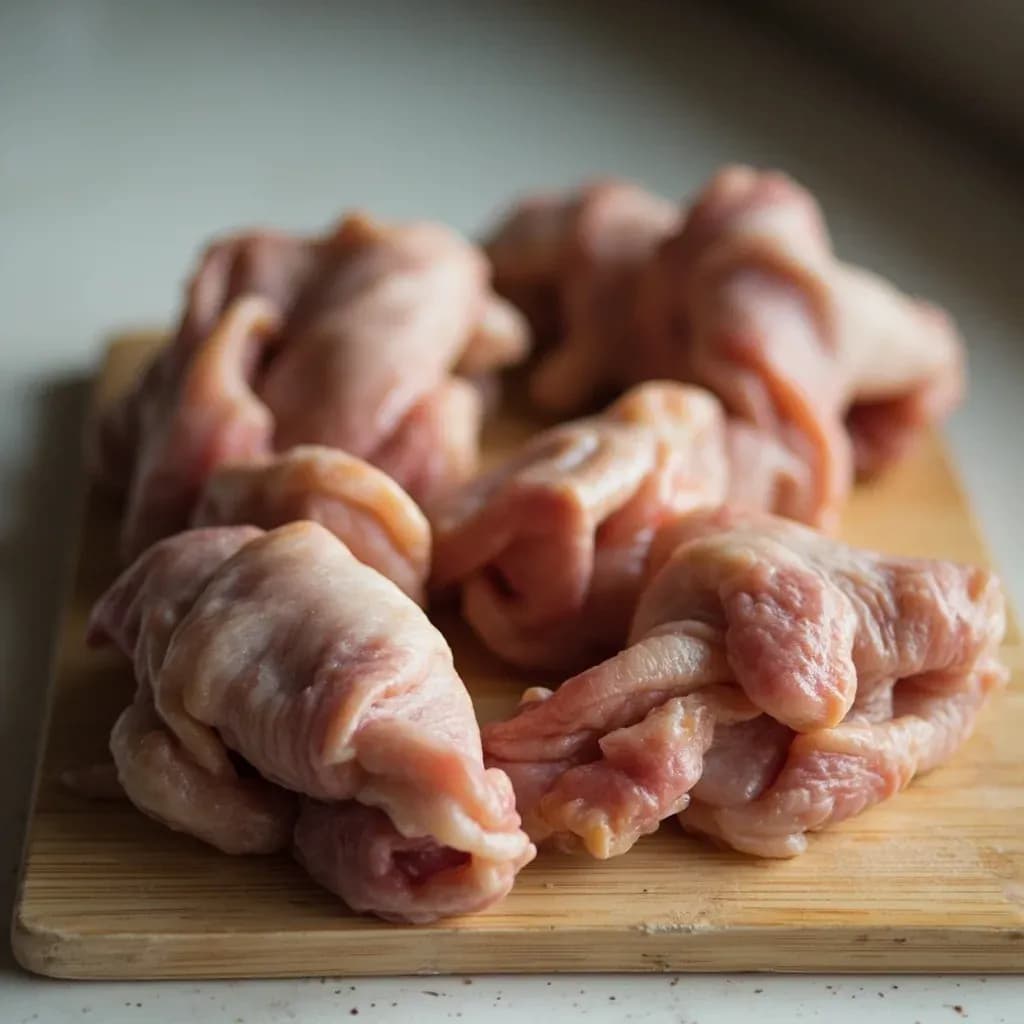
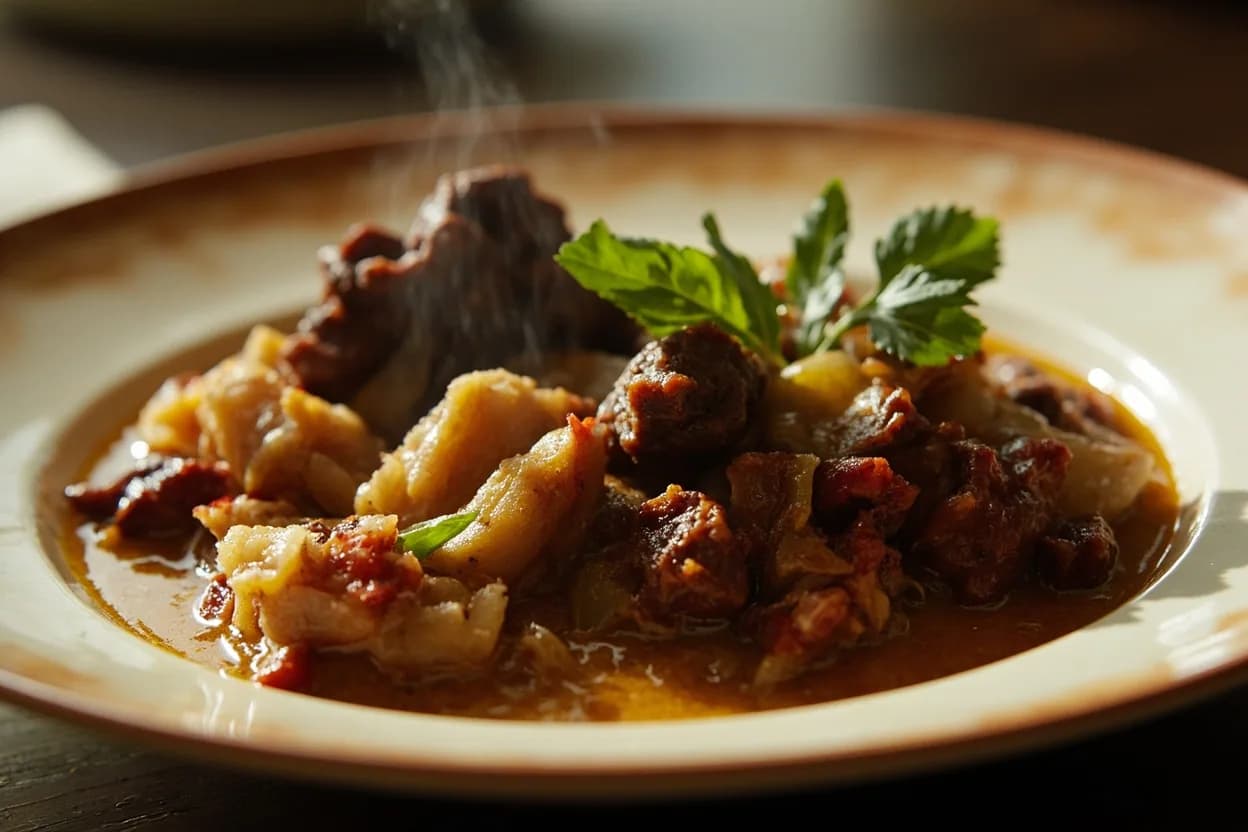
Gelatin-rich pig trotters, slow-cooked, braised, or pickled for rich texture.
Pig feet, or trotters, are the lower leg and foot of the pig, full of skin, cartilage, and connective tissue. Slow braising, stewing, or boiling renders them rich and gelatinous, lending body to soups and stocks; they are also pickled or crisped. They are a thrifty, collagen-heavy ingredient prized across Chinese, Korean, Southern US, and Caribbean cooking.
Pig's feet (also called trotters, and 'knuckles' in the UK) are the lower limbs of the pig, sold whole or split lengthwise into front and hind feet. They contain very little muscle meat but an extraordinary concentration of skin, tendons, cartilage, and bone, all of which are dense in collagen. When simmered gently, that collagen converts to gelatin and gives braises, stocks, and sauces a silky body, glossy mouthfeel, and the kind of unctuous richness that no amount of butter or cream can imitate. This is why a single trotter is often added to a pot of stock or braise that otherwise has little to bind it.
Beyond their role as a thickener, pig's feet are eaten as the star of the dish in many cuisines — from Italian piedino and zampone to Filipino pata, Korean jokbal, Spanish callos, and Southern-style pickled feet. Their flavor is mild and pork-forward, with a slightly mineral, almost-sweet undertone from the bones; most of the character comes from the cooking method (vinegar, soy, wine, chiles, smoke) and the condiments served alongside. Even when the goal is simply to extract their gelatin for someone else's benefit, they reward the cook with deep, savory base notes that read as 'real bone stock' on the plate.
- Measured in
- g
- Storage
- Fridge
Types & varieties
Smaller, more tender skin and a bit more meat; the traditional choice when the foot itself is the centerpiece (zampone, piedino, pata tim, jokbal).
Larger, with thicker skin and a meaty ankle joint. Often used for stocks, brawn/head cheese, and for whole roasted preparations.
Pre-cut down the middle by the butcher. Exposes bone marrow and tendon, speeds gelatin extraction, and is the form most recipes assume.
Sold intact with the hoof on (the hoof is usually singed off or scalded). Best when you want to keep a tidy shape for plating.
Already cooked and preserved in a spiced vinegar brine, eaten cold as a snack or with crackers. Common in the American South, the Caribbean, and parts of the American Midwest.
Hot- or cold-smoked after an initial cook; show up in Southern U.S. bean pots and on some pit-smoked barbecue boards, where the smoke carries through bean broths nicely.
Commercially available skinless or hairless 'dressed' feet, usually frozen. Convenient and skip the singeing step but lose a layer of skin flavor.
Why a cook keeps pig's feet in the freezer
Pig's feet are the single cheapest source of culinary gelatin you can buy at most Western butchers. A kilogram of trotters costs less than a packet of powdered gelatin, and the body and flavor they add to a stock, braise, or terrine is in a different league — gelatin extracted from bone carries the savory, slightly sweet notes of cooked pork and marrow that commercial gelatin has lost. Adding one split trotter to an otherwise lean chicken stock will set it in the fridge and give it a round, fatty mouthfeel without a drop of cream. A couple of feet in a pot of beans turns them into something that eats like a long braise. The foot is essentially a flavor-and-body delivery system disguised as offal.
Buying and prepping
Most feet at retail are already scalded and de-haired, but a quick pass over a gas flame or under a hot grill element removes any stubble the butcher missed and crisps the skin so it peels clean. Split them yourself with a heavy cleaver through the ankle joint if your butcher hasn't already; the cut surfaces release gelatin far faster than the intact skin does. After singeing, soak in cold water for 30–60 minutes to draw out any residual blood, then scrub with a brush.
- Singed hair is best removed with a gas flame, a kitchen blowtorch, or by plunging into just-boiled water and scraping with a knife.
- Trim the hooves at the joint or leave them on; most restaurants leave them on as a visual cue and remove before serving.
- A quick cold-water soak (with a splash of vinegar) leaches out blood and clarifies the eventual stock.
- Always split when the goal is maximum gelatin in the shortest time; keep whole for plated presentations.
Cooking methods at a glance
- Long simmer (4–8 h) for clear, jellied pork stock — the foundation for consommé, aspics, and demi-glace substitutes.
- Braise in aromatic liquid (wine, vinegar, soy, tomato) for 2–3 h for feet that are meant to be eaten as the main event.
- Pressure-cook at high pressure for 60–90 minutes when time is short; the gel strength is comparable to a long simmer.
- Deep-fry after a long simmer or steam to render the skin puffy and crisp (the starting point for Filipino crispy pata and similar dishes).
- Cook feet until tender first (2–3 hours simmering), then pour a hot spiced vinegar brine over them and chill for several days; this is the classic pickled preparation.
Common uses
Tips & pitfalls
- Skim, don't boil. A hard boil emulsifies fat into the liquid and turns a clear stock cloudy. Hold the pot at the barest tremor on the surface.
- Cold start, hot finish. Drop feet into cold water and bring up slowly so proteins coagulate into a scum you can lift off — this is the difference between a clear consommé-style stock and a muddy one.
- Browning first is worth it. Roast split feet at 220 °C/425 °F until the skin and marrow darken, then deglaze the pan and add to the stock pot. You gain Maillard depth that a plain simmer can't deliver.
- Save the liquid even when the foot isn't the star. The pot liquor from a braise of jokbal, pata, or piedino will set like aspic in the fridge; stir it back into rice, noodles, or a pan sauce.
- Common mistake: under-salting the cooking liquid. Because feet are mostly skin and bone, underseasoned stock from them tastes flat. Salt lightly from the start and adjust at the end.
- Common mistake: overcooking feet you intend to serve. Past the point where the skin yields easily to a spoon (usually 3–4 h on the bone), it turns gluey and the meat disintegrates. Test by feel, not by clock.
- Common mistake: skipping the tooth test on the skin. Properly cooked trotter skin should be tender enough to bite through with no resistance. If it bounces back, keep going.
- Common mistake: tossing the marrow. The central bones hold a surprising amount of soft, rich marrow. Push it out of the split bones at the end of cooking and stir it into the braise or spread it on toast.
Nutrition
Nutrition
No USDA FoodData Central match for Pig Feet yet. We surface a per-100 g profile once a generic whole-food entry is matched and verified.
In the shops
Matched grocery products
No matched grocery products for Pig Feet yet.
Good to know
- Also known as
- Pig's trotters, trotters, knuckles (UK), jokbal (Korean), pata (Filipino), piedini (Italian), zampone (Italian, stuffed), patas/patitas de cerdo (Spanish/Latin American), Schweinsfüße (German), pieds de porc (French)
- Composition
- Mostly skin, tendon, cartilage, and bone, with small amounts of muscle. The skin and connective tissue together make up the majority of the edible weight, and that is where the gelatin comes from.
- Typical weight
- Each foot weighs about 250–450 g (roughly ½–1 lb); a single split trotter will set about 1–1.5 L of stock to a soft, trembling gel when cold.
- Gelatin yield
- A slow 4–6 hour simmer extracts enough collagen to set a cooled stock to a firm jelly; feet are one of the most concentrated common sources of culinary gelatin.
- Front vs. hind
- Front feet (forefeet, 'knuckles' in the UK) are smaller, meatier, and have finer skin; hind feet are larger with more tendon and a meatier ankle joint. Both work interchangeably for stocks; the front feet are preferred when the meat will be served.
- Collagen → gelatin
- Begins converting meaningfully above 70 °C/160 °F; a bare simmer (around 85–90 °C/185–195 °F) maximizes extraction while keeping the liquid clear.
- How sold
- Whole un-split, split lengthwise (cleft), or already cooked and pickled in vinegar brine; frozen is common and the quality is essentially identical to fresh.
- Shelf life
- Refrigerate raw feet 1–2 days, or freeze up to 3 months; pickled feet keep for weeks in their brine once opened.
Substitutes
- Pork neck bones — The closest everyday substitute for adding body to a braise or stock; leaner on gelatin so use roughly 1.5× the weight.
- Oxtail — Beefy, rich, and extremely gelatinous; use sparingly as it will dominate the flavor of a pork dish.
- Pork skin (rind) — Pure skin, no bone flavor; excellent for thickening bean stews or vegan-leaning stocks when you want body without meat.
- Chicken feet — Standard in Asian stocks; release gelatin quickly and have a neutral flavor that suits Cantonese, Vietnamese, and Thai broths.
- Veal shank or beef shank — Heavy collagen and marrow; substitute in long, dark braises, not in delicate stocks where the flavor would be too strong.
- Pig's ears — Pure cartilage and skin; add to stocks for extra set, or pickle and serve as a snack. Combine with another cut rather than use alone.
Pairs with
Also called
Pig Trotters · Trotters · Salted Pigtail
Appears in these dishes
Related
Egg
The kitchen's everything ingredient — bind, leaven, enrich, or fry
Chicken Breast
Lean, quick-cooking white meat for everyday dinners

Ground Beef
Versatile minced beef for burgers, ragù, tacos, and meatballs
Pork Loin
Lean, tender roasting cut that stays juicy with care
Salmon
Rich, rosy fish that roasts, grills, or cures beautifully

Egg White
Pure protein that whips to airy peaks for meringue and more

Egg Yolk
Rich, golden yolk for custards, mayonnaise, and pasta

Quail Egg
Tiny, speckled eggs for garnishing and elegant bites