 Japanese
Medium · Hot
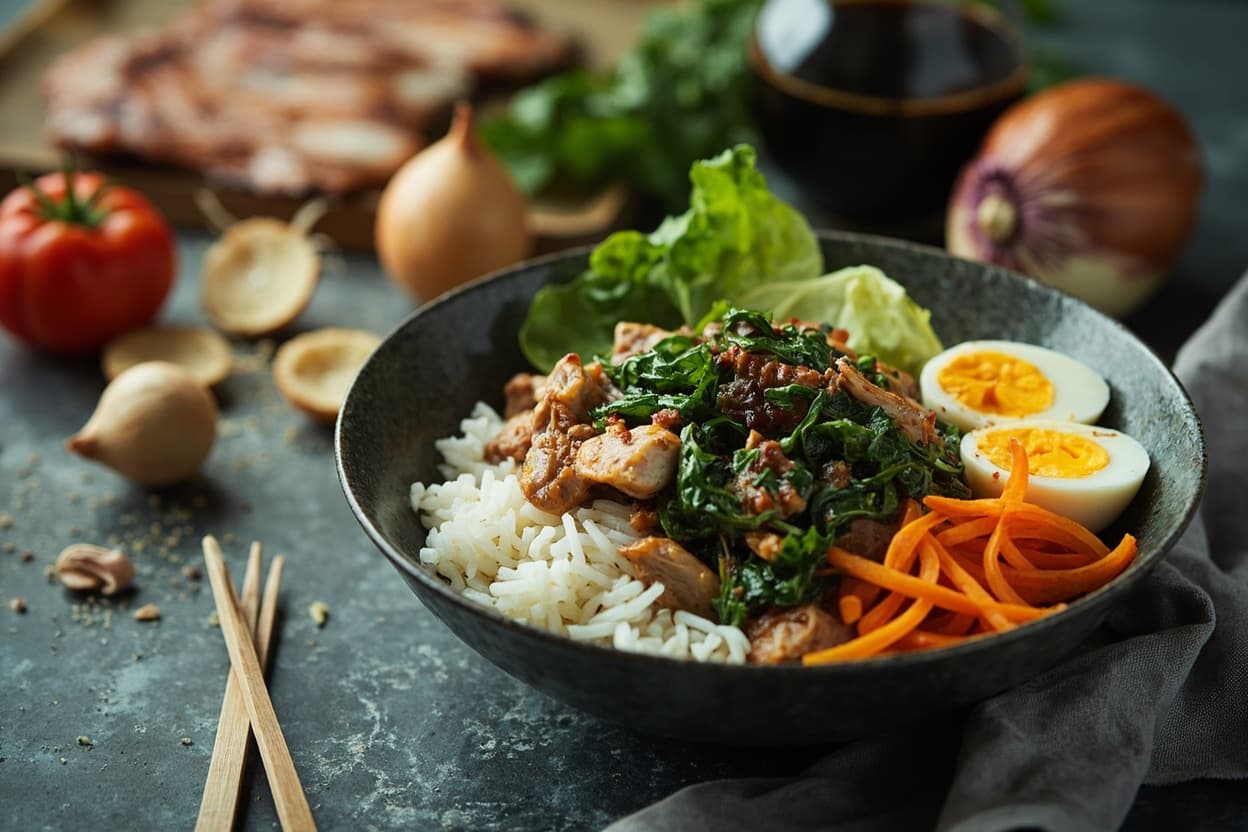
Chicken and Egg Donburi with Spinach
Chicken breast simmered in a soy-seasoned broth until just cooked, then egg is poured over and left to set loosely before the whole mixture slides onto white rice. Spinach wilts in the residual heat. The egg should still tremble slightly at the center when you serve it.

Prep
10 min
Cook
25 min
Total
35 min
Method
Prepare the Foundations
1
Rinse the white rice until water runs clear, then cook in a rice cooker with an equal measure of water. Set aside and keep warm.
Build the Sauce
Cook the Chicken and Onion
4
Slice chicken thigh into 2cm pieces. Halve and thinly slice the yellow onion.
5
Grade pending
Nutri-Score
Estimated nutrition
Grade pending · 100% ingredient coverage
Calories
858
per serving
High in protein · 50gLow saturated fat · 5g
Protein
50g
Carbs
112g
Fat
22g
Sat. fat
5g
Fiber
3g
Sodium
707mg
Dairy FreeNut FreeHigh ProteinBalanced MealLean Muscle
Nutri-Score is a general nutritional-balance guide, not medical or dietary advice.
D
Environmental impact
High impact
A–E · lower is better · includes estimates
kg CO2e
2.0
per serving
DCarbonAEU all-round· carbon sets the grade
Water
1.9m³
Runoff
0.2g P
Chicken Thigh drives 62% of this recipe’s estimated footprint.
Carbon from Poore & Nemecek 2018; water, land & runoff from Agribalyse — modelled averages for comparing recipes, not a measurement of your groceries.
Flavor Profile
8
Umami
4
Sweet
6
Salty
2
Sour
1
Bitter
0
Spicy
Textures
TenderSilkySoft
Aromas
SavorySesameGingerHerbal
Kitchen Equipment
Safety & Storage
Cooking Temperature
Cook chicken thigh pieces to an internal temperature of 165°F (74°C) to eliminate harmful bacteria. Verify with a calibrated food thermometer inserted into the thickest part of the largest piece.
Eggs in this dish are intentionally cooked to a soft, slightly runny consistency. If serving to high-risk individuals (elderly, pregnant, immunocompromised, or young children), cook eggs thoroughly until firm with no liquid remaining, reaching 160°F (71°C).
Cross Contamination
Prevent cross-contamination by using separate cutting boards for raw chicken and vegetables. Wash all utensils, surfaces, and hands with hot soapy water after handling raw poultry.
High Risk Population
This dish contains undercooked eggs by design. Pregnant individuals, young children, elderly, and immunocompromised persons should request fully cooked eggs or avoid this dish.
Storage
Refrigerate leftover donburi within 2 hours of cooking. Store in airtight containers and consume within 3-4 days. Reheat thoroughly to 165°F (74°C) before eating.
Handling
Do not leave cooked rice at room temperature for more than 2 hours. Keep rice hot above 140°F (60°C) or cool rapidly and refrigerate. Rice is a common source of Bacillus cereus bacteria if improperly handled.
Allergen Warning
This dish contains multiple allergens: eggs, soy, sesame, and gluten. Verify all ingredients and condiments are allergen-free before serving to individuals with food allergies or intolerances.
Pro Tips
Technique
When you pour the beaten eggs over the chicken, resist the urge to stir. Instead, cover the pan and let the eggs steam gently for about 45 seconds so they set into a soft, custardy layer that envelops the meat without becoming rubbery.
Substitution
If mirin is out of reach, a blend of honey with a splash of rice vinegar closely mimics its sweet acidity; use roughly 2 tbsp honey plus ½ tsp vinegar to replace the mirin in the sauce.
From the chef
When the first cool breezes of early autumn brush the market stalls, I reach for tender chicken thigh and silky eggs to drape over steamed rice. This gentle donburi, brightened with blanched spinach and a whisper of sesame, captures the season's quiet abundance and the balanced harmony that defines washoku.
TagsJapanese CuisineDonburiChickenEggSpinachOne BowlSesameUmami
AllergensEggsSoySesameGluten
Source: generated · May 30, 2026