 Chinese
Medium · Hot
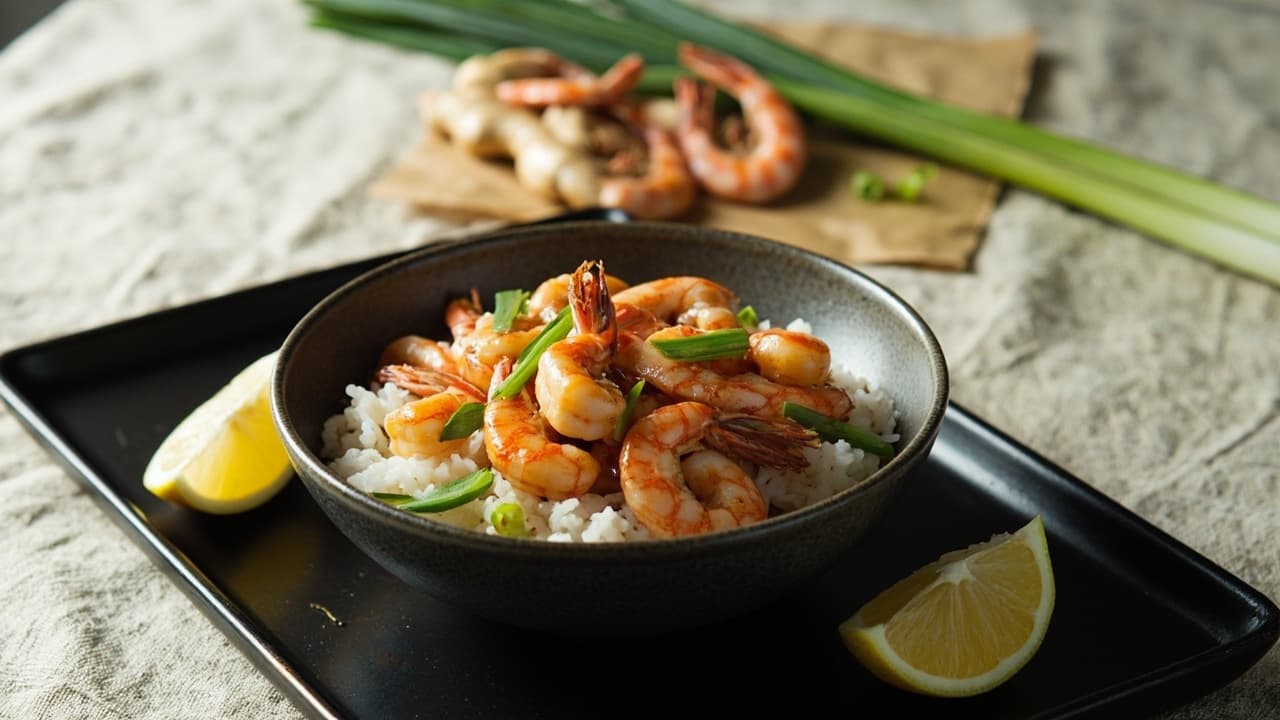
Ginger Shrimp with Scallion
Quick-cooked shrimp glazed in a savory-sweet sauce with aromatic ginger and fresh scallion. A clean, umami-rich dish that lets the natural sweetness of the shrimp shine.

Prep
10 min
Cook
10 min
Rest
5 min
Total
25 min
Method
Prep
1
Pat shrimp dry with paper towels. Peel and devein if needed. Combine with grated ginger, salt, and white pepper. Toss to coat evenly and let marinate 5 minutes.
Cook
2
3
Heat sesame oil in a wok or large skillet over medium-high heat until shimmering.
5
Add marinated shrimp in a single layer. Cook undisturbed 1 minute to develop color, then flip and cook 1 minute more until opaque and curled.
B
Nutri-Score
Good balance
A–E · lower is better · score 2
Calories
190
per serving
High in protein · 31gLow sugar · 5gLow saturated fat · 1g
Protein
31g
Carbs
9g
Fat
4g
Sat. fat
1g
Fiber
1g
Sugar
5g
Sodium
960mg
PescatarianGluten FreeDairy FreeLow CarbHigh ProteinHeart HealthyAnti InflammatoryLow Sodium AdaptableOmega 3Weight Management
Nutri-Score is a general nutritional-balance guide, not medical or dietary advice.
E
Environmental impact
Very high impact
A–E · lower is better · includes estimates
kg CO2e
3.4
per serving
ECarbonBEU all-round· carbon sets the grade
Water
22m³
Land
33Pt
Runoff
1.1g P
Shrimp drives 99% of this recipe’s estimated footprint.
Carbon from Poore & Nemecek 2018; water, land & runoff from Agribalyse — modelled averages for comparing recipes, not a measurement of your groceries.
Flavor Profile
7
Umami
5
Sweet
6
Salty
4
Sour
1
Bitter
5
Spicy
Textures
TenderCrispyFresh
Aromas
GingerGarlickySesameGreen Onion
Kitchen Equipment
Primary Tool
WokCounter FootprintMedium
Techniques
Safety & Storage
Cooking Temperature
Stir-fry at high heat (400-450°F/200-230°C). Cook shrimp until opaque and curled, approximately 1-2 minutes per side. Internal temperature should reach 145°F (63°C).
Cross Contamination
Use separate cutting boards and utensils for raw shrimp. Never place cooked shrimp on surfaces that held raw seafood. Wash hands thoroughly after handling raw shrimp.
Storage
Refrigerate raw shrimp at 40°F (4°C) or below if cooking within 1-2 days. Freeze at 0°F (-18°C) for longer storage up to 3 months. Store leftover cooked dish refrigerated in airtight container for up to 3 days.
High Risk Population
Elderly, pregnant, immunocompromised, and young children should ensure shrimp is fully cooked to safe internal temperature. These populations are more vulnerable to seafood-related foodborne illness.
Allergen Warning
This dish contains shellfish (shrimp), soy, sesame, and gluten. For severe allergies, use verified gluten-free tamari instead of soy sauce. Prepare allergen-free version separately before adding any allergens.
Shelf Life
Consume leftover dish within 2-3 days refrigerated. Do not leave at room temperature for more than 2 hours. Reheat to 165°F (74°C) before serving leftovers.
Handling
Pat shrimp completely dry before cooking to ensure proper browning and caramelization. Avoid overcooking as shrimp becomes rubbery. When stir-frying garlic and ginger, maintain constant motion to prevent burning which creates bitter compounds.
Pro Tips
Technique
When stir-frying the shrimp, resist the urge to move them too soon. Letting them sear undisturbed for that full minute allows the natural sweetness to caramelize at the edges, creating depth without adding any sweetness to the pan.
Substitution
If mirin is available, substitute it for the honey to honor the washoku tradition. The result will be less overtly sweet but more layered, with that characteristic mild acidity that mirin brings.
Equipment
A well-seasoned carbon steel wok retains heat better than stainless steel and develops the subtle smoky char that makes this dish sing.
Seasonal
Late autumn brings the sweetest shrimp. The cooler waters make their flesh firmer and more flavorful, which is why this dish feels right for now.
From the chef
This dish reminds me of autumn evenings by the sea in Hokkaido, where the air carries the mineral scent of the ocean. Shrimp absorbs ginger's warmth like a quiet conversation between land and sea, while scallion brings gentle sharpness to balance the honey's sweetness. It is simple, honest, and exactly what the season asks for — a reminder that umami needs no complexity to be complete.
TagsQuick MealHigh ProteinWeeknight DinnerGluten Free AdaptableOne Pan
AllergensShellfishSoySesameGluten
Source: generated · June 10, 2026