 Thai
ThaiMedium · Hot
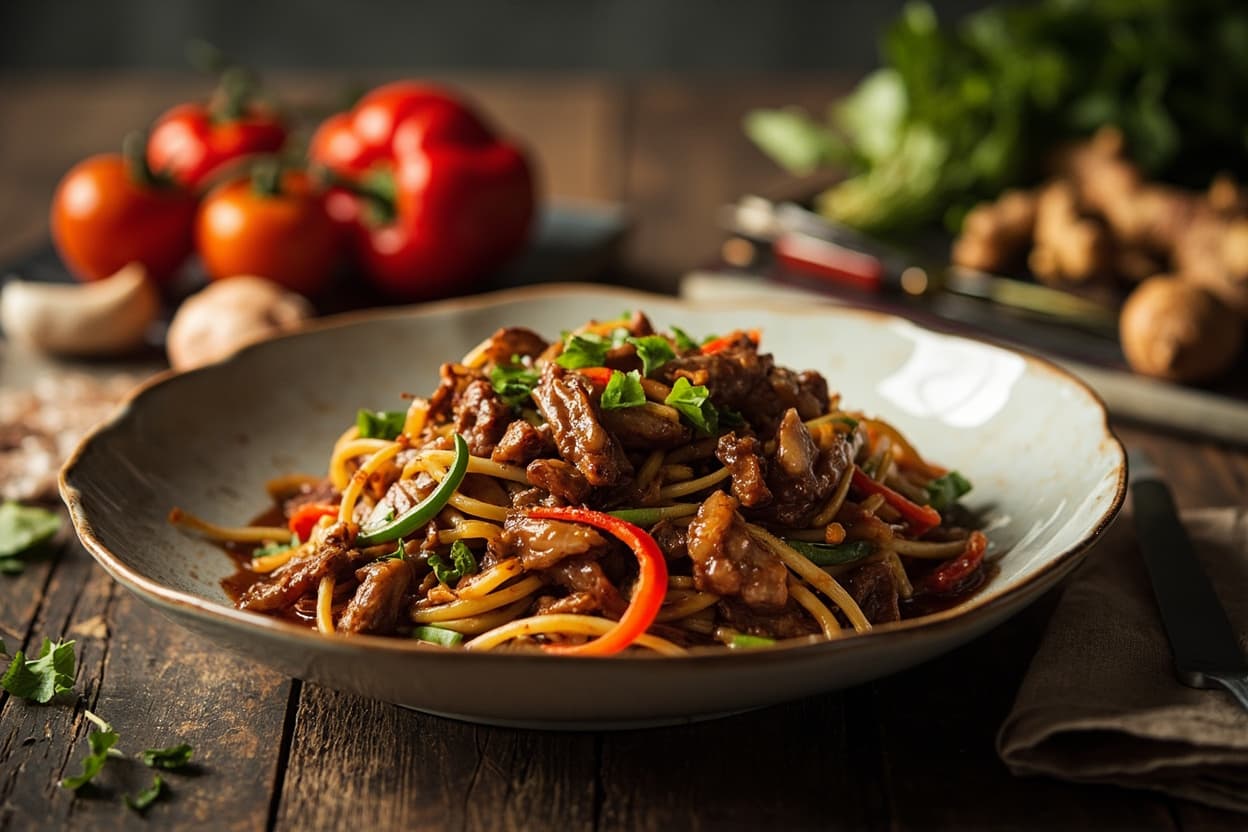
Honey-Soy Duck and Pepper Stir-Fry
Duck has the confident, iron-rich savoriness of a good steak, and here it meets the sweet-salty tension that makes teriyaki so compulsively satisfying — honey lacquering the meat over high heat while soy brings the umami and ginger keeps everything bright. Bell pepper adds just enough crunch and sweetness to balance the duck's weight without fighting it. High heat, fast hands, and the result is a weeknight dish that tastes like a restaurant paid attention.

Prep
15 min
Cook
20 min
Rest
5 min
Total
40 min
Method
Marinade the Duck
Build the Stir-Fry
3
Bring It Together
5
Plate and Serve
7
Serve over steamed white rice, using the extra sauce from the pan to drizzle over the top.
Grade pending
Nutri-Score
Estimated nutrition
Grade pending · 100% ingredient coverage
Calories
1401
per serving
High in saturated fat · 29gCalorie-dense · 1401 kcalSource of protein · 48g
Protein
48g
Carbs
167g
Fat
57g
Sat. fat
29g
Fiber
5g
Sodium
1291mg
Gluten FreeDairy FreeLow CarbHigh ProteinDiabetes FriendlyHeart HealthyWeight ManagementLow Sodium AdaptableMuscle RecoveryWeight LossBalanced Meal
Nutri-Score is a general nutritional-balance guide, not medical or dietary advice.
D
Environmental impact
High impact
A–E · lower is better · includes estimates
kg CO2e
2.5
per serving
DCarbonBEU all-round· carbon sets the grade
Water
2.9m³
Land
90Pt
Runoff
0.3g P
Duck breast, thinly sliced drives 68% of this recipe’s estimated footprint.
Carbon from Poore & Nemecek 2018; water, land & runoff from Agribalyse — modelled averages for comparing recipes, not a measurement of your groceries.
Flavor Profile
7
Umami
5
Sweet
6
Salty
1
Sour
1
Bitter
3
Spicy
Textures
TenderCrispChewy
Aromas
SavoryNuttyWarm Spiced
Kitchen Equipment
Techniques
Safety & Storage
Cooking Temperature
Heat wok until smoking before adding duck. Ensure duck reaches 165°F (74°C) internally—stir-fry 90 seconds per side until caramelized and fully cooked through.
Cross Contamination
Use separate cutting board and utensils for raw duck. Keep raw duck separated from vegetables during prep. Wash hands thoroughly after handling raw duck.
Storage
Refrigerate leftover stir-fry within 2 hours in airtight container. Label with date. Consume within 3-4 days for best quality.
High Risk Population
Duck is a protein that must be cooked to proper temperature. Elderly, immunocompromised, pregnant individuals, and young children should ensure duck is fully cooked before consuming.
Allergen Warning
This dish contains soy (soy sauce) and sesame (sesame seeds). Both are common allergens that can cause severe reactions. Verify dietary restrictions before serving.
Pro Tips
Technique
Don't crowd the wok! I know it temping to dump everything in at once, but a single layer of duck means actual caramelization instead of steaming. That Maillard reaction is what gives you that restaurant-quality sear.
Substitution
No duck breast? Chicken thighs work beautifully here - they're more forgiving and have extra fat that soaks up the honey-soy glaze wonderfully. Pork tenderloin would also work in a pinch.
From the chef
Every time I make this stir-fry in my kitchen, I'm reminded of the first time I convinced my college roommate from Ohio to try duck - he thought it was only for French restaurants. This honey-soy glaze is my secret weapon: it's the same sweet-salty logic as a good bourbon BBQ sauce, but with ginger and garlic that make the duck sing. The key is high heat and patience - let that marinade caramelize like you're building a sticky-sweet glaze on a Memphis rib.
TagsWeeknight DinnerUmami RichOne PotQuick
AllergensSoySesame
Source: generated · May 30, 2026