 Georgian
Medium · Chilled
Grape Leaf Kefir Kulturbund
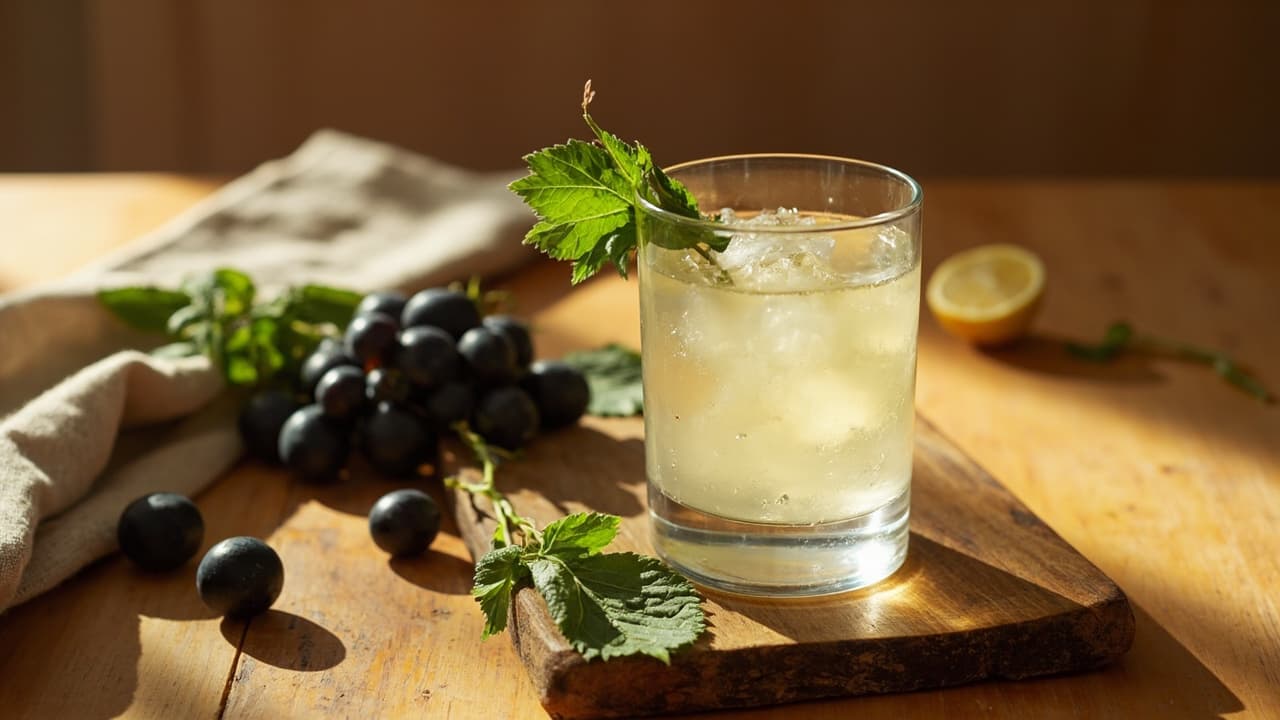
A living-culture fermented kefir drink infused with the essence of wild grape and alpine herbs, embodying the ancient Caucasian tradition of cultivating beneficial microbes in clay vessels.
Prep
20 min
Cook
20 min
Total
40 min
Method
1
Sanitize a 1-liter glass jar and wooden stirring paddle by boiling for 5 minutes; rinse and air-dry.
2
Gently rinse grape leaves under cool running water; pat dry with clean linen cloth.
3
4
Crush grapes lightly with your hands or a wooden pestle to release juices and skins into a medium bowl.
5
Pour live kefir culture into the prepared glass jar.
6
Add whole milk to the kefir and stir clockwise 7 times with the wooden paddle to incorporate air.
7
Fold in crushed grapes with their juice, then tuck grape leaves into the mixture as aromatic boats.
8
Drizzle honey in a slow spiral over the surface; stir gently once more to distribute.
9
Cover the jar with a double layer of natural breathable cloth; secure with kitchen twine. Place in a warm spot (20-24C) away from direct sunlight.
10
Allow to ferment undisturbed for 24-48 hours, until the surface bubbles活跃 and the smell turns pleasantly tangy. Longer fermentation deepens the wild complexity.
11
Line a fine-mesh strainer with unbleached cheesecloth; pour fermented kulturbund through it, discarding solids.
12
Squeeze the cloth gently to extract all liquid; taste the strained result.
13
14
Transfer to a clean glass bottle; refrigerate at or below 4C for up to 5 days. Serve chilled in small glasses, garnished with reserved grape leaves and herb sprigs.
B
Nutri-Score
Good balance
A–E · lower is better · score 1
Calories
152
per serving
Source of protein · 7gLow salt · 86mg
Protein
7g
Carbs
26g
Fat
4g
Sat. fat
4g
Fiber
1g
Sugar
22g
Sodium
86mg
DairyGluten FreeProbioticRawWild FermentedDiabetesDigestive SupportHeart HealthyImmune SupportLow SodiumHigh CalciumHigh ProteinNatural SugarProbiotic RichVitamin K
Nutri-Score is a general nutritional-balance guide, not medical or dietary advice.
B
Environmental impact
Low impact
A–E · lower is better · includes estimates
kg CO2e
0.7
per serving
BCarbon
Kefir (live culture) drives 59% of this recipe’s estimated footprint.
Carbon from Poore & Nemecek 2018; water, land & runoff from Agribalyse — modelled averages for comparing recipes, not a measurement of your groceries.
Flavor Profile
5
Umami
5
Sweet
1
Salty
7
Sour
2
Bitter
0
Spicy
Textures
CreamyEffervescentSilky
Aromas
FermentedFloralFruityHerbalTangy
Kitchen Equipment
Primary Tool
Glass Fermentation JarFine Mesh StrainerGlass BottleGlass Fermentation JarWooden Stirring PaddleKitchen TwineWooden PestleNatural Breathable ClothUnbleached Cheesecloth
Safety & Storage
High Risk Population
Raw honey is included in this recipe. Do not serve to infants under 12 months due to risk of infant botulism from Clostridium botulinum spores that can survive fermentation.
Storage
After straining, the finished kulturbund must be refrigerated at or below 4°C immediately. Do not leave at room temperature for more than 2 hours after fermentation completes.
Handling
During the 24-48 hour fermentation period, maintain consistent temperature of 20-24°C. Temperatures outside this range may allow harmful bacteria to proliferate instead of beneficial cultures.
Strain fermented kulturbund through cheesecloth into clean sanitized glass bottles. Squeeze cloth gently to extract liquid without forcing pulp through, which can cause rapid spoilage.
Allergen Warning
This recipe contains milk and milk-derived ingredients from kefir and whole milk. Ensure equipment used for fermentation is not cross-contaminated with allergen-free products if serving to individuals with severe milk allergies.
Cross Contamination
Use dedicated fermentation equipment (glass jar, wooden paddle) that has been properly sanitized by boiling. Do not use equipment that has contacted dairy products when preparing dairy-free alternatives.
Shelf Life
Refrigerated kulturbund maintains quality for up to 5 days. Discard if carbonation becomes excessive, if off-odors develop, or if visible mold appears on the surface.
Pro Tips
Technique
Trust the culture, not the clock. When the surface begins to breathe with tiny bubbles and the aroma shifts from sweet milk to pleasantly tangy, your microbes have done their ancient work—the longer you let them speak, the deeper the wild complexity becomes.
Substitution
If alpine herbs are not available, amplify the mint and basil with a small handful of wild Svaneti thyme; the honey sweetness remains constant, binding all flavors together as it did in my grandmother's qvevri.
Storage
This kulturbund lives best when cold—transfer to glass and maintain below 4 degrees, where the living cultures rest peacefully for up to five days, though in our village it never lasted that long.
Equipment
Always sanitize your vessel with boiling water and dry with clean linen; never synthetic cloth, for the natural fibers honor the fermentation spirits our ancestors worked alongside.
From the chef
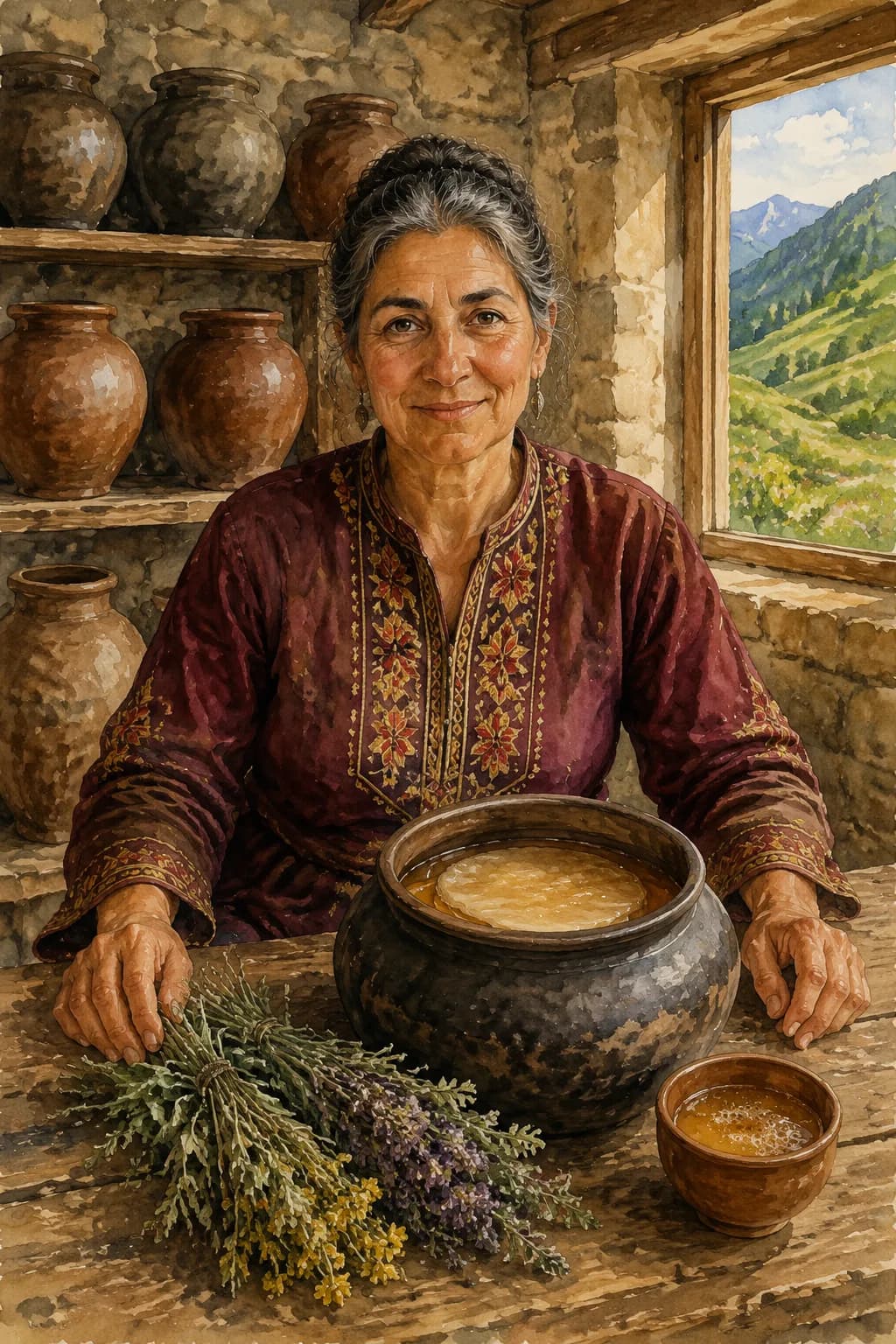
In Kakheti, where my great-grandmother first taught me to read the wind before stirring a SCOBY, we gathered grape leaves at dawn when their veins still held mountain dew. This kulturbund carries that memory—the living dance between kefir culture and wild grape essence, fermented in the old way, a conversation between microbes and maker that has sustained our mountain people for centuries.
TagsFermentedKefirProbioticLiving CultureGrape LeafHoney SweetenedHerbalWild FermentedTraditionalGeorgianRefreshingCold ServingHerbal Infused
AllergensMilk
Source: generated · June 13, 2026