 Japanese
Medium · Hot
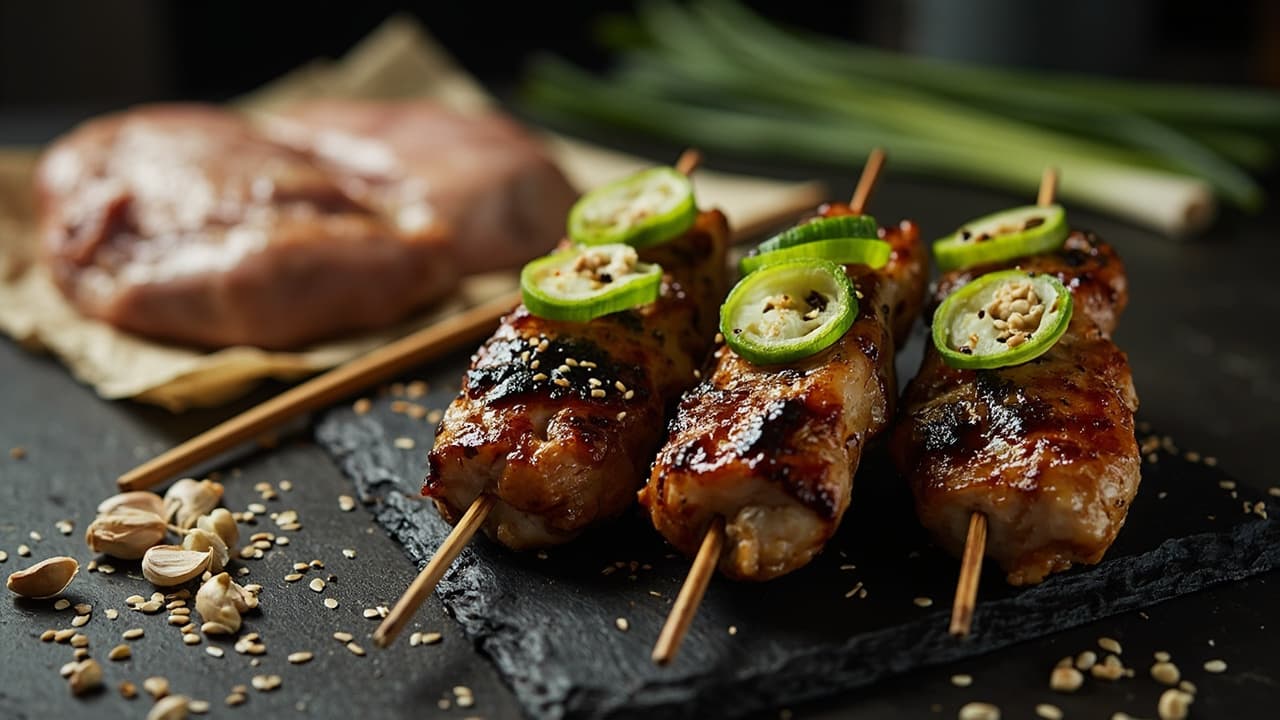
Sesame Chicken Yakitori with Scallion
Charred chicken thigh threaded on bamboo skewers, brushed with a light soy-sesame glaze and finished with toasted sesame salt and fresh scallion. Cooked over high radiant heat to achieve a clean, subtle char without smoke flavor.

Prep
20 min
Cook
15 min
Total
35 min
Method
1
Cut the chicken thigh into 4cm cubes, removing excess fat but retaining the connective tissue for flavor.
2
Mince the garlic cloves to a fine paste using the flat of your knife blade.
3
In a small bowl, whisk together soy sauce, sesame oil, and minced garlic until fully combined.
4
Add the chicken pieces to the marinade and toss gently to coat every surface. Rest for 10 minutes at room temperature—no longer, or the acid will begin to cook the protein.
5
Thread 4–5 pieces onto each bamboo skewer, passing through the center of each cube for stable positioning on the grill.
6
In a dry pan over medium-low heat, toast the sesame seeds, stirring constantly, until they release their fragrance and turn a shade darker, approximately 3–4 minutes. Transfer to a plate to cool.
7
Combine cooled sesame seeds with salt and grind briefly with a mortar, leaving some texture intact.
8
Prepare your heat source for direct high-heat cooking. The coals should be glowing white with no black patches remaining, ash swept aside from the cooking zone.
9
10
During the final minute, brush lightly with remaining marinade to create a faint glaze. Remove before the glaze blackens.
11
Transfer skewers to a resting rack and let stand for 2 minutes—this allows the juices to settle.
D
Nutri-Score
Needs balance
A–E · lower is better · score 11
Calories
402
per serving
High in salt · 1494mgHigh in protein · 42gLow sugar · 2g
Protein
42g
Carbs
4g
Fat
24g
Sat. fat
5g
Fiber
2g
Sugar
2g
Sodium
1494mg
Dairy FreeGluten FreePaleo FriendlyWhole30 CompatibleAnti InflammatoryDiabetesHeart HealthyLow GlycemicBalanced FatsHigh ProteinLow CarbSingle Serve Protein Forward
Nutri-Score is a general nutritional-balance guide, not medical or dietary advice.
C
Environmental impact
Moderate impact
A–E · lower is better · includes estimates
kg CO2e
1.5
per serving
CCarbonAEU all-round· carbon sets the grade
Water
0.4m³
Land
55Pt
Runoff
0.2g P
Chicken Thigh drives 96% of this recipe’s estimated footprint.
Carbon from Poore & Nemecek 2018; water, land & runoff from Agribalyse — modelled averages for comparing recipes, not a measurement of your groceries.
Flavor Profile
7
Umami
3
Sweet
6
Salty
2
Sour
2
Bitter
0
Spicy
Textures
ChewyCrispyTender
Aromas
HerbalNuttySmoky
Kitchen Equipment
Primary Tool
GrillSafety & Storage
Cooking Temperature
Grill chicken skewers until internal temperature reaches 165°F (74°C) to eliminate pathogens. Use a probe thermometer inserted into the thickest piece of chicken.
Cross Contamination
Do not use leftover marinade that touched raw chicken for glazing. Boil remaining marinade for 1 minute before applying as a glaze, or discard after raw chicken contact.
Handling
{"classification":"handling","text":{"text":"Marinate chicken at room temperature for no longer than 10 minutes. Extended exposure to room temperature creates conditions favorable for bacterial growth. While soy sauce (pH 4.5-5) is not acidic enough to denature proteins like citrus or vinegar, prolonged room temperature marination is a food safety concern."}}
Storage
Refrigerate raw chicken at 40°F (4°C) or below. Store leftover cooked skewers separately within 2 hours of cooking and consume within 3-4 days.
Allergen Warning
Recipe contains sesame, soy, and gluten. Inform guests of allergen content before serving. Use dedicated utensils and serving dishes to prevent cross-contact.
High Risk Population
Poultry products present heightened risk for young children, elderly individuals, pregnant persons, and immunocompromised guests. Ensure thorough cooking to 165°F (74°C) minimum.
Pro Tips
Technique
Read your coals like text. The white glow tells you everything—if you still see black, the heat is dirty, and dirty heat will lie to your chicken. Wait until the gray ash covers everything uniformly, and the warmth rises clean.
Substitution
If binchōtan is unavailable, lump charcoal works—but never use briquettes. They carry additives that will whisper smoke into your meat, and this dish asks for silence, not interference.
From the chef
Chicken thigh threaded on bamboo, touched with soy and sesame for ten minutes, then placed over white coals and left to develop a clean, subtle char—this is yakitori in its most deliberate form. The sesame salt is not decoration; it is the final word, completing the circle from grain to bird to flame to table. A brief marinade, high radiant heat, two minutes of rest, then scallion and sesame salt scattered over the top. When it arrives right, you taste Kagoshima.
TagsYakitoriGrilledSkeweredCharringHigh HeatWeeknight Dinner
AllergensSesameSoyWheatGluten
Source: generated · June 12, 2026