 Japanese
Medium · Hot
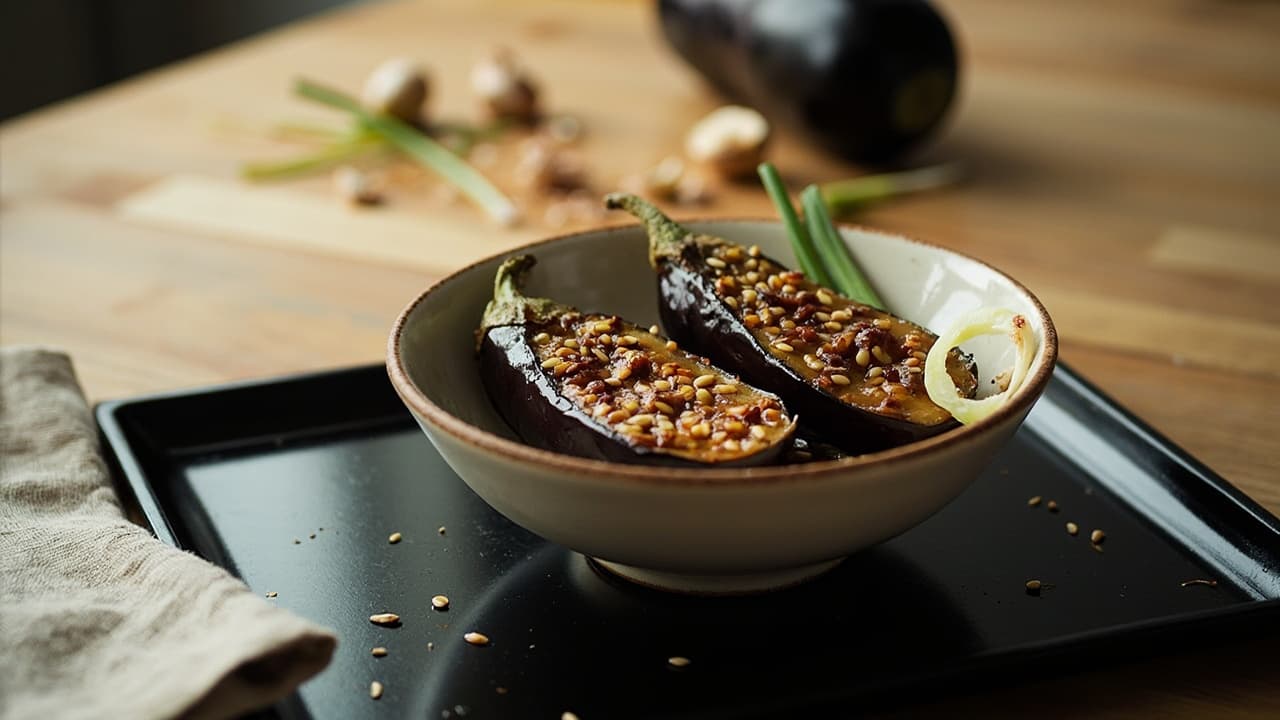
Soy-Glazed Eggplant with Sesame
Tender eggplant halves caramelized in a savory soy glaze, finished with toasted sesame seeds and fresh scallion. Clean umami depth with gentle sweetness.

Prep
10 min
Cook
25 min
Rest
5 min
Total
40 min
Method
Prepare
1
Cut eggplants in half lengthwise. Score the flesh in a crosshatch pattern, cutting deeply but not through the skin.
Sear
4
Cook 5-6 minutes until deep golden. Flip and cook flesh-side down 3 minutes.
5
Remove eggplant to a plate.
Glaze
6
In the same skillet over medium heat, add sesame oil, minced garlic, and grated ginger. Stir 30 seconds until fragrant.
7
Stir in soy sauce, rice vinegar, and sugar. Simmer 2 minutes until slightly thickened.
9
Cover and cook 4-5 minutes until eggplant is tender and glaze is sticky.
Finish
10
Toast sesame seeds in a small dry pan over medium heat until golden, about 2 minutes.
11
Scatter sesame seeds over eggplant. Garnish with thinly sliced scallion.
B
Nutri-Score
Good balance
A–E · lower is better · score 2
Calories
170
per serving
Source of fibre · 3gLow sugar · 5g
Protein
2g
Carbs
10g
Fat
14g
Sat. fat
2g
Fiber
3g
Sugar
5g
Sodium
347mg
Heart HealthyDiabetes FriendlyLow CarbWeight ManagementLow CalorieUmami RichBalanced Meal
Nutri-Score is a general nutritional-balance guide, not medical or dietary advice.
A
Environmental impact
Very low impact
A–E · lower is better · includes estimates
kg CO2e
0.2
per serving
ACarbonAEU all-round· both agree
Water
0.3m³
Land
12Pt
Runoff
0.03g P
Eggplant drives 62% of this recipe’s estimated footprint.
Carbon from Poore & Nemecek 2018; water, land & runoff from Agribalyse — modelled averages for comparing recipes, not a measurement of your groceries.
Flavor Profile
8
Umami
5
Sweet
7
Salty
2
Sour
1
Bitter
2
Spicy
Textures
CrispyTenderStickySilky
Aromas
NuttySavoryPungentHerbalEarthy
Kitchen Equipment
Primary Tool
SkilletCounter FootprintMedium
Safety & Storage
Cooking Temperature
Toast sesame seeds in a dry pan over medium heat, stirring frequently, until golden and fragrant — approximately 2 minutes. Remove from heat immediately when golden to prevent burning and bitter flavor.
Storage
Store leftover soy-glazed eggplant in an airtight container in the refrigerator within 2 hours of cooking. Consume within 3-4 days for optimal quality and food safety.
Cross Contamination
If preparing for someone with soy, sesame, or gluten allergies, use dedicated utensils and cutting boards. Note that traditional soy sauce contains gluten — consider tamari or coconut aminos as a gluten-free substitute if needed.
Allergen Warning
This dish contains soy and sesame — two of the nine major allergens requiring declaration. Always inform guests of allergen content before serving. Garnish sesame seeds separately if some diners have sesame allergies.
High Risk Population
Immunocompromised individuals, young children, elderly, and pregnant individuals should ensure leftover eggplant is reheated to 165°F (74°C) throughout before consumption.
Handling
When scoring eggplant in crosshatch pattern, cut deeply but do not pierce the skin — this allows eggplant to hold together during cooking and ensures even caramelization without falling apart.
Pro Tips
Technique
When scoring the eggplant crosshatch, cut deeply but leave the skin intact. This creates channels for the glaze while the flesh becomes silky and the skin holds its shape.
Substitution
If mirin is unavailable, substitute equal parts sake with a pinch of sugar—the sweetness and umami will still bridge the soy and sesame beautifully.
Equipment
A cast iron skillet holds heat evenly for caramelization, but any heavy-bottomed pan works. The key is medium-high heat and patience—resist moving the eggplant until it releases naturally.
Seasonal
This dish reaches its peak in late summer when eggplant is most tender. Choose firm, glossy specimens that feel heavy for their size—they will absorb the glaze without becoming mushy.
From the chef
Eggplant speaks quietly in summer, so we must listen carefully. When I score its flesh and let the soy glaze seep in, something tender emerges—sweet and savory in balance, as washoku teaches us. I finish with sesame, toasted just until golden, because even a small garnish carries meaning when done with intention.
AllergensSoySesameGluten
Source: generated · June 10, 2026