 Thai
ThaiMedium · Hot
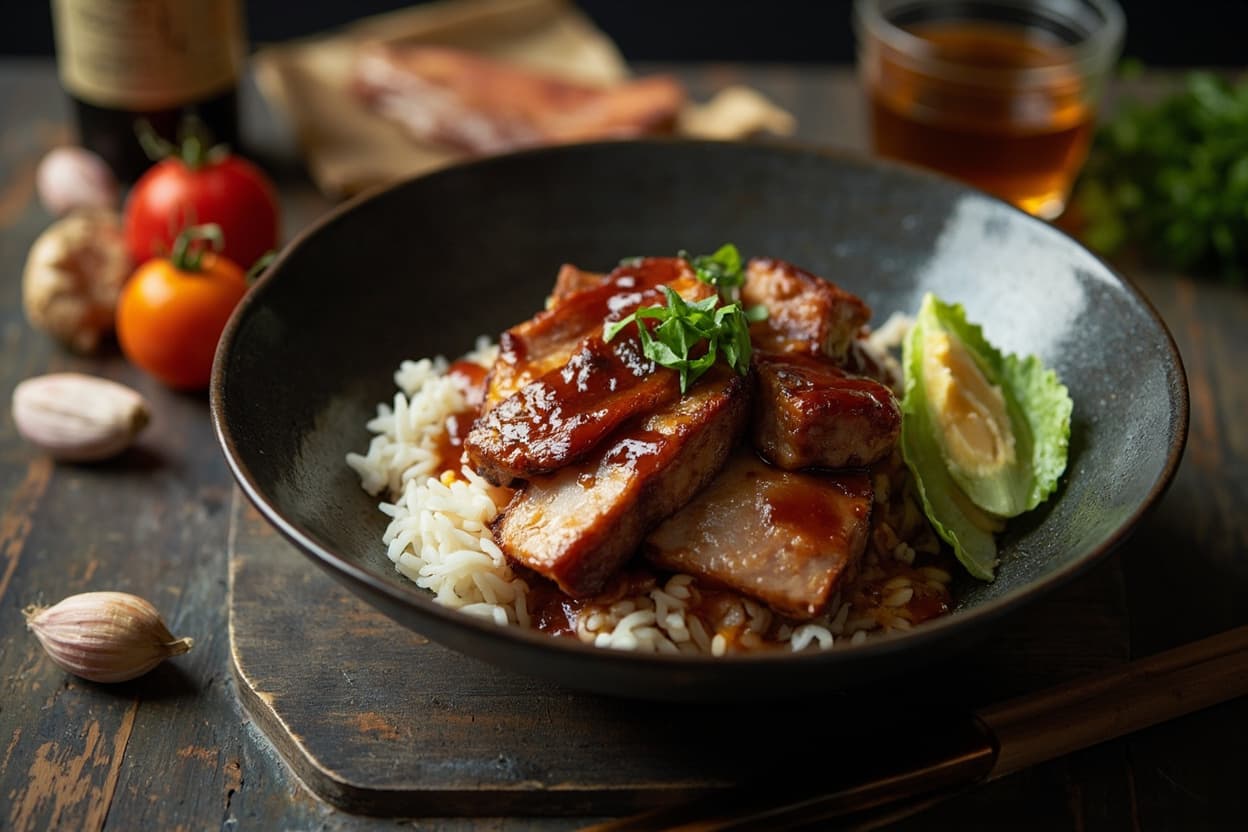
Soy-Braised Pork Belly Rice Bowl
Think of this as the umami equivalent of barbecue low-and-slow — pork belly surrenders its fat into a soy-and-ginger broth until the collagen melts into something almost silky, coating every grain of white rice underneath. Garlic deepens the brine, ginger cuts the richness just enough that each bite stays clean rather than heavy. It is the dish that teaches you why soy sauce is not just salt — it is caramelized depth.

Prep
15 min
Cook
2h
Rest
5 min
Total
2h 20m
Method
Mise en Place
1
Cut pork belly into 2-inch cubes. Slice onion thinly. Mince garlic. Grate ginger. Slice cucumber thin on the bias.
2
Rinse white rice under cold water until water runs clear. Drain and set aside.
Build the Braise
3
Heat sunflower oil in a wide Dutch oven or heavy pot over medium-high heat. Add onion and sauté for 3 minutes until softened and beginning to caramelize.
4
5
Add pork belly cubes in a single layer. Sear without stirring for 2 minutes per side until golden brown. Flip and repeat until all sides have color.
Braise Low and Slow
6
7
Reduce heat to low. Cover and simmer for 25-30 minutes, until pork is tender and yields easily to a fork.
8
Reduce heat to low. Cover and simmer for 90-120 minutes, until pork is fork-tender and the collagen has fully broken down into silky, unctuous richness.
9
Uncover and simmer for an additional 10-15 minutes, basting the pork frequently in the glossy, syrupy sauce until it clings to every surface and reaches glaze consistency.
Cook the Rice
10
Combine rinsed rice and water in a pot with a tight-fitting lid. Bring to a boil over high heat.
11
Once boiling, reduce heat to low. Cover and cook for 15 minutes without lifting the lid.
12
Remove from heat and let steam, covered, for 5 minutes. Fluff with a fork.
Plate and Serve
13
Divide rice between four bowls. Arrange glazed pork belly cubes on top.
14
Drizzle with the remaining braising sauce from the pan.
16
Serve with lime wedges on the side—tell your guests the acid is non-negotiable, it brightens everything.
Grade pending
Nutri-Score
Estimated nutrition
Grade pending · 100% ingredient coverage
Calories
1239
per serving
High in saturated fat · 21gCalorie-dense · 1239 kcal
Protein
23g
Carbs
115g
Fat
76g
Sat. fat
21g
Fiber
4g
Sodium
912mg
Gluten FreeDairy FreeHigh Sodium ConcernNot Heart HealthyNot Kidney FriendlyHigh ProteinBalanced Macros
Nutri-Score is a general nutritional-balance guide, not medical or dietary advice.
D
Environmental impact
High impact
A–E · lower is better · includes estimates
kg CO2e
2.1
per serving
DCarbonAEU all-round· carbon sets the grade
Water
2.2m³
Land
58Pt
Runoff
0.2g P
Pork Belly, cubed drives 72% of this recipe’s estimated footprint.
Carbon from Poore & Nemecek 2018; water, land & runoff from Agribalyse — modelled averages for comparing recipes, not a measurement of your groceries.
Flavor Profile
8
Umami
4
Sweet
6
Salty
3
Sour
1
Bitter
1
Spicy
Textures
TenderSilkyFluffyCrunchy
Aromas
SavoryCaramelizedHerbalNutty
Kitchen Equipment
Primary Tool
Dutch OvenDutch OvenRice CookerChef KnifeCutting BoardMixing BowlMeasuring CupsMeasuring SpoonsTongsPlastic WrapPaper Towels
Counter FootprintMedium
Safety & Storage
Cooking Temperature
Sear pork belly to golden brown on all sides at medium-high heat (375-400°F) to ensure proper browning and pathogen reduction before braising.
Braise pork belly covered at low heat for 25-30 minutes until fork-tender. Final 5 minutes uncovered reduces sauce to safe glaze consistency.
Chicken thighs (suggested substitution) must reach internal temperature of 165°F (74°C). Use a meat thermometer to verify doneness before serving.
High Risk Population
Pregnant individuals should ensure pork reaches 145°F internal temperature. Use thermometer for verification.
Cross Contamination
Use separate cutting boards for raw pork and fresh garnishes (cucumber, cilantro, lime). Wash hands thoroughly after handling raw meat.
Storage
Store leftover braised pork belly in airtight container in refrigerator for up to 3 days. Reheat to 165°F before consuming.
Allergen Warning
Soy sauce contains both soy and wheat gluten. For wheat-free version, substitute tamari or coconut aminos.
Sesame seeds are added as garnish post-cooking. Inform guests of sesame content if serving to unfamiliar audiences.
Pro Tips
Technique
Don't rush the searing step. Getting that deep golden crust on the pork belly before you add the braising liquid is what builds the foundation of flavor—it's the same principle as searing a pot roast before braising. Those brown bits on the bottom of the pan? They're called fond, and they're浓缩 all the good stuff. Deglaze them with your soy sauce mixture and watch the flavor multiply.
Substitution
If you can't find pork belly, thick-cut bacon works in a pinch—render it first until crispy, then proceed with the braise. You'll lose the melt-in-your-mouth texture, but the flavor profile stays intact. For a lighter option, chicken thighs are surprisingly forgiving and absorb the sauce beautifully.
From the chef
Think of this dish like the ultimate umami shortcut—you know when you simmer bacon in coffee for breakfast and it makes everything taste richer? That’s what soy sauce, garlic, and ginger do to pork belly, except we’re taking it further. The sauce reduces into a glossy, lacquer-like glaze that clings to every bite—this is the essence of umami, the fifth taste, turned edible. And here's the thing: the longer it braises, the more those flavors deepen, so even if you overcook it slightly, it actually gets better.
TagsPork BellyBraisedSoy SauceUmamiRice BowlLimeWeeknight DinnerOne Pot MealSesame SeedsGluten Free Optional
AllergensSoySesameGluten
Source: generated · May 30, 2026