 German
Medium · Hot
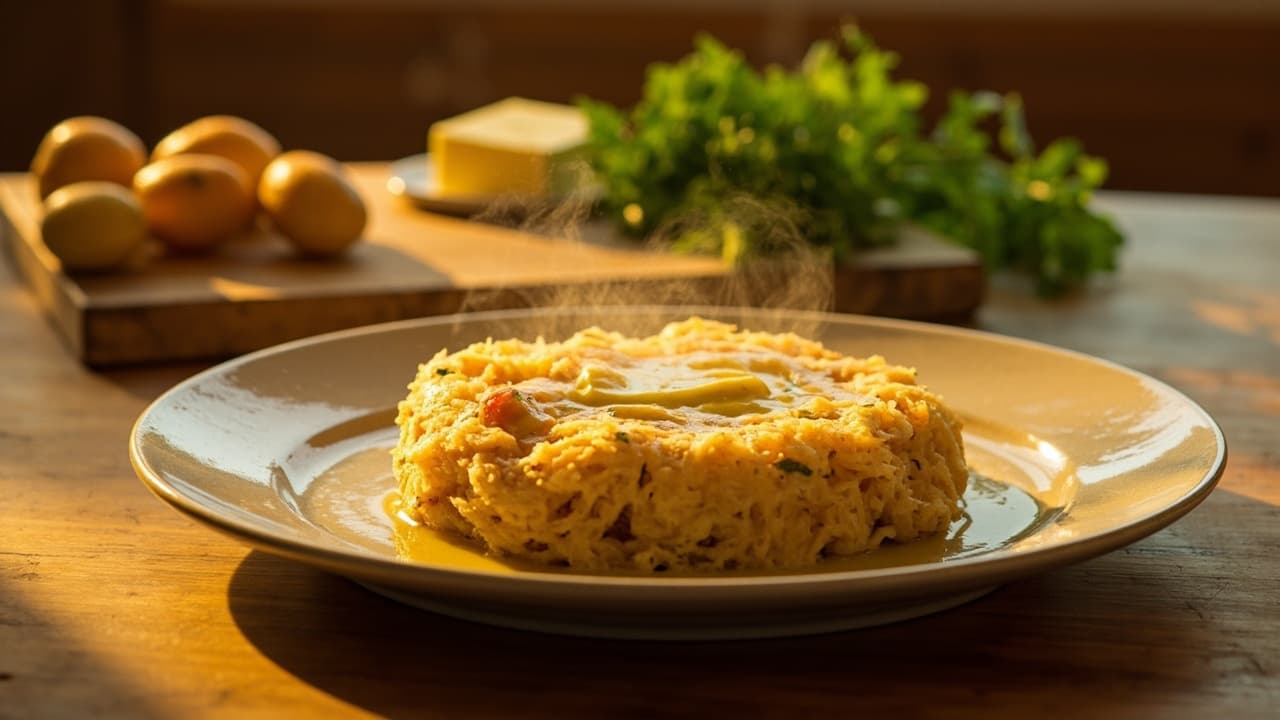
Bavarian Rösti with Parsley Butter
A hearty Swiss-German potato pancake, pan-fried until golden and crispy, served with a bright parsley butter that melts over the hot rösti. Precise technique makes all the difference here.

Prep
20 min
Cook
25 min
Total
45 min
Method
Prepare the Parsley Butter
1
Prepare the Potatoes for Rösti
3
Peel the potatoes and grate them on the large holes of a box grater into a clean bowl.
4
Season the grated potato immediately with salt and black pepper. Toss gently to distribute the seasoning evenly.
5
Heat 30g of butter in a large cast-iron skillet over medium-high heat until the butter begins to foam.
Form and Fry the Rösti
6
7
Divide the potato into 4 equal portions. Carefully place one portion into the hot skillet and press it firmly into a round cake, about 1cm thick.
8
Fry the rösti for 5-7 minutes until the underside is deep golden brown and crispy. Do not move it while it cooks.
9
10
Fry the second side for another 5-7 minutes until equally golden and crispy. Transfer to a warm plate.
C
Nutri-Score
Fair balance
A–E · lower is better · score 5
Calories
298
per serving
High in saturated fat · 14gLow sugar · 1g
Protein
3g
Carbs
26g
Fat
21g
Sat. fat
14g
Fiber
4g
Sugar
1g
Sodium
770mg
Gluten FreeDairy InclusiveLow ProteinHigh FatHeart ConditionsSodium SensitiveBalanced Meal
Nutri-Score is a general nutritional-balance guide, not medical or dietary advice.
A
Environmental impact
Very low impact
A–E · lower is better · includes estimates
kg CO2e
0.3
per serving
ACarbonAEU all-round· both agree
Water
0.08m³
Land
15Pt
Runoff
0.04g P
Butter drives 74% of this recipe’s estimated footprint.
Carbon from Poore & Nemecek 2018; water, land & runoff from Agribalyse — modelled averages for comparing recipes, not a measurement of your groceries.
Flavor Profile
6
Umami
3
Sweet
5
Salty
1
Sour
1
Bitter
3
Spicy
Textures
CrispyTender
Aromas
HerbalButteryEarthy
Kitchen Equipment
Primary Tool
Cast Iron SkilletCounter FootprintMedium
Techniques
Safety & Storage
Cooking Temperature
Heat butter until foaming before adding potato. Medium-high heat ensures proper Maillard reaction for crispy golden crust. Add cold butter when starting new portions to maintain consistent temperature.
Handling
Use wide spatula and hand support when flipping rösti to prevent burns from hot oil. Cast-iron skillet retains heat - handle with dry towels only.
Allergen Warning
Butter contains milk/dairy. Verify all guests have no dairy allergies or intolerances before serving.
Cross Contamination
Use separate bowls and utensils for grated potato and parsley butter preparation. Clean surfaces between handling raw potato and finished parsley butter.
Storage
Refrigerate leftover parsley butter within 2 hours. Store cooked rösti in airtight container in refrigerator for up to 2 days. Reheat in skillet with small amount of butter to restore crispness.
Shelf Life
Parsley butter should not be left at room temperature for more than 2 hours total. Discard if left out overnight or if butter appears discolored or has off smell.
Equipment Safety
Cast-iron skillet is heavy when hot. Ensure stable placement on stovetop. Do not place hot skillet on wooden surfaces or countertops that may be damaged by heat.
Pro Tips
Technique
The most important step is squeezing every drop of moisture from your grated potatoes — I use a clean kitchen towel and really press. Wet potatoes mean a soggy rösti, and there is nothing worse than a limp potato pancake in my kitchen.
Do not touch your rösti while it fries on the first side. I see people wiggling it after two minutes — that is how you get a broken mess instead of a crisp, unified cake. Patience, my friend, patience.
Substitution
If you cannot find flat-leaf parsley, fresh chives mixed with a bit of dill work beautifully as a substitute — you keep that fresh green color and a mild, oniony character that plays well against the butter.
From the chef
This is my Oma's Saturday morning recipe — she would make a big pile of these for the whole family, and my brothers would fight over who got the biggest one with the crispiest edges. A proper rösti is not complicated, but it demands respect: get your pan hot, squeeze out every drop of water, and then — only then — will you get that golden crust that shatters when you cut into it. The parsley butter is my modern touch, because even tradition deserves a little freshening up now and then.
TagsPotatoPan FriedComfort FoodButteryCrispyGermanSwiss
AllergensMilk
Source: generated · June 10, 2026