 Mediterranean
Medium · Hot
Whipped Feta and Olive Oil Pasta with Harissa
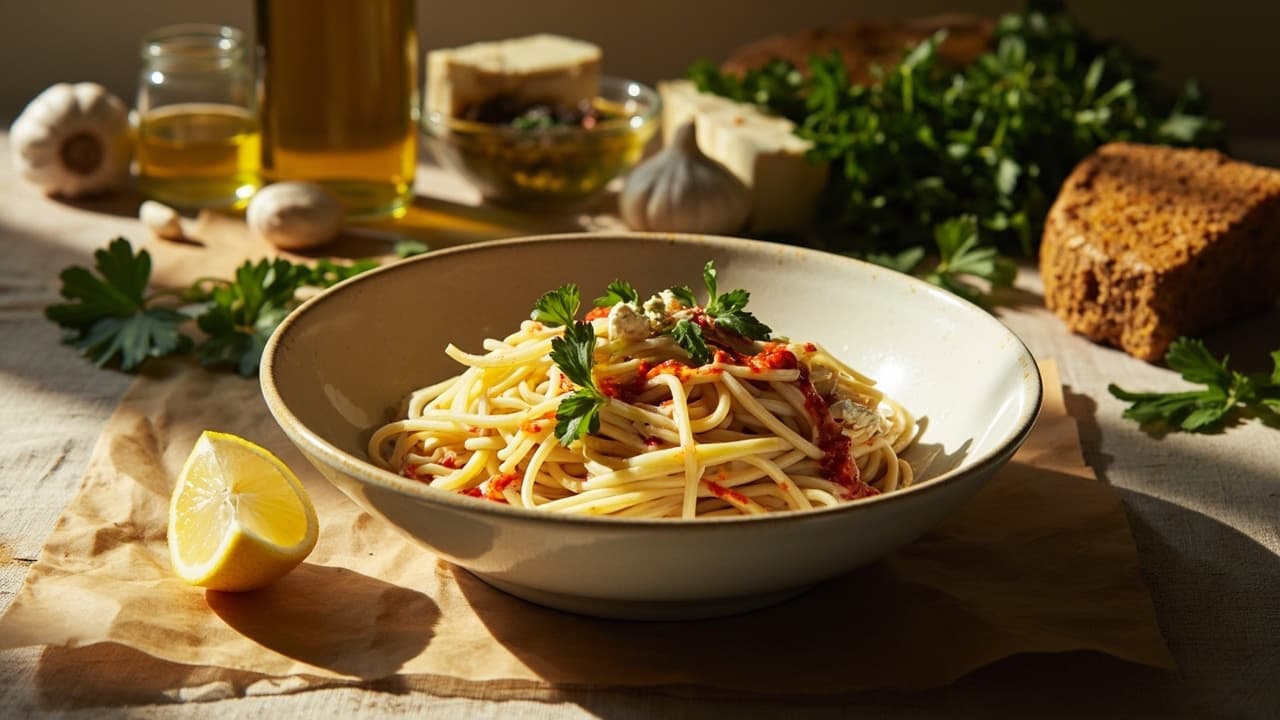
Silky whipped feta draped over hot pasta, loosened with starchy pasta water, finished with a fiery harissa drizzle and fresh herbs. This is the kind of dish where the sauce arrives before the carbohydrates and everyone is better for it.

Prep
15 min
Cook
15 min
Total
30 min
Method
Whip the Feta
2
Process on high for 2-3 minutes until completely smooth, creamy, and whipped. Scrape down sides as needed. The feta should have the consistency of thick cream — fluffy, lush, begging to be on bread. Set aside.
Cook the Pasta
4
Cook spaghetti until al dente, according to package directions. Reserve 1½ cups of pasta cooking water before draining.
5
Drain pasta and immediately return it to the hot pot.
Bring It Together
6
Add the whipped feta sauce to the hot pasta. Toss vigorously, adding pasta water a splash at a time to create a silky, coating sauce. You want enough richness that every strand of spaghetti is glistening — not dry, never dry.
8
Divide pasta among bowls. Drizzle the harissa sauce in bold swirls over the top — do not be timid.
D
Nutri-Score
Needs balance
A–E · lower is better · score 15
Calories
676
per serving
High in salt · 4569mgCalorie-dense · 676 kcalSource of protein · 22gLow sugar · 5g
Protein
22g
Carbs
81g
Fat
29g
Sat. fat
11g
Fiber
5g
Sugar
5g
Sodium
4569mg
VegetarianHeart HealthyAnti InflammatoryBlood Sugar BalanceHigh ProteinMediterranean StyleBalanced Macros
Nutri-Score is a general nutritional-balance guide, not medical or dietary advice.
C
Environmental impact
Moderate impact
A–E · lower is better · includes estimates
kg CO2e
0.9
per serving
CCarbonAEU all-round· carbon sets the grade
Water
0.7m³
Land
66Pt
Runoff
0.1g P
Feta cheese, crumbled drives 64% of this recipe’s estimated footprint.
Carbon from Poore & Nemecek 2018; water, land & runoff from Agribalyse — modelled averages for comparing recipes, not a measurement of your groceries.
Flavor Profile
5
Umami
2
Sweet
6
Salty
4
Sour
1
Bitter
5
Spicy
Textures
CreamySilkyTenderSaucyChewy
Aromas
GarlickySmokyHerbaceousCitrusDairy Tang
Kitchen Equipment
Primary Tool
Food ProcessorFood ProcessorLarge PotChef KnifeCutting BoardMixing BowlsMeasuring SpoonsMeasuring CupsGarlic PressServing BowlPlastic WrapTongs
Counter FootprintMedium
Techniques
Safety & Storage
Allergen Warning
This recipe contains milk/dairy (feta cheese and Greek yogurt) and wheat/gluten (spaghetti). Ensure all allergens are communicated to consumers and that the dish is not served to individuals with milk or gluten allergies or celiac disease.
Cross Contamination
Use cleaned food processor or blender when making the whipped feta sauce to prevent cross-contact with other allergens. Do not use equipment that has been used for nut-based or shellfish preparations without thorough sanitization.
Cooking Temperature
Cook pasta in boiling water (100°C/212°F) until al dente per package directions. The dish should be served immediately while hot to ensure proper food-safe temperature.
Storage
Refrigerate leftover whipped feta sauce separately within 2 hours of preparation. Store pasta and sauce components in airtight containers at 4°C (40°F) or below.
Shelf Life
Leftover whipped feta sauce is safe for up to 3-5 days when refrigerated. Prepared pasta dishes are best consumed within 2-3 days.
Handling
When tossing hot pasta with feta sauce, add reserved pasta water gradually while tossing to create a silky sauce without splashing. Use heat-resistant utensils when working with boiling water and hot pasta.
High Risk Population
This dish contains raw garlic in the feta sauce. Infants under 12 months, young children, pregnant individuals, and immunocompromised persons should be aware that raw garlic is used. Consider blanching garlic if serving to high-risk populations.
Pro Tips
Technique
Your pasta water is liquid gold here — keep it hot and add it gradually while tossing. Too much at once and you've got soup; too little and the feta won't coat properly. We're building a silky emulsion, not a tragedy.
Substitution
No Greek yogurt? Full-fat labneh works beautifully and adds a slightly earthier tang. Harissa too mild? A pinch of cayenne stirred into the drizzle brings the heat back where it belongs.
From the chef
Silky whipped feta loosened with starchy pasta water until every strand of spaghetti glistens — that is the philosophy here, and it is not complicated. Feta, yogurt, garlic, and lemon go into the blender until fluffy and lush, then hit the hot pasta with a splash of cooking water at a time until the sauce coats everything. A harissa swirl goes on in bold strokes at the end, not a timid drizzle. The sauce arrives first, the carbohydrates follow, and everyone at the table is better for it.
TagsSauce ForwardVegetarianQuick PrepWeeknight DinnerNo Cook Sauce
AllergensMilkWheatGluten
Source: generated · June 10, 2026