 Portuguese
Medium · Warm
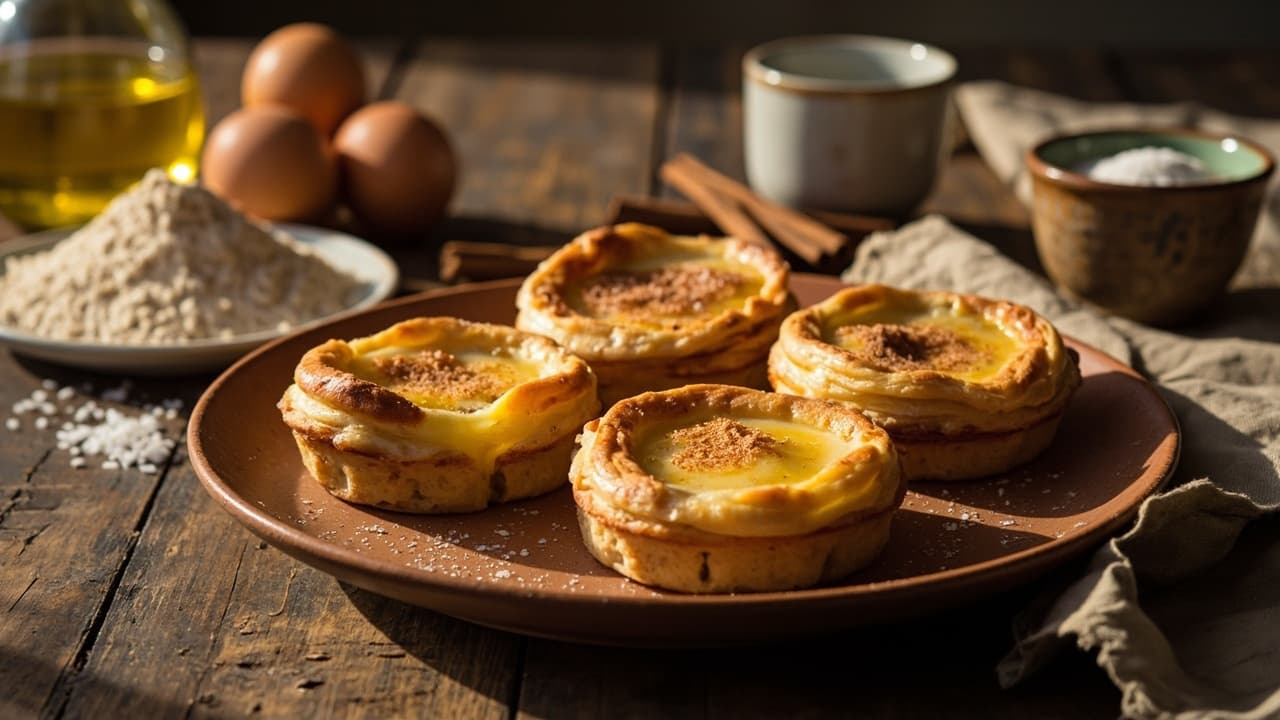
Olive Oil Custard Tarts with Cinnamon and Salt
Silken custard baked inside a crisp olive-oil pastry, finished with a dusting of cinnamon and flaky salt — the kind of humble, devout sweetness Inês learned to love in Aveiro.

Prep
15 min
Cook
25 min
Total
40 min
Method
1
Combine 200g flour and 1 pinch salt in a bowl. Make a well and add 1 egg, 60ml olive oil, and 30ml cold water. Stir with a wooden spoon until a shaggy dough forms.
2
Knead gently on a floured surface for 2 minutes until smooth. Shape into a flat disk, wrap in plastic, and refrigerate for 30 minutes.
3
4
Preheat oven to 180°C. Divide rested dough into 4 portions and press each into a lightly oiled muffin tin, pressing up the sides to form tart shells.
5
Stir the custard once more and divide among the four tart shells, filling each about three-quarters full.
6
Bake for 22-25 minutes, until the pastry is golden at the edges and the custards are just set with a slight jiggle in the center. They will firm as they cool.
7
8
Serve warm or at room temperature. These hold for a day, but Inês would tell you they are best the moment they come out of the oven.
Grade pending
Nutri-Score
Estimated nutrition
Grade pending · 100% ingredient coverage
Calories
519
per serving
Protein
9g
Carbs
53g
Fat
30g
Sat. fat
8g
Fiber
3g
Sugar
15g
Sodium
170mg
Anti InflammatoryBalanced Macros
Nutri-Score is a general nutritional-balance guide, not medical or dietary advice.
Grade pending
Environmental impact
Estimated footprint
Grade pending · 100% ingredient coverage
kg CO2e
0.5
per serving
Water
0.4m³
Land
25Pt
Runoff
0.05g P
Heavy Cream drives 41% of this recipe’s estimated footprint.
Carbon from Poore & Nemecek 2018; water, land & runoff from Agribalyse — modelled averages for comparing recipes, not a measurement of your groceries.
Flavor Profile
5
Umami
4
Sweet
6
Salty
1
Sour
1
Bitter
3
Spicy
Textures
CrispySilky SmoothTender
Aromas
CaramelHerbalWarm Spice
Kitchen Equipment
Primary Tool
Muffin TinSafety & Storage
Cooking Temperature
Bake at 180°C (356°F) for 22-25 minutes until custard is just set with slight jiggle in center. Internal temperature should reach 74°C (165°F) to ensure egg safety.
Allergen Warning
This recipe contains eggs and milk/dairy. Use pasteurized eggs or cream for high-risk populations including young children, elderly, pregnant individuals, or immunocompromised persons.
Cross Contamination
Avoid cross-contamination by using clean utensils and equipment when handling raw eggs for pastry and custard. Do not use the same bowl for raw ingredients and ready-to-eat items without thorough washing.
Storage
Store finished tarts in airtight container. Custard tarts with eggs and dairy must be refrigerated within 2 hours of baking if not consumed immediately.
Shelf Life
Best consumed same day while warm. These tarts hold for up to 24 hours stored at room temperature or up to 3 days refrigerated, but quality diminishes rapidly.
Handling
Allow tarts to cool slightly before serving. When sprinkling flaky salt finish, ensure hands are clean to avoid contamination. The custard will firm as tarts cool.
Pro Tips
Technique
When pressing the dough into the muffin tin, work quickly and let the dough rest if it fights back — the cold rest has done its work, and the pastry will cooperate if you give it a moment to come back to room temperature.
Substitution
A small pinch of smoked paprika stirred into the custard — just barely there — adds a slow Atlantic warmth without changing the devout simplicity of the tarts.
From the chef
In Aveiro, we learned early that sweetness does not need to announce itself — it just needs good olive oil, patience, and a little cinnamon to finish. My avó would never call these tarts anything fancy, but she knew the way the custard should wobble, just barely set, still holding the warmth of the oven. We bake them the same way now: unhurried, devout, with flaky salt to catch the light.
TagsOlive Oil CrustCustardCinnamonFlaky SaltPortugueseBaked
AllergensEggsDairyWheatGluten
Source: generated · June 12, 2026