 Spanish
Medium · Hot
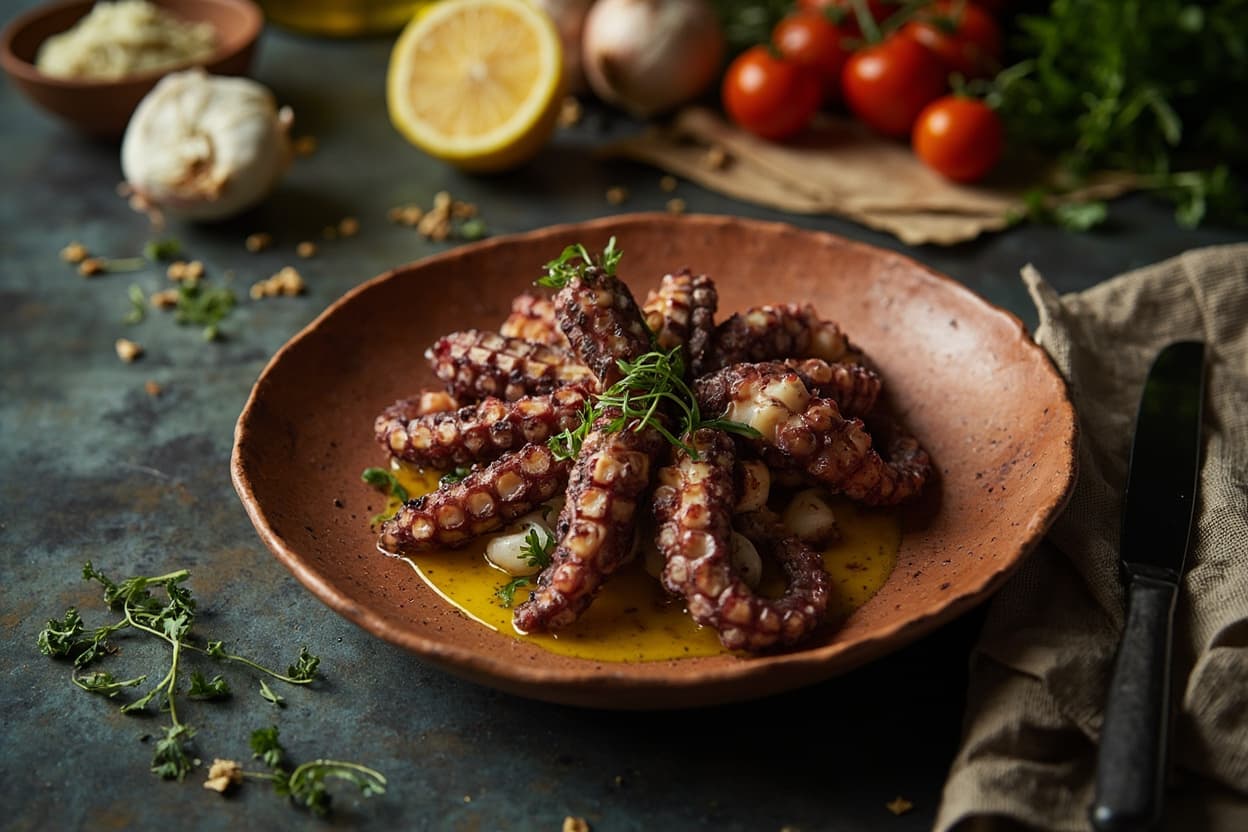
Grilled Octopus with Garlic Parsley Oil
Octopus that has been cooked tender first, then laid over high heat long enough to char at the edges and take on that smoky, slightly caramelized crust that no other method gives you. Garlic and parsley worked into olive oil form a rough, vivid sauce, and lemon goes over everything at the end to wake it all up. The kind of thing that smells like the coast.
Prep
15 min
Cook
50 min
Rest
20 min
Total
1h 25m
Method
Prepare the Octopus
1
Clean the octopus by rinsing under cold water and removing the beak. Pat dry with a kitchen towel.
2
Pound the octopus tentacles gently with a rolling pin or meat mallet to break up the fibers — this helps it cook evenly and stay tender.
Simmer Until Tender
3
In a large stock pot, bring 2 quarts of water to a gentle simmer with 1 tablespoon of salt and 2 tablespoons of white vinegar.
4
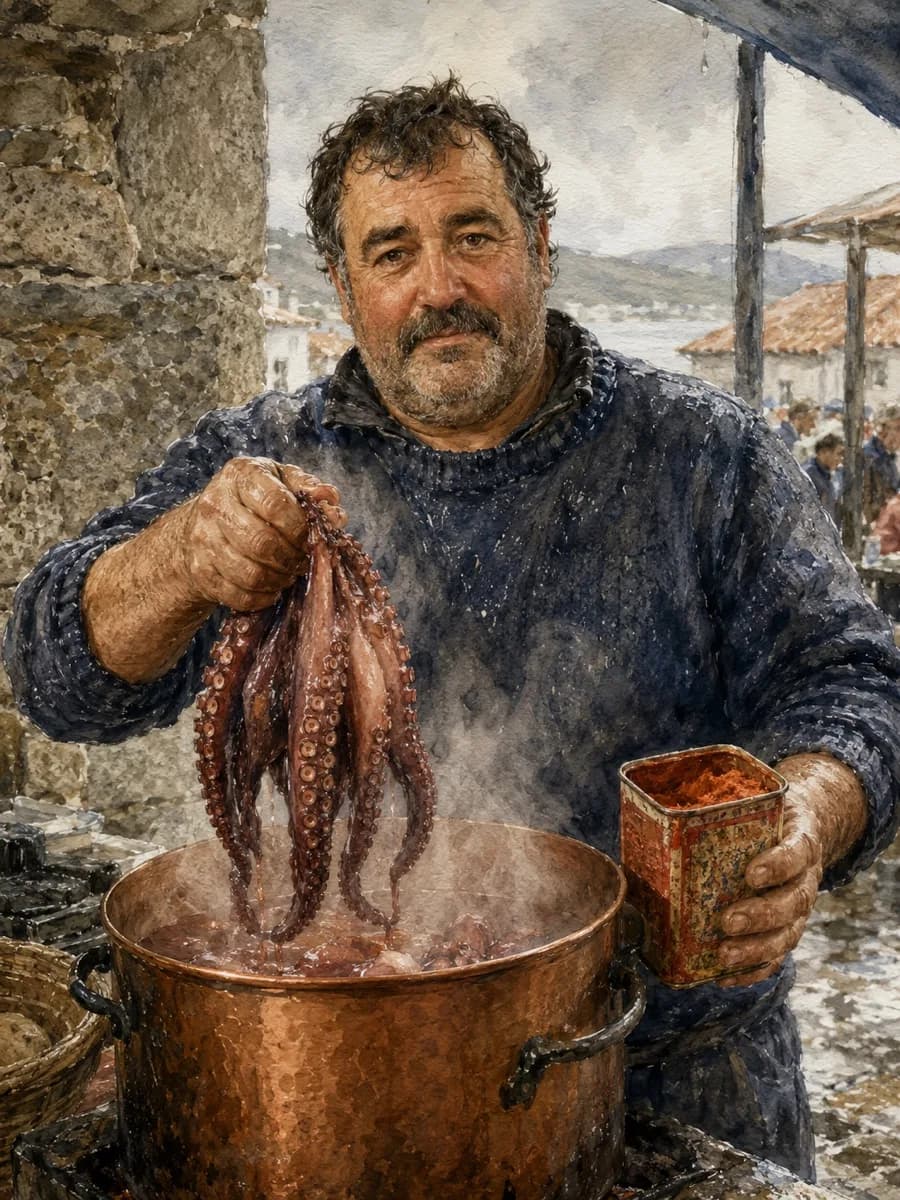
Submerge the octopus and simmer covered for 30 to 45 minutes, until the thickest part of the tentacle yields easily when pierced with a skewer or knife tip.
5
Remove the octopus from the heat and let it cool in its cooking liquid for at least 15 minutes. This step is important — don't skip the rest.
Make the Garlic Parsley Oil
6
7
Let the garlic infuse in the oil for 5 to 7 minutes, stirring occasionally, until it turns pale golden and fragrant. Watch carefully — you want golden, not brown.
Grill the Octopus
9
10
11
Grill the tentacles for 3 to 4 minutes per side, pressing gently with a spatula, until the skin blisters and chars in places and the flesh shows good grill marks.
12
Transfer to a cutting board and let rest for 5 minutes before slicing the tentacles apart.
Assemble and Serve
17
18
Dust with smoked paprika — a generous teaspoon per serving. Cut the lemon into wedges and serve on the side for squeezing over the top.
B
Nutri-Score
Good balance
A–E · lower is better · score 2
Calories
599
per serving
High in salt · 3006mgHigh in protein · 38gLow sugar · 3gLow saturated fat · 6g
Protein
38g
Carbs
29g
Fat
37g
Sat. fat
6g
Fiber
7g
Sugar
3g
Sodium
3006mg
Gluten FreeDairy FreeLow CarbHeart HealthyDiabetes FriendlyAnti InflammatoryHigh ProteinLow Saturated FatOmega 3 Rich
Nutri-Score is a general nutritional-balance guide, not medical or dietary advice.
Flavor Profile
7
Umami
3
Sweet
5
Salty
2
Sour
1
Bitter
4
Spicy
Textures
CrispyTenderCharredSilky
Aromas
HerbalSmokyGarlickyBriny
Kitchen Equipment
Primary Tool
GrillStock PotGrillSkilletSmall SaucepanChef KnifeCutting BoardMeat MalletWooden SpoonTongsMeasuring SpoonsKitchen TowelPaper Towels
Counter FootprintMedium
Techniques
Safety & Storage
Cooking Temperature
Warm garlic oil over low heat and watch carefully until pale golden. Remove immediately if it turns brown to prevent burning and acrolein formation.
Simmer octopus for 30-45 minutes until thickest part yields easily when pierced. This ensures safe and thorough cooking of the mollusk.
Grill octopus over high heat (smoking hot) for 3-4 minutes per side. Press gently with spatula to achieve char and grill marks while cooking through.
Handling
Clean octopus thoroughly by rinsing under cold water and removing the beak completely before cooking. Pat dry before grilling for optimal char.
Storage
If storing raw octopus before cooking, keep refrigerated at or below 40°F. Use within 1-2 days for optimal freshness.
Leftover cooked octopus must be refrigerated within 2 hours and consumed within 3 days. Reheat to 165°F minimum before serving.
Cross Contamination
Use separate cutting boards and utensils for raw octopus. Clean and sanitize all surfaces after handling raw mollusks to prevent cross-contact with other foods.
Allergen Warning
This dish contains octopus (mollusks). Even trace amounts from cross-contamination can trigger reactions in sensitive individuals. Inform guests of mollusk content before serving.
High Risk Population
Young children, elderly individuals, and immunocompromised persons should only consume octopus that has been cooked to safe temperatures throughout to avoid bacterial risks.
Pro Tips
Technique
The secret is in the drying — once you've simmered that octopus, really work it dry with kitchen towels. The drier it is going onto the grill, the better the char you'll get, and that char is everything.
Substitution
Can't find fresh octopus? Frozen works perfectly fine — just thaw it overnight in the fridge and treat it the same. The quality has gotten quite good.
From the chef
Tender first, then over a real flame — that is the only way to do grilled octopus. You simmer it until the thickest part of the tentacle gives without a fight, let it rest in its own liquid, then lay it on high heat just long enough to char the edges and tighten the skin into something worth biting through. Garlic worked into warm olive oil with parsley forms the sauce — rough, vivid, alive. Lemon goes on last while everything is still steaming. The smell is the coast on a clear morning, and the crust is the whole reason.
TagsGrilled OctopusGalician CuisineSmoked PaprikaOlive Oil DrizzleHigh ProteinSeafoodCharred
AllergensMollusks
Source: generated · May 30, 2026