 Mediterranean
Easy · Hot
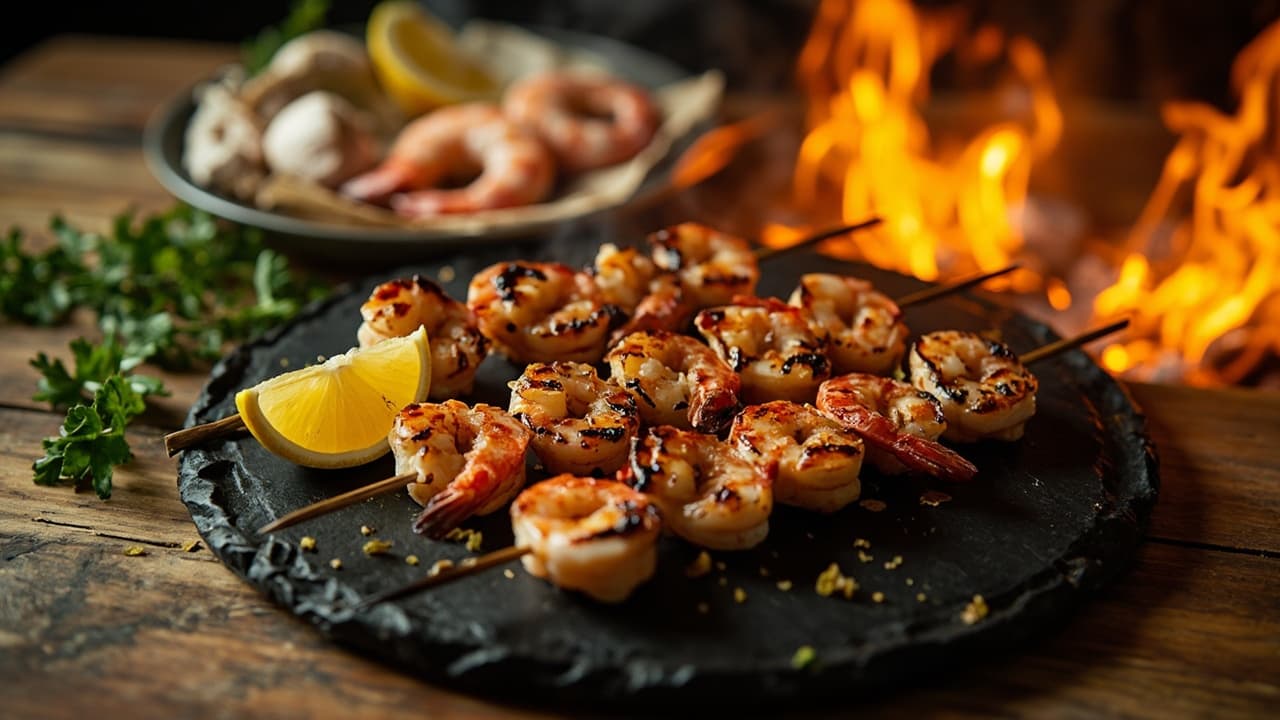
Garlic Shrimp Skewers with Lemon and Parsley
Plump shrimp kissed by flame, glazed in garlicky oil and brightened with lemon. A simple skewer done right over live fire.
Prep
20 min
Cook
8 min
Total
28 min
Method
Prepare the Fire and Skewers
1
2
Soak wooden skewers in water for 20 minutes so they do not catch fire on the grill.
Build the Garlic Marinade
3
Mince the garlic finely — Bruno wants it to melt into the oil, not char in chunks. Combine with olive-oil, the zest and juice of one lemon, salt, and black-pepper in a bowl.
4
Whisk until the oil is bright and fragrant. Taste it. It should smell like sunshine and smoke waiting to happen.
Marinate the Shrimp
5
Pat the shrimp completely dry with paper towels. Moisture is the enemy of char.
Thread and Grill
7
Thread 4-5 shrimp per skewer, leaving a tiny gap between each so heat circulates evenly.
8
Place skewers over the hottest part of the fire. Cook 2 minutes per side, until the shells blister and turn pink-orange. Do not move them until you are ready to flip.
9
Watch for the moment the shrimp curl into a C shape — that is when they are done. An O shape means they are overcooked.
B
Nutri-Score
Good balance
A–E · lower is better · score 1
Calories
322
per serving
High in protein · 42gLow sugar · 2gLow saturated fat · 2g
Protein
42g
Carbs
8g
Fat
15g
Sat. fat
2g
Fiber
3g
Sugar
2g
Sodium
1521mg
Gluten FreeDairy FreePescatarianMediterraneanHeart HealthyWeight ManagementBlood Sugar FriendlyHigh ProteinLow CarbOmega 3 Rich
Nutri-Score is a general nutritional-balance guide, not medical or dietary advice.
E
Environmental impact
Very high impact
A–E · lower is better · includes estimates
kg CO2e
4.7
per serving
ECarbonCEU all-round· carbon sets the grade
Water
31m³
Land
54Pt
Runoff
1.5g P
shrimp drives 97% of this recipe’s estimated footprint.
Carbon from Poore & Nemecek 2018; water, land & runoff from Agribalyse — modelled averages for comparing recipes, not a measurement of your groceries.
Flavor Profile
7
Umami
4
Sweet
5
Salty
6
Sour
2
Bitter
4
Spicy
Textures
TenderCrispySucculent
Aromas
SmokyCitrusGarlickyHerbal
Safety & Storage
Cooking Temperature
Grill shrimp until they curl into a C shape and reach an internal temperature of at least 145°F. Shrimp that curl into an O shape are overcooked. Undercooked shellfish poses risk of Vibrio bacteria.
Cross Contamination
Raw shrimp marinade must not be used as a finishing sauce. Keep raw shrimp separate from ready-to-eat foods. Use separate cutting boards, utensils, and plates for raw versus cooked items.
Storage
Store raw shrimp at 40°F or below. Cook within 1-2 days of purchase. Refrigerate cooked leftovers within 2 hours at 40°F or below. Use within 3-4 days.
Allergen Warning
Shellfish allergy can be life-threatening. Clearly communicate presence of shrimp to guests. Ensure no cross-contact occurs during preparation. Have epinephrine available if serving to shellfish-allergic individuals.
High Risk Population
Pregnant women, elderly, young children, and immunocompromised individuals should only consume fully cooked shrimp. These populations are at higher risk for foodborne illness from undercooked seafood.
Handling
Pat shrimp completely dry before grilling to ensure proper searing and char development. Do not marinate longer than 10 minutes as lemon acid will denature proteins and create mushy texture.
Equipment Safety
Soak wooden skewers in water for 20 minutes minimum before grilling to prevent them from catching fire. Use long tongs for safe grill handling.
Pro Tips
Technique
Watch the curl, not the clock. When shrimp form a tight C shape, they're done — perfect, plump, yielding. An O shape means you've already lost them to overcooking and the flesh will taste like rubber. The curl is your only truth.
Equipment
Soak wooden skewers at least 20 minutes or they catch fire and char before your shrimp even think about cooking. Metal skewers work beautifully too and conduct heat beautifully for a more even cook.
Substitution
No fresh parsley? A handful of fresh cilantro or even mint works in a pinch — just know you're shifting the flavor from classic Argentine to something brighter and more Mediterranean. Both are worthy.
From the chef
Shrimp are one of the most forgiving things you can put over a live fire — and one of the easiest to ruin. The window between blistered and pink and rubbery and overdone is barely two minutes. You want a hot coal bed, dry shrimp, and a garlic-and-lemon oil that has had time to bloom before the heat touches it. Thread them with a small gap between each, lay them over the hottest zone, and do not move them until you are ready to flip. When they curl into a C, they are done. Finish with parsley, a last pour of olive oil, and a squeeze of lemon — the acid cuts through the char and makes the whole skewer sing.
TagsGrilledSkewersGarlicLemonQuickSummerShellfishLive FireLemon Herb
AllergensShellfish
Source: generated · June 10, 2026