Prep & Assembly
Skewering
Threading food onto sticks or rods so it can be grilled, roasted, or held together.
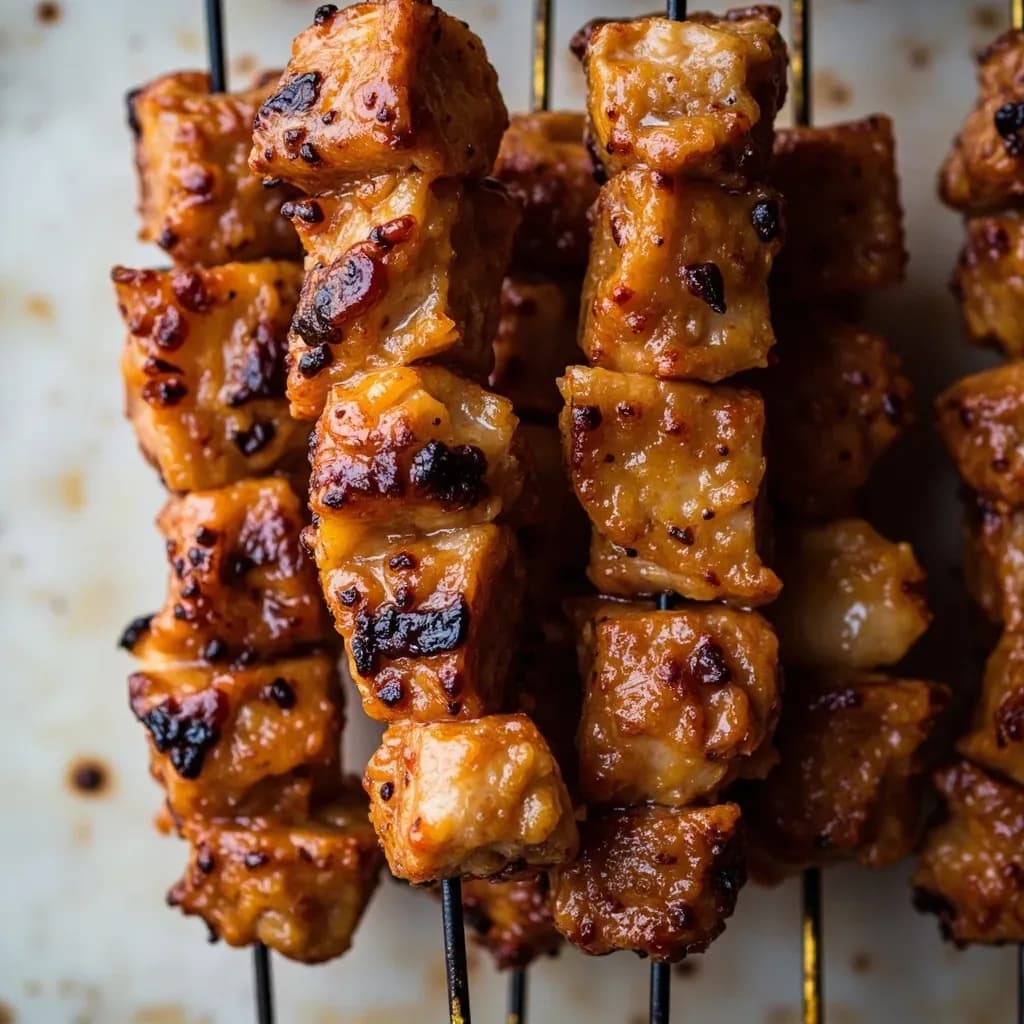
Skewering threads pieces of meat, seafood, or vegetables onto metal or wooden rods so they can be turned and cooked evenly over direct heat, as for kebabs and satay. The skewer holds small or delicate pieces together, makes them easy to flip, and promotes even charring on all sides. Wooden skewers are usually soaked in water first so they don't burn over the flame.
Skewering is one of the oldest cooking techniques in the world, but the decisions behind it are surprisingly consequential. A skewer doesn't just hold food together over a fire — it dictates how heat moves through the food, how the food is presented, and how evenly each piece cooks. A bamboo stick imparts nothing and burns if it hasn't been soaked; a flat metal skewer conducts heat into the center of the food and keeps the food from spinning; a sword-length steel rod turns whole fish or large beef cuts into a table-side spectacle. Choosing among them is the first decision of any skewered cook.
Beyond logistics, skewering reshapes the food itself. Cutting ingredients into uniform, bite-sized pieces dramatically increases exposed surface area, which means faster cooking, deeper char, and more efficient marination. The technique also serves a structural role: it pins thin fish fillets in place, holds stuffed vegetables closed, and lets a single turn of the wrist re-expose every face to the heat. Whether the food is eaten directly off the stick — yakitori, satay, pintxos — or slid off onto a plate, the same fundamentals apply: uniform sizing, dry surfaces, real gaps between pieces, and hot, fast heat.
Skewering lives at the intersection of prep and cooking, and it shows up far beyond grilling. Japanese kushiyaki includes deep-fried and simmered items, and in cocktail and hors d'oeuvre work a skewer is often purely a structural or visual device rather than a cooking tool. But the core craft — choosing the right stick, sizing the food, and threading it for even heat — underwrites dozens of distinct national cuisines, from Levantine shish kebab to Xinjiang chuan'r to Madeiran espetada.
- Difficulty
- Easy
Types & varieties
Japanese; bite-sized pieces on short bamboo (kushi), grilled over binchotan or charcoal, seasoned with tare or salt (shio).
Turkish/Levantine; 'shish' means skewer. Cubed lamb or beef with onion, pepper, and tomato on flat metal skewers.
Southeast Asian (Indonesian/Malaysian); thin marinated strips on bamboo skewers, served with peanut sauce.
Greek; pork, chicken, or lamb cubes on small skewers, often served in pita with tomato, onion, and tzatziki.
Indian/South Asian; yogurt-marinated cubes cooked in a tandoor on long flat metal skewers.
Northern Chinese (Xinjiang); cumin- and chili-seasoned lamb or beef on long thin skewers, a night-market staple.
Caucasus/Russia; cubed meat marinated with onion juice and vinegar, threaded flat on metal skewers.
Spanish (Málaga); sardines or other fish threaded onto canes or thin sticks and cooked over an open flame, traditionally with the skewers driven vertically into the sand.
Brazilian; large meat cuts threaded on sword-length metal skewers and roasted over open flame or charcoal.
Spanish (Basque); small skewered bites of bread, fish, pepper, or meat, often pinned with a toothpick and eaten as bar snacks.
French; umbrella term for skewered food, usually alternating meat with vegetables or fruit.
Portuguese (Madeira); large beef chunks threaded on a bay-leaf-lined skewer, suspended over embers or carved table-side.
How to do it
- 1
Choose the right skewer for the job
Use flat or square stainless-steel skewers for cubed meats and vegetables — the flats keep food from spinning. Use bamboo or wood for short cooks and table presentation, and soak them first. Reach for long sword-style metal skewers for whole fish, large beef chunks (espetada, churrasco), or table-side carving. Reserve short cocktail picks or thin bamboo (about 8 in / 20 cm) for appetizers, yakitori, and satay.
- 2
Prep the skewers
Submerge bamboo or wooden skewers in water for at least 30 minutes; for long or high-heat cooks, soak up to an hour or longer. Plain water is reliable. Wipe metal skewers with a lightly oiled cloth. If the skewer will be eaten off (yakitori, satay), make sure the wood end stays out of the heat and is clean to hold.
- 3
Cut food to a uniform size
Aim for pieces that are roughly equal in size — about 1 to 1.5 inches (2.5–4 cm) for beef, lamb, pork, and chicken breast; slightly larger for tougher cuts that will shrink as they cook. Pat proteins dry before threading so they sear rather than steam. Cut sturdy vegetables (onion, pepper, zucchini) to match the protein; leave cherry tomatoes and small mushrooms whole. Leave shrimp and scallops whole, and trim fish into roughly 1-inch (2.5 cm) strips.
- 4
Marinate and season
Marinate cubed meat for 30 minutes to several hours, depending on the style — yogurt-based marinades (tikka) benefit from 1–4 hours; oil-and-acid marinades (shish kebab) need 1–2 hours; dry rubs can go on just before threading. Pat marinated food dry before it goes on the skewer; surface moisture prevents browning. Season with salt and pepper just before threading, not earlier — salt drawn out by time at room temperature dries the surface and dulls the sear.
- 5
Thread the food
Fold or accordion-cut thin pieces (fish fillets, chicken thighs, large pepper pieces) so they hold their shape. For shrimp, thread through the tail and the body in two places to keep them straight. For scallops or thin fish fillets, use two parallel skewers to keep the food flat and easy to flip. For cherry tomatoes or whole small mushrooms, pre-pierce with the skewer tip to prevent splitting. Alternate proteins with vegetables so the meat shields more delicate items from flare-ups, and leave a small gap between pieces — roughly 1/8 to 1/4 inch (3–6 mm) — for heat to circulate. Don't pack pieces against each other; they will steam rather than char.
- 6
Heat the cooking surface
For charcoal: light 30–45 minutes ahead and cook when coals are ashed over and give off steady radiant heat. For gas: preheat on high with the lid closed for 10–15 minutes. For broiling: position the rack 4–6 inches (10–15 cm) from the element and preheat. Clean and oil the grates just before laying the skewers down. Have a spray bottle of water ready for flare-ups, especially with bamboo skewers and fatty cuts.
- 7
Lay down and turn with care
Lay skewers perpendicular to the grates so they don't fall through. Don't move them for the first 2–3 minutes — a clean release from the grates is your signal that the sear has set. Turn every 2–3 minutes for even cooking. Use long-handled tongs to grip and turn metal skewers; use the cool wood end of bamboo skewers as a handle. Baste with fresh marinade or a glaze in the final minute, and watch closely — sugar- and yogurt-based coatings burn fast.
- 8
Check doneness and rest
Pull skewers just before the target internal temperature — food continues to cook off the heat. Chicken should read 160°F (71°C) and carry over to 165°F (74°C); shrimp curl into a 'C' and turn opaque; scallops feel springy; vegetables should be tender with charred edges. Transfer to a warm platter or sheet pan, tent loosely, and let rest 1–2 minutes.
- 9
Finish and serve
Hit the skewers with a final squeeze of lemon or lime, a brush of butter or herb oil, a sprinkle of flaky salt, fresh herbs, or toasted spices (cumin, sumac, shichimi togarashi). Serve immediately, either sliding the food off the skewer onto rice, salad, or flatbread, or letting diners eat straight from the stick (yakitori, satay, pintxos). For long sword-style skewers, set the hot end on a heatproof rest and let guests carve table-side.
Skewer materials and when to use them
The skewer you reach for shapes the dish more than you'd expect. There are three families worth knowing, each with honest tradeoffs.
- Bamboo and wood: Cheap, disposable, and presentation-friendly (yakitori, satay, and pintxos are eaten straight off the stick). They impart no flavor and conduct almost no heat. The catch is that they ignite over direct flame, so soak them in water for at least 30 minutes — an hour for long cooks — and keep a spray bottle handy for flare-ups.
- Round metal (stainless steel): Durable, dishwasher-safe, and reusable. The round cross-section is the classic weakness: food spins when you turn the skewer, which means uneven browning. Fine for shrimp, scallops, or any food you intend to slide off the stick at the table.
- Flat or square metal: The professional's choice for cubed proteins. The flat faces resist spinning, sear marks stay clean, and the metal carries some heat into the center of the food, nudging cooking along. Heavier in the hand and pricier than bamboo, but worth the investment.
- Long sword skewers (30–90 cm / 12–35 in): Built for whole fish, large beef chunks, and table-side carving (espetada, churrasco). They hold a lot of food and read as dramatic. Let the meat slide down to the cool end off the heat and let guests carve for themselves.
Common uses
Tips & pitfalls
- Soak bamboo or wooden skewers in water for at least 30 minutes (an hour for long cooks); a damp skewer smolders rather than ignites. Skipping this is the fastest way to lose a batch to flame.
- Choose flat or square metal skewers over round ones — they prevent food from spinning when you turn the skewer, which is why professionals overwhelmingly prefer them for cubed proteins.
- Cut everything to a uniform size (about 1 to 1.5 in / 2.5–4 cm for cubed proteins) so pieces finish at the same time. Mixing sizes means some pieces overcook while others stay raw in the middle.
- Don't pack food shoulder-to-shoulder. Leave a small gap — roughly 1/8 to 1/4 in (3–6 mm) — between pieces so heat circulates and edges can char instead of steam.
- Salt protein just before threading, not earlier. Salt drawn out by time at room temperature dries the surface and dulls the sear.
- For delicate items (shrimp, scallops, fish fillets), use two parallel skewers to keep the food flat and easy to flip without tearing.
- Oil the food, not just the grill, just before cooking. Oiling the grates helps, but it can't compensate for a dry food surface.
- Keep a spray bottle or cup of water on hand for flare-ups, especially with bamboo skewers and fatty meats. A flare-up can scorch a thin fish strip in seconds.
- Never reuse raw marinade that touched the meat unless you boil it first. Reserve a clean portion for basting, or make a separate finishing glaze.
Good to know
- Category
- Prep & Assembly technique
- Also called
- Threading, mounting, broaching (French: embrocher)
- Origin
- Prehistoric; skewered and roasted meat is documented across nearly every ancient cuisine
- Primary cuisines
- Middle Eastern, South Asian, Southeast Asian, East Asian, Mediterranean, Latin American
- Standard skewer length
- Bamboo 8–12 in (20–30 cm); stainless steel 12–16 in (30–40 cm); sword skewers up to about 90 cm (35 in)
- Bamboo soak time
- 30–60 minutes in water; longer for high-heat or long cooks
- Difficulty
- Beginner to intermediate; high-end results require attention to sizing and heat management
- Cook time
- Typically 4–12 minutes over high heat for cubed proteins; longer for whole fish or root vegetables
- Heat source
- Charcoal, gas, wood fire, oven broiler, or pan-grill
- Works with
- Meat, poultry, seafood, vegetables, fruit, cheese (halloumi, paneer), tofu, tempeh, bread
Also called
Skewering · Threading · Kebab Assembly
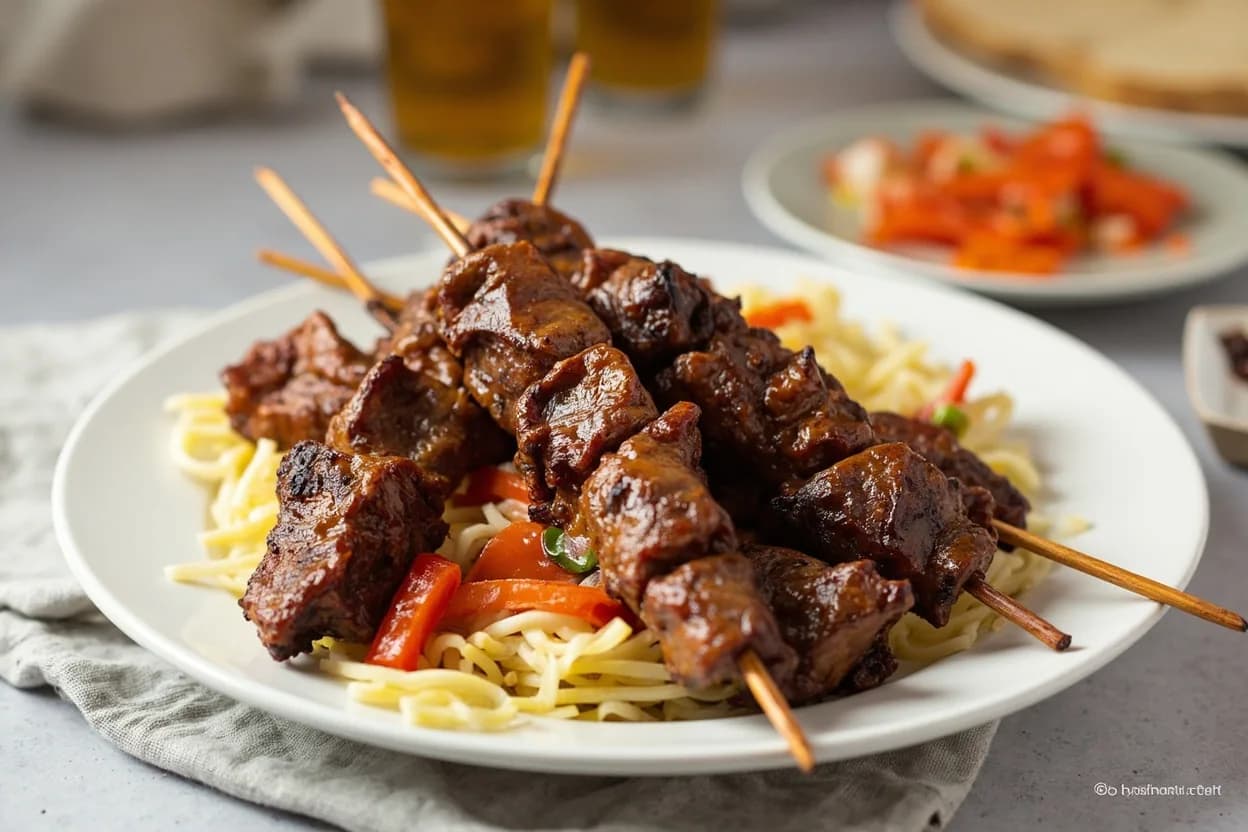
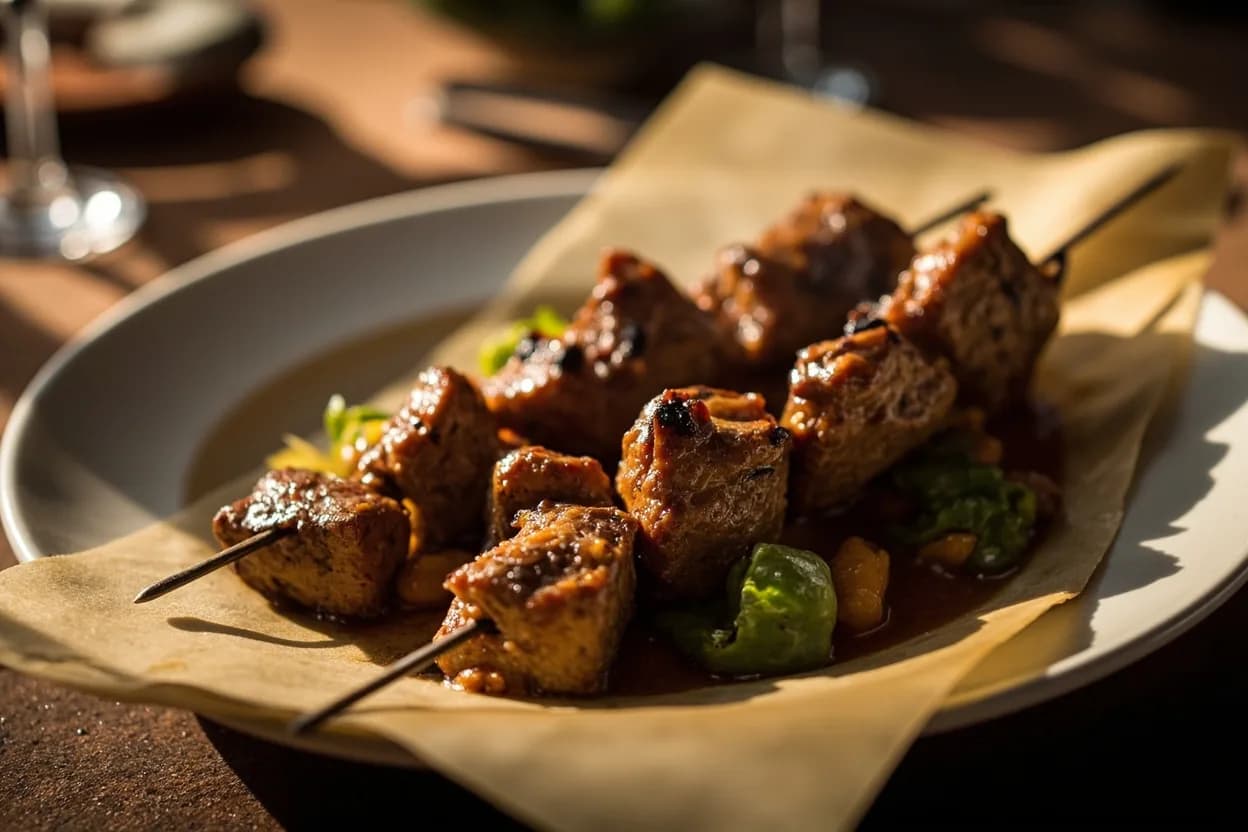
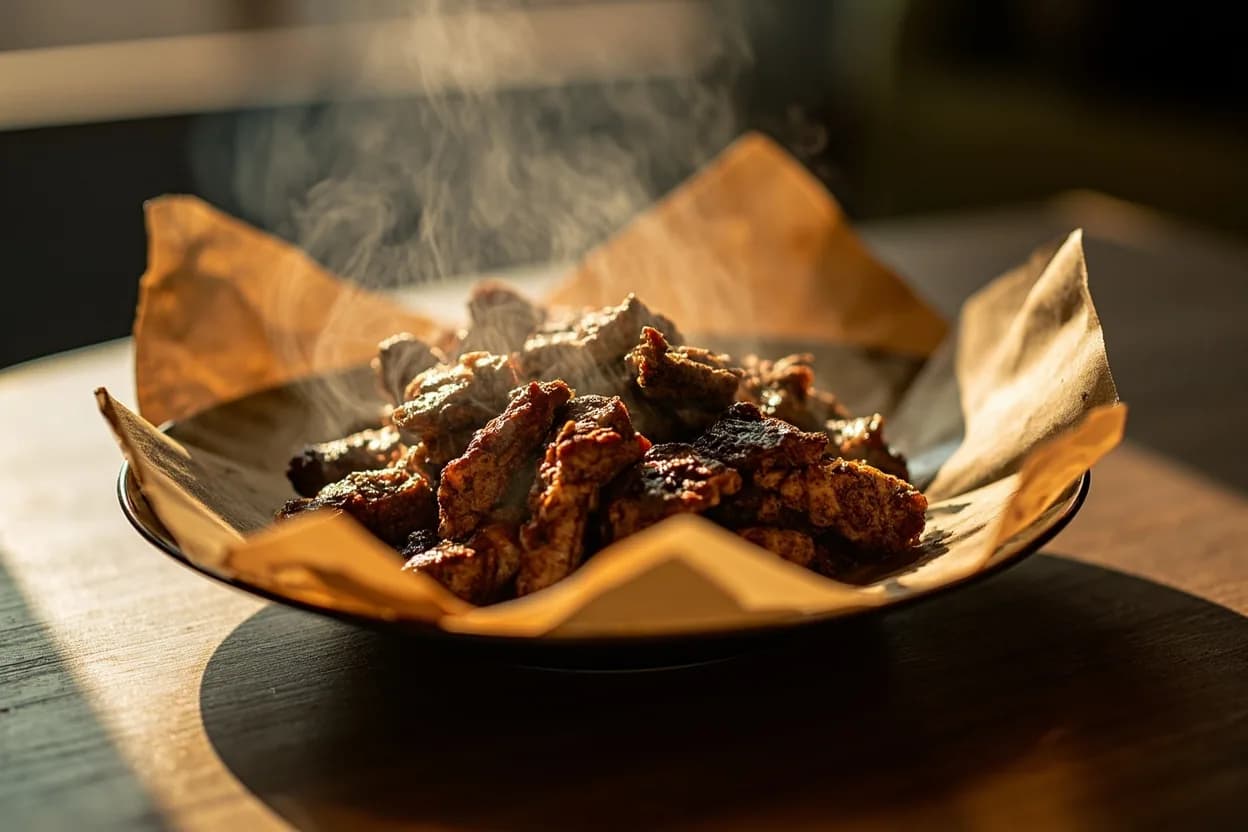
Dishes that rely on it
Related

Whisk
Beat ingredients smooth and aerated with a looping wire motion

Sift
Pass dry ingredients through mesh to aerate and remove lumps

Strain
Pour through mesh to separate solids from liquid for a smooth result

Filter
Pass liquid through fine material to clarify out the smallest particles

Rice
Press cooked potatoes through small holes for fluffy, lump-free texture

Mash
Crush soft cooked food into a rustic, creamy purée

Grind
Crush food into a coarse to fine texture, from spices to meat

Grate
Shred food into fine bits against a sharp-toothed surface