 Japanese
Medium · Hot
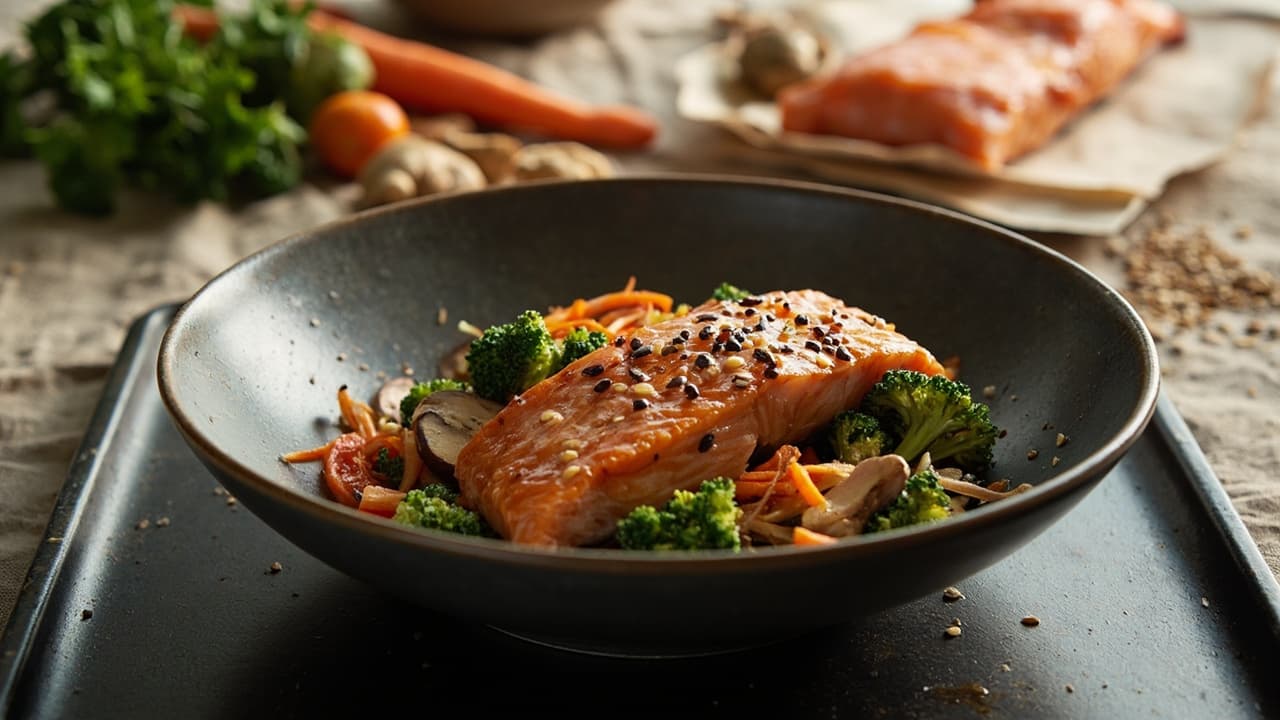
Ginger Salmon with Sesame Vegetables
Silky salmon glazed with fresh ginger and soy, served alongside crisp vegetables tossed in toasted sesame oil and seeds. A washoku-inspired dish where dashi whispers under every bite.

Prep
15 min
Cook
25 min
Rest
5 min
Total
45 min
Method
Prepare
1
Rinse rice until water runs clear. Add 2 cups water and set aside to soak while preparing other ingredients.
2
Pat salmon dry with paper towels. Grate ginger on a fine grater, collecting the juice.
Steam Rice
4
Bring rice and water to a boil over medium-high heat. Cover, reduce heat to low, and simmer for 18 minutes until water is absorbed.
5
Remove from heat and let steam, covered, for 5 minutes. Fluff with chopsticks.
6
[object Object]
Stir-Fry Vegetables
7
In the same skillet over medium-high heat, warm sesame oil until it shimmers. Add broccoli and carrot. Stir-fry 3 minutes. NOTE: Monitor oil temperature closely as sesame oil has a relatively low smoke point. Do not allow oil to smoke.
A
Nutri-Score
Excellent balance
A–E · lower is better · score -2
Calories
822
per serving
Source of protein · 38gLow sugar · 6gLow saturated fat · 4g
Protein
38g
Carbs
111g
Fat
24g
Sat. fat
4g
Fiber
6g
Sugar
6g
Sodium
1399mg
Gluten FreeDairy FreeHeart HealthyAnti InflammatoryHigh ProteinOmega 3 RichLow Sodium Friendly
Nutri-Score is a general nutritional-balance guide, not medical or dietary advice.
E
Environmental impact
Very high impact
A–E · lower is better · includes estimates
kg CO2e
2.9
per serving
ECarbon
Salmon fillet drives 80% of this recipe’s estimated footprint.
Carbon from Poore & Nemecek 2018; water, land & runoff from Agribalyse — modelled averages for comparing recipes, not a measurement of your groceries.
Flavor Profile
7
Umami
3
Sweet
5
Salty
1
Sour
1
Bitter
4
Spicy
Textures
CrispyTender CrispSilkyTender
Aromas
GingerSesameUmami
Kitchen Equipment
Primary Tool
Heavy SkilletCounter FootprintMedium
Techniques
Safety & Storage
Cooking Temperature
Cook salmon to minimum internal temperature of 63°C (145°F) as measured at the thickest part. Use a calibrated meat thermometer to verify doneness.
Heat sesame oil over medium-high heat until shimmering before adding vegetables to ensure proper cooking and flavor development.
Cross Contamination
Use separate cutting boards and utensils for raw salmon and vegetables. The same skillet is used sequentially; ensure thorough cleaning between proteins and vegetables.
Avoid reuse of marinade that has contacted raw salmon. Reserve portion before coating fish for later use as sauce.
Storage
Refrigerate leftover salmon and vegetables separately within 2 hours of cooking. Consume within 3 days. Reheat to 74°C (165°F) before serving.
Handling
Pat salmon dry before cooking to ensure proper searing and skin crispiness. Moisture on fish surface will cause steaming rather than searing.
High Risk Population
Immunocompromised individuals, pregnant women, young children, and elderly should only consume fully cooked salmon. Verify internal temperature with thermometer.
Allergen Warning
This dish contains fish, soy, and sesame. Ensure no cross-contact with allergen-free preparation surfaces and utensils.
Pro Tips
Technique
When grating ginger, collect both the juice and pulp — the juice carries bright aromatics while the pulp holds earthy warmth. This combination creates the layered ginger flavor that defines the glaze.
Substitution
If wild salmon is unavailable, substitute with sablefish (black cod) for similar fatty richness, or use a firmer white fish like cod for a lighter interpretation.
Equipment
A heavy skillet — preferably cast iron — maintains consistent heat for crisping the salmon skin. This contact is essential for that satisfying textural contrast.
Seasonal
In autumn, seek out broccoli and carrots at peak sweetness. The natural sugars in these seasonal vegetables pair beautifully with the savory ginger-soy glaze.
From the chef
This dish speaks of autumn on a plate — the richness of wild salmon catching the last warmth of the season, its fat melding with fresh grated ginger and the deep whisper of soy. The vegetables are bright witnesses to this union, tossed in toasted sesame oil until they glisten like morning dew. In my mother's kitchen, we would say: here is balance, here is harmony, here is everything the body craves as the air grows cool.
TagsWashoku InspiredSalmonHealthyWeeknight DinnerSteamedStir FriedGingerSesame
AllergensFishSoySesame
Source: generated · June 10, 2026