 Mediterranean
Medium · Hot
Charred Zucchini Salad with Feta and Parsley
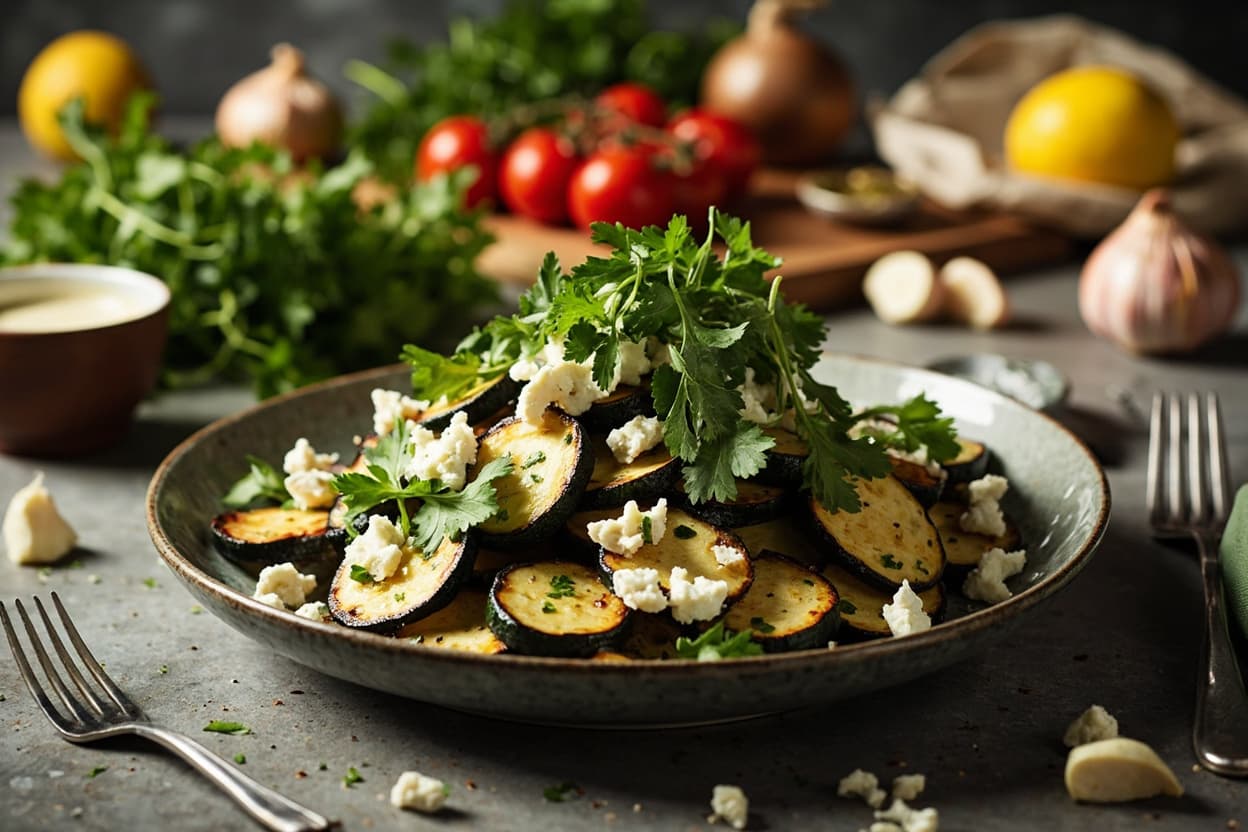
Zucchini needs high, dry heat to shed its water and concentrate into something worth eating — a grill or a screaming-hot griddle, nothing in between. The blistered planks go down still warm onto a plate, and the feta crumbled on top begins to soften at the edges immediately. Lemon, garlic, parsley, and olive oil are the dressing, and they ask for nothing more.

Prep
10 min
Cook
20 min
Rest
5 min
Total
35 min
Method
Fire the Zucchini
1
Lay the planks directly on the fire. Do not move them. Let them char、深烤 until blackened stripes form, about 3-4 minutes per side. You want color, smoke, and blisters—the char IS the flavor here. Remove when the flesh is tender and pulled from the flame.
Build the Oil
2
While the zucchini rests, microplane or finely mince the garlic. Combine it with the remaining olive oil, a squeeze of the whole lemon, black pepper, and salt. Let it sit—melding the raw bite into something smoother.
C
Nutri-Score
Fair balance
A–E · lower is better · score 3
Calories
283
per serving
Low sugar · 6g
Protein
8g
Carbs
13g
Fat
24g
Sat. fat
8g
Fiber
5g
Sugar
6g
Sodium
1570mg
Gluten FreeMediterraneanLow CarbDairyHeart HealthyAnti InflammatoryWeight ManagementHealthy FatVegetable ForwardLow Carb Option
Nutri-Score is a general nutritional-balance guide, not medical or dietary advice.
B
Environmental impact
Low impact
A–E · lower is better · includes estimates
kg CO2e
0.6
per serving
BCarbonAEU all-round· carbon sets the grade
Water
0.9m³
Land
36Pt
Runoff
0.05g P
feta drives 57% of this recipe’s estimated footprint.
Carbon from Poore & Nemecek 2018; water, land & runoff from Agribalyse — modelled averages for comparing recipes, not a measurement of your groceries.
Flavor Profile
5
Umami
4
Sweet
6
Salty
4
Sour
2
Bitter
2
Spicy
Textures
CrispyTenderCreamy
Aromas
SmokyHerbalCitrusPungent
Kitchen Equipment
Primary Tool
GrillCounter FootprintSmall
Safety & Storage
Cooking Temperature
Open fire charring reaches extreme temperatures. Remove zucchini when blackened stripes form on both sides, ensuring flesh is tender but not burnt to carbon. Watch for flare-ups from oil dripping onto flames.
Handling
Use long tongs to handle zucchini directly on the fire. Allow charred vegetables to rest before slicing to prevent burns from retained heat.
Cross Contamination
Keep raw zucchini separate from ready-to-eat feta during preparation. Use separate cutting boards or clean between uses to prevent bacterial transfer from charred exterior to other ingredients.
Storage
Refrigerate feta at or below 40°F. Store leftover salad in airtight container and consume within 2 days. The lemon-garlic oil is not preserved and should be used immediately or stored properly.
Allergen Warning
This dish contains milk (feta cheese). Use separate serving utensils to prevent cross-contact with other dishes if serving at gatherings.
Equipment Safety
Position grill away from flammable materials. Keep a fire extinguisher or water source nearby when cooking with open flame. Never leave open fire unattended during the 3-4 minute charring periods.
Pro Tips
Technique
Do not move the zucchini while it's on the fire. Sliding it around only cools the contact point and creates steam instead of char. Let the coals do their work—those black stripes are where the flavor lives.
Substitution
If you don't have a grill, a cast-iron skillet over the highest heat possible works nearly as well. Get it smoking hot, press the zucchini planks down, and accept some char marks instead of even cooking.
Equipment
Long tongs are your only friend here. You need reach and control to position and retrieve the zucchini without bending or tearing the softened flesh.
From the chef
Zucchini needs high, dry heat to become worth eating — a screaming-hot grill or griddle until blistered stripes form and the flesh concentrates into something with genuine flavor and a voice it never had raw. Lay the planks down over fire and do not move them; the char is the flavor here, built in carbon and smoke. While still warm, crumbled feta begins to soften at the edges immediately. Lemon-garlic oil — made while the zucchini chars — is the dressing, and it asks for nothing more.
TagsVegetarianGluten FreeGrilledCharredSummerNo Cook Sauce
AllergensMilk
Source: generated · May 30, 2026