 Ecuadorian
Medium · Cold
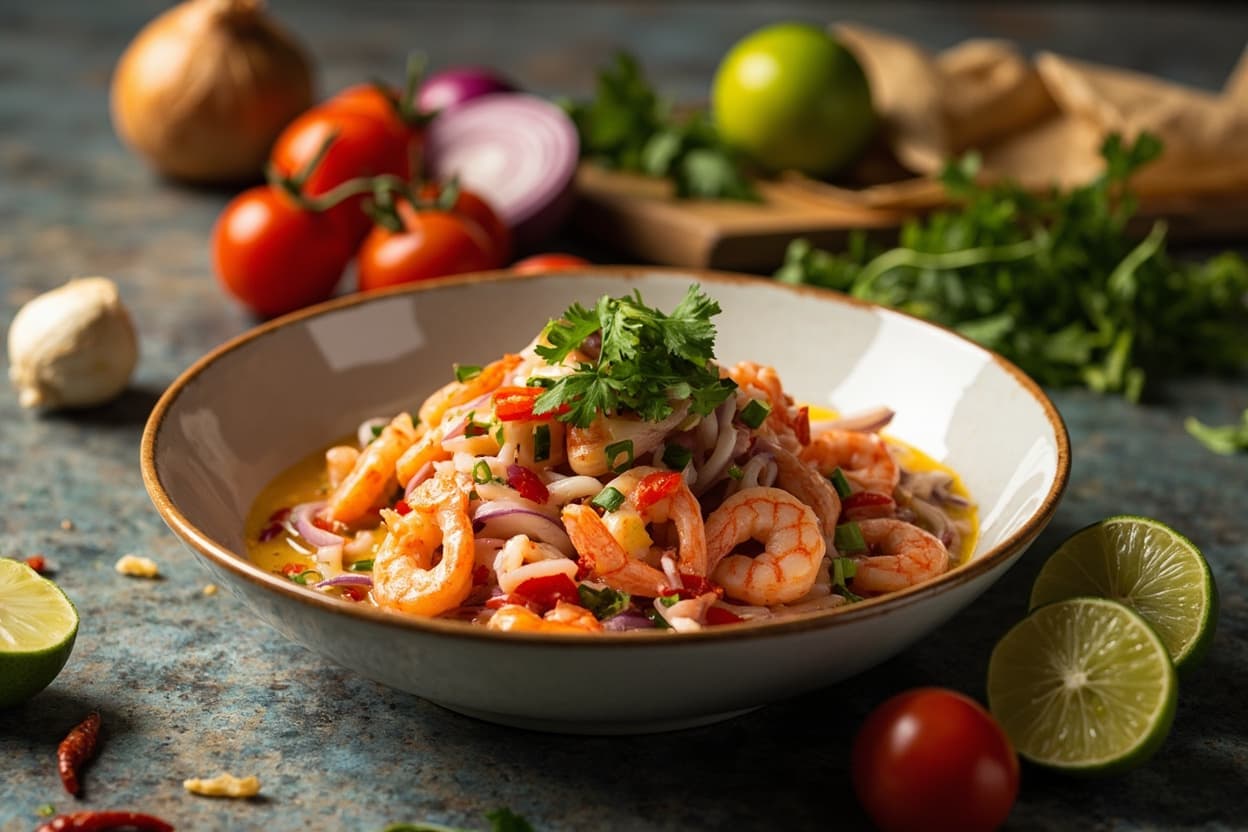
Ecuadorian Shrimp Ceviche with Tomato and Red Onion
Shrimp cure in lime juice until they are just firm, then get tossed with thin-sliced yellow onion, ripe tomato, and enough cilantro to turn the whole bowl green-flecked and fragrant. This is ceviche the way the coast makes it — not too fussy, not too refined, just bright and cold and alive with acidity. Eat it quickly, before the lime takes it too far.

Prep
20 min
Rest
1h
Total
1h 20m
Method
Prepare the Shrimp
1
Rinse the shrimp under cold water and pat completely dry with paper towels. Peel and devein them, then season with 1 teaspoon of salt. Set aside.
Make the Citrus Marinade
2
3
Add the cleaned shrimp to the lime marinade, making sure they are fully submerged. Cover the bowl with plastic wrap and refrigerate for at least 30 minutes, or until the shrimp turn opaque and 'cook' in the acid.
Build the Tomato and Onion Base
4
Peel and halve the yellow onion, then slice into thin, delicate half-moons. Add the sliced onion to the tomatoes and toss gently.
Combine and Finish
A
Nutri-Score
Excellent balance
A–E · lower is better · score -5
Calories
223
per serving
High in protein · 34gLow sugar · 7gLow saturated fat · 0g
Protein
34g
Carbs
27g
Fat
1g
Sat. fat
0g
Fiber
8g
Sugar
7g
Sodium
1294mg
Gluten FreeDairy FreeLow FatPescatarianWhole30Heart HealthyDiabetes FriendlyAnti InflammatoryLow SodiumHigh ProteinLow CalorieNutrient DenseQuick Protein
Nutri-Score is a general nutritional-balance guide, not medical or dietary advice.
E
Environmental impact
Very high impact
A–E · lower is better · includes estimates
kg CO2e
3.8
per serving
ECarbonBEU all-round· carbon sets the grade
Water
24m³
Land
37Pt
Runoff
1.1g P
Shrimp drives 89% of this recipe’s estimated footprint.
Carbon from Poore & Nemecek 2018; water, land & runoff from Agribalyse — modelled averages for comparing recipes, not a measurement of your groceries.
Flavor Profile
6
Umami
4
Sweet
5
Salty
9
Sour
2
Bitter
0
Spicy
Textures
TenderJuicyCrispSilky
Aromas
CitrusHerbalPungentEarthySweet
Kitchen Equipment
Primary Tool
Mixing BowlCounter FootprintSmall
Techniques
Safety & Storage
Storage
Keep shrimp refrigerated at 40°F or below until ready to use. After acid-cooking, maintain ceviche at cold temperatures (40°F or below) until serving.
Cross Contamination
Shrimp is a priority allergen - use dedicated cutting boards, utensils, and serving dishes. Clean all surfaces thoroughly after handling raw shrimp to prevent allergen cross-contact with other dishes.
Handling
The lime juice 'cooks' the shrimp through acid denaturation, not heat - ensure shrimp is submerged entirely in citrus marinade during the 30+ minute rest period for complete protein coagulation.
Shelf Life
Ceviche prepared with acid-cooked seafood has a limited shelf life of 2-3 days maximum when refrigerated. Do not consume after 72 hours.
High Risk Population
Pregnant women, young children, elderly, and immunocompromised individuals should exercise caution with acid-cooked seafood. Consider using fully cooked shrimp if serving to high-risk populations.
Allergen Warning
This dish contains SHELLFISH (shrimp). Even trace amounts from cross-contact can cause severe reactions in allergic individuals. Clearly label and separate from allergen-free dishes.
Pro Tips
Technique
Trust the lime — the shrimp is 'cooked' when it turns opaque and firm, usually around 30 minutes in the acid. You don't need heat for this magic, just patience and really fresh lime juice.
Substitution
If shrimp isn't available, firm white fish like cod works beautifully here in Ecuador. Cut it into small cubes and let it marinate the same way — the brightness of the lime will do all the work.
Storage
Ceviche is best eaten the moment it's ready. If you must store it, keep the tomato-onion base separate from the shrimp marinade and combine them just before serving so the onions don't lose their crunch.
From the chef
Coastal ceviche is about timing and acid. Shrimp go into lime juice with garlic and cumin and stay just long enough to turn opaque and firm without going rubbery — thirty minutes in the cold is all it takes. Then comes the toss: thin-sliced yellow onion that has softened in the marinade, ripe tomato, and enough cilantro to turn the whole bowl green-flecked and fragrant. Eat it cold and eat it quickly, because the lime keeps working the longer it sits. This is the way the coast makes it — not fussy, not refined, just bright and bracing and alive with acidity.
TagsCitrus CuredNo CookSeafoodGluten FreeBrightCoastalLimeSummerQuick
AllergensShellfish
Source: generated · May 30, 2026