 Georgian Inspired
Easy · Cold
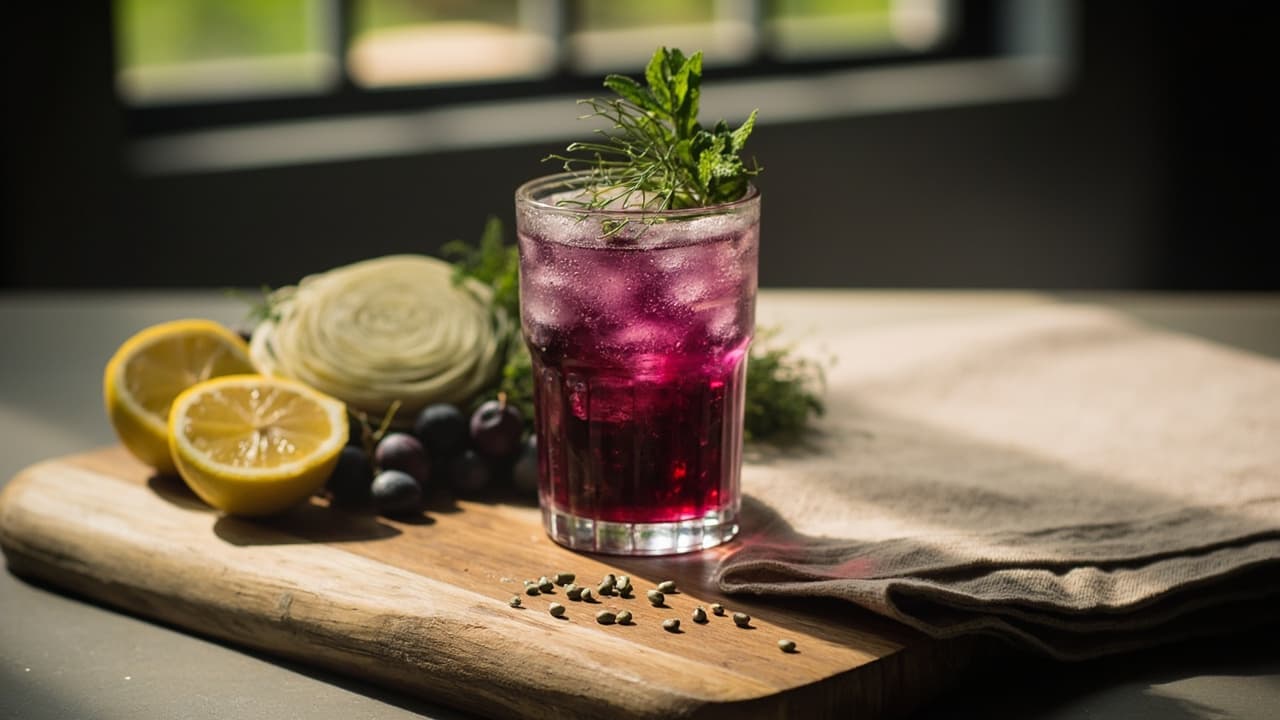
Fennel-Twisted Wild Grape Sipper
A living-culture-inspired refresher that marries wild grape's grape-forward depth with bright fennel aromatics, finished with gentle natural carbonation.
Prep
20 min
Cook
45 min
Total
1h 5m
Method
1
Wash 500g grapes thoroughly, remove stems, and place in a large non-reactive bowl. Using a wooden muddler or clean hands, gently crush the grapes to release their juices and wild yeast-laden skins.
2
Add 60ml raw honey and the zest and juice of 1 lemon to the crushed grapes. Stir gently to combine. Cover with clean muslin cloth and let rest at room temperature for 2-3 hours to allow natural fermentation to begin and flavors to meld. Note: This brief room-temperature rest is intentionally short to minimize harmful bacterial growth while allowing initial flavor development.
3
While the grape must rests, thinly slice the fennel bulb, reserving a few delicate fronds for garnish. Combine sliced fennel, 5g fennel seeds, and 500ml freshly boiled water in a heatproof vessel.
4
Steep the fennel mixture for 15 minutes at room temperature, then strain through fine mesh lined with clean cloth. Discard solids and let the bright emerald infusion cool to room temperature.
5
After the grape must has rested, strain it through fine mesh, pressing gently with a wooden spoon to extract all juice. You should have approximately 400ml of rich grape must.
6
7
Refrigerate the combined sipper for 30 minutes until chilled. Just before serving, slowly add 1000ml cold sparkling water, pouring along the side of the pitcher to preserve carbonation.
8
Taste and adjust sweetness with additional honey if needed. Pour over large ice cubes in tall glasses, garnish each with fresh mint sprigs and reserved fennel fronds. Serve immediately for best effervescence.
Grade pending
Nutri-Score
Estimated nutrition
Grade pending · 100% ingredient coverage
Calories
226
per serving
Source of protein · 9gLow salt · 316mg
Protein
9g
Carbs
54g
Fat
1g
Fiber
9g
Sodium
316mg
Dairy FreeEgg FreeGluten FreeLow SodiumVeganWhole FoodAnti InflammatoryDigestive SupportHeart HealthyImmune SupportLow CalorieLow FatLow GlycemicLow Protein
Nutri-Score is a general nutritional-balance guide, not medical or dietary advice.
A
Environmental impact
Very low impact
A–E · lower is better · includes estimates
kg CO2e
0.3
per serving
ACarbon
Grapes drives 61% of this recipe’s estimated footprint.
Carbon from Poore & Nemecek 2018; water, land & runoff from Agribalyse — modelled averages for comparing recipes, not a measurement of your groceries.
Flavor Profile
2
Umami
7
Sweet
1
Salty
4
Sour
3
Bitter
0
Spicy
Textures
EffervescentFibrousSilky
Aromas
CitrusEarthyFloralHerbal
Kitchen Equipment
Primary Tool
NoneCitrus JuicerFine Mesh StrainerGlass PitcherHeatproof VesselMeasuring CupsMeasuring SpoonMicroplane ZesterWooden MuddlerWooden PaddleWooden SpoonCheeseclothIce Cube Tray
Safety & Storage
High Risk Population
Raw honey is used in this recipe. Do not serve to infants under 12 months, immunocompromised individuals, or pregnant women due to risk of Clostridium botulinum spores.
Cross Contamination
Use thoroughly sanitized non-reactive vessels, wooden utensils, and fine mesh strainers exclusively for fermentation. Cross-contamination from unsanitized equipment can introduce harmful bacteria to the wild fermentation process.
Handling
Wash all grapes thoroughly and remove all stems before crushing. The natural yeast on grape skins initiates fermentation, but surface debris can introduce unwanted microorganisms.
Storage
After combining grape must with fennel infusion, refrigerate and consume within 24-48 hours. The natural carbonation and lack of preservatives means this living beverage continues to ferment and should not be stored at room temperature for extended periods.
Shelf Life
Serve immediately after adding sparkling water for optimal carbonation. The wild fermentation creates a perishable beverage with limited shelf life once carbonated.
Wild fermentation using natural grape yeast carries inherent variability. Monitor for off-odors, unusual mold, or discoloration. Discard if any signs of contamination appear. The 2-3 hour rest period at room temperature is brief to minimize fermentation risks while allowing flavor melding.
Pro Tips
Technique
When crushing the grapes, use the heel of your palm in slow, circular motions rather than aggressive pounding. This gentle coaxing preserves the delicate wild yeasts on the grape skins while still releasing the deep juices. Aggressive crushing can bruise the flavors bitter.
Substitution
If wild grapes are not available where you live, seek out organically grown Concord or Norton grapes — their thick skins carry robust wild yeast populations. Simply avoid thoroughly washed or treated supermarket grapes, as the protective bloom will have been stripped away.
Equipment
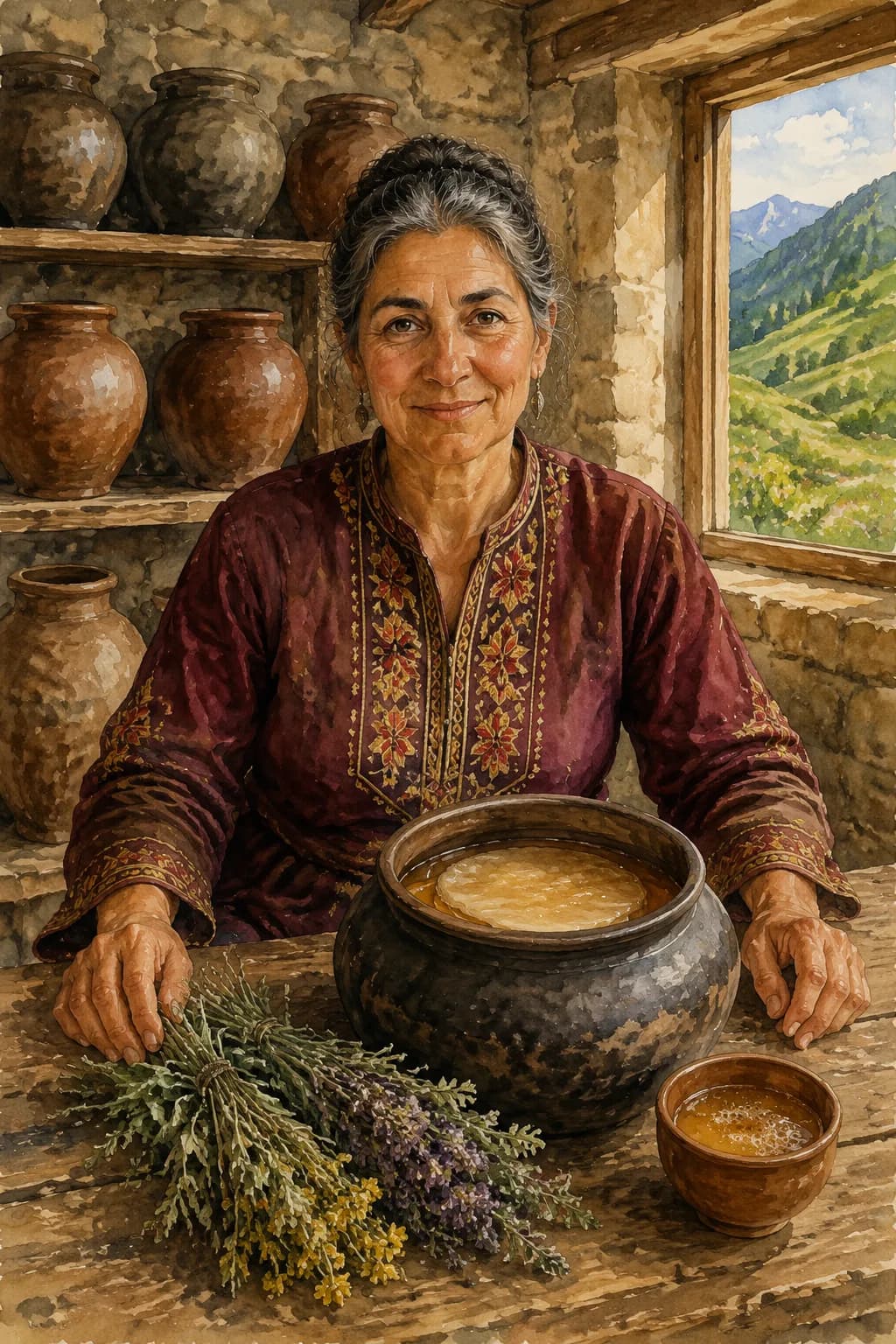
If you have a Georgian qvevri or ceramic fermentation crock, use it for the grape must rest. The porous clay carries ancestral energy and allows the ferments to breathe naturally, just as our ancestors intended.
From the chef
Wild grapes macerated with raw honey and lemon meet a slow-steeped fennel infusion in this sipper, and the pairing is stranger and more right than it has any business being. The grape must rests for a few hours, stirring up the indigenous wild yeasts on the skins while the fennel releases its anise sweetness into hot water. When the two liquids come together, something happens — the grape-forward depth softens around the aromatic fennel, the honey holds the balance, and sparkling water carries it all into your glass with a clean natural fizz. Finish with mint and fennel fronds and drink it immediately for the sharpest effervescence.
TagsWild FermentedLiving CultureNatural CarbonationHoney SweetenedHerbal InfusedNo AlcoholGrape ForwardFermented RefresherAncestral TechniqueEasy Prep
Source: generated · June 13, 2026