 British
Easy · Hot
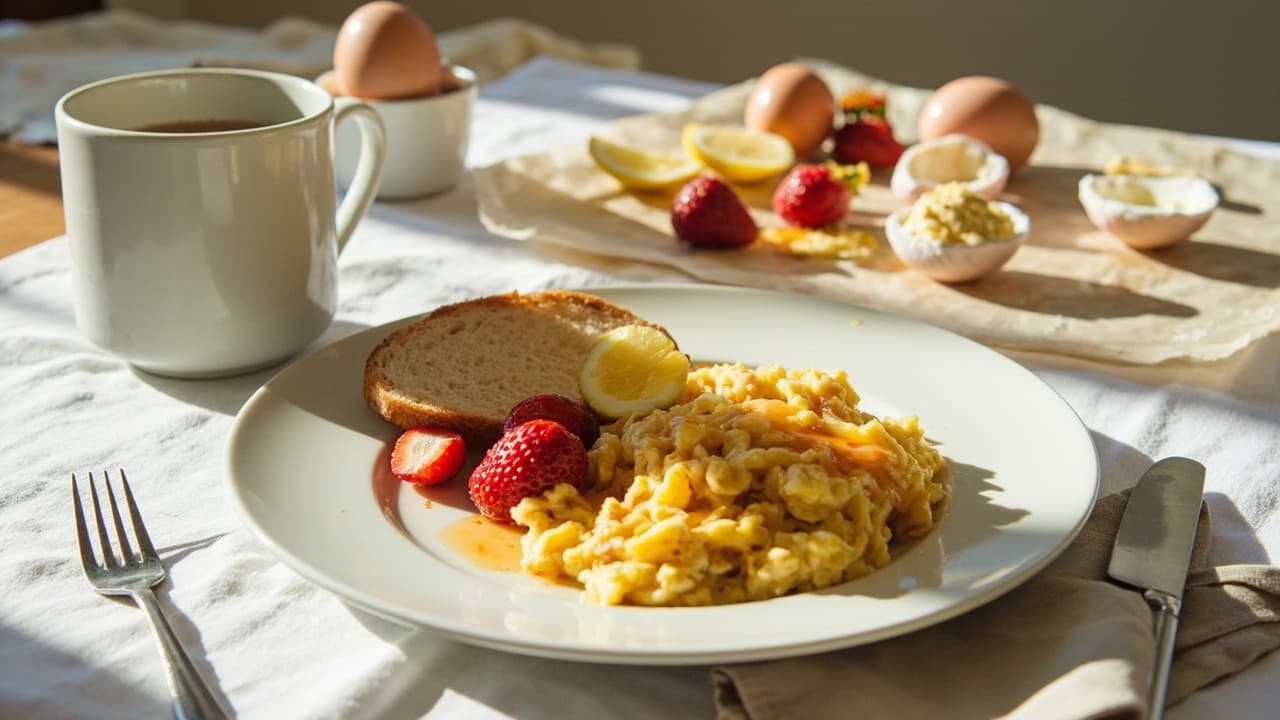
Soft Scrambled Eggs with Honey Strawberries
Buttery soft-scrambled eggs paired with honey-drizzled strawberries macerated in lemon juice — a lazy Sunday plate done right. Gentle heat, unhurried stirring, and fresh fruit brightness make this Theo Calder's idea of a perfect morning.

Prep
10 min
Cook
10 min
Total
20 min
Method
Macerate the Strawberries
1
Hull the strawberries and slice them into quarters. Place in a bowl and drizzle over the honey.
Scramble the Eggs
3
Crack the eggs into a bowl and whisk together with salt and white-pepper until well combined.
4
Warm a non-stick frying pan over medium-low heat. Add the butter and let it melt, swirling gently until foamy but not browning — about 2 minutes.
5
6
Continue stirring gently, scraping the bottom of the pan as you go. The eggs should form soft, small curds. This takes about 4-5 minutes — don't rush it.
7
When the eggs are still slightly glossy and creamy, remove the pan from the heat. The residual warmth will finish them off.
B
Nutri-Score
Good balance
A–E · lower is better · score 1
Calories
303
per serving
Source of protein · 14g
Protein
14g
Carbs
22g
Fat
19g
Sat. fat
9g
Fiber
3g
Sugar
16g
Sodium
438mg
Nutri-Score is a general nutritional-balance guide, not medical or dietary advice.
B
Environmental impact
Low impact
A–E · lower is better · includes estimates
kg CO2e
0.8
per serving
BCarbonAEU all-round· carbon sets the grade
Water
1.2m³
Land
31Pt
Runoff
0.08g P
egg drives 60% of this recipe’s estimated footprint.
Carbon from Poore & Nemecek 2018; water, land & runoff from Agribalyse — modelled averages for comparing recipes, not a measurement of your groceries.
Flavor Profile
5
Umami
6
Sweet
3
Salty
4
Sour
1
Bitter
2
Spicy
Textures
CreamyTenderSoftSilky
Aromas
ButterySweetCitrusFruity
Kitchen Equipment
Primary Tool
Non Stick Frying PanCounter FootprintSmall
Techniques
Safety & Storage
Cooking Temperature
Soft-scrambled eggs removed from heat while still glossy may not reach the recommended internal temperature of 160°F (71°C) needed to eliminate Salmonella. Use a probe thermometer to verify doneness, especially when serving vulnerable populations.
High Risk Population
This recipe's softly scrambled eggs, which are intentionally undercooked for texture, are not recommended for pregnant individuals, young children, elderly persons, or immunocompromised guests due to Salmonella risk.
Cross Contamination
Raw egg shells and egg mixture must not contact the strawberries, which are served raw. Use separate cutting boards, utensils, and bowls, or thoroughly sanitize between uses.
Handling
Wash hands with soap and warm water for at least 20 seconds after handling raw eggs, eggshells, or contaminated surfaces. Avoid touching your face while preparing the egg component.
Storage
Refrigerate strawberries at 40°F (4°C) or below until ready to use. Leftover prepared dish must be refrigerated within 2 hours and consumed within 2 days. Reheat eggs to 165°F (74°C) before consuming leftovers.
Equipment Safety
Non-stick pan should be used only on low-to-medium heat. Overheating butter past its smoke point of 350°F (177°C) can degrade the coating and release harmful fumes.
Pro Tips
Technique
The secret to those silky curds is patience — keep your heat at medium-low and stir slowly, letting the eggs tell you when they're ready rather than rushing them along.
Substitution
If strawberries aren't hitting right, ripe peaches or nectarines work beautifully in summer. Same idea with the honey and lemon, just a different fruit to brighten your plate.
From the chef
Soft-scrambled eggs need patience more than they need skill — low heat, a gentle hand with the spatula, and the willingness to pull the pan off before they look quite done. Butter is the whole point here, coating each soft curd with a richness that toast alone cannot match. While the eggs come together, the strawberries sit quietly in honey and lemon juice, turning jammy and bright, their juices pooling across the plate when you spoon them alongside. The sweetness and the buttery eggs play off each other in exactly the way you want on a slow morning. Keep the tea warm and take your time.
TagsSoft ScrambledStrawberriesHoneyButterEasyQuickSweet Savory
AllergensEggsMilk
Source: generated · June 10, 2026