 Filipino
Medium · Hot
Coconut Flour–Crusted Pork Belly Bites with Sweet Soy Dip
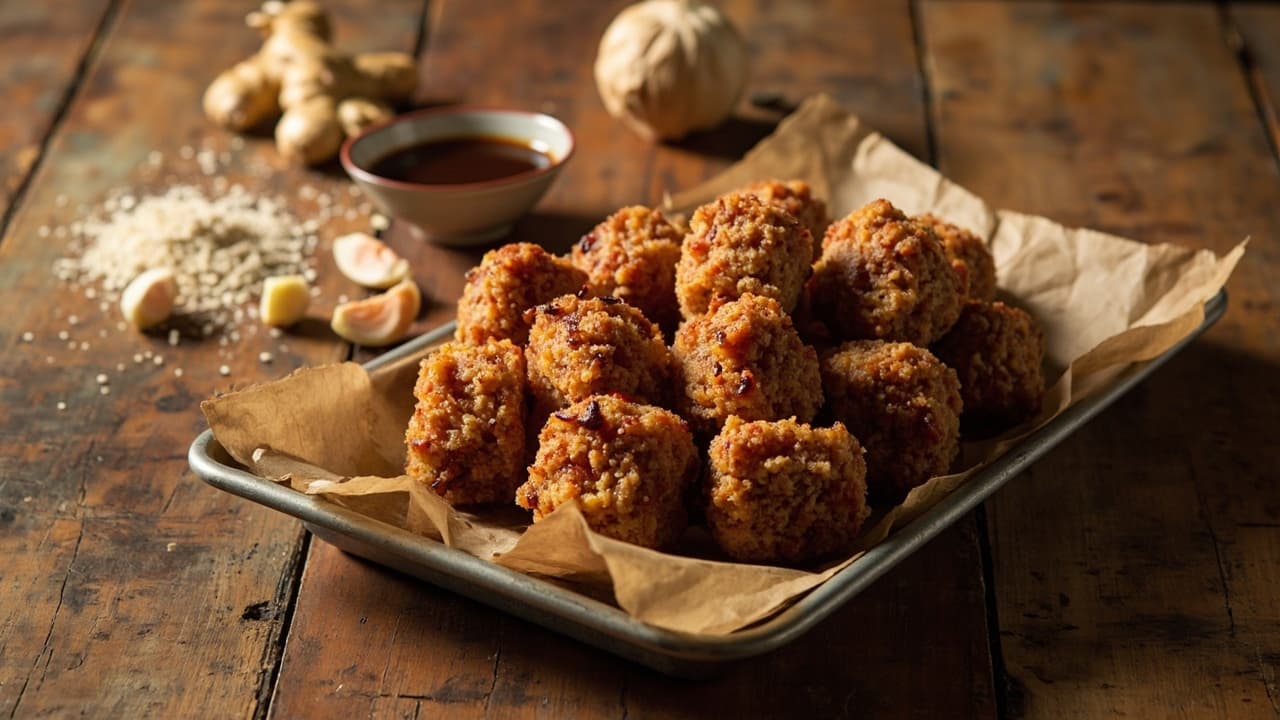
Crispy coconut flour–coated pork belly cubes seared to golden perfection and served with a sticky sweet soy dipping sauce. Channeling that caramelized char Rico loves, but adapted for the stovetop with a crunchier crust.

Prep
20 min
Cook
15 min
Total
35 min
Method
1
Cut pork belly into 1-inch cubes. Pat completely dry with paper towels and season with 0.5 tsp salt, 0.25 tsp black pepper, 3 cloves minced garlic, and 1 tsp grated ginger. Toss well to coat.
2
In a shallow bowl, whisk together coconut flour, 0.5 tsp salt, 0.25 tsp black pepper, and 0.5 tsp garlic powder. In another small bowl, beat the egg with a fork until uniform.
3
4
One at a time, dip each pork belly cube into the beaten egg, letting excess drip off. Roll immediately in the coconut flour mixture until evenly coated. Place on a plate and repeat with remaining cubes.
5
Heat sunflower oil in a large skillet over medium-high heat until the oil shimmers, about 1-2 minutes. Carefully place half the coated pork belly cubes in a single layer — do not crowd the pan.
6
Sear for 3-4 minutes on each side, until the crust is deep golden and crispy at the edges. Use tongs to turn each piece only once. An instant-read thermometer inserted into the center should read 63°C (145°F). Transfer to a paper towel–lined plate.
7
Repeat with the remaining pork belly cubes, adding 1 more tablespoon of oil if needed. Let the first batch rest on the counter while the second batch cooks.
8
Arrange the crispy pork belly bites on a serving platter. Serve immediately with the sweet soy dipping sauce on the side for drizzling or dipping. The bites are best eaten fresh while the crust is at its crunchiest.
E
Nutri-Score
Least favorable
A–E · lower is better · score 21
Calories
875
per serving
High in saturated fat · 24gHigh in salt · 1755mgCalorie-dense · 875 kcalSource of fibre · 6g
Protein
17g
Carbs
21g
Fat
81g
Sat. fat
24g
Fiber
6g
Sugar
12g
Sodium
1755mg
Low CarbHigh FatKeto Friendly
Nutri-Score is a general nutritional-balance guide, not medical or dietary advice.
C
Environmental impact
Moderate impact
A–E · lower is better · includes estimates
kg CO2e
1.7
per serving
CCarbonAEU all-round· carbon sets the grade
Water
0.3m³
Land
53Pt
Runoff
0.1g P
Pork belly, skin removed, cut into 1-inch cubes drives 91% of this recipe’s estimated footprint.
Carbon from Poore & Nemecek 2018; water, land & runoff from Agribalyse — modelled averages for comparing recipes, not a measurement of your groceries.
Flavor Profile
8
Umami
5
Sweet
6
Salty
2
Sour
1
Bitter
1
Spicy
Textures
CrispyJuicyTender
Aromas
HerbalNuttySavory
Kitchen Equipment
Primary Tool
Large SkilletTechniques
Bread CrumbingSear
Safety & Storage
Cooking Temperature
Cook pork belly cubes until an instant-read thermometer reads 63°C (145°F) in the center. The egg coating should appear fully set and golden brown, not wet or glossy, indicating thorough cooking.
Cross Contamination
Do not double-dip: the dipping sauce is for finished product only. Never taste the raw egg-coated pork and then reuse sauce. Use separate utensils for raw pork preparation and for serving.
Storage
Keep raw pork belly refrigerated at or below 4°C (40°F) until ready to cook. Cooked pork belly bites are best consumed immediately; if storing, refrigerate within 2 hours and consume within 2 days.
High Risk Population
Young children, elderly individuals, pregnant women, and immunocompromised persons should ensure pork is cooked to at least 63°C (145°F) with a 3-minute rest time, or consider cooking to 71°C (160°F) for added safety.
Handling
Wash hands thoroughly with soap and water for at least 20 seconds after handling raw pork belly and before touching any ready-to-eat foods or surfaces.
Allergen Warning
This dish contains eggs, soy, and coconut. If serving to guests with food allergies, prepare portions separately and use clean equipment to prevent cross-contact.
Shelf Life
Raw pork belly should be used within 3-5 days of purchase when refrigerated, or frozen for up to 4-6 months. The prepared dish is best consumed fresh and should not be left at room temperature for more than 2 hours.
Pro Tips
Technique
Pat that pork belly bone-dry before seasoning—moisture is the enemy of crunch. And please, don't crowd your pan. Give each cube its own space to sizzle and develop that beautiful golden crust.
Substitution
No coconut flour? Almond flour works beautifully here—it gives a similar nutty crunch. Just know that coconut flour absorbs more, so your crust might be slightly thinner but still delicious.
From the chef
This recipe brings back memories of my lola's Sunday market stand in Cebu—she'd flip skewers with practiced hands while the coconut shell charcoal whispered its smoky secrets. Now, I channel that same caramelized char into these stovetop bites, letting the coconut flour create that golden crunch we all crave. The sweet soy dip? That's her legacy living on in every glossy drizzle.
TagsPork BellyCoconut FlourSweet SavoryCrispyPan SearedDipping SauceSoy BasedHoneyWeeknight DinnerStovetopQuick CookingParty FoodFilipino StyleSkewer Inspired
AllergensEggsSoyTree Nuts
Source: generated · June 12, 2026