 German Austrian
Medium · Hot
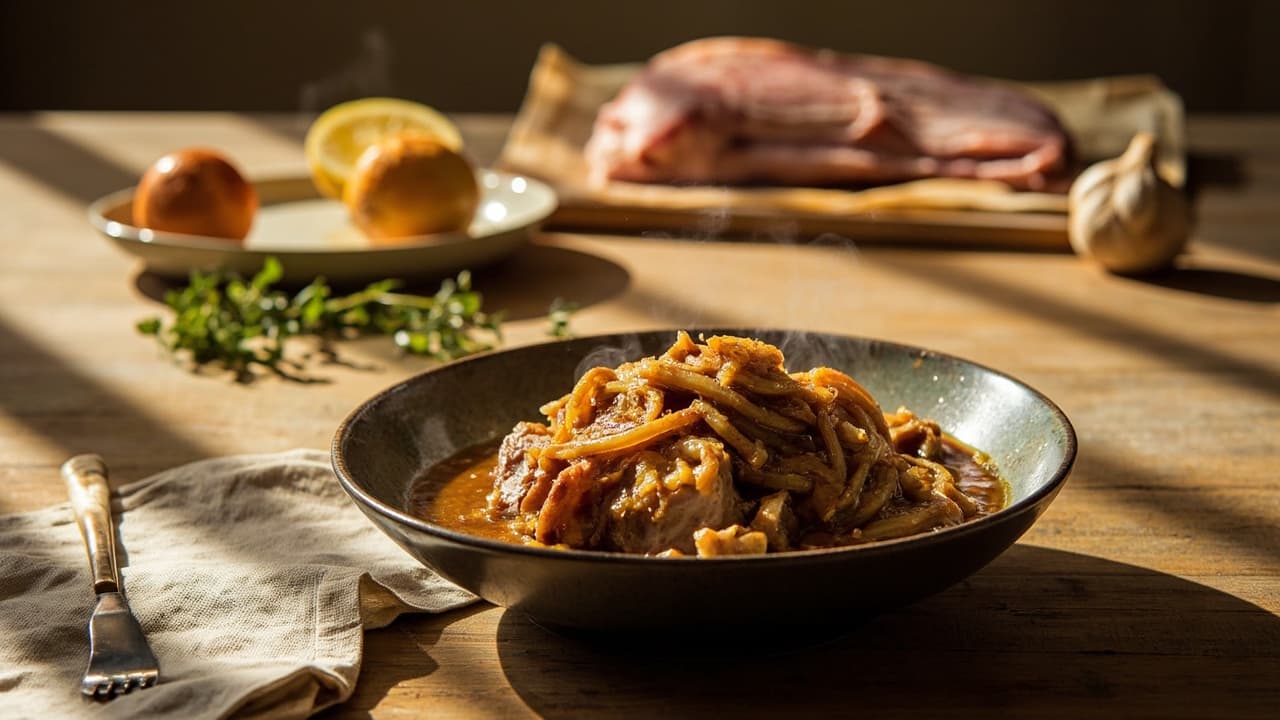
Braised Pork Loin with Mustard and Caramelized Onions
Tender pork loin braised low and slow in a savory mustard-spiked broth, finished with sweet caramelized onions — hearty Alpine comfort done right.

Prep
20 min
Cook
1h 30m
Rest
5 min
Total
1h 55m
Method
Sear the Pork
1
Pat the pork loin dry with paper towels. Season generously all over with salt and black pepper.
2
Heat a heavy-bottomed pot or Dutch oven over medium-high heat. Add 1 tbsp butter and let it foam.
Caramelize the Onions
4
In the same pot over medium-low heat, add the remaining 2 tbsp butter.
5
Add the sliced yellow onions and a pinch of salt. Cook, stirring occasionally, for 25-30 minutes until deeply golden and caramelized.
Braise
6
Push the onions to the sides. Add the garlic cloves and cook for 1 minute until fragrant.
7
Stir in the mustard and white vinegar, scraping up any browned bits from the bottom of the pot.
8
Pour in the chicken broth and bring to a gentle simmer.
9
Return the seared pork loin to the pot. Cover and reduce heat to low.
10
Braise for 45-50 minutes, turning the pork halfway through, until the loin is tender and cooked through to an internal temperature of 63°C (145°F).
Finish and Serve
11
Remove the pork loin and let rest on a cutting board for 5 minutes.
12
Slice the pork loin against the grain into thick medallions.
13
Spoon the caramelized onions and braising sauce over the sliced pork. Serve immediately.
B
Nutri-Score
Good balance
A–E · lower is better · score 2
Calories
430
per serving
High in protein · 44gLow sugar · 7g
Protein
44g
Carbs
13g
Fat
22g
Sat. fat
12g
Fiber
2g
Sugar
7g
Sodium
1137mg
Gluten FreeDairy PresentPork BasedHeart HealthyDiabetes FriendlyWeight LossHigh ProteinLow CarbLean Protein
Nutri-Score is a general nutritional-balance guide, not medical or dietary advice.
E
Environmental impact
Very high impact
A–E · lower is better · includes estimates
kg CO2e
2.6
per serving
ECarbonAEU all-round· carbon sets the grade
Water
0.5m³
Land
79Pt
Runoff
0.2g P
Pork Loin drives 93% of this recipe’s estimated footprint.
Carbon from Poore & Nemecek 2018; water, land & runoff from Agribalyse — modelled averages for comparing recipes, not a measurement of your groceries.
Flavor Profile
7
Umami
5
Sweet
4
Salty
3
Sour
2
Bitter
0
Spicy
Textures
CrispyTenderSilkySoft
Aromas
SavoryCaramelizedButteryPungent
Kitchen Equipment
Primary Tool
Dutch OvenCounter FootprintMedium
Safety & Storage
Cooking Temperature
Pork loin must reach internal temperature of 63°C (145°F) to ensure food safety. Use a calibrated meat thermometer inserted into the thickest part of the loin.
Cross Contamination
Use separate cutting boards and utensils for raw pork and ready-to-eat ingredients. Wash hands thoroughly with soap after handling raw pork.
Storage
Refrigerate leftover pork at 4°C (40°F) or below within 2 hours of cooking. Consume within 3-4 days or freeze for up to 3 months.
Allergen Warning
Contains milk (butter) and mustard. Individuals with mustard allergy should avoid this dish. Butter may contain trace milk proteins.
Handling
Pat pork dry before searing to achieve proper browning. Allow pork to rest 5 minutes after cooking before slicing to retain juices.
Equipment Safety
Use oven mitts when handling hot Dutch oven or pot. Allow pot to cool before washing to prevent thermal shock.
Pro Tips
Technique
Resist the urge to rush the caramelized onions — this is where the soul of the dish lives. Keep the heat at medium-low and stir occasionally for 25-30 minutes until they turn a deep, honeyed amber. Rushing means bitter, not sweet.
Substitution
If you cannot find yellow onions, a mix of white onion and shallots works beautifully. For the mustard, a whole grain variety adds pleasant texture, though classic Dijon keeps the sauce silky.
Equipment
A heavy Dutch oven or cast-iron pot is essential here — you need the even heat distribution for proper browning and the tight lid to trap moisture during the braise.
From the chef
This is the kind of braise my Oma would have made on a cold Salzburg evening — simple, honest, and demanding patience. The onions must go low and slow until they turn sweet and golden, then we build the sauce with sharp mustard and a splash of vinegar to cut through the richness. It is comfort food, yes, but comfort that requires precision. Every step matters. The reward is pork so tender it practically falls apart, bathed in a sauce that tastes like the Alpine inn it came from.
TagsBraisedPorkComfort FoodMustardAlpineOne Pot
AllergensMilkMustard
Source: generated · June 10, 2026