Easy · Hot
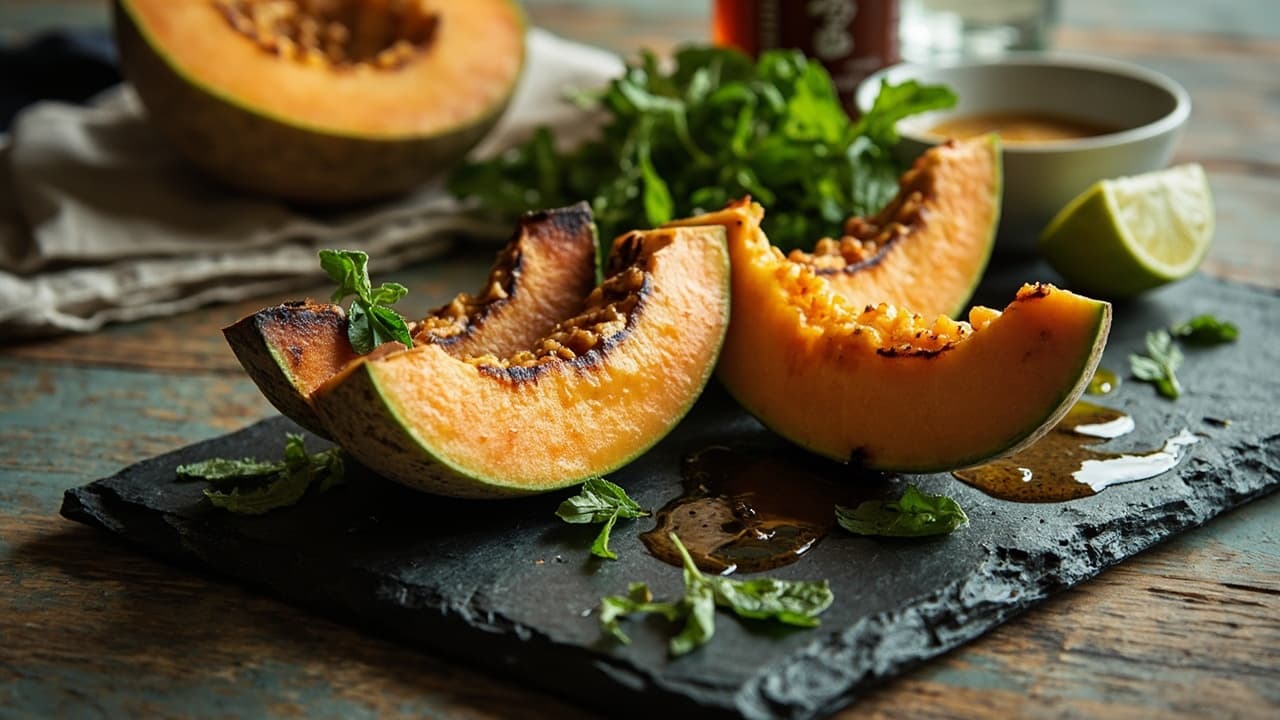
Charred Cantaloupe with Mint and Rice Vinegar
Thick-cut cantaloupe wedges charred directly over live coals, finished with a sharp rice-vinegar drizzle, grassy mint, and a veil of olive oil. The fire concentrates the melon's sugar into something almost smoky; the vinegar cuts straight through like a cold stream.

Prep
10 min
Cook
20 min
Total
30 min
Method
1
2
Brush each cantaloupe wedge generously with olive oil on all cut sides. Lay them cut-side-down directly on the grill grate over the embers. Do not move them for 6-8 minutes — you want deep char marks to form and the flesh to pull from the grate cleanly when ready.
3
Flip each wedge once. Cook the rounded skin side for 3-4 minutes more, just to warm through and lightly sear. Remove to a clean cutting board or platter when the cut sides show bold caramelized-char crust.
4
In a small bowl, whisk together the rice vinegar, 1 tablespoon olive oil, salt, and cracked black pepper until the salt dissolves.
5
Drizzle the vinegar-oil mixture over the warm charred wedges, letting it pool in the char grooves. Scatter the torn mint leaves over the top — the residual heat will release their fragrance without cooking them.
B
Nutri-Score
Good balance
A–E · lower is better · score 0
Calories
142
per serving
Low saturated fat · 2g
Protein
2g
Carbs
12g
Fat
11g
Sat. fat
2g
Fiber
2g
Sugar
9g
Sodium
318mg
Dairy FreeEgg FreeGluten FreeLow ProteinNut FreePlant BasedAnti InflammatoryHeart HealthyLow SodiumWeight ManagementAntioxidant RichLow CalorieLow Carb
Nutri-Score is a general nutritional-balance guide, not medical or dietary advice.
B
Environmental impact
Low impact
A–E · lower is better · includes estimates
kg CO2e
0.2
per serving
BCarbonAEU all-round· carbon sets the grade
Water
0.5m³
Land
12Pt
Runoff
0.04g P
Cantaloupe, halved, seeds scooped out, cut into 3-cm wedges drives 59% of this recipe’s estimated footprint.
Carbon from Poore & Nemecek 2018; water, land & runoff from Agribalyse — modelled averages for comparing recipes, not a measurement of your groceries.
Flavor Profile
4
Umami
7
Sweet
5
Salty
6
Sour
3
Bitter
2
Spicy
Textures
CrispyJuicyTender
Aromas
AcidicFruityHerbalSmoky
Kitchen Equipment
Primary Tool
Charcoal GrillSafety & Storage
Equipment Safety
Live coal cooking presents burn and fire risks. Allow flames to die back fully to embers before placing food. Keep water or fire extinguisher nearby. Never leave grill unattended.
Use long-handled tongs to handle hot cantaloupe wedges and manage the coal bed. Wear heat-resistant gloves when working near open flames.
Cross Contamination
If this grill has been used for meat, poultry, or seafood, thoroughly clean the grate before cooking cantaloupe to prevent cross-contact with allergens.
High Risk Population
Cantaloupe has been linked to listeria outbreaks. Pregnant women, elderly, and immunocompromised individuals should ensure melon is washed thoroughly and consumed promptly after cooking.
Storage
Cooked cantaloupe should not sit at room temperature for more than 2 hours. Refrigerate any leftovers promptly and consume within 2-3 days.
Handling
Thoroughly wash the cantaloupe exterior under running water before cutting to remove potential surface contaminants. Use separate cutting boards for raw and ready-to-eat foods.
Pro Tips
Technique
Build your coal bed and then wait. I always tell people to cook by the heat, not the clock. When the cantaloupe releases cleanly from the grate with no sticking, that is your moment to flip — no sooner, no later.
Substitution
If you do not have rice vinegar, a squeeze of fresh lemon mixed with a touch of water will bring similar brightness without overpowering the char.
From the chef
My uncle used to throw whatever was ripening in the garden onto the coals — peaches, pineapple, once even watermelon rind. I tried cantaloupe the first time not because some recipe told me to, but because I was curious whether the fire could find the same sweetness in melon that it finds in stone fruit. It can. The smoke pulls something almost caramelized out of the flesh, and when you hit it with rice vinegar and torn mint, you are not masking the fire — you are having a conversation with it.
TagsGrilledCharredFruitSummerQuickLive FireNo Cook
Source: generated · June 12, 2026