 Cambodian
Medium · Hot
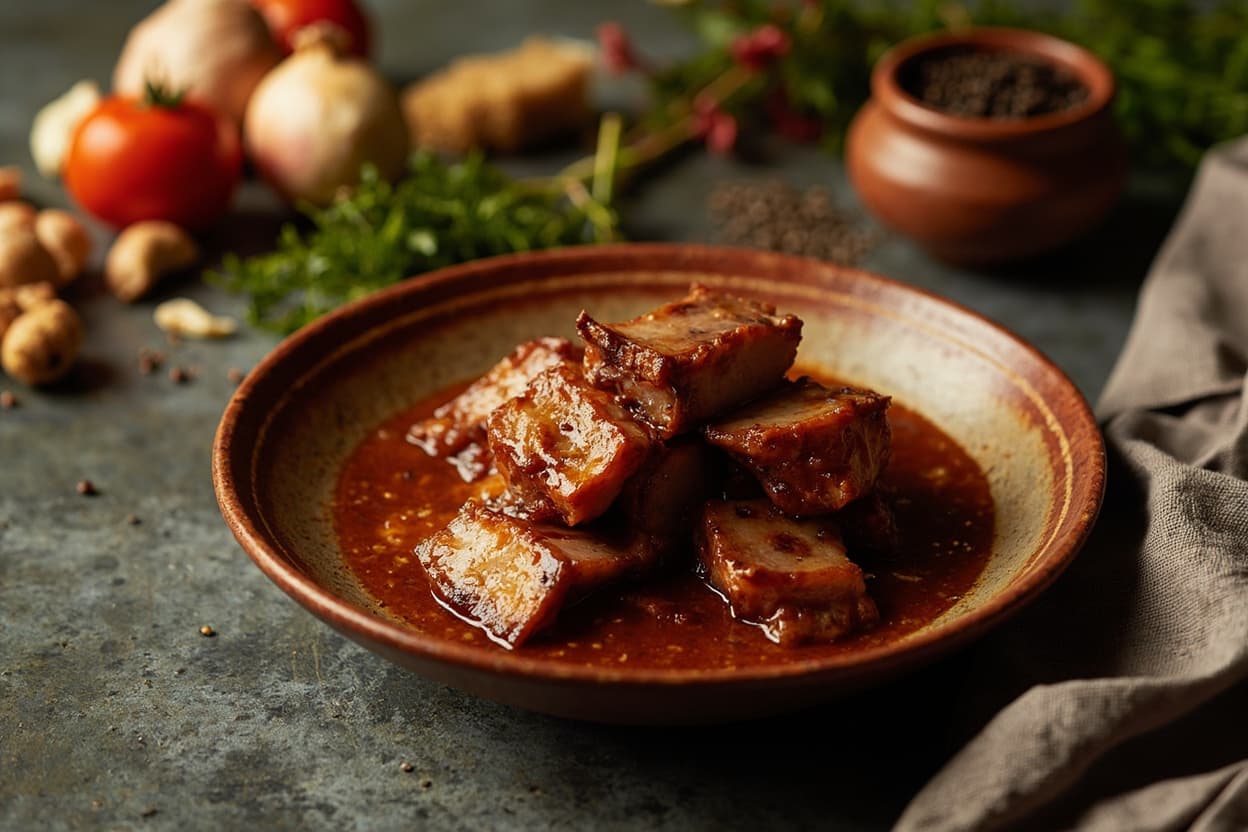
Claypot Caramel Pork Belly with Crushed Pepper
This is Anh's clay pot at its most persuasive: pork belly braised low in a caramel made from brown sugar and garlic until the fat renders translucent and the sauce thickens to a coat that clings. Ginger steadies the sweetness throughout the braise, and crushed black pepper pressed into the meat just before serving cuts through the richness with a final, aromatic authority.

Prep
20 min
Cook
45 min
Rest
15 min
Total
1h 20m
Method
Prepare the Pork Belly
1
Cut the pork belly into 4cm cubes. Pat dry with paper towels — this step matters, dry meat caramelizes better.
2
Season generously with salt and crushed black pepper, tossing to coat evenly. Let it rest at room temperature for 15 minutes while you prepare the other components.
Build the Aromatic Base
Create the Caramel in the Clay Pot
4
Place your clay pot or heavy-bottomed pan over medium heat. Add the coconut oil and let it shimmer.
5
Add the white sugar and stir occasionally. Watch as it melts from white to golden amber — this is the heart of the dish. Do not rush this moment.
6
Once the caramel reaches a deep amber color, carefully add the pork belly cubes. They will sizzle dramatically. Stir gently to coat each piece in the caramel.
Braise to Tenderness
7
8
Pour in the water and squeeze in the lime juice. Stir to combine.
9
Reduce heat to low, cover partially, and simmer gently for 35-40 minutes until the pork is tender and the sauce has reduced to a glossy glaze. Stir occasionally to prevent sticking.
Finish and Serve
10
Remove the lid and increase heat slightly. Let the remaining sauce reduce until it coats the back of a spoon and cling beautifully to each pork piece.
11
Remove from heat. Scatter fresh cilantro over the top.
12
Serve immediately with lime wedges on the side. Serve over white rice to catch every drop of that precious caramel glaze.
Grade pending
Nutri-Score
Estimated nutrition
Grade pending · 100% ingredient coverage
Calories
920
per serving
Protein
15g
Carbs
20g
Fat
87g
Sat. fat
31g
Fiber
2g
Sugar
15g
Sodium
1557mg
Gluten FreeDairy FreeLow FatLow SugarHeart HealthyDiabetes FriendlyAnti InflammatoryHigh ProteinBalanced Macros
Nutri-Score is a general nutritional-balance guide, not medical or dietary advice.
Grade pending
Environmental impact
Estimated footprint
Grade pending · 100% ingredient coverage
kg CO2e
1.9
per serving
Water
0.8m³
Land
58Pt
Runoff
0.1g P
Pork Belly drives 95% of this recipe’s estimated footprint.
Carbon from Poore & Nemecek 2018; water, land & runoff from Agribalyse — modelled averages for comparing recipes, not a measurement of your groceries.
Flavor Profile
6
Umami
7
Sweet
5
Salty
3
Sour
1
Bitter
5
Spicy
Textures
TenderCrispyGlossyChewy
Aromas
CaramelPepperyCitrusHerbalAromatic
Kitchen Equipment
Primary Tool
Clay PotCounter FootprintMedium
Safety & Storage
Cooking Temperature
Caramelized sugar can reach 320°F and cause severe burns. Remove from heat immediately if it smokes or turns dark brown before adding pork.
Ensure pork belly reaches a minimum internal temperature of 145°F (63°C) to eliminate harmful bacteria before serving.
Cross Contamination
Use separate cutting boards and utensils for raw pork and ready-to-eat ingredients like cilantro and lime wedges to prevent cross-contamination.
Handling
When adding pork to hot caramel, stand back and use long tongs to prevent splashing. The caramel will cause dramatic sizzling and may bubble vigorously.
Storage
Refrigerate leftovers within 2 hours in airtight containers. Consume within 3-4 days or freeze for up to 3 months.
Allergen Warning
This dish contains soy sauce (soy allergen). Check any additional serving accompaniments like rice for allergen cross-contact during preparation.
Pro Tips
Technique
Watch your caramel like it owes you something — it only takes a few minutes to go from perfect amber to burnt. When it smells faintly of toffee and reads a deep mahogany, that's your moment to add the pork.
Substitution
Palm sugar would be traditional and adds a deeper, more complex sweetness than white sugar, but coconut sugar or even light brown sugar work beautifully if that's what you have.
From the chef
Pork belly braised low and slow in a caramel of white sugar, garlic, and ginger until the fat renders translucent and the sauce reduces to a coat that clings — this is the claypot at its most persuasive. The caramel must reach deep amber before the pork goes in; that color is the flavor. Soy sauce and lime juice deepen the glaze, and crushed black pepper pressed in toward the end cuts through the richness with a final, aromatic authority. Serve over white rice and spoon every drop of that precious sauce over the top — nothing about this dish should be wasted.
TagsSlow CookedCaramelizedClaypotSweet SavorySpicyWeeknight Dinner
AllergensSoy
Source: generated · May 30, 2026