 Japanese
Medium · Hot
Binchōtan Grilled Chicken Thigh & Butternut Squash Skewer
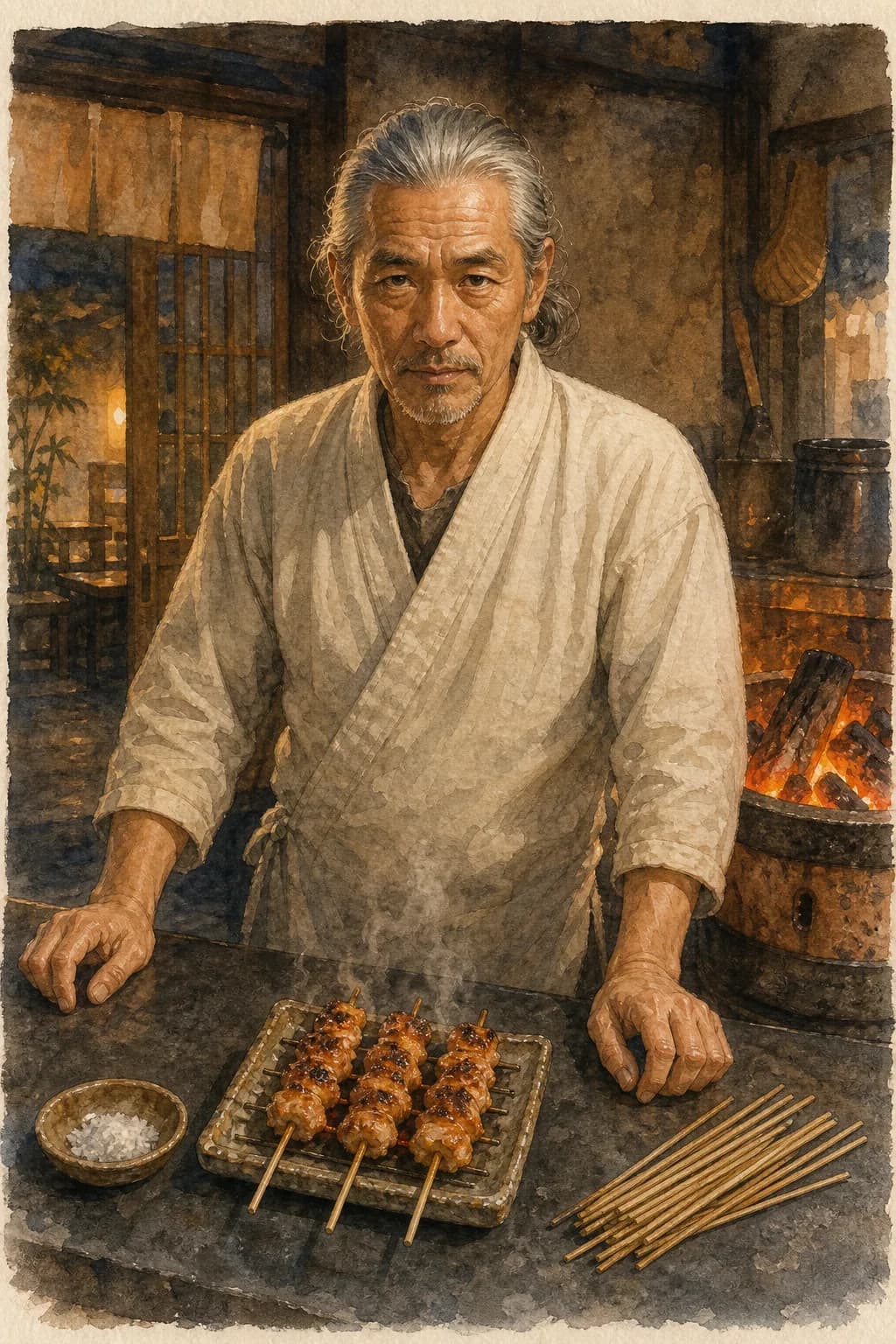
Skewered free-range chicken thigh and butternut squash, charred over pristine binchōtan coals with a whisper of soy, garlic, and black pepper—honest fire, nothing more.
Prep
20 min
Cook
12 min
Total
32 min
Method
1
Light the binchōtan in your brazier. Let the coals burn until they glow uniformly white with no dark core—this takes 20–25 minutes. Spread them in an even layer under the iron wire grill and let the radiant heat stabilize for 5 minutes more before cooking.
2
While the coals settle, cut the chicken thigh into 4 cm chunks. Peel the butternut squash and cut into 3 cm cubes. Core the bell pepper and cut into 3 cm pieces. Keep all pieces uniform in size so they grill evenly.
3
Mince the garlic finely. In a large bowl, whisk together the olive oil, soy sauce, garlic, salt, and black pepper. Add the chicken and vegetables and toss gently until everything is lightly coated. Let sit for 10 minutes—no longer.
4
Thread bamboo skewers alternating chicken, squash, and bell pepper—three pieces of each per skewer, ending on chicken. Press pieces snugly but do not crush them.
5
Place the skewers on the iron wire grill over the white-hot binchōtan. Grill for 10–12 minutes total, turning every 2–3 minutes, until the chicken is golden with a faint char at the edges and reaches 74°C internally at its thickest point. The squash should be tender with caramelized, charred corners.
A
Nutri-Score
Excellent balance
A–E · lower is better · score -2
Calories
468
per serving
High in protein · 41gLow sugar · 6g
Protein
41g
Carbs
16g
Fat
27g
Sat. fat
9g
Fiber
5g
Sugar
6g
Sodium
979mg
Gluten FreeHigh ProteinLow CarbMediterraneanDiabetesHeart HealthyBalanced Macros
Nutri-Score is a general nutritional-balance guide, not medical or dietary advice.
C
Environmental impact
Moderate impact
A–E · lower is better · includes estimates
kg CO2e
1.6
per serving
CCarbonAEU all-round· carbon sets the grade
Water
0.7m³
Land
59Pt
Runoff
0.2g P
Chicken Thigh drives 91% of this recipe’s estimated footprint.
Carbon from Poore & Nemecek 2018; water, land & runoff from Agribalyse — modelled averages for comparing recipes, not a measurement of your groceries.
Flavor Profile
6
Umami
4
Sweet
5
Salty
1
Sour
2
Bitter
3
Spicy
Textures
CrispyJuicyTender
Aromas
EarthyHerbalSmokyUmami
Kitchen Equipment
Primary Tool
Bincho BrazierBincho BrazierIron Wire Yakitori GrillChef KnifeCutting BoardInstant Read ThermometerMixing BowlTongsSalt DishServing PlateSkewers
Techniques
Safety & Storage
Cooking Temperature
Chicken must reach exactly 74°C internally at its thickest point to ensure harmful bacteria are eliminated. Use a probe thermometer to verify—visual cues alone are insufficient for poultry safety.
Cross Contamination
Keep raw chicken separate from vegetables throughout prep. Use separate cutting boards and utensils, or clean thoroughly between uses. Never place cooked skewers on plates or surfaces that touched raw chicken.
Handling
Binchōtan coals reach extreme temperatures. Allow 20–25 minutes for proper ignition and stabilization before cooking. Use long-handled tongs and steel skewer tongs—never touch hot coals or the iron grill directly.
Storage
Store raw chicken at or below 4°C before use. If marinating exceeds 10 minutes, keep refrigerated. Discard any leftover marinade that contacted raw chicken.
Equipment Safety
Ensure the brazier is stable on a non-flammable surface away from combustible materials. The iron wire grill should be secured properly to prevent skewers from falling into the coals.
Pro Tips
Technique
When the binchōtan turns fully white with no dark veins, press your palm above the coals—if you can hold it there for three slow breaths, the heat is correct. Too hot, and the exterior will burn before the interior warms.
Substitution
If butternut squash is unavailable, substitute kabocha squash cut to the same dimensions. Its firmer flesh holds structure over the coals and develops a similar honeyed sweetness with excellent caramelization.
From the chef
Chicken thigh and butternut squash ask only one thing: honest fire. The squash does not need glaze, the chicken needs no brine—only the brief conversation of oil, soy, and ten minutes over white-hot binchōtan coals. When you bite into the charred corner of squash beside the golden chicken, the flavors arrive plainly, each one distinct, none competing. This is the philosophy of the skewer: thread it uniform, let the heat do its work, rest two minutes before you eat.
TagsYakitori StyleSkewerCharcoal GrilledHigh ProteinDairy FreeWeeknight DinnerSummer CookingOne Skewer
AllergensSoy
Source: generated · June 13, 2026