 Thai
ThaiMedium · Warm
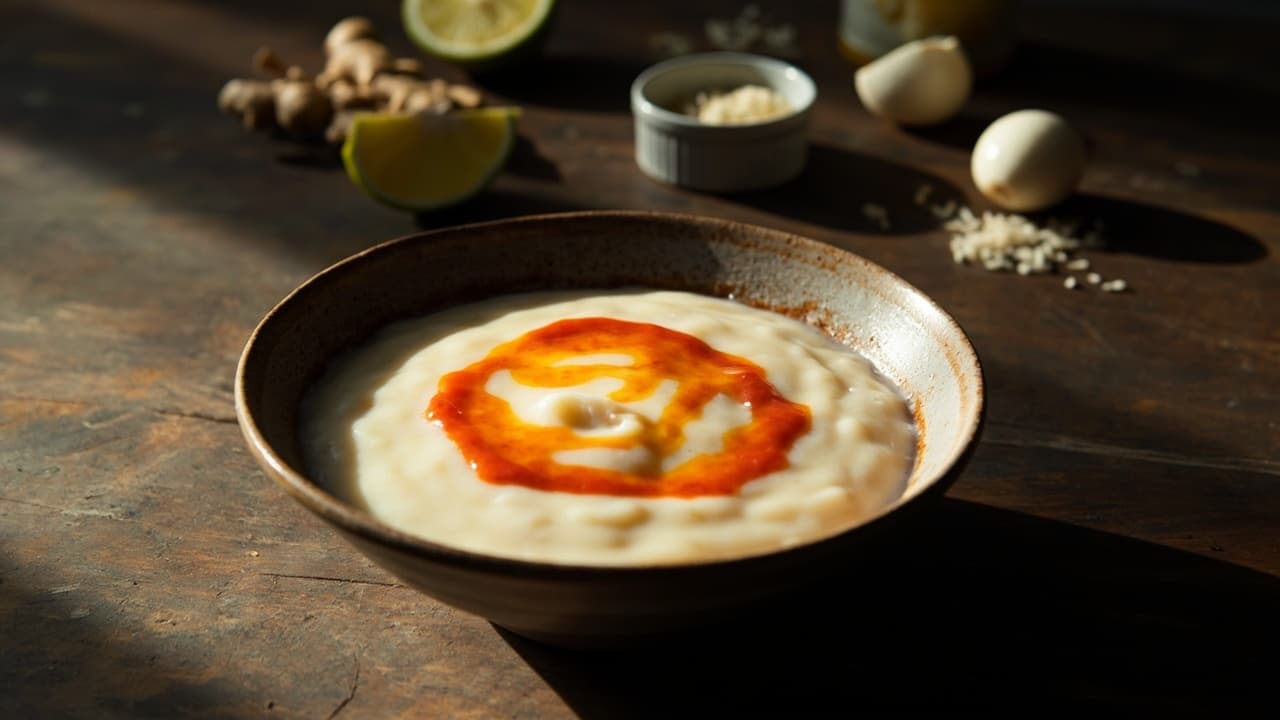
Coconut Flour Rice Pudding with Ginger and Sriracha Drizzle
A comforting rice pudding made with coconut flour for a tender, slightly sweet texture, finished with a zingy ginger-sriracha drizzle that balances the creaminess with heat and brightness.

Prep
10 min
Cook
30 min
Total
40 min
Method
1
2
Rinse the white rice under cold water until the water runs clear. In a medium saucepan, combine the rinsed rice, whole milk, coconut oil, and salt. Bring to a gentle boil over medium-high heat, stirring occasionally.
3
Once boiling, reduce the heat to low and simmer uncovered for 20-22 minutes, stirring every 3-4 minutes to prevent sticking, until the rice is tender and the mixture has thickened to a porridge consistency.
4
In a small bowl, whisk together the eggs, honey, vanilla extract, and coconut flour until smooth. Temper the egg mixture by slowly adding 2 tbsp of the hot rice pudding while whisking constantly.
5
Pour the tempered egg mixture back into the saucepan with the rice, stirring vigorously. Cook on low heat for 2-3 minutes, until the pudding thickens noticeably and coats the back of a spoon. Remove from heat.
6
C
Nutri-Score
Fair balance
A–E · lower is better · score 3
Calories
495
per serving
Protein
15g
Carbs
80g
Fat
13g
Sat. fat
10g
Fiber
5g
Sugar
26g
Sodium
547mg
Dairy PresentGluten Free
Nutri-Score is a general nutritional-balance guide, not medical or dietary advice.
C
Environmental impact
Moderate impact
A–E · lower is better · includes estimates
kg CO2e
0.9
per serving
CCarbonAEU all-round· carbon sets the grade
Water
1.0m³
Land
25Pt
Runoff
0.06g P
Whole Milk drives 54% of this recipe’s estimated footprint.
Carbon from Poore & Nemecek 2018; water, land & runoff from Agribalyse — modelled averages for comparing recipes, not a measurement of your groceries.
Flavor Profile
6
Umami
5
Sweet
4
Salty
3
Sour
1
Bitter
4
Spicy
Textures
CreamySilkyTender
Aromas
FermentedHerbalSweet
Kitchen Equipment
Primary Tool
{"PrimaryCookingTool":"Medium Saucepan"}Safety & Storage
Cooking Temperature
When tempering eggs with hot rice pudding, add the hot mixture slowly while whisking constantly to prevent scrambling. The egg mixture should be added gradually, about 2 tablespoons at a time, until the eggs are brought up to temperature.
After adding the tempered egg mixture, cook on low heat for only 2-3 minutes. Remove immediately once the pudding thickens and coats the back of a spoon to avoid overcooking or curdling the eggs.
Cross Contamination
Use separate utensils and serving bowls when serving to individuals with milk or egg allergies. Clean all preparation surfaces, whisks, and cookware thoroughly between uses.
Storage
Refrigerate leftover rice pudding within 2 hours of preparation in an airtight container. Consume within 3-4 days. Reheat thoroughly until steaming hot before serving leftovers.
High Risk Population
This dish contains eggs cooked with dairy. Elderly individuals, young children, pregnant individuals, and immunocompromised persons should ensure eggs are fully cooked to an internal temperature of 160°F.
Allergen Warning
While coconut flour and coconut oil are used, coconut is classified as a fruit rather than a tree nut. However, those with coconut allergies should exercise caution and consider alternatives.
Pro Tips
Technique
When tempering your eggs, think of it like introducing your shy cousin to a loud party—you add the hot rice slowly while whisking constantly so they blend in without clumping. Rushing this step is how you get scrambled eggs in your pudding, and nobody wants that drama.
Substitution
If you want to dial back the heat but keep the flavor, swap the sriracha for a spoonful of chipotle in adobo—the smokiness plays beautifully with the coconut flour's subtle sweetness. It gives you that same punch but with a different kind of depth.
From the chef
Rice pudding done right is about texture tension: you want the base creamy enough to coat a spoon but not so stiff it feels heavy. Coconut flour absorbs liquid differently than wheat flour, giving the pudding a tender, slightly yielding body that holds up under the drizzle. That drizzle is the whole point — sriracha, fresh ginger, honey, and lime create a bright, spicy-sweet finish that cuts through the richness and makes each spoonful feel alive. The heat does not overpower; it arrives slowly and keeps you going back. This is comfort food with intention.
TagsSpicyOne PotWeeknight DinnerCoconut FlourComfort Food
AllergensMilkEggs
Source: generated · June 12, 2026