 American
Medium · Hot
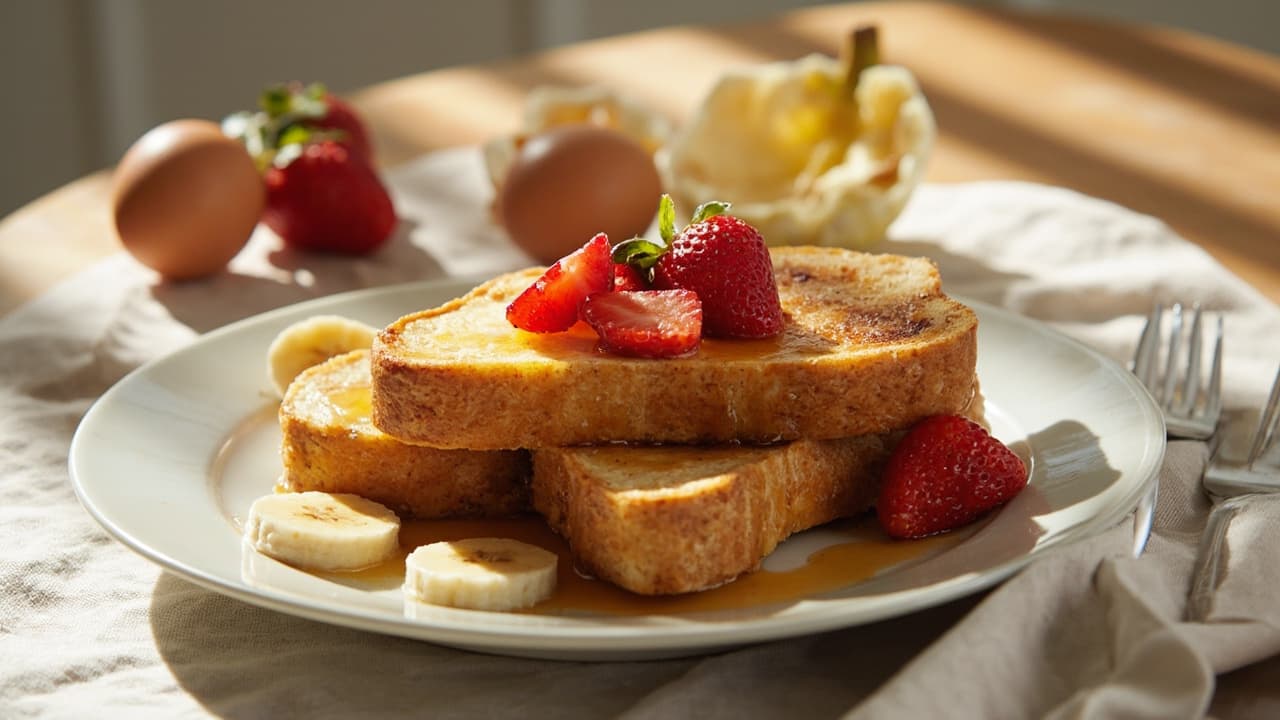
Cinnamon Honey French Toast with Fresh Banana and Strawberry
Golden, custardy French toast crowned with warm honey drizzle, sliced fresh banana, and bright ripe strawberries. A lazy Sunday brunch that feels like a hug from the inside out.

Prep
10 min
Cook
28 min
Total
30 min
Method
Make the Custard Mixture
1
2
Pour in the whole milk, add the ground cinnamon, honey, and white sugar. Whisk vigorously until everything is smoothly blended and slightly frothy.
3
Let the custard sit for a couple minutes while you prepare the bread and pan.
Soak the Bread
4
Heat a large non-stick frying pan or griddle over medium-low heat. Add half the butter and let it melt, foaming gently without browning.
5
Dip one slice of white bread into the custard, letting it soak for about 30 to 45 seconds per side. Thicker bread slices need adequate time to fully absorb the custard mixture—rushing this step results in dry, under-custarded centers with pale, uncooked spots.
6
Repeat with 2 more slices, giving each piece its own space in the pan. Note: The remaining butter will be added after this first batch is done.
Cook the French Toast
7
Cook the soaked bread over medium-low heat for 3 to 4 minutes per side, until the edges look golden and set. The gentle heat ensures the custard cooks through without burning the exterior.
8
Flip each slice when the bottom side is deeply golden with a slight caramel color. The second side usually takes about 2 to 3 minutes.
9
Transfer cooked slices to a warm plate and tent loosely with foil. Add remaining butter to the pan, wait 1-2 minutes for it to melt and stabilize, then cook the remaining slices the same way.
Prepare the Fresh Toppings
10
While the last batch cooks, slice the bananas into thick diagonal coins, about half an inch each.
11
Hull the strawberries and slice them into halves or quarters depending on their size. You want bite-sized pieces that tumble nicely over the toast.
Assemble and Serve
12
Stack 2 slices of French toast on each plate, slightly overlapping.
13
Pile the sliced banana and strawberry generously over the top, letting some tumble down onto the plate.
14
Drizzle with a little extra honey, watching it run down the sides. Serve immediately while the toast is still warm and the fruit is fresh.
B
Nutri-Score
Good balance
A–E · lower is better · score 0
Calories
480
per serving
Low salt · 291mg
Protein
14g
Carbs
72g
Fat
18g
Sat. fat
10g
Fiber
8g
Sugar
40g
Sodium
291mg
Nutri-Score is a general nutritional-balance guide, not medical or dietary advice.
C
Environmental impact
Moderate impact
A–E · lower is better · includes estimates
kg CO2e
0.9
per serving
CCarbonAEU all-round· carbon sets the grade
Water
1.0m³
Land
36Pt
Runoff
0.08g P
large egg drives 26% of this recipe’s estimated footprint.
Carbon from Poore & Nemecek 2018; water, land & runoff from Agribalyse — modelled averages for comparing recipes, not a measurement of your groceries.
Flavor Profile
5
Umami
8
Sweet
3
Salty
3
Sour
1
Bitter
4
Spicy
Textures
CrispyTenderCreamyJuicy
Aromas
CinnamonButterySweetFruity
Kitchen Equipment
Primary Tool
Frying PanCounter FootprintMedium
Techniques
Safety & Storage
Cooking Temperature
Cook French toast at medium-low heat for 3-4 minutes per side. The gentle heat ensures the egg-milk custard cooks through without burning the exterior or leaving a raw, runny center.
French toast must reach an internal temperature of at least 160°F (71°C) measured in the center of the thickest slice to ensure the egg custard is fully cooked and safe from Salmonella. Use a food thermometer to verify doneness, especially for high-risk consumers.
Cross Contamination
Use separate cutting boards and utensils for raw egg custard and fresh fruit toppings. Wash all equipment with hot soapy water between uses to prevent bacterial transfer from raw eggs to ready-to-eat strawberries and bananas.
High Risk Population
This recipe contains undercooked eggs in the custard mixture. Young children, elderly individuals, pregnant women, and immunocompromised persons should consume only fully cooked eggs to avoid salmonella risk. Consider using pasteurized eggs if serving to vulnerable populations.
Allergen Warning
This dish contains multiple allergens: eggs, milk, wheat/gluten, and dairy. Clearly label all allergens when serving. Do not use egg substitutes without verifying allergen status of the alternative product.
Storage
Serve French toast immediately after cooking. If leftovers must be stored, refrigerate below 40°F within 2 hours. Consume within 2 days. Reheat to 165°F before serving leftovers.
Handling
When cracking eggs for the custard, inspect shells for cracks and wash the egg surface before cracking to reduce contamination risk. Discard any eggs with visible cracks or unusual odor.
Equipment Safety
Butter burns easily at high heat. Keep pan at medium-low temperature. Add butter in stages as directed and never leave hot pan unattended. Use butter with a higher smoke point or clarified butter if concerned about burning.
Pro Tips
Technique
Don't rush the soak—let each slice sit in the custard for about 15 seconds per side. The bread needs that time to drink properly, or you'll end up with pale, dry spots in the middle. And keep that heat medium-low; we're coaxing the custard through gently, not searing the outside while the inside stays raw.
Substitution
This recipe loves a good swap. Brioche or challah will give you an even richer, more tender crumb, and you can interchange the banana and strawberries with blueberries, raspberries, or even a handful of fresh figs when they're in season. Maple syrup works beautifully alongside the honey if you fancy that deeper, earthier sweetness instead.
From the chef
I made this French toast every Sunday morning at the cafe for over a decade, and it never let me down. There's something magic about those thick slices drinking in that cinnamon-sweet custard while the pan warms through—the honey threads through everything like golden ribbons, and the fresh banana and strawberries on top remind you that breakfast can be bright and alive, not just heavy and filling. This is the plate I still dream about on grey mornings: warm, forgiving, and exactly what a lazy Sunday should taste like.
TagsWeekend BrunchSweetFruit ToppingHoneyCinnamonButtery
AllergensEggsMilkGlutenDairy
Source: generated · June 10, 2026