 American
Medium · Hot
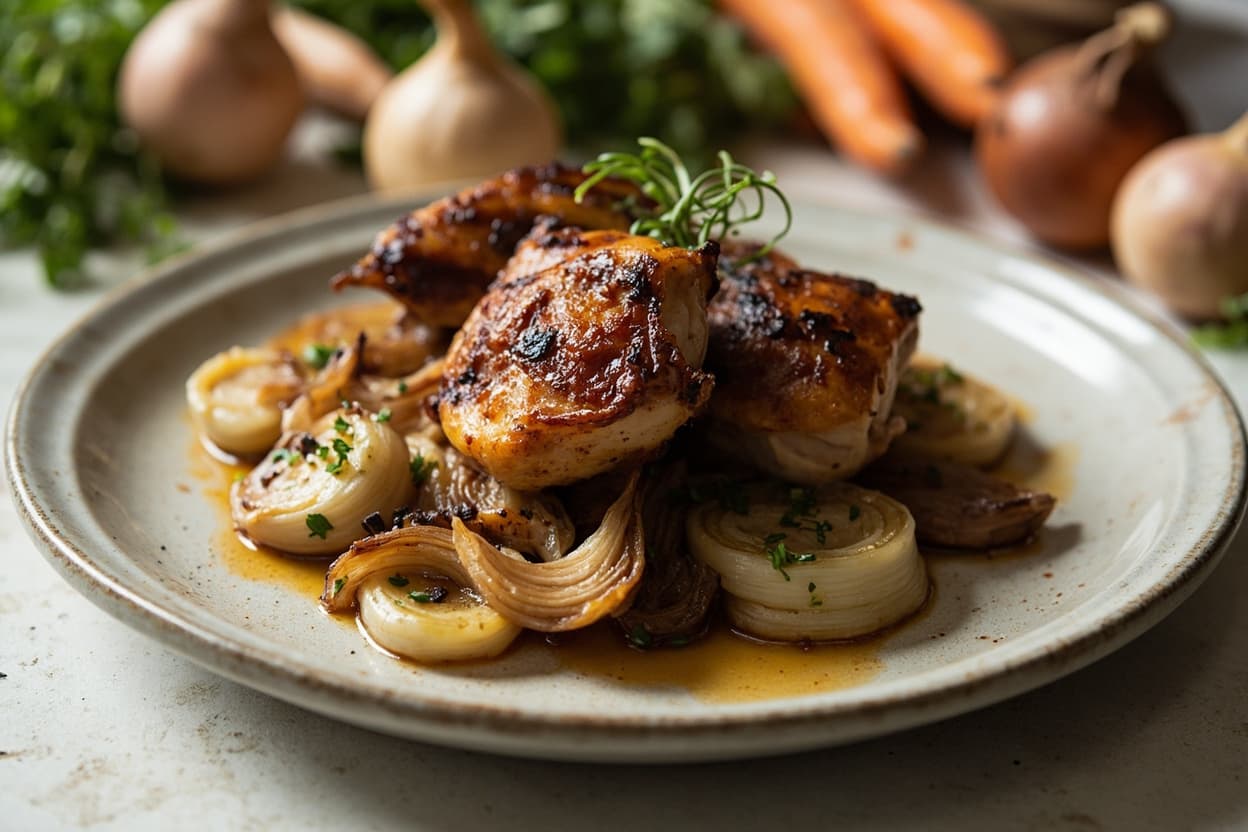
Chicken Thighs with Charred Onions
Bone-in chicken thighs seared until deeply golden, resting over onions that char in the rendered fat until sweet and blackened at the edges. No sauce. No garnish. Just the Maillard reaction doing its job.

Prep
15 min
Cook
33 min
Rest
5 min
Total
53 min
Method
Season and Sear Chicken
1
Pat chicken thighs completely dry with paper towels. Season all surfaces with 1 teaspoon salt, pressing it into the skin.
2
Heat an empty cast iron skillet over high heat until smoking. Add 1 tablespoon olive oil, swirl to coat. Place chicken skin-side DOWN in the center of the pan — not touching the edges. Do not move it. Sear without touching for 8 minutes until skin is deep mahogany and releases cleanly.
Char the Onions
4
Reduce heat to medium-high. Add sliced yellow onions to the hot fat. Stir to coat. Cook, stirring only every 2 minutes, for 10 minutes until onions are soft, golden, and charred at the edges.
Finish and Rest
6
Return chicken thighs to the pan, skin-side UP, nestled into and over the charred onions. Cook on medium-low heat 5 minutes to heat through and meld flavors.
7
Remove from heat. Let rest in pan 5 minutes — the carryover heat finishes cooking while juices redistribute. Serve chicken over or beside the charred onions with all pan juices.
C
Nutri-Score
Fair balance
A–E · lower is better · score 4
Calories
371
per serving
High in protein · 32gLow sugar · 4g
Protein
32g
Carbs
7g
Fat
24g
Sat. fat
4g
Fiber
1g
Sugar
4g
Sodium
984mg
Gluten FreeLow CarbDairy FreeDiabetes FriendlyHeart HealthyLow Sodium AppropriateHigh ProteinWhole Foods
Nutri-Score is a general nutritional-balance guide, not medical or dietary advice.
C
Environmental impact
Moderate impact
A–E · lower is better · complete match
kg CO2e
1.2
per serving
CCarbonAEU all-round· carbon sets the grade
Water
0.6m³
Land
45Pt
Runoff
0.1g P
Chicken Thighs drives 92% of this recipe’s estimated footprint.
Carbon from Poore & Nemecek 2018; water, land & runoff from Agribalyse — modelled averages for comparing recipes, not a measurement of your groceries.
Flavor Profile
7
Umami
5
Sweet
5
Salty
1
Sour
3
Bitter
0
Spicy
Textures
CrispyTenderCaramelized
Aromas
SmokySavoryNuttyCaramelized
Kitchen Equipment
Primary Tool
Cast Iron SkilletCounter FootprintSmall
Techniques
Safety & Storage
Cooking Temperature
Chicken thighs must reach 165°F internal temperature. Use a meat thermometer to verify doneness, especially in the thickest part away from bone.
Cross Contamination
Raw poultry juices are high-risk. Use dedicated cutting boards, wash hands with soap for 20 seconds after handling raw chicken, and sanitize all surfaces that contact raw meat.
Handling
Cast iron skillet reaches smoking point before oil is added. Use long tongs or heavy oven mitts when flipping chicken and adding ingredients to prevent grease burns.
Storage
Refrigerate leftovers within 2 hours. Store chicken separate from other foods. Consume within 3-4 days or freeze for up to 4 months.
High Risk Population
Elderly, immunocompromised, pregnant individuals, and young children should verify complete cooking to 165°F and avoid leftover chicken held at room temperature.
Pro Tips
Technique
Stop touching the chicken. I mean it. Eight minutes skin-side down without moving it — the skin will release when it's ready, mahogany and crisp. If you lift it early, you're just ripping skin and wasting browning you can't get back.
Substitution
Red onions work if that's what you have, but yellow onions caramelize differently — they get sweeter without falling apart. Swap them and adjust your timing; you'll know when they're done by the black edges, not the clock.
From the chef
Four chicken thighs. Two onions. One skillet. I didn't add a sauce because the fond building between the skin and the pan is the sauce — you're just too impatient to see it yet. The onions blacken in the rendered fat while the chicken rests, and what you get is an entire meal that tastes like you spent all day in the kitchen when you spent thirty-three minutes.
TagsPan SearedCast IronCharredOne PanSimpleTechnique Focused
Source: generated · June 9, 2026