 Japanese
Medium · Hot
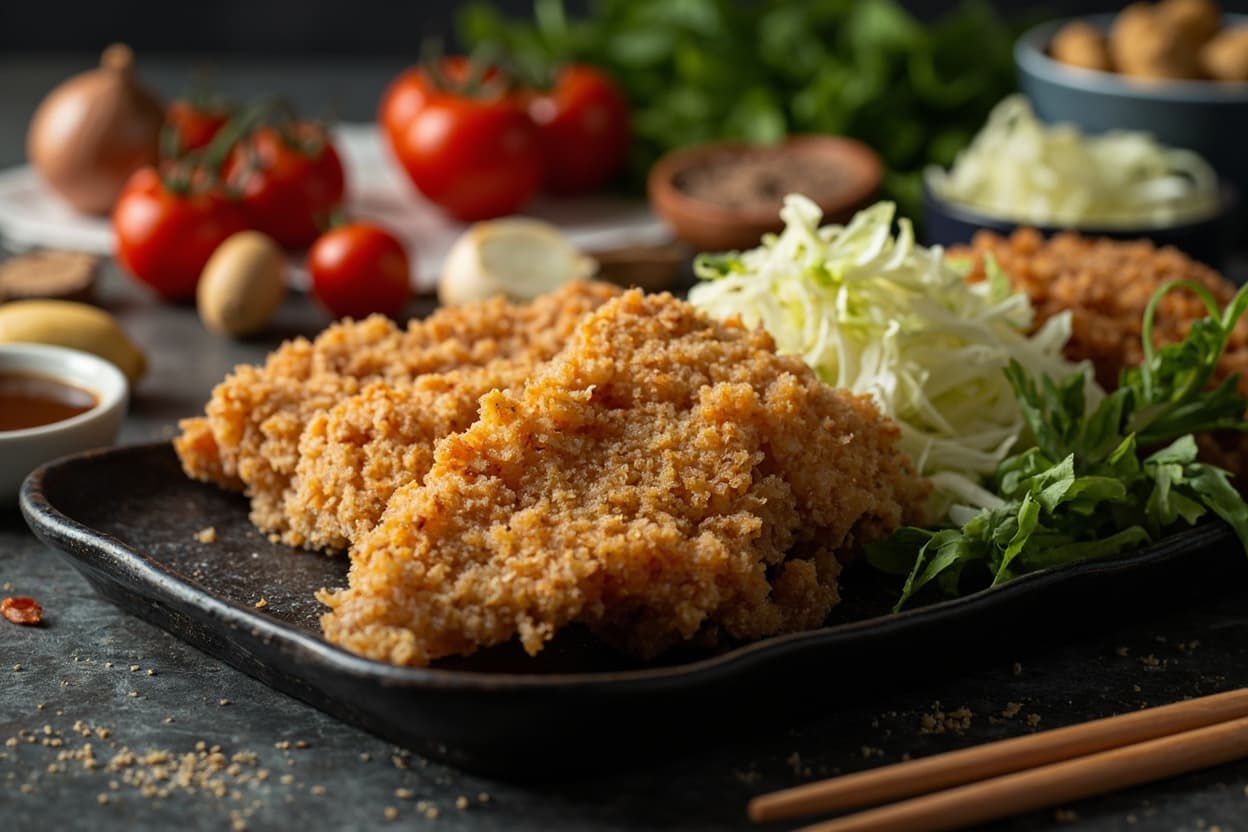
Crispy Cod Katsu with Cabbage Slaw
Cod pressed into breadcrumbs after an egg wash and fried to a deep golden crust that stays crisp while the fish inside steams gently. Cabbage is shredded fine alongside, dressed simply with soy. The contrast between the crust and the yielding white flesh is the whole point.

Prep
15 min
Cook
30 min
Rest
5 min
Total
50 min
Method
Prepare the Cod
1
Pat the cod fillets dry with paper towels. Season both sides evenly with salt and white pepper.
2
Set up your breading station: place flour in one shallow dish, beaten eggs in another, and breadcrumbs in a third.
3
Dredge each fillet first in flour, shaking off excess. Dip into the beaten egg, allowing any excess to drip off. Finally, coat thoroughly with breadcrumbs, pressing gently to adhere.
4
Place breaded fillets on a plate and let rest for 5 minutes while you prepare the slaw.
Make the Cabbage Slaw
5
Halve the cabbage, remove the core, and thinly slice into fine ribbons. Transfer to a large bowl.
6
In a small bowl, whisk together rice vinegar, soy sauce, white sugar, grated ginger, and salt until the sugar dissolves.
7
Pour the dressing over the cabbage and toss well to coat evenly. Sprinkle with sesame seeds.
8
Set aside to let the cabbage soften slightly while you cook the katsu.
Fry the Katsu
9
Heat sunflower oil in a large deep skillet or wok over medium-high heat until it reaches 350°F (175°C). Test with a small piece of breadcrumb—it should sizzle immediately.
10
Carefully place two cod fillets in the hot oil. Fry undisturbed for 3-4 minutes until the underside is deeply golden.
11
Flip each fillet and continue frying for another 3-4 minutes until the cod is cooked through and the coating is crispy and golden throughout.
12
Transfer to a wire rack or paper towels to drain. Repeat with the remaining fillets.
Serve
13
Slice each katsu into 1-inch pieces on the bias. Arrange alongside the cabbage slaw.
14
Serve immediately with steamed white rice on the side if desired.
Grade pending
Nutri-Score
Estimated nutrition
Grade pending · 100% ingredient coverage
Calories
1645
per serving
High in salt · 2687mgCalorie-dense · 1645 kcal
Protein
39g
Carbs
82g
Fat
129g
Sat. fat
14g
Fiber
5g
Sodium
2687mg
PescatarianHeart HealthyDiabetes AppropriateHigh ProteinBalanced MealWeight Management
Nutri-Score is a general nutritional-balance guide, not medical or dietary advice.
Grade pending
Environmental impact
Estimated footprint
Grade pending · 66% ingredient coverage
kg CO2e
≥0.7
per serving
Sunflower oil drives 57% of this recipe’s estimated footprint.
Carbon from Poore & Nemecek 2018; water, land & runoff from Agribalyse — modelled averages for comparing recipes, not a measurement of your groceries.
Flavor Profile
7
Umami
3
Sweet
5
Salty
3
Sour
1
Bitter
2
Spicy
Textures
CrispyTenderCrumbly
Aromas
NuttyUmami RichHerbal
Kitchen Equipment
Primary Tool
WokWokDeep SkilletThermometerChef KnifeCutting BoardGraterMixing BowlSmall BowlPaper TowelsWire RackShallow Dishes
Counter FootprintMedium
Techniques
Safety & Storage
Cooking Temperature
Maintain oil temperature at 350°F (175°C) during frying. Use a thermometer and do not overcrowd the pan—fry two fillets at a time to prevent temperature drop. Oil below 325°F causes excessive absorption and soggy coating; above 375°F risks burning.
Cross Contamination
Designate separate plates and tongs for raw breaded fish versus cooked katsu. The breading station (flour, egg, breadcrumbs) should be prepared in order and contaminated dishes removed after coating each fillet.
Allergen Warning
This dish contains five allergen categories. Clearly label and separate from allergen-free dishes during plating. Do not reuse oil that has contacted fish for other preparations if allergen management protocols require dedicated fryers.
Storage
Cooked katsu should be held at 140°F or above if served immediately. For leftovers, cool to 70°F within 2 hours, then refrigerate at 40°F or below. Consume within 2 days. Reheat to 165°F before serving.
High Risk Population
Fish and egg allergies can cause severe reactions in sensitive individuals. For immunocompromised or elderly diners, ensure fish is cooked to an internal temperature of 145°F minimum. Avoid serving raw or undercooked breaded fish even as a leftover option.
Handling
Pat cod fillets thoroughly dry before breading—moisture undermines coating adhesion and causes oil splattering. Let breaded fillets rest 5 minutes before frying to set the crust. Handle fried items with clean tongs only.
Pro Tips
Technique
After breading, let the cod rest for 5 minutes before it touches the oil. This allows the coating to set properly and helps prevent it from falling off during frying.
Substitution
If cod is unavailable, use another firm white fish such as haddock or pollock. For a lighter breading, replace regular breadcrumbs with panko.
From the chef
Cod katsu earns its character from the breadcrumb crust — pressed on firmly, rested before frying, pulled from the oil at deep gold. The fish inside steams gently while the crust holds firm. Alongside it, cabbage shredded fine and dressed with rice vinegar, soy, and ginger offers the brightness the katsu needs. Crispy exterior, tender interior, clean accompaniment. This is the washoku principle applied to something satisfying and direct.
TagsJapaneseSeafoodCodKatsuWeeknight DinnerFried
AllergensFishEggsGlutenSoySesame
Source: generated · May 30, 2026