 Chinese
Medium · Hot
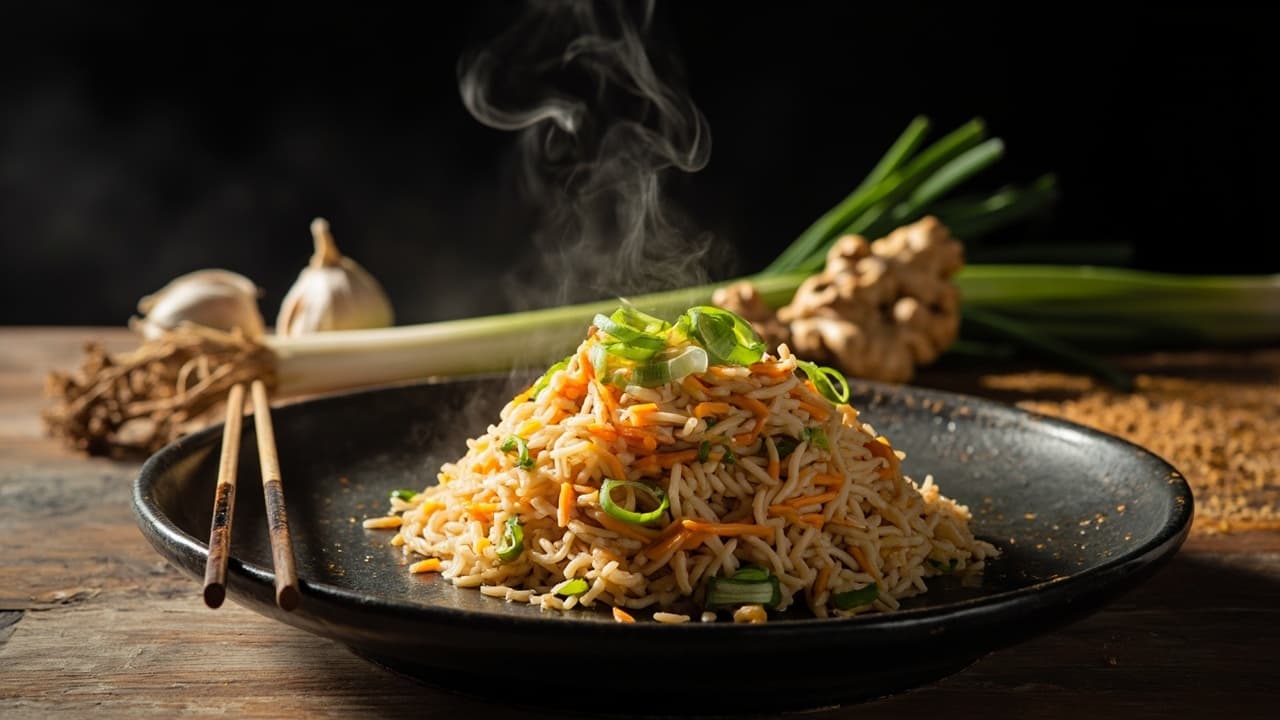
Classic Egg Fried Rice
A wok hei masterpiece of day-old rice, fluffy scrambled eggs, and bold aromatics tossed over high heat. This is the technique that separates restaurant-quality fried rice from the sad, soggy imitations.

Prep
10 min
Cook
10 min
Total
20 min
Method
Preparation
1
Crack eggs into a bowl. Add salt and white pepper. Whisk vigorously until fully combined and slightly frothy. Set aside.
2
Ensure your rice is cold and dry — break up any clumps with your hands. Day-old refrigerated rice is essential; fresh rice will turn to mush.
Scramble the Eggs
4
Set your wok over highest heat until smoking slightly. Add 2 tablespoons sunflower oil — you want a shimmer, not smoke.
Wok Fire Assembly
6
Return wok to highest heat. Add remaining 2 tablespoons sunflower oil. Throw in garlic and ginger. Stir-fry for 20-30 seconds until intensely fragrant — your kitchen should smell electric.
7
Add scallion whites. Toss for 15 seconds until slightly softened.
8
Add the cold rice. Spread it in an even layer and let it sear for 60 seconds without stirring. Then toss vigorously — you want every grain to make contact with the wok surface.
9
Continue tossing and breaking up clumps for 2-3 minutes until rice is heated through and grains are separated and slightly toasted.
Season and Finish
10
Create a well in the center. Add soy sauce and let it sizzle for 5 seconds, then toss to coat evenly. This is where the savory depth lives.
11
Sprinkle white pepper. Toss to distribute.
12
13
Remove from heat. Drizzle sesame oil over the top and add remaining scallion greens. Toss once more and serve immediately.
Grade pending
Nutri-Score
Estimated nutrition
Grade pending · 100% ingredient coverage
Calories
1104
per serving
Protein
22g
Carbs
195g
Fat
24g
Sat. fat
4g
Fiber
2g
Sugar
1g
Sodium
206mg
Gluten FreeDairy FreeHeart HealthyDiabetes FriendlyLow InflammatoryHigh ProteinBalanced MacrosWhole Grain
Nutri-Score is a general nutritional-balance guide, not medical or dietary advice.
Grade pending
Environmental impact
Estimated footprint
Grade pending · 100% ingredient coverage
kg CO2e
1.1
per serving
Water
2.9m³
Land
28Pt
Runoff
0.09g P
Day-Old White Rice drives 78% of this recipe’s estimated footprint.
Carbon from Poore & Nemecek 2018; water, land & runoff from Agribalyse — modelled averages for comparing recipes, not a measurement of your groceries.
Flavor Profile
7
Umami
3
Sweet
6
Salty
1
Sour
2
Bitter
2
Spicy
Textures
CrispyTenderFluffy
Aromas
HerbalSmokyNuttyPungent
Techniques
Safety & Storage
Cooking Temperature
The wok must reach extremely high heat (smoking point). Never leave unattended and ensure adequate ventilation to prevent smoke buildup.
Cross Contamination
Raw eggs are handled in this recipe. Use separate utensils and bowls for raw eggs and ready-to-eat ingredients. Sanitize all surfaces after handling raw eggs.
Handling
{"classification":"handling","text":{"text":"Hot oil at 400-450°F presents severe splatter and burn risk. Use long-handled utensils, stand back when adding ingredients, and never add water to hot oil."}}
Storage
Day-old rice must be stored refrigerated within 2 hours of cooking and used within 24-48 hours to prevent Bacillus cereus spore germination.
High Risk Population
Eggs in this recipe are cooked briefly and may not reach temperatures that eliminate all pathogens. This dish should be avoided by immunocompromised individuals, pregnant women, young children, and elderly unless eggs are fully cooked to 160°F.
Equipment Safety
Carbon steel and cast iron woks retain heat long after cooking. Place on heat-resistant surface away from edges and keep away from children and pets until fully cooled.
Pro Tips
Technique
Do not stir the rice for the first 60 seconds after adding it to the wok — let it sear and develop that coveted wok hei. This is where restaurant-quality flavor lives, and it's not optional.
Make Ahead
Day-old refrigerated rice is non-negotiable. Fresh rice has too much moisture and will turn to mush. Cook your rice a day ahead and store it uncovered in the fridge to dry it out further.
Equipment
A carbon steel wok develops the best wok hei, but any wide-bottomed pan over maximum heat will work. The key is ensuring your vessel is hot enough that the rice actually sizzles and sears, not steams.
From the chef
Day-old rice is not a workaround — it is the requirement. Fresh rice steams and clumps; cold, dry grains hit the wok and actually toast, developing that separated, slightly scorched texture that defines real fried rice. Eggs go in first, cooked to large soft curds and pulled before they fully set, then returned at the end so they stay fluffy. Soy sauce sizzles into the well at the center rather than poured over the top — that five-second contact with the hot wok is where the savory depth lives. Get your heat right and your kitchen will smell electric in minutes.
TagsEgg
AllergensEggsSoySesameWheatGluten
Source: generated · June 10, 2026