 French
Medium · Hot
Soft-Poached Egg with Mustard Cream
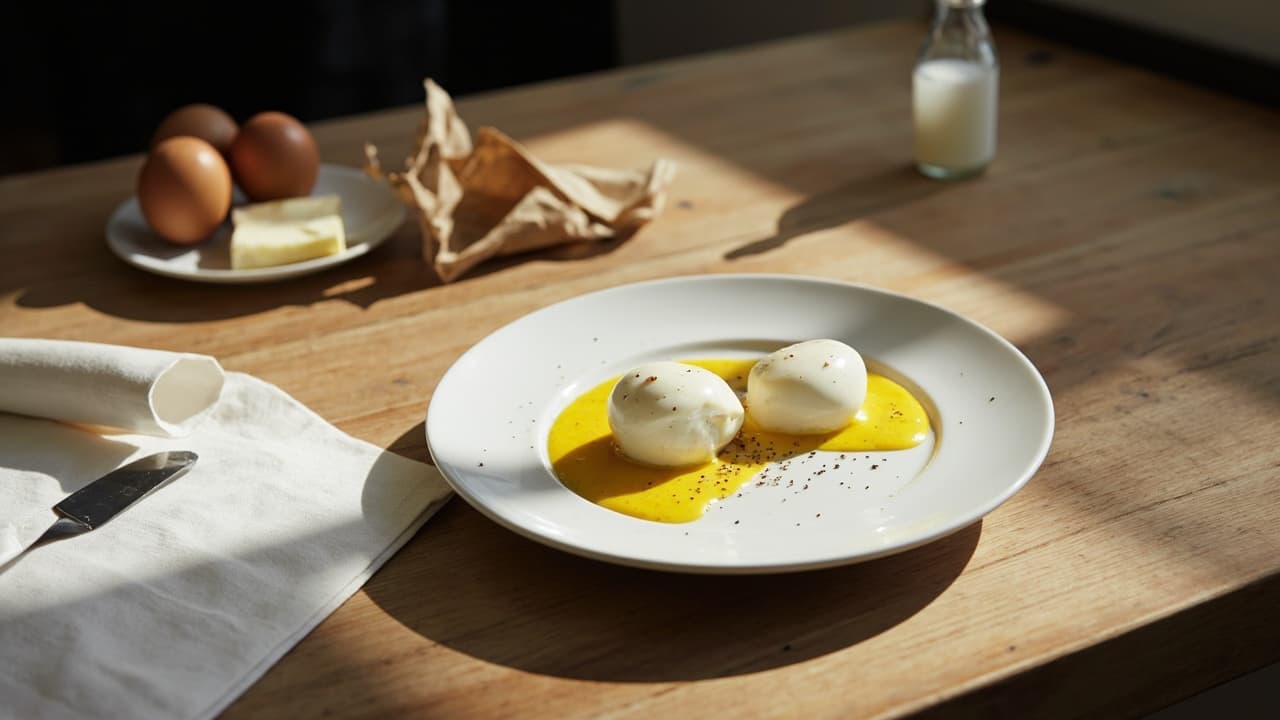
Two silken eggs on a modest plate, draped in a sharp mustard cream that cuts through the richness. No towers, no velvet ropes. Just breakfast.

Prep
5 min
Cook
15 min
Total
20 min
Method
Prepare the Poaching Water
1
Fill a saucepan with about 3 inches of water. Add the white-vinegar and a pinch of salt. Set over medium-high heat and bring to a gentle simmer—you want small bubbles, not a rolling boil.
Poach the Eggs
3
Reduce heat to medium-low. Using a spoon, stir the water to create a gentle vortex. Slide one egg into the center. Cook for exactly 3 minutes for a runny yolk with just-set whites. Remove with a slotted spoon and drain on a clean towel. Repeat with remaining eggs.
Make the Mustard Cream
4
In a small saucepan over medium heat, bring the heavy-cream to a gentle simmer. Cook for 2 minutes, stirring occasionally, until it begins to thicken.
5
Remove from heat. Whisk in the mustard, salt, and black-pepper. Let it cool for 30 seconds, then swirl in the butter piece by piece until the sauce is glossy and coats a spoon.
Plate and Serve
6
Spoon the warm mustard cream onto two plates. Place two poached eggs on each. Grind a touch more black-pepper over the top. Serve immediately—eggs do not wait for applause.
D
Nutri-Score
Needs balance
A–E · lower is better · score 13
Calories
467
per serving
High in saturated fat · 19gSource of protein · 15gLow sugar · 4g
Protein
15g
Carbs
4g
Fat
44g
Sat. fat
19g
Fiber
0g
Sugar
4g
Sodium
501mg
Gluten FreeLow CarbLow FiberModerate SodiumDiabetes FriendlyLow Sodium CautionHeart Disease CautionWeight Loss CautionHigh ProteinKeto Friendly
Nutri-Score is a general nutritional-balance guide, not medical or dietary advice.
C
Environmental impact
Moderate impact
A–E · lower is better · includes estimates
kg CO2e
1.0
per serving
CCarbonAEU all-round· carbon sets the grade
Water
0.1m³
Land
36Pt
Runoff
0.09g P
egg drives 48% of this recipe’s estimated footprint.
Carbon from Poore & Nemecek 2018; water, land & runoff from Agribalyse — modelled averages for comparing recipes, not a measurement of your groceries.
Flavor Profile
7
Umami
3
Sweet
5
Salty
3
Sour
1
Bitter
4
Spicy
Textures
SilkyRunnyCreamyTender
Aromas
PungentButteryDairySharpRich
Safety & Storage
High Risk Population
Runny poached eggs with undercooked whites pose Salmonella risk. Pregnant women, children under 5, adults over 65, and immunocompromised individuals should consume eggs with fully set whites or choose alternative preparation.
Cooking Temperature
Maintain poaching water at gentle simmer (180-190°F). Rolling boil damages egg structure and creates dangerous splashing near heat source.
Cross Contamination
Crack each egg into separate ramekin before adding to water. This prevents shell fragments and allows removal of any spoiled eggs before water contamination.
Handling
Use fresh, refrigerated eggs within expiration date. Room temperature eggs added to water create optimal environment for bacterial growth if shell integrity is compromised.
Storage
Refrigerate heavy cream immediately after opening. Cream sauce must be served within 2 hours of preparation. Do not leave dairy-based sauces at room temperature.
Shelf Life
Use poached eggs immediately after cooking. Reheated eggs become rubbery and increase bacterial risk. Discard any eggs that have been at room temperature for more than 2 hours.
Allergen Warning
This dish contains eggs, milk, and mustard. Verify all guests have no allergies before serving. Clean all utensils and preparation surfaces thoroughly between uses.
Equipment Safety
Use slotted spoon with secure grip when removing eggs from boiling water. Drain eggs on clean towel placed on stable surface to prevent slipping accidents.
Pro Tips
Technique
The swirl is your friend. When poaching, create a gentle vortex with your spoon and slide the egg into its center—this bundles the whites neatly around the yolk instead of letting them trail off like silk confetti.
Substitution
Dijon is my preference here, but whole-grain mustard adds pleasant texture and a more rustic character. A generous spoonful of horseradish works too—it's sharp, direct, and refuses to apologize for itself.
From the chef
I nearly closed a restaurant over this sauce. Not because of drama—because the brunch masses wanted their eggs benedict rebuilt as a three-tiered architectural project with microgreens and edible flowers. I kept the sauce, lost the show. Two perfect eggs, a ladle of sharp mustard cream, and a quiet plate. This is breakfast without a velvet rope.
TagsPoached EggMustard CreamQuickElegantSimple
AllergensEggsDairyMustardSulfites
Source: generated · June 10, 2026