 Japanese
Easy · Warm
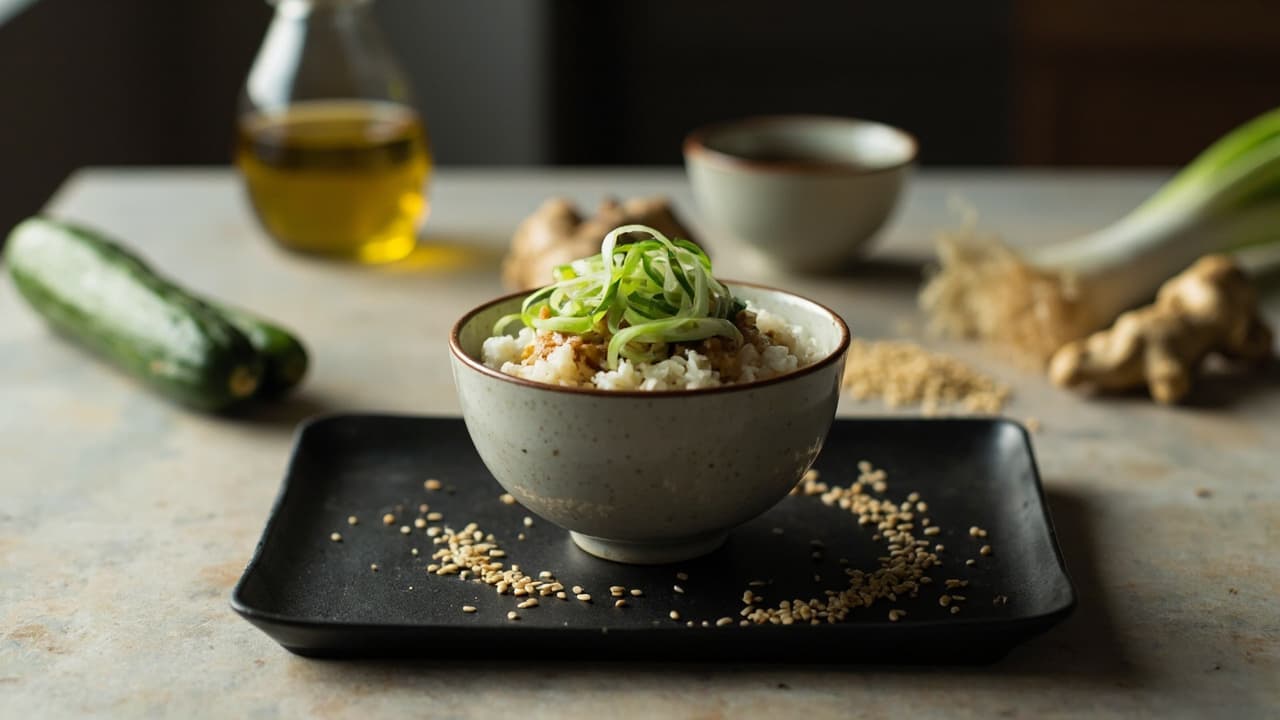
Sesame Cucumber Rice Bowl
A light Japanese-inspired rice bowl with marinated cucumber and a fragrant toasted sesame dressing. Clean, seasonal, and deeply satisfying.

Prep
20 min
Cook
30 min
Rest
5 min
Total
55 min
Method
Prepare the Rice
1
Rinse 2 cups white rice under cold water until the water runs clear. This removes excess starch for a cleaner texture.
2
Cook the rice in a rice cooker or pot with an equal amount of water until tender and fluffy.
3
Let the cooked rice rest covered for 5 minutes, then gently fold to release steam.
Prepare the Cucumbers
4
Thinly slice the cucumbers into half-moons, about 1/8 inch thick.
6
Gently squeeze the cucumbers to remove liquid, then pat dry with a clean towel.
Make the Sesame Dressing
7
Toast sesame seeds in a dry pan over medium-low heat, stirring constantly, until golden and fragrant, about 2 minutes. Set aside half for garnish.
8
Grate the fresh ginger to yield about 1 tsp of juice.
9
In a small bowl, combine the remaining toasted sesame seeds, sesame oil, soy sauce, rice vinegar, and grated ginger. Whisk until emulsified.
10
Season the dressing with 1/2 tsp salt.
Assemble the Bowls
11
Divide the warm rice among four bowls.
12
Arrange the prepared cucumber slices over the rice.
13
Drizzle the sesame dressing generously over each bowl.
14
Finely chop the scallions and sprinkle over each bowl along with the reserved toasted sesame seeds.
C
Nutri-Score
Fair balance
A–E · lower is better · score 3
Calories
577
per serving
Calorie-dense · 577 kcalLow sugar · 2gLow saturated fat · 2g
Protein
11g
Carbs
102g
Fat
14g
Sat. fat
2g
Fiber
3g
Sugar
2g
Sodium
897mg
Heart HealthyLow CholesterolBlood Sugar ConsciousBalanced MacrosSodium AwareClean Eating
Nutri-Score is a general nutritional-balance guide, not medical or dietary advice.
B
Environmental impact
Low impact
A–E · lower is better · includes estimates
kg CO2e
0.6
per serving
BCarbonAEU all-round· carbon sets the grade
Water
1.5m³
Land
13Pt
Runoff
0.05g P
White Rice drives 78% of this recipe’s estimated footprint.
Carbon from Poore & Nemecek 2018; water, land & runoff from Agribalyse — modelled averages for comparing recipes, not a measurement of your groceries.
Flavor Profile
7
Umami
3
Sweet
5
Salty
3
Sour
1
Bitter
1
Spicy
Textures
CrispTenderSilky
Aromas
NuttyHerbalFragrant
Kitchen Equipment
Primary Tool
Rice CookerCounter FootprintSmall
Techniques
Safety & Storage
Allergen Warning
Sesame is a potent allergen. Use dedicated utensils and containers when handling sesame seeds and oil. Clean all surfaces thoroughly after preparation.
Soy sauce contains gluten from wheat. For gluten-free alternatives, use tamari or coconut aminos in equal amounts.
Cross Contamination
Prevent cross-contact with other allergens by cleaning knives, cutting boards, and bowls between uses. Store sesame-containing components separately.
Handling
When toasting sesame seeds, stir constantly over medium-low heat. Remove from pan immediately when golden to prevent burning and smoke.
Temperature
Keep cooked rice warm above 140°F or cool rapidly to below 40°F within 2 hours. Do not leave rice at room temperature for more than 1 hour.
Salt-treated cucumbers (10-minute draw time) should not exceed 2 hours total at room temperature. Refrigerate promptly after preparation.
Storage
Store sesame dressing separately in a sealed container in the refrigerator for up to 5 days. Separation is normal; whisk before use.
Cooked rice can be refrigerated for up to 5 days or frozen for 1 month. Store in airtight containers to prevent moisture loss.
High Risk Population
For immunocompromised individuals, pregnant persons, or elderly, ensure all components are prepared with extra attention to hygiene and freshness.
Ginger root should be washed thoroughly before grating. Use a microplane or fine grater for 1 tsp juice yield.
Egg Safety
If using soft-poached egg as a topping, use pasteurized eggs or cook to an internal temperature of 160°F (71°C) to eliminate Salmonella risk. Avoid soft-poached eggs for immunocompromised individuals, pregnant persons, or elderly.
Pro Tips
Technique
When toasting sesame seeds, listen carefully. The moment they release that popcorn-like fragrance, they're ready—remove them from heat immediately or they will turn bitter.
Substitution
If fresh ginger is unavailable, substitute with a small pinch of ground ginger. The flavor will be softer, less bright, but the dressing will still hold together beautifully.
Storage
The sesame dressing keeps in a sealed jar for up to one week. Make extra—it elevates grilled vegetables, cold tofu, or leftover rice throughout the week with no extra effort.
Seasonal
In late summer, add thin slices of ripe heirloom tomato or a handful of fresh edamame alongside the cucumber. The seasons give us what we need.
From the chef
This dish is summer on a plate—light, clean, exactly what the body craves when the air grows heavy. The cucumbers surrender their water to salt, becoming crisp and refreshing, while the sesame dressing brings quiet richness. It is washoku in its purest form: no waste, no excess, only the honest flavors of what ripens now.
TagsWeeknight Dinner
AllergensSesameSoyGluten
Source: generated · June 10, 2026