 Ethiopian
Medium · Hot
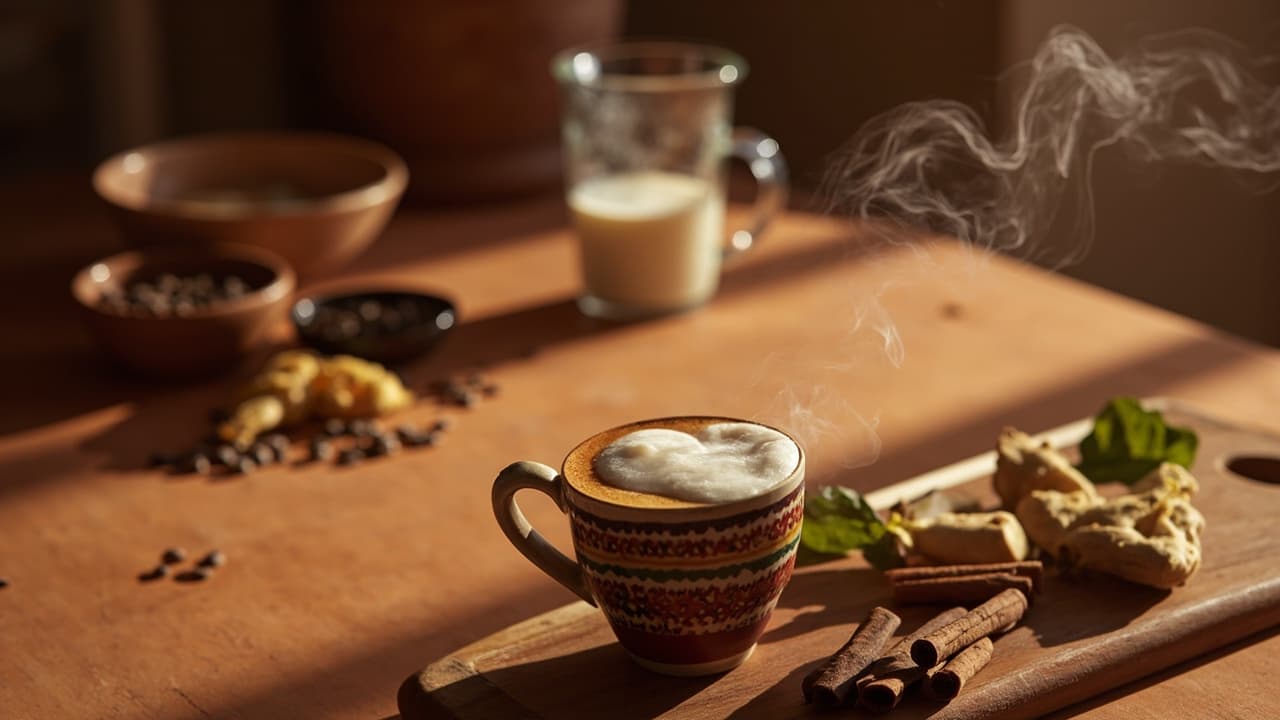
Tona Cardamom Ceremonial Latte
A reverence to the second round of the Ethiopian coffee ceremony — strong hand-brewed coffee meets silky spiced milk infused with cinnamon and ginger, sweetened with honey and served in the tona tradition of warmth and sharing.

Prep
10 min
Cook
25 min
Total
35 min
Method
1
Combine whole milk, honey, cinnamon, and ground ginger in a medium saucepan over medium heat. Stir gently to dissolve the honey fully.
2
3
Remove from heat and strain through a fine-mesh sieve into a thermal carafe or pitcher to keep warm. Set aside.
4
Combine ground coffee and water in a deep saucepan or jebena-style vessel over medium-high heat. Bring to a boil, then immediately reduce to a low simmer.
5
Simmer uncovered for 5 to 6 minutes, stirring occasionally, until the coffee is dark and aromatic with a rich, full-bodied extraction. Watch for a deep mahogany color and fragrant steam.
6
Remove from heat and allow the grounds to settle for 2 minutes. Carefully pour the brewed coffee through a cheesecloth-lined strainer into a clean vessel, reserving the liquid and discarding the grounds.
7
Warm four ceramic serving cups by rinsing briefly with hot water. Pour 3/4 cup of the spiced milk into each cup.
8
Slowly pour 1/2 cup of the hot brewed coffee over the spiced milk in each cup, tilting the cup slightly to create a gentle layered effect. The coffee will swirl naturally with the milk.
9
Stir each cup once gently with a wooden spoon to blend the layers. Top with a light drizzle of honey and a faint dusting of cinnamon if desired.
10
Serve immediately while steaming, alongside a small plate of roasted coffee cherries or injera bread if you wish — this completes the tona sharing experience.
B
Nutri-Score
Good balance
A–E · lower is better · score 2
Calories
209
per serving
Source of protein · 8gLow sugar · 26gLow salt · 127mg
Protein
8g
Carbs
28g
Fat
8g
Sat. fat
6g
Fiber
1g
Sugar
26g
Sodium
127mg
DairyGluten FreeNo ShellfishNo Tree NutLow FatLow SodiumAntioxidant RichBalanced MacrosModerate Calorie
Nutri-Score is a general nutritional-balance guide, not medical or dietary advice.
C
Environmental impact
Moderate impact
A–E · lower is better · includes estimates
kg CO2e
1.7
per serving
CCarbon
Ground Coffee drives 50% of this recipe’s estimated footprint.
Carbon from Poore & Nemecek 2018; water, land & runoff from Agribalyse — modelled averages for comparing recipes, not a measurement of your groceries.
Flavor Profile
4
Umami
4
Sweet
1
Salty
2
Sour
3
Bitter
3
Spicy
Textures
CreamySilkySmooth
Aromas
EarthyFloralHerbalSmokySpicy
Kitchen Equipment
Primary Tool
Deep Saucepan Jebena StyleCheesecloth Lined StrainerDeep Saucepan Or Jebena Style PotFine Mesh SieveMedium SaucepanLadleMeasuring CupsMeasuring SpoonsThermal Carafe Or PitcherWooden SpoonClean Cloth For Warming Cups
Safety & Storage
Allergen Warning
This recipe contains milk from whole milk. Not suitable for individuals with milk allergies or lactose intolerance. The spiced milk base contains 4 cups of whole milk.
Cooking Temperature
Heat the spiced milk to a gentle simmer only — small bubbles around the edges with wisps of steam. Do not allow to boil. Boiling can cause milk proteins to denature, alter texture, and create a scalded taste that overwhelms the delicate spice infusion.
When brewing coffee, bring to a boil then immediately reduce to low simmer. Maintain uncovered simmering for 5-6 minutes for proper extraction. Full boiling of coffee grounds ensures potential contaminants are minimized.
Cross Contamination
Use dedicated equipment for the spiced milk base if serving to individuals with milk allergies. Clean all utensils, saucepans, strainers, and carafes thoroughly with soap and hot water between uses.
Storage
Serve beverages immediately after assembly. If prepared ahead, store the strained spiced milk in a covered container in the refrigerator for up to 24 hours. Reheat gently on low heat — never boil refrigerated milk.
Brewed coffee can be stored in the refrigerator for up to 24 hours but is best consumed immediately for optimal aroma and flavor. Reheat to serving temperature before combining with milk.
Handling
When straining hot beverages through cheesecloth, allow grounds to settle fully before pouring. Use caution with the hot liquid to prevent burns. The fine-mesh sieve and cheesecloth combination effectively filters sediment for safe consumption.
High Risk Population
For young children, elderly individuals, or immunocompromised persons, ensure all dairy components are pasteurized and the coffee is brewed at temperatures sufficient to eliminate potential microbial contaminants. Serve at safe consumption temperatures above 140°F.
Pro Tips
Technique
The secret to authentic tona lies in the milk's gentle simmer—never let it boil, or you lose the delicate spice infusion and the silkiness that makes this ceremony special. Watch for those small bubbles around the pan's edge, like tiny promises rising.
Equipment
If you have access to a jebena, use it for brewing—the clay vessel imparts a subtle mineral earthiness that honors the ceremony's roots. No jebena? A deep saucepan works beautifully, just remember to strain carefully through cheesecloth to capture the grounds completely.
Substitution
While Sidamo or Yirgacheffe beans are traditional, any quality medium-roast single-origin coffee works well. For the honey, unrefined sugarcane juice (qeshir) would be traditional, but any raw honey maintains the ceremonial sweetness you need.
From the chef
The Tona Cardamom Ceremonial Latte is built on patience at both the milk and the brew. Whole milk simmers gently for eight full minutes with cinnamon stick, ground ginger, and honey — long enough for the spices to saturate the fat without tipping into bitterness. The coffee brews separately in the jebena tradition, brought to depth through a slow simmer rather than a fast pour. The two come together in a warm ceramic cup with the coffee poured over the spiced milk in a gentle arc, swirling into a layered, amber-crowned drink. A final drizzle of honey and a veil of cinnamon close the ritual.
TagsEthiopian Coffee CeremonySpicedCeremonialHoney SweetenedDairy BeverageWarm BeverageTraditionalJebena Style
AllergensMilk
Source: generated · June 13, 2026