Transform & Preserve
Adobo Marinating
Steeping meat in an acidic adobo of vinegar, garlic, and spices to season, tenderize, and preserve.
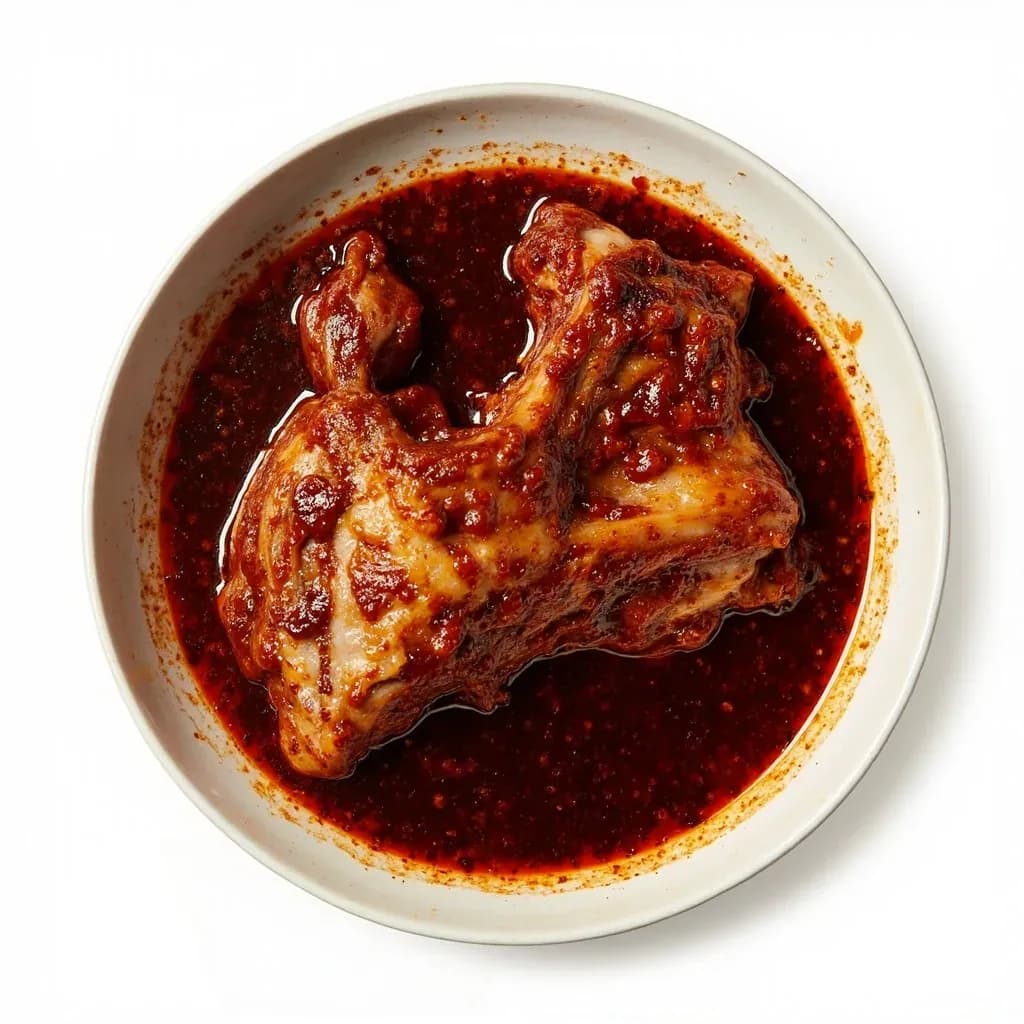
Adobo marinating soaks meat in a mixture built on vinegar, garlic, soy or salt, and spices, where the acid both flavors and tenderizes while extending shelf life. A dry adobo rub coats the surface with the same aromatic blend without liquid. The method is central to Filipino and Latin American cooking, often followed by braising or grilling.
Adobo marinating is the Filipino technique of steeping meat in an acidic, salty liquid — built on vinegar, garlic, bay leaves, and cracked peppercorns, with soy sauce or salt for savor — and then cooking the meat directly in that same liquid. It is unusual among the world's marinating methods because the marinade is never discarded: it becomes the braising stock, and finally the sauce. That continuity is the heart of the dish, and it is what gives adobo its layered tang-and-umami character.
The acid does two jobs at once. On a short steep it seasons the surface of the meat and firms up the proteins the way a ceviche cure does; on a long simmer it breaks down connective tissue in tougher cuts, turning pork shoulder or chicken legs silky without drying them out. Vinegar's preservative power is also why cooked adobo keeps for days in the refrigerator — the fat on top turns solid and acts as its own seal, and the meat beneath stays bright and savory long after most braises have gone dull.
What separates a good adobo from a forgettable one is balance and reduction. The marinade should taste distinctly sour at the start, almost too sharp, because much of that acidity softens as it simmers. A proper pot of adobo finishes with a sauce thick enough to glaze the meat and pool on the plate, never watery, and with whole cloves of garlic that have gone soft and sweet in the braise.
- Difficulty
- Easy
Types & varieties
Classic chicken adobo; bone-in thighs and legs give the most flavor and stay moist in the braise.
Pork adobo using belly or shoulder; rich from the higher fat content, which also softens the vinegar.
'White' adobo with no soy sauce, seasoned only with salt or patis; paler, sharper, and more purely vinegary.
Turmeric adobo common in southern Luzon; golden from fresh or powdered turmeric, slightly earthy.
'Red' adobo colored and lightly flavored with annatto (achuete) seeds.
'Black' adobo from the Visayas, made with fermented black beans (tausi) or squid ink.
Adobo braised in coconut milk for a creamy, mellowed, less acidic version.
Visayan sweet-savory cousin with fermented black beans, banana blossom, and muscovado sugar.
Squid adobo; squid ink darkens and enriches the sauce, with a short cook to keep the seafood tender.
Water spinach braised in adobo-style sauce, typically as a quick side dish.
How to do it
- 1
Build the marinade
In a non-reactive bowl, combine Filipino cane vinegar, soy sauce, smashed garlic cloves, cracked black peppercorns, and torn bay leaves. Stir and taste — the balance should lean tangy, with the soy sauce seasoning rather than dominating.
- 2
Marinate the meat
Add bone-in chicken pieces, pork shoulder or belly, or a mix. Toss to coat, then refrigerate for 30 minutes to overnight. Twenty to sixty minutes is enough for most cuts; longer marination is not necessarily better because of the high acid.
- 3
Sear the meat
Lift the meat from the marinade and reserve the liquid. Heat a tablespoon of neutral oil in a heavy pot over medium-high heat and brown the pieces in batches, skin side down first, until they develop a deep golden crust.
- 4
Pour in the marinade and simmer
Return all the meat and any accumulated juices to the pot, add the reserved marinade, and bring to a brisk boil for 2–3 minutes uncovered to drive off the raw vinegar edge. Lower the heat and simmer gently, partially covered, 30–45 minutes until the meat is tender.
- 5
Reduce the sauce
Uncover, raise the heat to medium, and simmer until the sauce thickens enough to coat the meat and pool richly in the pan, about 10–15 minutes. The garlic cloves should be soft and sweet; the bay leaves darkened.
- 6
Rest and serve
Off the heat, let the adobo sit 5–10 minutes so the meat reabsorbs the sauce. Skim excess fat if you like, or reserve it for frying. Serve with steamed jasmine rice that can catch every drop of the glaze.
Why it works as a marinade and a braise
Most marinades are either acidic enough to season but too harsh to cook in, or savory enough to braise in but too gentle to penetrate raw meat. Adobo straddles both jobs. Vinegar's acetic acid opens the surface of the protein and carries salt and aromatics inward during the steep, then continues tenderizing connective tissue during the simmer. Because the meat is cooked in the same liquid, none of that flavor is lost — what would be discarded in a typical marinade becomes the sauce on the plate.
- Acidity seasons the surface in 20–30 minutes; longer is rarely better.
- A short hard sear before braising adds Maillard depth without sealing off the marinade's penetration.
- Reducing the braising liquid at the end concentrates it into a glaze that clings to the meat.
Choosing your vinegar
The single biggest flavor decision in adobo is the vinegar. Filipino cane and coconut vinegars are mildly sweet and round, with a softer tang that survives a long simmer. Distilled white vinegar is sharper and more aggressive; it works in a pinch but can read as harsh, especially after reduction. Palm vinegar, used in the Visayas, has a faintly smoky, fermented character of its own.
- Cane or coconut vinegar for authenticity and a softer finish.
- Distilled white vinegar acceptable but expect a brighter, more aggressive sauce.
- Never use balsamic — its sweetness and color overwhelm the balance.
Storing and repurposing
Cooked adobo is one of the rare braises that genuinely improves after a night in the refrigerator, once the fat has resolidified and the meat has reabsorbed the sauce. That same fat layer can be skimmed and saved — it is intensely flavored and excellent for frying rice, eggs, or potatoes. Leftover shredded adobo is the classic base for tapsilog-style fried rice, adobo flakes, and empanada fillings.
- Keep refrigerated in a covered container for up to a week.
- Skim the solidified fat and reserve it as a cooking fat.
- Reheat gently with a splash of water to loosen the glaze.
Common uses
Tips & pitfalls
- Crack, do not finely grind, the peppercorns; their slow release is part of the flavor.
- Marinate poultry 30–60 minutes and pork up to overnight, but avoid going past 12 hours — straight vinegar can turn the surface of the meat mushy and chalky.
- Sear the meat in a little oil before adding the marinade; the Maillard browning carries the sauce.
- Never discard the marinade: pour it over the seared meat to become the braising liquid.
- Do not cover the pot during the final reduction if you want a concentrated, glazed sauce; cover only briefly if the cut is lean and you need to retain moisture.
- Reduce the sauce until it coats the back of a spoon — watery adobo is the most common complaint.
- Use cane or coconut vinegar for an authentic roundness; distilled white vinegar is sharper and can read as harsh.
- Smash the garlic with the side of a knife rather than mincing; the cloves sweeten and turn jammy as they cook.
- Save the rendered fat that solidifies on top after chilling; it is intensely flavored and perfect for frying rice or eggs.
Good to know
- Origin
- Philippines; pre-colonial cooks were already vinegar-curing meat, but the name came from the Spanish 'adobar' (to marinate or pickle).
- Core components
- Vinegar, soy sauce or salt, garlic, bay leaves, and whole black peppercorns.
- Acid base
- Filipino cane vinegar (sukang maasim) or coconut vinegar; palm vinegar in the Visayas.
- Marination time
- 30 minutes to overnight; most cooks stop at 30–60 minutes because of the high acid.
- Cook time
- 45–60 minutes simmer after an initial sear, then 10–15 minutes to reduce the sauce.
- Yield
- About 4 servings per 2 lb (900 g) of protein with the reduced sauce.
- Storage
- Refrigerated, cooked adobo keeps 5–7 days and deepens in flavor after a night or two.
- Difficulty
- Easy; forgiving and well-suited to beginners.
- Flavor profile
- Tangy, savory, garlicky, lightly peppery — a balance of sour, salty, and umami.
Also called
Adobo Dry-Rubbing · Adobo Marinade · Marinating in Adobo
Dishes that rely on it
Related

Confit
Cook slowly submerged in fat for silky tenderness and keeping

Cure
Draw out moisture with salt and time to preserve and concentrate

Pickle
Steep in acidic brine for bright, tangy, crunchy preservation

Ferment
Let friendly microbes transform food into tangy, complex flavor

Marinate
Soak in a seasoned mix to flavor and tenderize before cooking

Brine
Soak in salt water so meat stays juicy and seasoned throughout

Dehydrate
Slowly dry out moisture to concentrate flavor and extend shelf life

Cold-Smoke
Perfume cured food with smoke without cooking it through