Heat & Fire
Grilling (Braai)
South African live-fire grilling over wood or coals, a social cookout tradition.
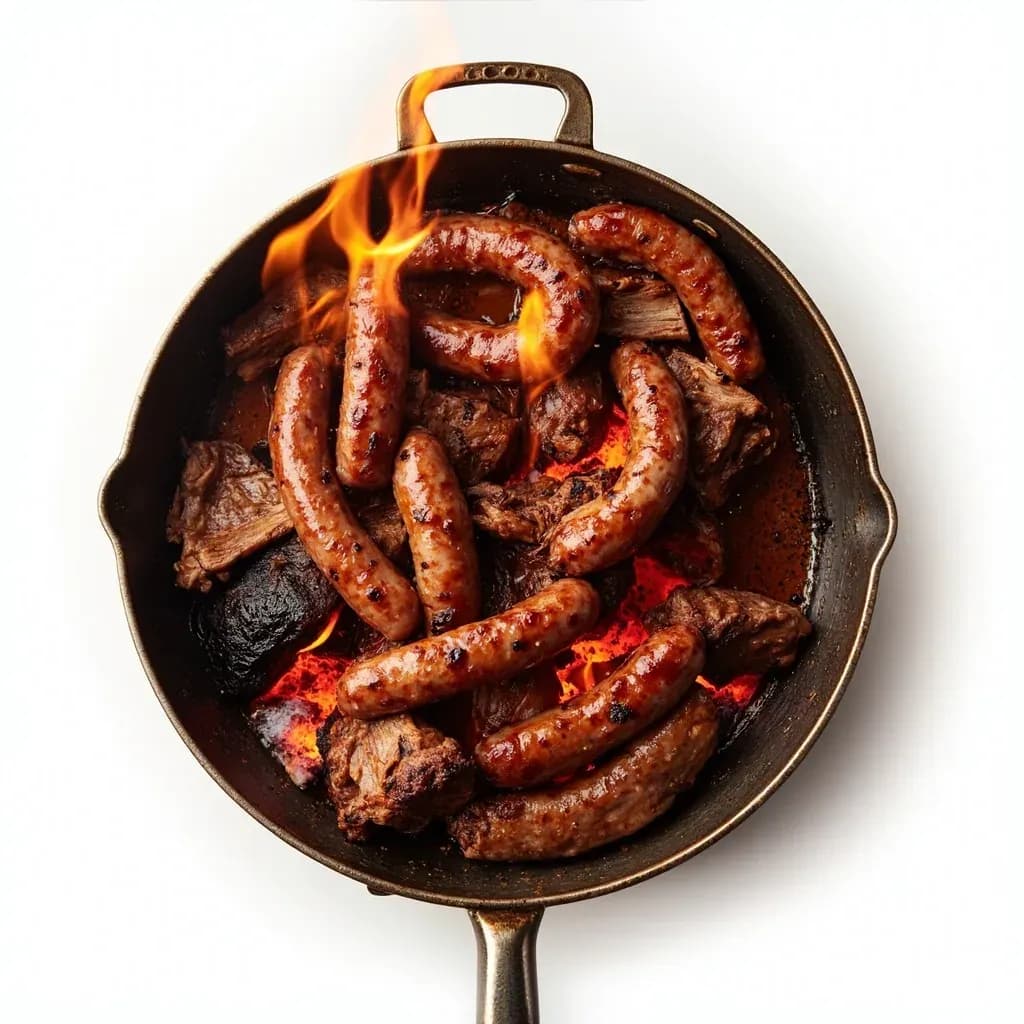
Braai is the South African practice of grilling meat, sausage (boerewors) and vegetables over an open wood or charcoal fire. More than a cooking method, it is a social ritual centered on the fire, where the cook (braaimaster) manages coals for steady radiant heat. Wood-fired smoke and direct heat give the food a characteristic char and flavor.
Braai (pronounced 'bry') is the South African tradition of cooking over wood or charcoal, and at its heart it is direct-heat grilling rather than the low-and-slow barbecue associated with the American South. The defining habit is patience with the fire: a proper braai is lit 30 to 45 minutes before anyone eats, and the cook waits for hardwood logs or lump charcoal to burn down to a bed of white-ash-covered coals before a single chop touches the grid. Food cooks from radiant heat rising off those embers, not from open flame, which is why a good braai produces a clean, mahogany crust and a faintly smoky aroma rather than the blackened, soot-bittered exterior of food rushed over live fire.
The technique is inseparable from its social setting. A braai is less a recipe than a gathering: someone tends the coals, someone else seasons the meat, and the rest stand around with a drink while the fire does its work. This is why South Africans observe Heritage Day, 24 September, as an informal National Braai Day, and why the Afrikaans phrase 'braaivleis, rugby, sunny skies' has the cadence of a national motto. The equipment reflects that temperament — a hinged grid (rooster) suspended over the coals, a flat steel plate (vlakbraai) for smaller items, or a closed kettle-style chamber that traps heat while the conversation continues.
What separates braai from other grilling traditions is the deliberate simplicity of the food. Coarse salt, cracked black pepper, and the smoke from native hardwoods such as sekelbos, rooikrans, or kameeldoring do most of the work. The marinated skewers known as sosaties are the major exception, carrying the curry, vinegar, and tamarind of Cape Malay cookery onto the grid. Boerewors — a coarse, herb-flecked sausage that by South African law must contain at least 90% meat in a natural casing — is the canonical braai protein, but lamb chops, rump and sirloin steaks, spatchcocked chicken, and whole fish like snoek and kabeljou all belong to the same fire.
- Difficulty
- Medium
Types & varieties
Standard hinged or flat grid set over coals; the default and most recognized form.
A solid flat steel plate (plancha-style) laid over coals; used for breakfast eggs, slap chips, onions, and smaller items that would fall through a grid.
A three-legged cast-iron pot suspended from a tripod or placed on coals; layered stew simmered slowly, not grilled, but cooked at the same fire.
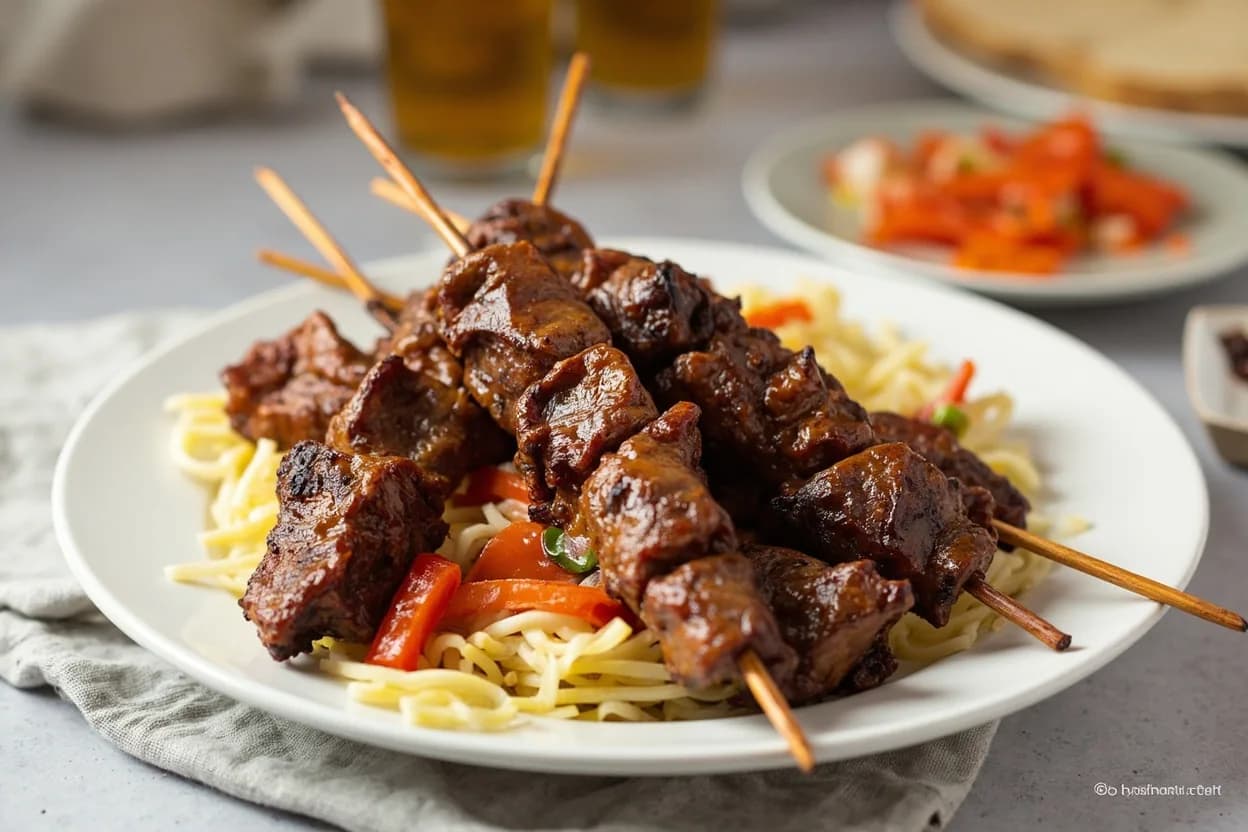
Skewered, marinated lamb or mutton (often Cape Malay-style with tamarind, curry, and vinegar) grilled over coals.
Whole lamb, pig, or chicken rotated on a horizontal spit beside or above the coals; common at large gatherings.
Closed kettle or drum-style grill (Weber, Mostert) that traps heat and smoke; the closest local equivalent to American barbecue, though still direct-heat oriented.
Grid set very low and nearly buried in coals for an intense, smoky sear on chops and wors. (The name also describes lamb's liver discs wrapped in caul fat grilled in the same way.)
How to do it
- 1
Choose and prepare the fuel
Select a hard, dry wood (sekelbos, rooikrans, kameeldoring) or quality lump charcoal. Pile in a loose pyramid in the firebox or kettle, light with a firelighter or chimney starter, and open bottom vents fully. Never use paraffin, petrol, or treated timber.
- 2
Burn down to coals
Allow 30–45 minutes for hardwood (longer for large logs) until flames die back and the coals glow with a thin grey-white ash. Spread the coals evenly for gentler cooking or leave them heaped for an intense sear.
- 3
Prepare the grid and surface
Clean the grid with a wire brush, then oil it lightly by rubbing with a halved raw onion dipped in oil, a folded paper towel gripped in tongs, or a heatproof brush. Place the grid 8–15 cm above the coals and let it preheat for 2–3 minutes.
- 4
Season the meat
Bring meat to room temperature 20–30 minutes before cooking. Season cuts simply with coarse salt and freshly ground black pepper, or apply a marinade (sosaties, lemon-and-herb chicken) well ahead — typically overnight. Pat the surface dry so it sears rather than steams.
- 5
Lay the meat and sear
Place each piece on the hot grid and leave it undisturbed for 2–4 minutes to develop a crust. Resist lifting or shifting the food early; a clean release from the grid is the sign of a proper sear.
- 6
Turn and finish
Flip once with long tongs. For boerewors, rotate the coil frequently to prevent one side charring. For thick chops and steaks, move to a slightly cooler part of the grid (or raise the height) to finish gently to the desired doneness.
- 7
Rest and serve
Transfer cooked meat to a warmed platter, tent loosely with foil, and rest 5–10 minutes. Serve with pap (maize porridge), chakalaka, tomato-smoor, or a simple green salad. On a kettle or chamber braai, close the lid between rounds to keep residual heat ready for the next batch.
Wood, coals, and the patience principle
The single biggest decision a braaier makes is the fuel, and most other mistakes flow from getting it wrong. South African braai culture treats wood selection as a craft: native hardwoods are chosen for the aromatic character they lend the smoke, the way a vintner chooses a barrel.
- Sekelbos (sickle bush) — sweet, faintly resinous smoke; a regional favourite in the Karoo.
- Kameeldoring (camel thorn) — burns very hot and clean, prized for searing chops and steaks.
- Rooikrans and witdoring — classic all-rounders with a balanced, slightly sweet smoke profile.
- Blue gum and black wattle — widely available and neutral in flavour; acceptable but unremarkable.
- Treated timber, pine, and any resinous softwood — rejected outright; the smoke carries toxic, acrid compounds that ruin the food.
- Lump charcoal is a clean, modern substitute that reaches cooking temperature faster and avoids the flavour of the wood itself; briquettes are tolerated but produce more ash and a duller fire.
Boerewors and sosaties: the proteins that define the braai
If there is a default braai menu, it centres on boerewors and sosaties, and understanding them explains much of how the fire is managed. Both demand a different relationship with the coals than a thick steak does.
- Boerewors — a coarse-ground sausage of beef, pork, or lamb with coriander, cloves, nutmeg, and vinegar. South African law requires at least 90% meat in a natural casing, with no offal. It cooks best over medium coals (spread the bed rather than heaping it), with frequent rotation to prevent the casing from splitting on one side.
- Sosaties — skewered cubes of lamb or mutton, marinated overnight in a Cape Malay mixture of vinegar, tamarind, curry powder, bay leaves, and onions. The acidic marinade tenderises tougher cuts and caramelises beautifully on the grid; the surface should be blotted dry before grilling to encourage browning.
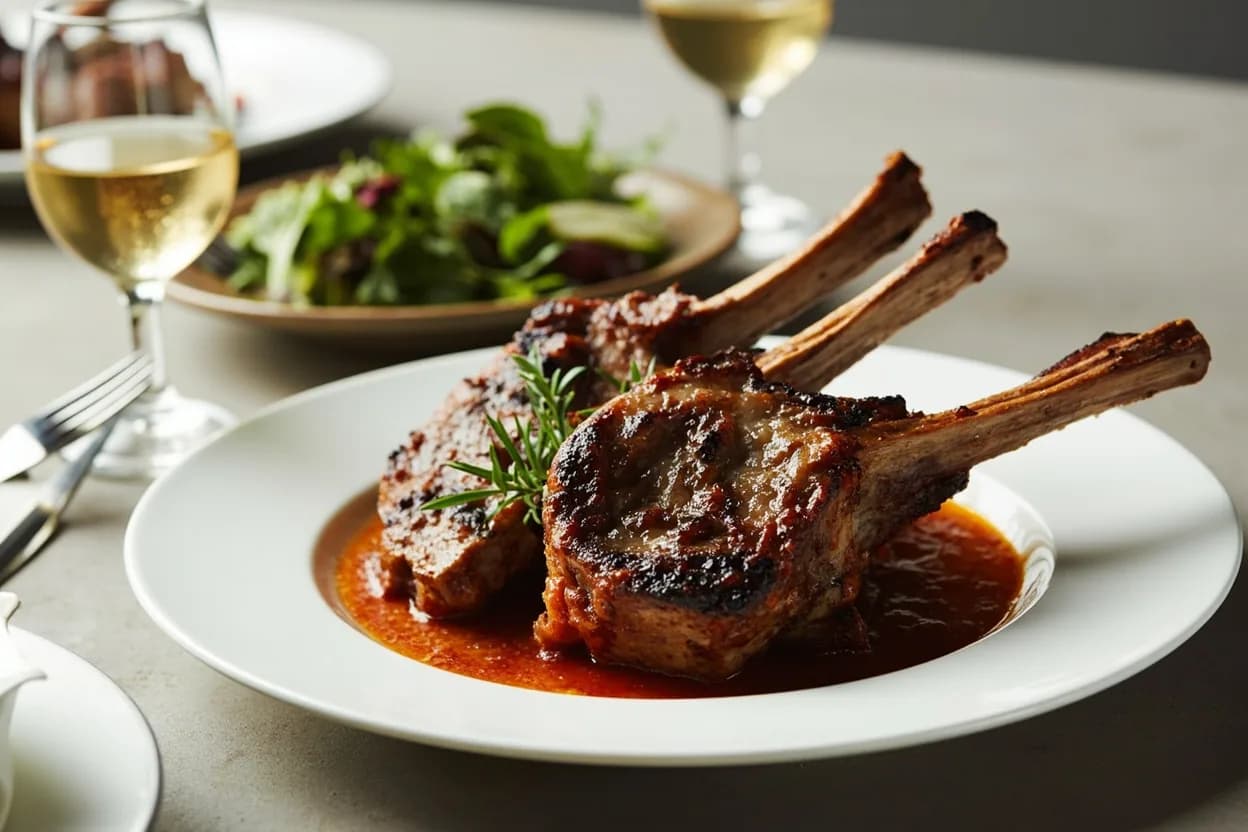
- Lamb and mutton chops — the braai's everyday cut, typically 2–3 cm thick on the bone, seasoned only with salt and pepper and seared hard over very hot coals.
- Steaks — rump and sirloin dominate; fillet appears at more formal braais. A Maillard crust forms in the first 2–4 minutes and the cut is then moved to a cooler zone or raised grid to finish.
- Whole fish — snoek (a regional classic, often basted with apricot jam), kabeljou, and yellowtail are butterflied and grilled on a well-oiled flat or hinged grid.
Common uses
Tips & pitfalls
- Wait for white ash on the coals before placing the grid; cooking over active flame chars the outside and leaves a bitter, soot-flavoured crust.
- Oil the grid (with a dipped onion, oiled paper towel, or brush) rather than oiling the meat, which drips onto the coals and flares.
- Use a long pair of braai tongs; never pierce meat with a fork — it loses juices and dries out fast under direct radiant heat.
- Season simply with coarse sea salt and cracked black pepper. Save heavy glazes (apricot jam on snoek, sticky basting sauces) for the last minute of cooking to prevent burning.
- Rest meat off the heat for 5–10 minutes under foil; the high radiant temperatures push juices to the surface and they need time to redistribute.
- Build the fire well in advance — rushing a braai with under-coaled wood is the most common mistake and produces uneven, flame-scorched food.
- Avoid lighter fluid and paraffin; use firelighters, charcoal starter cubes, or a chimney starter to keep the fuel taste clean.
- For boerewors, prick the casing once with a fork only if it's about to burst — too many holes let fat escape and the wors dries out.
- On a kettle or chamber braai, leave the lid closed between flips to retain oven-like heat and shorten cook times on thick cuts.
Good to know
- Origin
- South Africa; the Afrikaans word 'braai' derives from 'braaivleis' (roasted meat) and has roots in 17th-century Dutch settler cookery.
- National observance
- Heritage Day, 24 September, is informally observed as National Braai Day, an initiative started by Jan Scannell ('Jan Braai') in 2005.
- Core heat source
- Hardwood logs or lump charcoal, burned down to glowing coals; flame-cooking over open fire is generally avoided in favor of radiant heat from embers.
- Traditional woods
- Sekelbos (sickle bush), rooikrans, kameeldoring (camel thorn), and witdoring are prized; blue gum and black wattle are common but more neutral; treated or resinous softwoods are rejected.
- Primary equipment
- A grid (hooked or flat) suspended or laid over the coals; a kettle-style closed braai (e.g., Weber) is a common modern adaptation, often with a lid to mimic a chamber.
- Fuel-to-coal time
- Roughly 30–45 minutes for hardwood to reduce to a white-ash-covered coal bed suitable for grilling.
- Typical temperature
- Radiant heat at the grid surface runs roughly 200–280 °C (400–540 °F) for hot searing; grid height above the coals is the main regulator.
- Cultural role
- Considered a social institution rather than merely a cooking method; the gathering, fire-tending, and shared meal are the point of the ritual.
Also called
grilling-braai · braai · South African barbecue
Dishes that rely on it
Related

Sear
Blast the surface hot for a deep-browned, savory crust

Sauté
Cook quickly in a little fat over lively heat, tossing as you go

Stir-Fry
Toss bite-sized pieces over roaring heat for fast, smoky cooking

Pan-Fry
Crisp food in a shallow layer of hot fat, turning once or twice

Deep-Fry
Submerge in hot oil for an all-over crackling crust

Roast
Cook uncovered in dry oven heat for browned edges and tender centers

Bake
Cook with steady, surrounding oven heat — the soul of bread and pastry

Broil
Hit food from directly above with fierce overhead heat