Knife Skills
Cleaver Smashing
Striking food with the flat of a cleaver to crush and split it open.
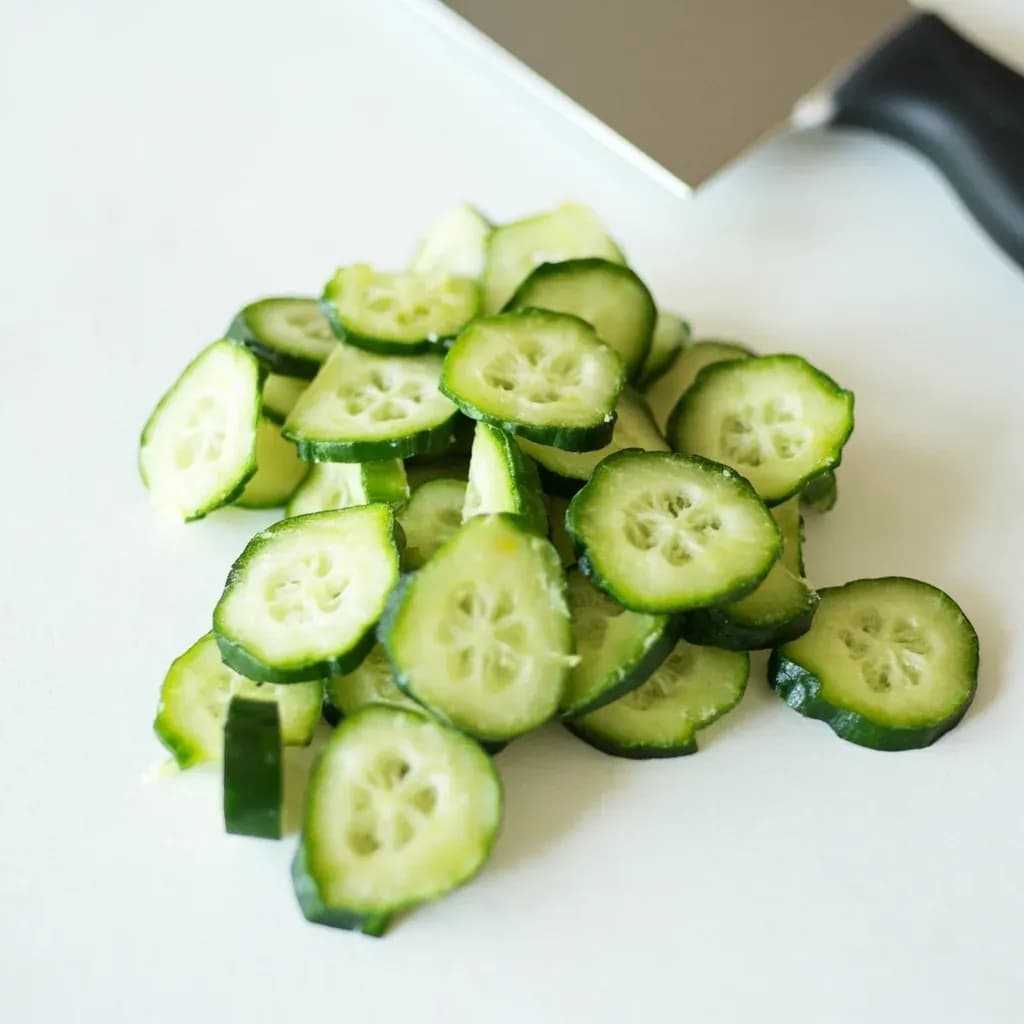
Cleaver smashing uses the broad flat side of a Chinese cleaver to whack and crush food, the 拍 technique. Smashing garlic frees its skin and oils instantly, while smashed cucumbers split into craggy, jagged pieces that grip dressing far better than clean-cut ones. The rough, torn surfaces created by smashing absorb flavor in a way smooth knife cuts cannot.
Cleaver smashing (拍, pāi) is a foundational Chinese knife technique in which the cook strikes food with the flat, spine-side of a heavy Chinese cleaver rather than slicing it. The blade drops under its own weight, and the impact — not a cutting edge — does the work, cracking skins, bursting cell walls, breaking small bones, and splitting flesh into craggy, irregular pieces. It is taught early in dāo gōng (刀工) because it teaches a cook how to control a heavy blade and how to read the structure of an ingredient from the sound and feel of the impact.
The technique matters because it changes what the ingredient does next. Smashed garlic and ginger give up their pungent oils in seconds; smashed cucumber drinks a dressing in the time it would take a sliced one to weep; smashed chicken pieces release collagen and absorb poaching liquid faster than intact pieces. Unlike pounding with a meat mallet, cleaver smashing is fast, controlled, and leaves a deliberately uneven surface that grabs onto sauces and marinades rather than a uniform mush.
In practice, the cleaver is treated almost like a small guillotine. The cook lifts it straight up, lets gravity carry it down, and stops the instant the food gives way. Over-smashing is a real risk: crushed garlic turns to paste before it hits the wok, and a smashed cucumber collapses into watery shards. The skill is knowing when to stop.
- Difficulty
- Easy
Types & varieties
Whole cloves struck to loosen papery skin and burst the segments so they mince cleanly into a paste
Knobs or thick slices struck to release juice before mincing or steeping in marinades and broths
Whole or halved cucumber cracked open along its length and dressed with garlic, Chinkiang vinegar, soy, sesame oil, and chili oil
Bone-in chicken pieces struck to break bones and tenderize before poaching or steaming, the prep behind 口水鸡 and other Sichuan cold dishes
Short ribs or thin chops flattened to tenderize and create a craggy surface that holds starch coatings and marinades
Tough stalks and rhizomes bruised before simmering in Thai curries, Vietnamese phở, and Tom Yum-style broths
Block ice struck into coarse, irregular crystals for Chinese-style shaved ice desserts and certain cocktails
How to do it
- 1
Set up the station
Place a sturdy wooden or thick polyethylene board on a damp kitchen towel to keep it from sliding. Trim and portion ingredients so each piece fits comfortably on the board: leave cucumbers whole, halve chicken pieces through the bone, and remove only the loose, papery skin from garlic.
- 2
Hold the cleaver correctly
Grip the handle firmly with your dominant hand. Hold the blade flat, spine-side down toward the food, with the sharpened edge angled away. Rest your guiding hand flat on or beside the ingredient, well clear of the strike path, with fingers curled under or out to the side.
- 3
Lift and let the blade fall
Raise the cleaver straight up 15–25 cm, keeping it perfectly vertical. Let it drop under its own weight, using your forearm only to guide the line of travel. Do not chop down with force; the mass of the cleaver and gravity should do the work.
- 4
Check the break and repeat as needed
Lift the blade and look at the result. The food should be cracked, split, or flattened, with fibers broken but not pulverized. Reposition and strike again if a piece is still intact, rotating it to control where it splits.
- 5
Finish with a secondary cut
Smashing is almost always a prep step, not a final presentation cut. Follow immediately with a rough chop, slice, or mince so the ruptured flesh and released juices are ready for dressing, marinating, or cooking.
How smashing fits into dāo gōng
Chinese knife work is organized into a small set of named actions, each defined by which part of the blade touches the food and how it moves. Smashing is distinct from the other foundational actions:
- 切 (qiē) — slicing, using the edge with a push or pull cut to produce clean, even pieces such as shreds of scallion or slivers of pork.
- 剁 (duò) — mincing or rough-chopping, the edge used in a rapid up-and-down motion for fillings, meatballs, and garlic paste.
- 片 (piàn) — slicing into thin, flat pieces, often with the blade pushed parallel to the board to open up a larger piece for stuffing or even cooking.
- 拍 (pāi) — smashing, the flat of the blade used vertically, no edge contact, to break structure rather than sever it.
Common uses
Tips & pitfalls
- Use the flat spine of the cleaver, never the sharpened edge; the goal is impact, not a slice
- Let gravity do the work — lift the blade and let it fall, rather than chopping down with muscle
- For garlic, lay the flat on top of the clove and give one firm tap with the heel of your hand to burst both skin and clove at once
- For smacked chicken, lay pieces skin-side down and strike through a sheet of parchment to contain splatter and protect the skin
- For smashed cucumber, leave the skin on and strike along the length so the flesh splits into rough, sauce-grabbing shards
- Keep your guiding hand well clear of the strike path; a flat palm or curled fingertips on the ingredient is safer than fingertips extended forward
- Stop the moment the food is cracked and split — over-smashing turns garlic and ginger into paste and squeezes juice out of cucumber before you want it on the plate
- A heavy Chinese cleaver works best; a light Western chef's knife lacks the mass to break bones cleanly and is more likely to bounce or chip
Good to know
- Chinese name
- 拍 (pāi) — literally "to pat or smash"
- Parent skill
- 刀工 (dāo gōng), Chinese knife work
- Primary tool
- Heavy Chinese cleaver (菜刀, cài dāo), flat spine-side
- Cuisine of origin
- Chinese, pan-regional; especially Sichuan home cooking
- Difficulty
- Beginner
- Blade contact
- Flat of the blade, never the sharpened edge
- Time per piece
- 5–15 seconds including setup
- Effect on food
- Cracks fibers, ruptures cells, breaks small bones, releases juice, increases surface area
Also called
Cleaver Smashing (拍) · Smashing
Dishes that rely on it
Related

Chop
Cut into rough, irregular pieces — the everyday workhorse cut

Dice
Cut into uniform cubes for even cooking and a tidy look

Mince
Cut as fine as possible so flavor melts evenly into the dish

Slice
Cut into even, flat pieces for consistent cooking and presentation

Julienne
Cut into thin matchsticks for fast cooking and elegant garnish

Brunoise
Cut into tiny, precise cubes — the finest dice in the kitchen

Chiffonade
Roll and slice leafy greens into delicate ribbons

Batonnet
Cut into tidy sticks, thicker than julienne — think classic fries