Knife Skills
Coring Vegetables
Removing the tough core or seeds from a vegetable or fruit to prep it for cooking.
Coring cuts out the woody core, stem, or seed cavity from produce such as apples, tomatoes, peppers, and cabbage. It removes inedible or bitter parts and, for stuffed dishes like mahshi, hollows out vegetables to hold a filling. The job is done with a paring knife, a dedicated corer, or a small spoon depending on the produce.
Coring is the targeted removal of a vegetable or fruit's tough central column, seed cavity, or fibrous stalk — the parts that resist chewing, carry bitter compounds, or interrupt an otherwise even texture. It sits alongside peeling and trimming as one of the foundational prep steps, and it earns its place because the core is almost always the part of the produce that cooks most slowly, tastes worst, or ruins a presentation. A cleanly cored pepper roasts evenly; a cored tomato sheds its watery gel; a cored cabbage wedge holds its shape in a gratin. The motion is small but the payoff, in both texture and cooking performance, is disproportionate to the effort.
The geometry of the produce dictates the technique. Dense, layered heads like cabbage, romaine, and iceberg yield to a V-cut or a twist-and-lift. Round seeded fruit — apples, pears, quinces — are pierced end-to-end with a tubular corer, or carved into a cone with a paring knife. Hollow-cavity vegetables like bell peppers, chiles, and tomatillos release their seed cluster with a circular cut around the stem. Columnar fruit like pineapple surrenders its woody core to a pair of angled slices. The unifying purpose across all of them is the same: strip out what is fibrous, bitter, seedy, or slow to cook, and in many cases leave behind a uniform cavity ready to be stuffed, sliced, or simply eaten.
Coring also creates stability. Removing the round base of a cabbage or a pepper gives the cook a flat face to grip, which in turn makes every subsequent cut safer and more precise. Most coring waste is compostable, but a surprising amount of it — cabbage cores, fennel stalks, pineapple hearts — carries real flavor and is better off in a stockpot, a quick pickle, or an infused syrup than in the bin.
- Difficulty
- Easy
Types & varieties
Quarter or halve the head, then angle a chef's knife to cut out the dense, wedge-shaped white base. Used for cabbage, romaine, and iceberg hearts.
Hit the exposed core of a whole iceberg sharply with the knife heel, then twist and lift the core free in one piece.
Push a circular metal corer straight through the blossom-to-stem axis to remove a seed-bearing cylinder. Used for whole apples, pears, and quinces.
Carve a shallow V-shaped cone with a paring knife to lift out the seed cavity without a tool. Works for pears and halved apples.
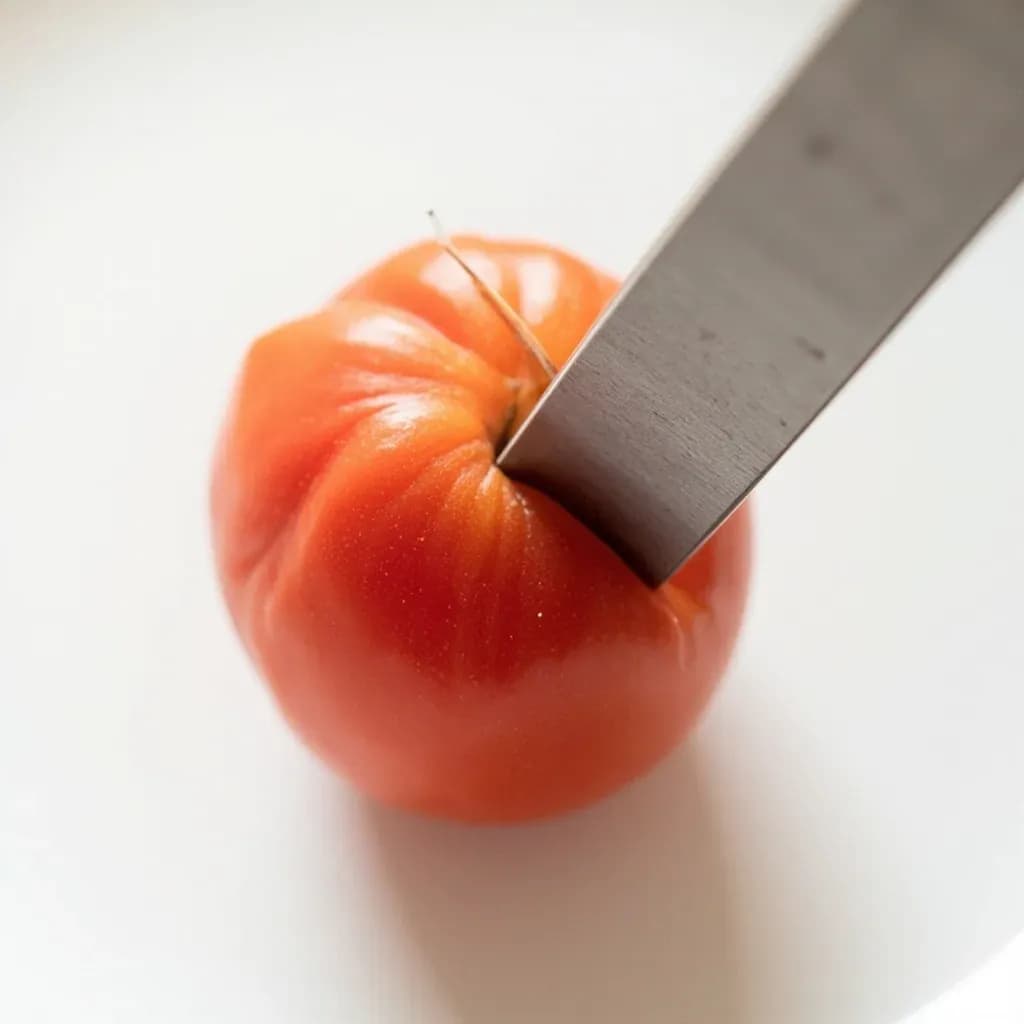
Slice around the stem cap and lift it with the attached seed cluster, then shake or scrape out remaining seeds. Used for bell peppers, chiles, and vine tomatoes.
Halve ripe tomatoes crosswise, squeeze gently, and use a finger or spoon to remove gel and seeds for a drier, meatier flesh.
After peeling pineapple, cut two diagonal wedges meeting at the base to release the woody central column in one piece.
Halve fennel or celery hearts lengthwise and cut a shallow V along the inner rib to remove the toughest fibers while keeping the bulb intact.
How to do it
- 1
Stabilize the produce
If the item is round and likely to roll, slice a thin slab off the bottom to make a flat face, or halve it and stand it cut-side down. Whole cabbage and iceberg can be cored as-is once the outer wrapper leaves are peeled. A stable base is the single biggest contributor to a clean, safe cut.
- 2
Match the tool to the task
Use a chef's knife for firm, dense items (cabbage, pineapple, fennel). Use a paring knife for smaller, more delicate work (pears, peppers, tomatoes). Use a tubular apple corer for whole apples and pears — it is faster and wastes less than a knife. Use a melon baller to scoop out softened or irregular seed cavities, and a bird's-beak peeler to finish any pineapple 'eyes' the diagonal slices leave behind.
- 3
Make the opening cut
Quarter apples, pears, and tomatoes; halve peppers lengthwise; cut cabbage into wedges or leave whole; trim the top and bottom off the pineapple and stand it upright. The shape of this first cut determines the path of the coring motion, so do not skip it on round produce.
- 4
Remove the core
Drive a tubular corer straight through the apple or pear from stem to blossom end. For wedges, angle a chef's knife in a V to pop out the triangular core. For peppers, cut a circle around the stem and lift the cap with the seed cluster attached. For whole cabbage or iceberg, hit the core sharply with the knife heel and twist; if it does not release cleanly, the head is too warm. For pineapple, slice two diagonal wedges meeting at the base to release the woody column in one piece.
- 5
Clear residual seeds and membrane
Tap pepper halves to shake loose seeds, then scrape the white ribs with a paring knife if a clean cavity is needed for stuffing. For tomatoes, squeeze gently or scoop with a finger. For pineapple, use a paring knife to nick out any 'eyes' left behind by the diagonal cuts. For cabbage and lettuce, check the inner leaves for hidden tough fibers and trim them flush.
- 6
Rinse, reserve, or discard
Rinse cored produce under cool water to flush out any remaining seeds. Reserve edible cores (cabbage, fennel, pineapple) for stocks, infusions, or snacks. Compost fibrous, bitter, or seedy waste — apple cores, pepper ribs, lettuce hearts — unless you have a specific use for it.
Cores worth keeping
Not every core belongs in the compost. Several common ones carry real flavor and can be redirected with minimal effort.
- Cabbage cores and the tender inner leaves are excellent shredded into slaw, fermented into sauerkraut, or simmered in a vegetable stock.
- Pineapple core is fibrous but sweet — slice it thinly for snacks, or simmer it in water or vinegar to make a tropical shrub or infused syrup.
- Fennel stalks and cores can be simmered in cream, added to fish stock, or used to flavor a braise alongside the bulbs.
- Apple and pear cores can be simmered and strained out to contribute background flavor and natural pectin to homemade jams and jellies, as long as the seeds are removed by the strainer and not consumed.
Safety and storage notes
A few coring situations deserve extra attention beyond the basic cut.
- Apple, pear, cherry, apricot, and peach seeds contain amygdalin, which can release cyanide when metabolized. Keep cores away from pets and small children in quantity, and do not feed them to birds in bulk — birds are especially sensitive.
- Cut surfaces oxidize quickly. Apples and pears brown within minutes; pears generally brown faster than apples. Toss with lemon juice, submerge in acidulated water, or cook immediately.
- Bell pepper ribs and seeds will oxidize over a few hours in the refrigerator. For prep-ahead work, store peppers in a tightly sealed container with a damp paper towel.
- Tomatoes lose their gel and become mealy if held too long after coring. For salads, core just before dressing; for sauces, core and proceed directly.
Common uses
Tips & pitfalls
- Use a freshly sharpened knife — a dull edge crushes cells, tears leafy cores, and slips on rounded produce, which is the most common cause of coring injuries.
- Always create a flat face (a slice, a halve, or a wedge) before coring round items; this single habit prevents most rolling accidents.
- For bell peppers, work the knife around the stem rather than yanking it; pulling almost always rips the cap and leaves ragged flesh behind.
- Tomato gel carries most of the water and the sharpest acidity — deseed for thick sauces and slow-roasted dishes, but leave seeds in for bright, fresh salads where you want the juice.
- Twist-coring iceberg only works when the head is very cold and crisp; limp or over-stored heads will not release cleanly and are better quartered and V-cored instead.
- Apple, pear, cherry, and apricot seeds contain amygdalin, which can release cyanide — keep cores out of reach of pets and small children in quantity.
- Pineapple core is fibrous but sweet; reserve it for infusing water, simple syrup, shrubs, or vinegar rather than discarding it.
- If an apple or pear corer is unavailable, a metal measuring spoon or the handle of a wooden spoon works as a backup.
Good to know
- Technique family
- Knife skills / foundational prep
- Difficulty
- Easy to moderate; rises with produce size and density
- Time per piece
- 10–60 seconds depending on size, density, and tool
- Primary tools
- Chef's knife, paring knife, apple/pineapple corer, melon baller, bird's-beak peeler
- Most-cored produce
- Apples, pears, bell peppers, tomatoes, cabbage, iceberg and romaine lettuce, pineapple, fennel, quince
- Typical waste
- 5–20% of total weight, depending on the item
- Effect on cooking
- Removes fibrous, bitter, or seedy tissue; creates a cavity for stuffing; promotes even heat penetration
- Storage of cored produce
- Wrap tightly and refrigerate; cut surfaces oxidize — apples and pears brown in minutes, peppers in hours
- Origin
- Pre-modern kitchen practice; one of the oldest documented prep steps, tied to the use of iron and steel knives in the medieval European kitchen
Also called
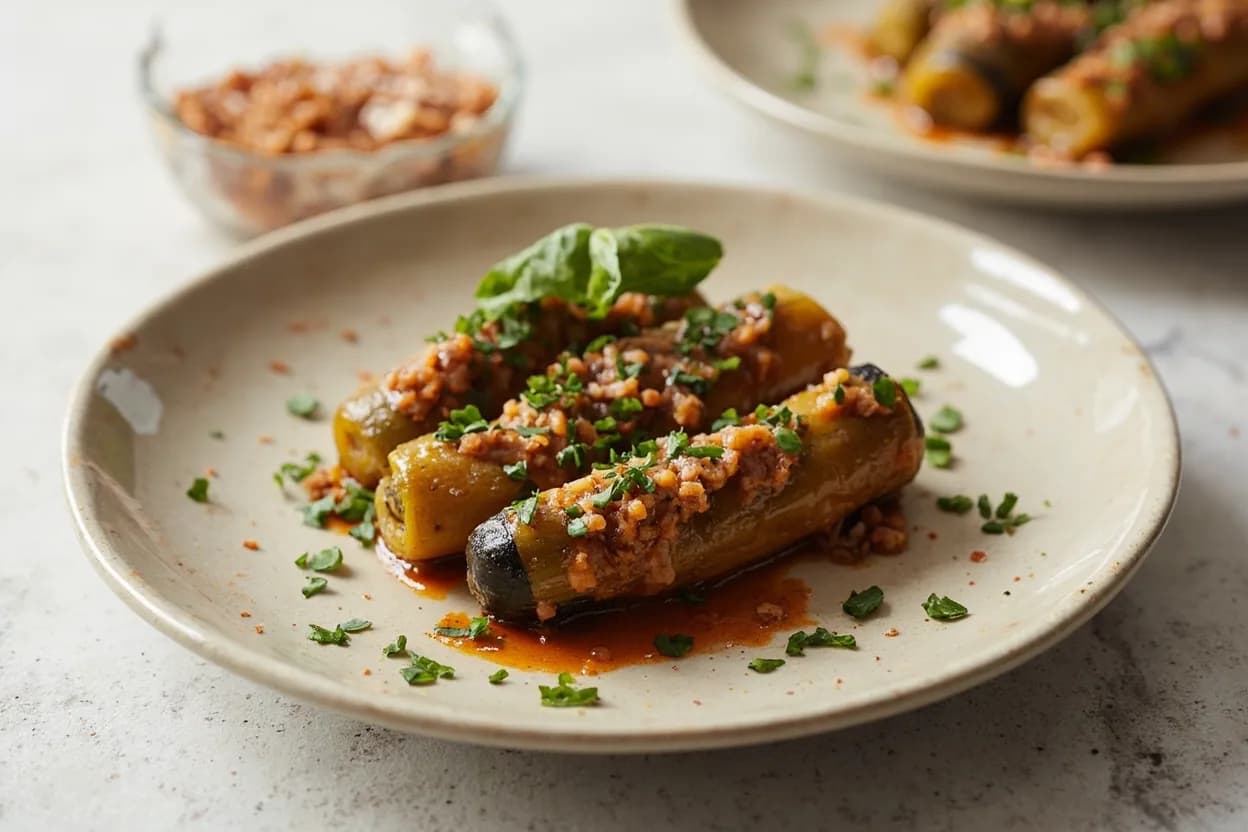
Coring Vegetables (for Mahshi) · Hollowing
Dishes that rely on it







Related

Chop
Cut into rough, irregular pieces — the everyday workhorse cut

Dice
Cut into uniform cubes for even cooking and a tidy look

Mince
Cut as fine as possible so flavor melts evenly into the dish

Slice
Cut into even, flat pieces for consistent cooking and presentation

Julienne
Cut into thin matchsticks for fast cooking and elegant garnish

Brunoise
Cut into tiny, precise cubes — the finest dice in the kitchen

Chiffonade
Roll and slice leafy greens into delicate ribbons

Batonnet
Cut into tidy sticks, thicker than julienne — think classic fries