Prep & Assembly
Removing Air Bubbles
Releasing trapped air from batters, jars, or molds to prevent gaps and spoilage.
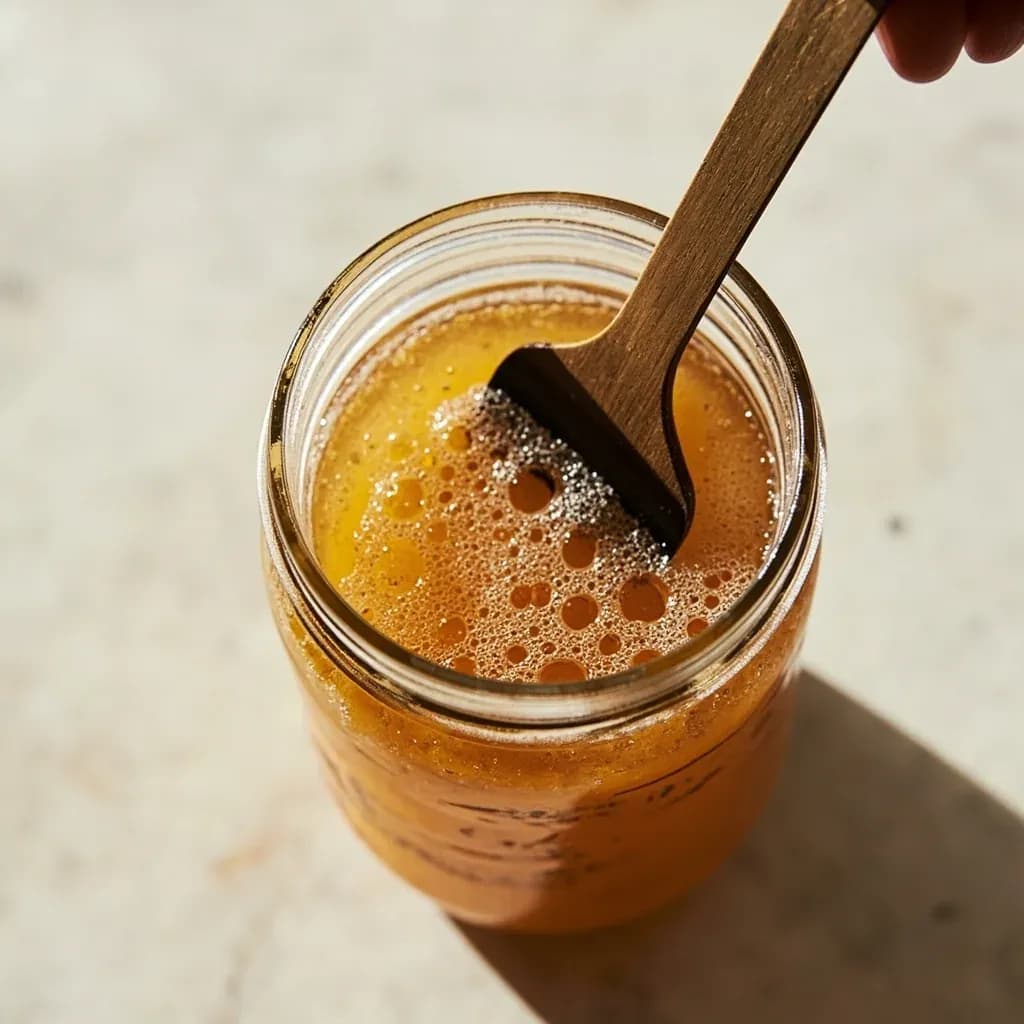
Removing air bubbles eliminates trapped pockets of air from batters, terrines, canning jars, or silicone molds by tapping, sliding a thin spatula along the edges, or rapping the vessel on the counter. In canning it prevents unsafe air pockets and ensures proper headspace, while in baking and molding it produces a smooth, dense, defect-free result. It is a quick but important finishing step before setting or processing.
Removing air bubbles — often called de-bubbling or working out the air — is the small final prep step that decides whether a jar seals, a cake rises evenly, a custard sets silken, or a chocolate shell comes out glossy and gap-free. Air trapped in food behaves differently depending on the medium: in canned preserves it gives anaerobic bacteria a foothold and can rupture the vacuum seal; in cake and cheesecake batter it expands in the oven and leaves tunnels, voids, and sunken middles; in custards and panna cotta it floats to the surface and sets as foam; in tempered chocolate it clings to the mold wall and leaves hollows on demolding. The remedy is the same idea applied in different forms — give the air somewhere to go. Sometimes that means tapping a pan against the counter, sometimes swirling a wooden skewer around the inside of a jar, sometimes pushing a custard through a fine-mesh chinois.
Professionals treat de-bubbling as automatic, the way a cook tastes as they go. Home cooks routinely skip it, which is the single most common reason canned fruit floats, cheesecakes crack, and bonbons show air pockets on the underside. The good news is that the work is light and forgiving: a few firm taps, a single pass with a skewer, a quick strain, or letting the batter or custard rest for fifteen to thirty minutes so gravity does the work for you. None of these techniques require skill, only a moment of attention at the right point in the recipe.
- Difficulty
- Easy
Types & varieties
Tapping filled pans firmly on the counter and popping visible bubbles with a toothpick — the workhorse method for cakes, muffins, and cheesecakes.
Running a non-metallic tool down the inside of a filled jar to release trapped air before applying the lid.
Pouring custards, pastry cream, and panna cotta bases through a fine-mesh sieve to break surface tension and remove bubbles.
Striking filled chocolate molds on the work surface to settle the chocolate and pop air pockets against the mold walls.
Letting batter sit undisturbed so air bubbles rise and dissipate before pouring or baking.
Gently pressing or folding risen dough to release large gas pockets without crushing the gluten structure.
Industrial and professional method using a vacuum chamber to pull air from sauces, purées, and frozen bases.
How to do it
- 1
For canning jars
After ladling food into clean, warm jars, run a wooden skewer, plastic chopstick, or narrow non-metallic spatula down the inside wall of each jar, rotating as you go. This collapses trapped air pockets and dislodges food particles clinging to the glass. Add more liquid if the level drops below the recommended headspace — typically 6 mm (¼ in) for jams and jellies, 1.5 cm (½ in) for fruits and tomatoes in water-bath canning, and 2.5 cm (1 in) for low-acid vegetables and meats in pressure canning. Wipe the rim clean with a damp cloth before applying the lid and band.
- 2
For cake and muffin pans
Pour batter into the prepared pan, then hold the pan 5–8 cm (2–3 in) above the counter and drop it flat once or twice — onto a folded kitchen towel rather than bare stone to protect the pan. Pop any large bubbles that rise to the surface with a toothpick, dragging the tip across to smooth the batter. Bake immediately for the best rise.
- 3
For cheesecakes and sponge batters
After pouring, lift the pan a few centimeters and drop it firmly on a folded towel three or four times to bring bubbles to the top. Skewer any visible pockets. For cheesecakes, this also helps the batter settle evenly into the crust and reduces the cracking that comes from uneven baking around trapped air.
- 4
For custards, panna cotta, and pastry cream
Pour the cooked liquid through a fine-mesh sieve (ideally a chinois) set over a clean bowl, pressing gently with a spatula or the back of a ladle. Tap the receiving bowl on the counter to bring any remaining bubbles to the surface. Skim with a spoon or pass a kitchen torch quickly over the top to pop the last few before the mixture sets.
- 5
For chocolate molds
Fill the mold and lift it about 10 cm (4 in) above the bench. Tap the bottom firmly three or four times with the heel of your hand or against the benchtop. Bubbles will rise and pop against the mold walls; rotate the mold a quarter turn between taps to release pockets from all sides. Work before the chocolate begins to set — once it thickens, tapping only mars the surface.
- 6
For bread dough after bulk fermentation
Tip the risen dough onto a lightly floured surface. With floured hands, gently press the dough outward from the center to deflate large gas pockets, then fold the sides into the middle and flip seam-side down. Avoid punching or tearing — the goal is to release big bubbles while preserving the gluten strands and dissolved gases that drive oven spring.
The resting shortcut
Most de-bubbling work can be done passively by time. A cake or muffin batter left on the counter for 15 to 30 minutes loses a surprising amount of trapped air on its own as bubbles migrate upward and the flour hydrates and settles. A cooked custard, panna cotta base, or pastry cream set over an ice bath and left undisturbed for ten minutes will skim itself; you can then lift off the foam or torch the surface. Chocolate thinned and poured at the correct working temperature behaves similarly if you give it a moment before tapping. The practical lesson: when a recipe offers a rest step before pouring or baking, the rest is doing structural work — don't shorten it for the sake of speed.
What skipping it costs you
Each medium punishes neglected air in a characteristic way. Knowing the failure mode makes the technique feel less fussy and more essential.
- Canning jars: floating fruit, cloudy liquid, lost seal, and — worst case — spoilage from anaerobic bacteria sheltered in air pockets.
- Cakes and muffins: tunnels through the crumb, sunken centers, and uneven rise, especially visible in pound cakes and financiers.
- Cheesecakes: surface cracks and voids along the crust edge where large air pockets expanded during baking.
- Custards and panna cotta: a foamy top layer and a slightly grainy mouthfeel even when the recipe is correctly cooked.
- Chocolate molds: hollows and bubbles on the demolded surface, dull patches, and shells that crack when removed.
- Bread dough after bulk fermentation: oversized, uneven holes in the crumb and reduced oven spring if the dough is handled too roughly.
Common uses
Tips & pitfalls
- Always use a wooden or plastic tool when working inside canning jars — metal can scratch glass and react with acidic foods like tomatoes and citrus.
- Tap cake pans onto a folded kitchen towel rather than the bare counter to avoid denting thin pans or chipping ceramic ones.
- Pop any bubbles that rise to the surface of cheesecake or sponge batter with a toothpick before baking; otherwise they set as voids in the finished cake.
- Let cake batter rest 15–30 minutes before baking; this often does more for crumb uniformity than tapping alone and also fully hydrates the flour.
- Strain custards through a fine-mesh chinois, not just a coarse sieve — the goal is a glass-smooth surface, not merely debris-free liquid.
- For chocolate, tap molds from a height of about 10 cm (4 in) so the impact has real force, and rotate between taps to release pockets on all sides.
- When degassing bread dough, press gently — never punch — to preserve the gluten strands and gases that drive oven spring.
- Over-tapping a soufflé or génoise will deflate it; tap only the filled pan, and only before it goes into the oven.
- If air bubbles persist after canning, top up with additional liquid to maintain the correct headspace rather than leaving a gap.
- A small kitchen torch passed quickly over the surface of a custard pops surface bubbles just before the mixture sets.
Good to know
- Primary contexts
- Canning jars, cake and cheesecake batters, custards, panna cotta, mousse, chocolate molds, and bread dough
- Key tool (canning)
- Wooden skewer, plastic spatula, or chopstick — never metal, which can scratch glass and react with acids
- Key tool (batter)
- Fine-mesh sieve, cake tester or toothpick, and a flat work surface for tapping
- Why it matters in canning
- Trapped air promotes bacterial growth, causes discoloration, and can break the vacuum seal during storage
- Why it matters in baking
- Large air pockets cause tunneling, uneven crumb, and sunken centers, especially in pound cakes and cheesecakes
- Batter rest time
- 15–30 minutes lets flour hydrate and air rise out naturally, often reducing the need for tapping
- Custard technique
- Straining cooked custard through a fine-mesh chinois is the standard professional method for a glass-smooth finish
- Chocolate method
- Molds are filled then tapped 3–4 times against the bench to settle chocolate and pop air pockets against the mold walls
- Bread distinction
- First-rise dough is gently degassed; overworking deflates the gluten network needed for oven spring
- Difficulty
- Beginner — no special skill, only attention at the right moment
Also called
De-bubbling · Bubble Removal · Burping Jars
Related

Whisk
Beat ingredients smooth and aerated with a looping wire motion

Sift
Pass dry ingredients through mesh to aerate and remove lumps

Strain
Pour through mesh to separate solids from liquid for a smooth result

Filter
Pass liquid through fine material to clarify out the smallest particles

Rice
Press cooked potatoes through small holes for fluffy, lump-free texture

Mash
Crush soft cooked food into a rustic, creamy purée

Grind
Crush food into a coarse to fine texture, from spices to meat

Grate
Shred food into fine bits against a sharp-toothed surface