Prep & Assembly
Defoaming
Skimming or knocking down foam that rises on simmering stocks and liquids.
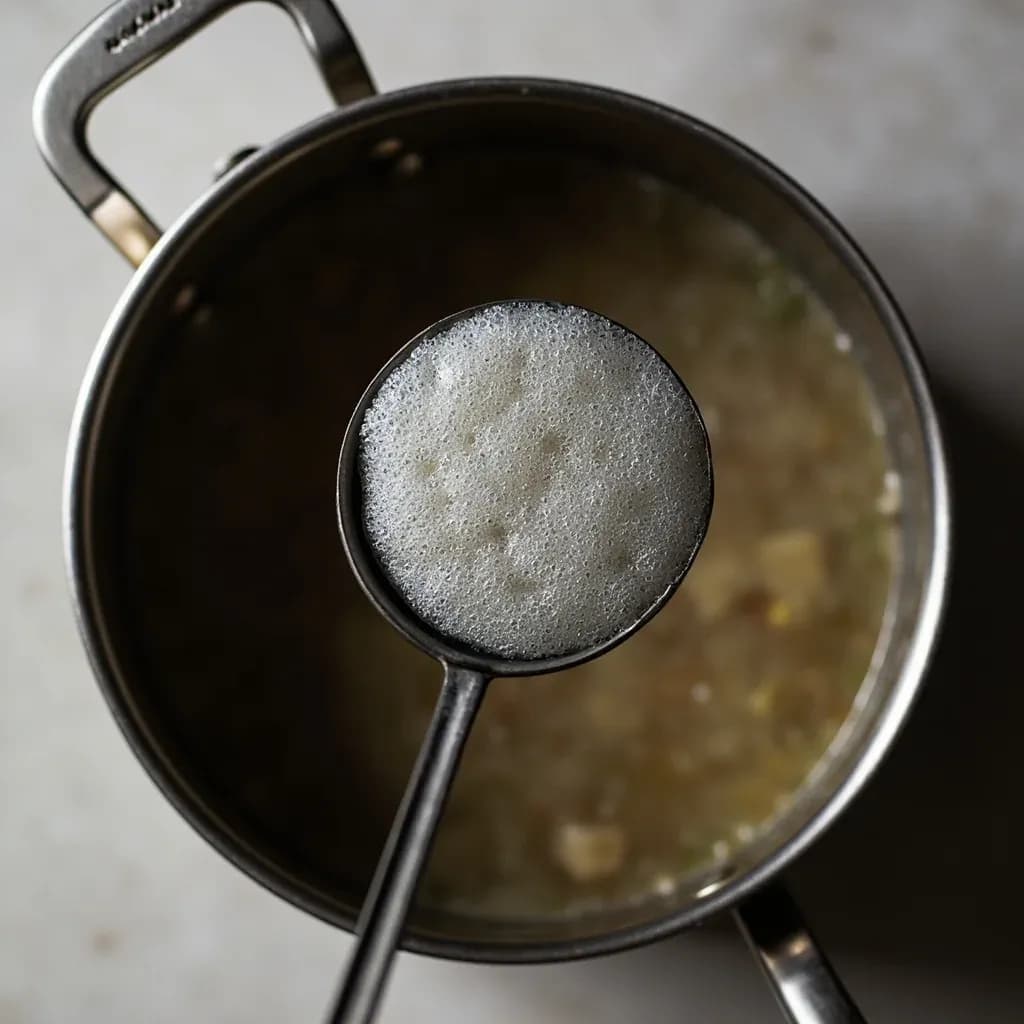
Defoaming removes the gray, frothy scum of coagulated proteins and impurities that surfaces when stocks, beans, or jams come to a simmer. Cooks skim it with a spoon or ladle to keep broths clear and clean-tasting. Regular skimming early in cooking prevents the foam from re-dissolving and clouding the final liquid.
Defoaming is the kitchen practice of lifting the grayish, protein-laden foam that gathers on the surface of a simmering liquid. The foam is not flavor; it is a raft of denatured albumins and globulins that have leached out of bones, vegetables, or legumes and migrated to the top of the pot. Because these proteins are amphiphilic — one end loves water, the other repels it — they act as surfactants, wrapping around air bubbles and stabilizing them at the surface in much the same way soap holds a lather.
Removing that raft matters for both clarity and taste. Trapped in the bubbles are starch granules, mineral impurities, and the broken remnants of cell walls that would otherwise stay suspended and turn a golden stock cloudy or muddy. For clear applications — consommé, aspic, court-bouillon, demi-glace — defoaming is non-negotiable. For a rustic chicken stock, a single early skimming is usually plenty. The bulk of the foam rises in the first ten to fifteen minutes of simmering, when the liquid crosses roughly 60–85°C; after that the surface calms as the soluble proteins are exhausted.
In practice, defoaming is governed by two levers: heat and air. A pot brought up slowly from cold produces large, easy-to-lift clumps; a vigorous boil churns air into the liquid and continuously renews foam. Most cooks defoam by hand with a flat skimmer (écumoire) or shallow ladle, but the same outcome can be reached by shocking the pot with cold water to collapse the bubbles, by leaving a thin fat cap to physically block air, or — in the classic consommé preparation — by suspending a raft of ground meat and egg whites that traps impurities as it coagulates. Industrial kitchens and breweries achieve the same suppression with food-grade silicones, but at home the tools and timing are entirely manual.
- Difficulty
- Easy
Types & varieties
Lifting foam with a flat skimmer, shallow ladle, or fine-mesh spoon; the everyday method in home and restaurant kitchens.
Adding 60–120 ml of cold water per liter to collapse persistent bubbles; triggers a second, heavier rise that skims off cleanly.
Leaving a thin layer of rendered fat on top to physically block air from entering the liquid; used in some confits and traditional stocks.
Simmering ground meat, egg whites, and mirepoix together so the coagulating proteins trap impurities and any would-be foam in a floating mass — the consommé method.
Whisked raw egg white stirred into a hot liquid; the albumen coagulates, binds suspended particles, and drags them to the surface for skimming.
Passing the finished liquid through a fine-mesh chinois lined with cheesecloth or a coffee filter to catch particulates that would resurface on cooling.
Food-grade silicone antifoams or mechanical foam breakers in commercial jam, sugar, brewing, and soy-sauce production.
How to do it
- 1
Bring the liquid up slowly from cold
Place bones, vegetables, and aromatics in cold water and heat gently over medium-low. A slow rise lets soluble proteins coagulate into large, coherent masses that float as a single raft rather than a fine, stubborn lather.
- 2
Hold at a bare simmer
As soon as the surface shimmers and the first bubbles break lazily, drop the heat. The target is roughly 85–95°C (185–203°F) — just below a rolling boil. Vigorously boiling liquid churns air into the broth and continuously renews the foam.
- 3
Skim the first rise of foam
Within the first 5–10 minutes, a grayish to off-white foam forms across the surface. Hold a flat skimmer (écumoire) or shallow ladle just under the foam and pull it across in one smooth motion, lifting gently so the liquid drains back. Work methodically from one side to the other; do not stir.
- 4
Discard and repeat
Empty the skimmer into a discard bowl — the foam is largely denatured protein and trapped impurities and is not generally palatable. Repeat every few minutes as new foam appears over the next 20–30 minutes; the rate will slow as soluble proteins are exhausted.
- 5
Use the cold-water shock if foam persists
If the foam is fine, sticky, and keeps regenerating (typical of fish stock, stock from young poultry, or pork), pour in 60–120 ml of cold water per liter of liquid. The temperature drop contracts the protein films, collapses the bubbles, and triggers a second, heavier rise that lifts off cleanly.
- 6
Degrease if needed
Once foam is largely gone, a clear liquid fat may pool on top, especially on chicken, beef, or duck stocks. Lay a sheet of paper towel on the surface and lift, or use a degreasing pitcher. This is a separate step but is usually paired with defoaming in practice.
- 7
Strain through a chinois for clarity
When cooking is complete, pass the liquid through a fine-mesh chinois, ideally lined with a single layer of cheesecloth or a coffee filter. This captures any remaining suspended particulates that would otherwise resurface on cooling or storage.
- 8
Cool correctly to prevent re-foaming
Cool the strained liquid rapidly in an ice bath or by dividing into small containers. Slow cooling allows dissolved gases to come out of solution and form a new foam film; rapid cooling keeps the stock clear and lets any remaining fat form a solid cap you can lift off in one piece.
The science behind the bubbles
Stock foam is a textbook example of protein surface chemistry. Soluble albumins and globulins dissolve readily in cold water and begin to denature as the temperature climbs past about 60°C. Once unfolded, their hydrophobic regions seek the air-water interface, and the molecules orient themselves with their water-loving tails in the liquid and their water-fearing heads in the air. The result is an elastic film that traps rising steam and gas, building a stable foam that can persist for hours if left alone. Cooling or stirring disrupts that film — cold water contracts the proteins and lets the bubbles collapse, while agitation simply rebuilds the foam elsewhere. This is why a slow, gentle simmer produces large coherent clumps that lift off in one pass, while a rolling boil produces a thin, persistent lather that fights the skimmer.
Foam versus fat: a critical distinction
Defoaming and degreasing are routinely confused because both happen at the surface of the same pot. They target entirely different layers. Foam is opaque, grayish to off-white, and clings to the surface in a foamy mat; rendered fat is clear and golden, pooling and breaking the light. Skim the foam first; once the surface is calm, the fat will settle as a separate layer you can lift with paper towel, a ladle, or a degreasing pitcher. Removing them out of order is wasted work — defoaming a fatty stock will simply re-foam as the fat layer is disturbed.
- Foam = denatured protein and trapped impurities; not palatable
- Fat = rendered lipid; clear, golden, breaks light
- Always defoam before degreasing for a clean separation
Common uses
Tips & pitfalls
- Bring the pot up slowly from cold: a gradual rise lets proteins coagulate into large, easy-to-remove clumps rather than a fine, persistent lather.
- Hold a bare simmer and never a rolling boil — agitation forces air into the liquid and multiplies foam.
- Skim early and frequently in the first 10–15 minutes; that is when the bulk of the impurities surface.
- Pull the skimmer in one direction across the surface and never stir, which re-incorporates the foam back into the liquid.
- Use a shallow, flat skimmer (écumoire) rather than a deep spoon, which drags liquid and solids with the foam.
- If the foam is sticky and persistent, use the cold-water shock: 60–120 ml of cold water per liter will collapse the bubbles and trigger a cleaner second rise.
- Do not confuse foam with fat: foam is opaque and grayish and clings to the surface; rendered fat is clear and golden and pools in a separate layer — defoam first, then degrease.
- Never fill the pot more than two-thirds full; foam expands and a vigorous simmer will boil over in a full pot.
Good to know
- Also called
- Skimming; écumage (French); écumer (verb)
- What it removes
- Denatured albumins, globulins, and trapped starches and particulates buoyed by air bubbles
- Active agents targeted
- Amphiphilic proteins (albumin, globulin) that stabilize bubbles at the liquid surface
- Foam peaks between
- 60–85°C (140–185°F); a bare simmer of ~85–95°C minimizes foam generation
- Active skimming window
- Roughly the first 5–15 minutes of simmering, with periodic passes thereafter
- Tools
- Flat-edge skimmer (écumoire; sometimes araignée), shallow ladle, fine-mesh chinois, kitchen tweezers
- Industrial counterpart
- Food-grade polydimethylsiloxane (PDMS, E900) at 1–10 mg/kg
- Related but distinct
- Degreasing (fat removal) — performed with similar tools but targeting a different layer
Also called
skimming · scumming
Dishes that rely on it
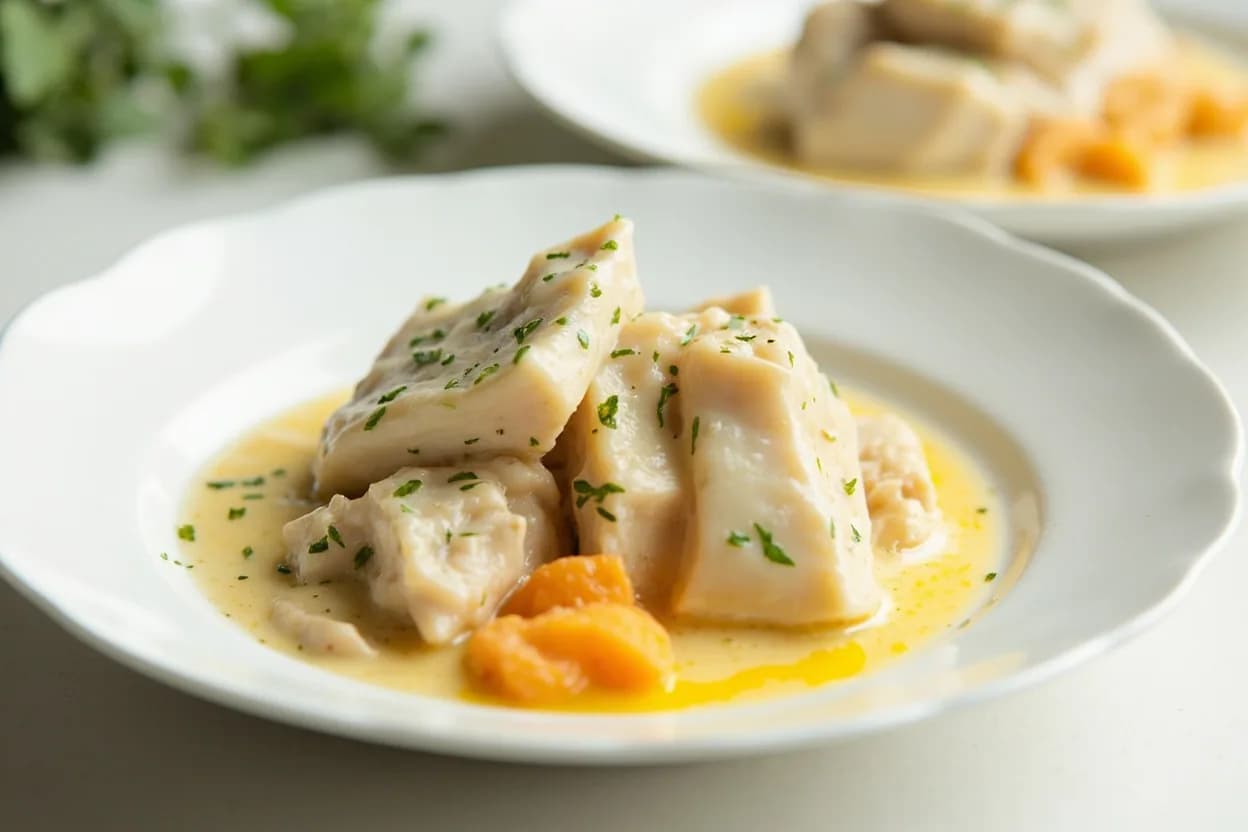
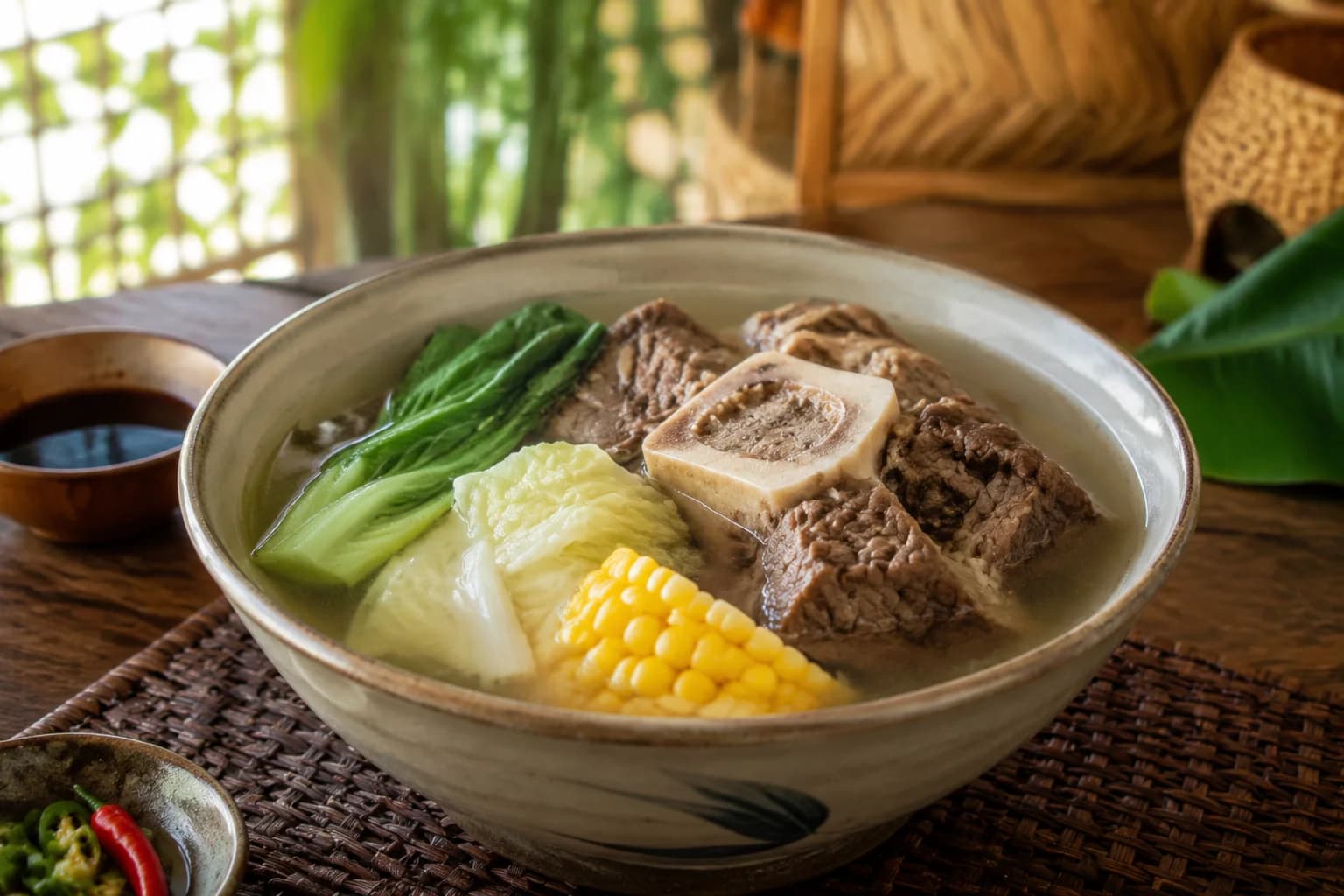
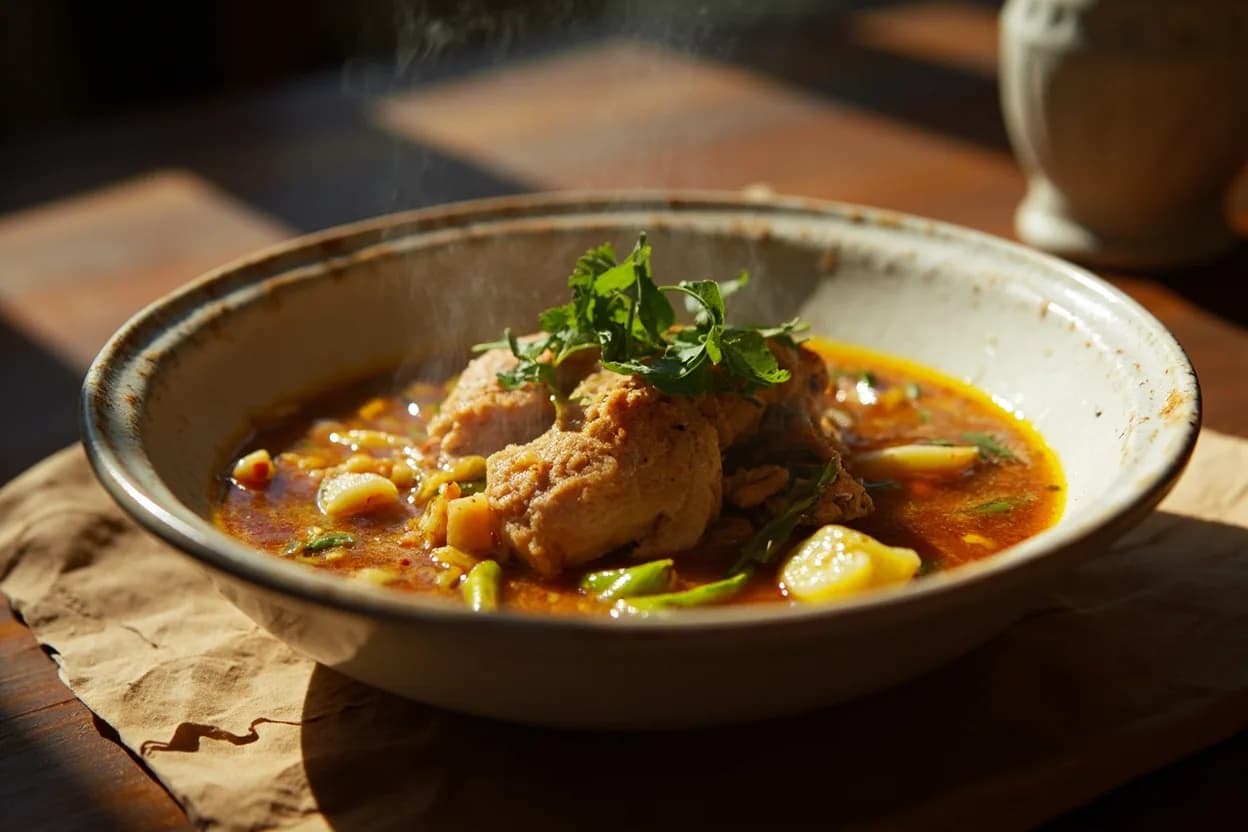

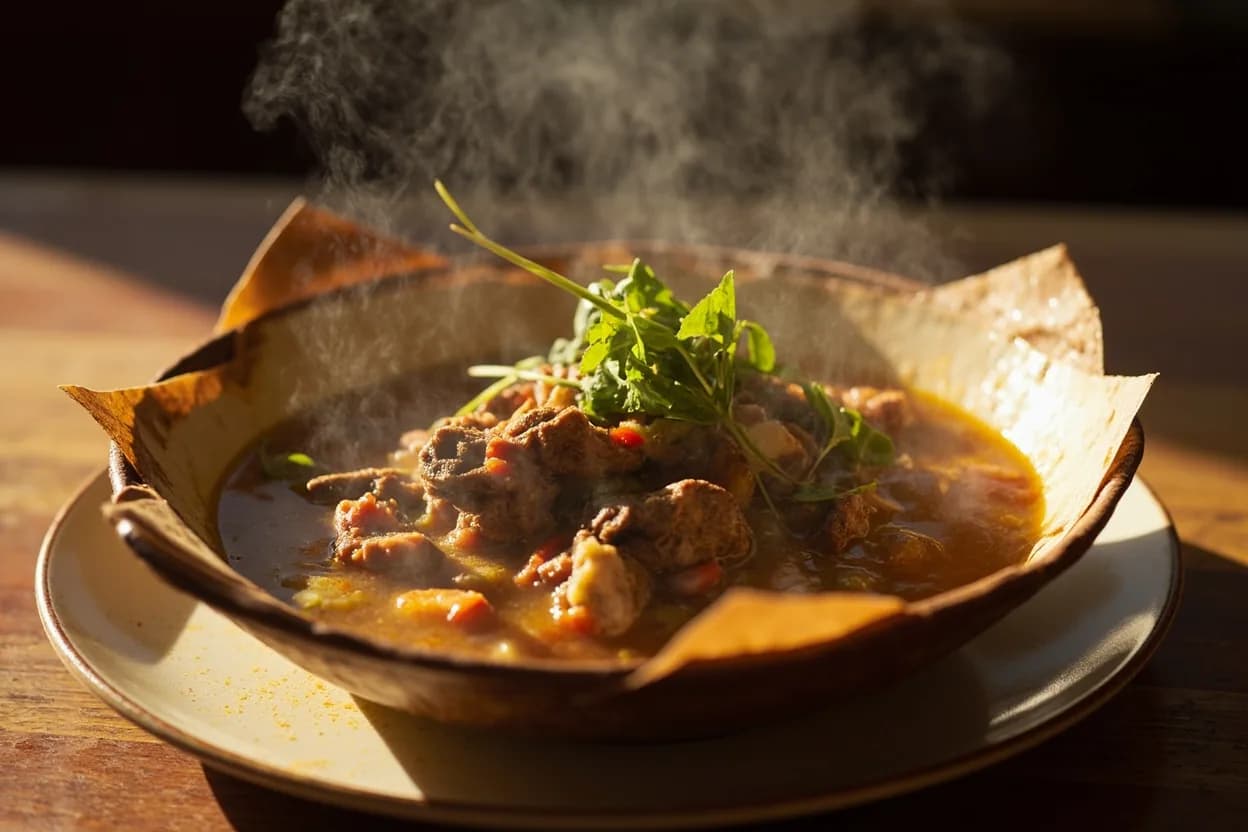
Related

Whisk
Beat ingredients smooth and aerated with a looping wire motion

Sift
Pass dry ingredients through mesh to aerate and remove lumps

Strain
Pour through mesh to separate solids from liquid for a smooth result

Filter
Pass liquid through fine material to clarify out the smallest particles

Rice
Press cooked potatoes through small holes for fluffy, lump-free texture

Mash
Crush soft cooked food into a rustic, creamy purée

Grind
Crush food into a coarse to fine texture, from spices to meat

Grate
Shred food into fine bits against a sharp-toothed surface