Knife Skills
Deseeding Pods
Removing seeds and membranes from chiles or pods to control heat and texture.
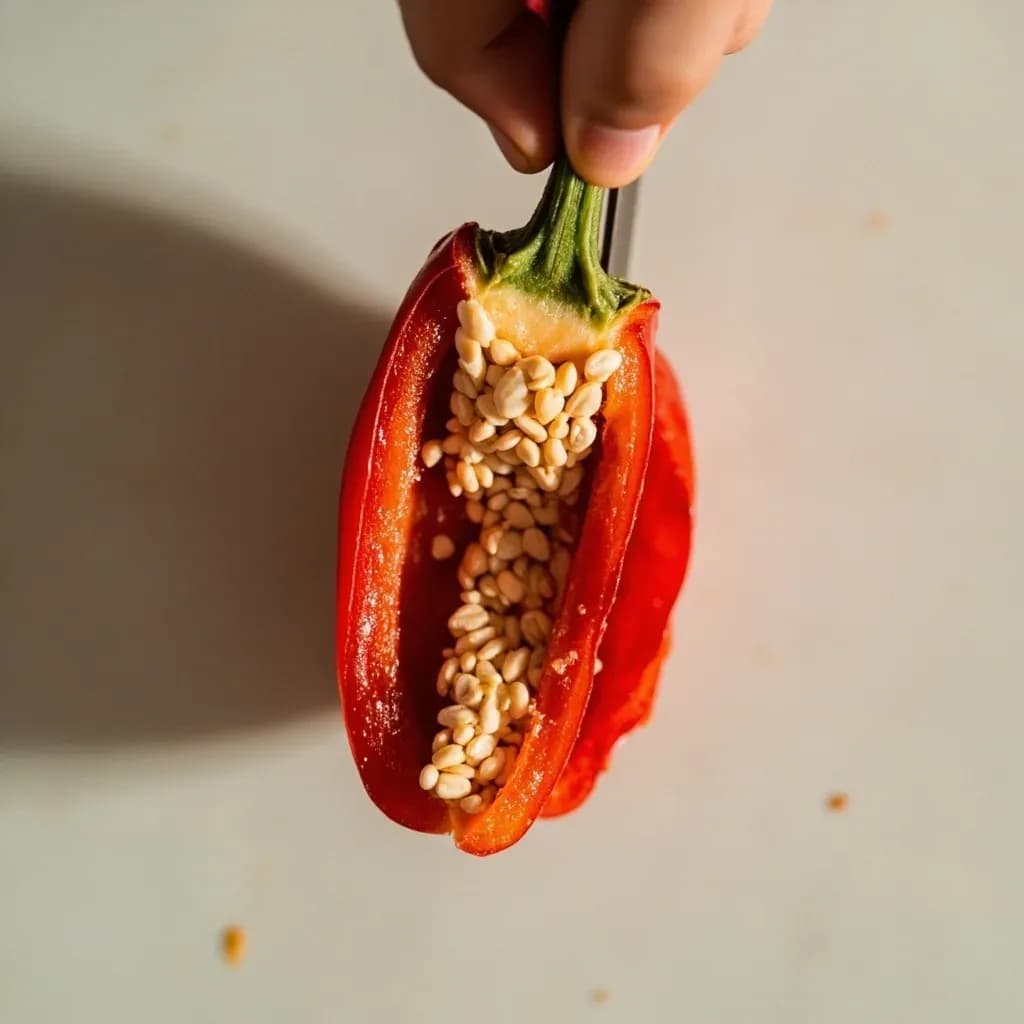
Deseeding pods means slicing open chiles, peppers, or seed pods and scraping out the seeds and inner membrane. For chiles this tames the heat, since much of the capsaicin sits in the membrane, while for vanilla or cardamom it harvests the prized inner seeds. Cooks often wear gloves with hot chiles and use the tip of a knife or a spoon to clean the cavity.
Deseeding is the kitchen technique of removing the seeds—and, more importantly, the white pithy ribs that hold them—from chili peppers and similar seed-bearing pods. The distinction matters: the capsaicin that makes a chile hot lives in the placental membranes (the white veins that run down the inside of the pod), not in the seeds themselves. Seeds taste fiery only because they sit against those ribs and get coated in capsaicin-rich oil. A cook who pulls the seeds out but leaves the ribs intact has done half the job; a cook who scrapes the ribs clean has tamed the chile properly.
The technique is also used outside the heat-control arena. Sweet bell peppers are deseeded purely to create a hollow cavity for stuffing or to give a cleaner texture to rings and brunoise. Cardamom pods are cracked open to free the aromatic black seeds inside for baking and spice blends, and vanilla beans are split lengthwise and scraped to harvest the tiny seed "caviar" that perfumes custards, ice cream bases, and crème anglaise. In each case, the principle is the same: a paring knife and a small spoon give you access to the interior of a pod so you can separate what you want from what you don't.
Mastering deseeding pays back in control. A jalapeño scraped clean of its ribs behaves like a different ingredient than a jalapeño left whole: milder, fruitier, and friendlier to a mixed salsa. A poblano whose placenta is gone can be stuffed without bitter surprises. The work is fast—fifteen to sixty seconds per pod for most chiles—but the safety habits it requires (gloves, soap-and-oil hand-washing, no face-touching) make it a foundational knife skill worth learning properly.
- Difficulty
- Easy
Types & varieties
Slice in half lengthwise and scrape with a spoon to moderate heat for salsas or poppers
Smaller and hotter than a jalapeño; slit tip-to-tip and scoop—standard prep for finer table salsas
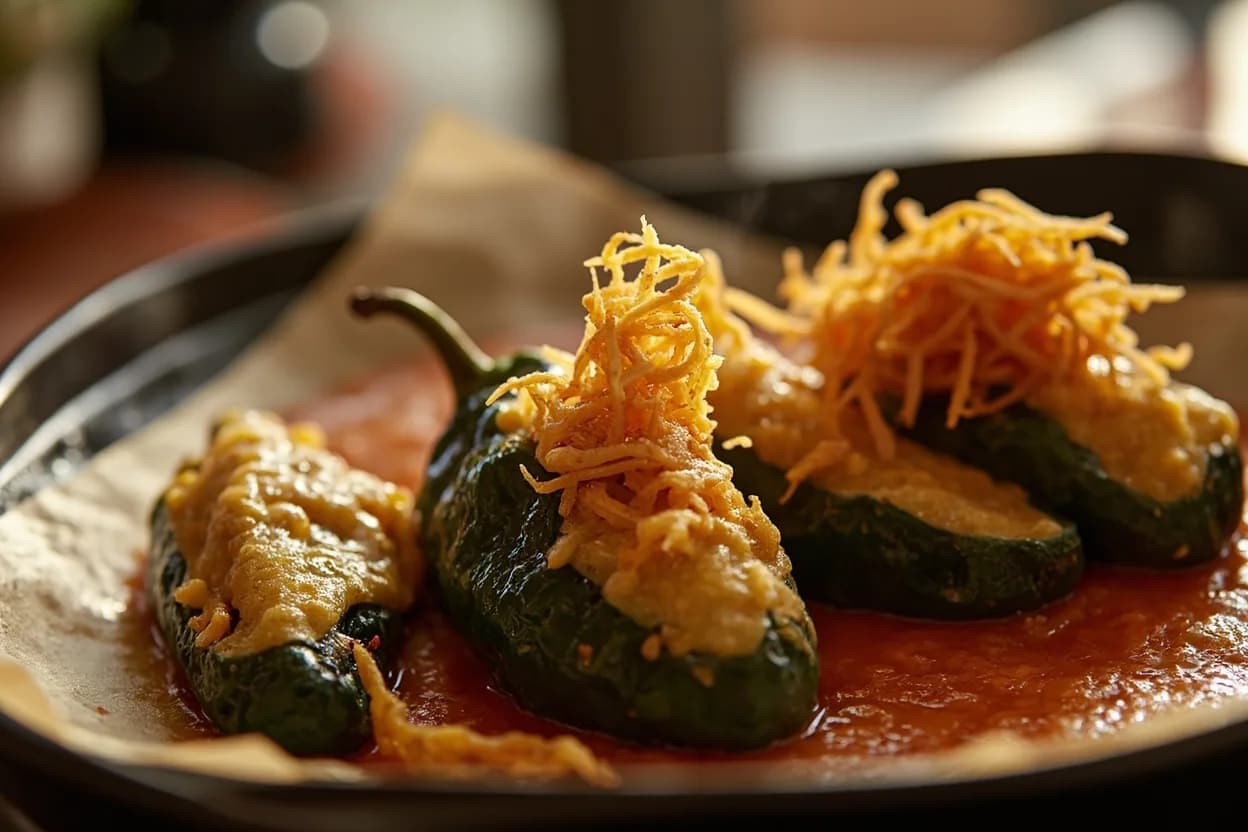
Usually roasted and peeled first, then slit open and deseeded for chiles rellenos or rajas
Mild, large, and rib-heavy; deseed for chile verde and stuffed applications
Tiny but fierce; gloves are essential—snip the stem and tap or slice-and-scrape
Extreme capsaicin; deseed under cold running water and glove up every time
Deseed only with full PPE (gloves, eye protection, ventilation); most cooks leave these whole
Deseeded for stuffing or clean rings; no capsaicin concern, only texture and shape
Crushed lightly with the flat of a knife and opened to release the seeds inside for baking or chai
Split lengthwise and scraped with the back of a knife to harvest the seed caviar for custards and sauces
How to do it
- 1
Select and chill the pod
Choose firm, fresh chiles with intact stems. For very hot varieties, chill them for 10–15 minutes; firmer flesh slices cleanly and cold pods release fewer capsaicin vapors into the air.
- 2
Gear up
Put on disposable nitrile or latex gloves when working with serranos or anything hotter. Set out a sharp paring knife, a small spoon (a teaspoon or grapefruit spoon works well), a cutting board, and two bowls—one for trimmings, one for cleaned pods.
- 3
Make the incision
Lay the chile flat. For most uses, slice off the top quarter inch just below the stem to open the cavity, or cut lengthwise from stem to tip to fully expose the ribs—whichever the recipe calls for. For stuffed chiles like rellenos or poppers, cut lengthwise along one side only and leave the stem attached as a handle.
- 4
Expose the placenta
Open the chile so the white seed-bearing ribs are clearly visible. Use the tip of the knife or your gloved fingers to lift away any large clusters of seeds.
- 5
Scrape the ribs clean
Hold the opened chile flat against the board. Drag the edge of the spoon or the knife tip along each rib with gentle downward pressure, dislodging the white membrane and any remaining seeds. Repeat until the interior looks mostly green or red, with no obvious white streaks left.
- 6
Rinse or tap dry
For very hot chiles, give the opened pod a brief rinse under cold running water to wash away residual capsaicin. Otherwise, turn the pod upside down and tap it sharply against the board to release loose seeds, then pat dry with a towel before further cutting or stuffing.
- 7
Clean up safely
Peel off the gloves, wash your hands with dish soap (which cuts oil far better than hand soap), and wipe down the board, knife, and any nearby surfaces with hot soapy water. Do not touch your face, eyes, or contact lenses until this step is done.
Common uses
Tips & pitfalls
- Wear nitrile or latex gloves for anything hotter than a jalapeño—capsaicin absorbs through skin and will burn your eyes hours after you think you're clean
- The white ribs carry nearly all the heat, so scrape them aggressively even if a few stray seeds remain
- Keep the stem intact when you'll stuff the chile whole (poblanos, bell peppers, jalapeño poppers) so the pod holds its shape and gains a natural handle
- Cut tip-to-tip rather than crosswise to expose more of the placenta at once and speed up scraping
- For very hot chiles, deseed under a thin stream of cold running water; it washes capsaicin away before it can aerosolize and sting your nose
- Soak scorched fingers in whole milk, rub them with vegetable oil, or wash with dish soap—never plain water, which just spreads the burn
- Don't believe that deseeding alone removes heat; if the white ribs are still there, the pod is still hot
- Save the trimmings—seeds and ribs—to infuse vinegar or oil for a controlled background warmth in dressings and marinades
Good to know
- Primary purpose
- Reduce heat, bitterness, or textural grittiness in chiles and similar seed-bearing pods
- Where capsaicin lives
- Primarily in the white placental ribs (pith) that hold the seeds, not the seeds themselves
- Why seeds taste hot
- Seeds pick up capsaicin-rich oils from the placenta they touch
- Typical time per pod
- 15–60 seconds for most chiles; under 2 minutes for large poblanos and Anaheims
- Essential tools
- Sharp paring knife, small spoon (teaspoon or grapefruit), cutting board, gloves for hot varieties
- Yield impact
- Deseeding reduces the weight of a jalapeño by roughly 8–15%
- Capsaicin relief
- Whole milk, yogurt, or oil dissolve capsaicin; water spreads it around
- Difficulty
- Beginner; the real challenge is avoiding capsaicin exposure, not the cutting
Also called
Seeding · Deseeding
Dishes that rely on it
Related

Chop
Cut into rough, irregular pieces — the everyday workhorse cut

Dice
Cut into uniform cubes for even cooking and a tidy look

Mince
Cut as fine as possible so flavor melts evenly into the dish

Slice
Cut into even, flat pieces for consistent cooking and presentation

Julienne
Cut into thin matchsticks for fast cooking and elegant garnish

Brunoise
Cut into tiny, precise cubes — the finest dice in the kitchen

Chiffonade
Roll and slice leafy greens into delicate ribbons

Batonnet
Cut into tidy sticks, thicker than julienne — think classic fries