Baking
Vanilla Bean
Dark, fragrant orchid pod scraped for its tiny seeds to perfume custards and desserts.
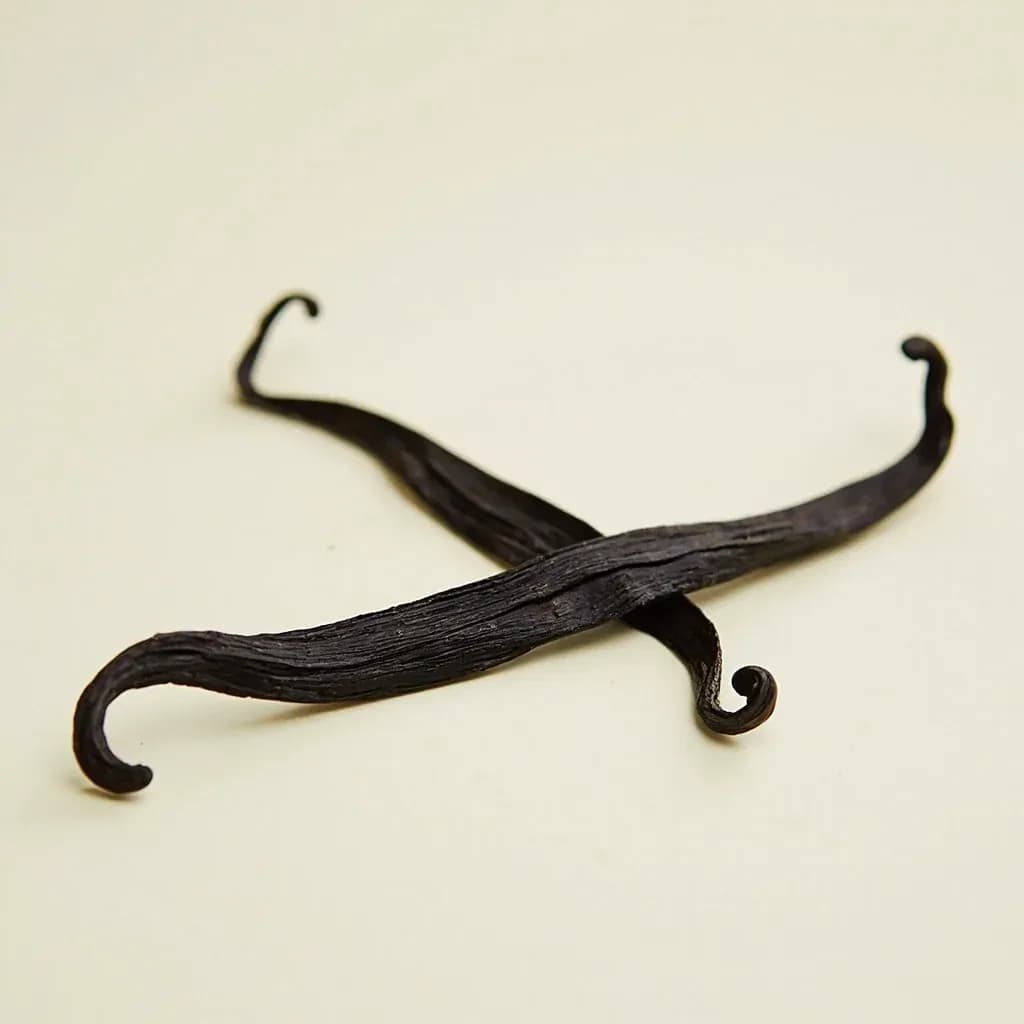
A vanilla bean is the cured seed pod of a tropical orchid, dark and pliable with a deep, sweet floral aroma. Cooks split the pod and scrape out the thousands of tiny seeds to flavor custards, ice cream, syrups and baked goods, and steep the spent pod in milk or sugar. The whole, intact bean delivers a richer, more nuanced flavor than extract.
Vanilla bean is the cured seed pod of Vanilla planifolia, an orchid species and the only edible fruit-bearing orchid in the world. What enters your kitchen as a dark, wrinkled pencil-thick pod has traveled an extraordinary path: the flowers must be hand-pollinated (outside Mexico, where native bee pollinators cannot reach them), the unripe pods are harvested entirely by hand, and then cured through a meticulous 6-9 month process of sweating, drying, and conditioning that develops its characteristic aroma. This labor—roughly 500 hand-pollinated flowers yield just one kilogram of pods—makes vanilla the second most expensive spice after saffron by weight. The flavor is incomparably complex: while imitation vanilla contains only synthetic vanillin, a single compound, real vanilla harbors over 100 aromatic compounds that together produce its signature depth, floral sweetness, and warm roundness. The tiny black seeds scraped from the pod are not decorative; they are the actual vanilla fruit, and both seeds and the scraped pod contribute flavor when infused into liquids or custards. Vanilla behaves differently from most spices—its aromatic compounds mean it pairs naturally with dairy and chocolate, and its volatile molecules are delicate enough to degrade with prolonged high heat, which is why experienced cooks add it late in cooking or infusion.
- Measured in
- piece
- Storage
- Pantry
Types & varieties
Standard culinary vanilla. Creamy, sweet, classic vanilla flavor with floral and caramel notes. The benchmark against which others are judged. Grown on Madagascar and the Bourbon Islands (Réunion, Mauritius).
Darker, more bold; woody, smoky, earthy with lower moisture content. Good for chocolate, coffee, strong-flavored applications.
The original vanilla. Distinctly floral with spicy, anise-like and clove undertones. Often used in traditional mole recipes.
Exceptionally bold, rich, and smoky. High vanillin content. Pairs well with dark chocolate and coffee.
A different species. Floral, fruity, anisic. Higher moisture; pods are plump and dark. Often preferred for perfumery; use when a lighter, more exotic note is desired.
Similar character to Indonesian; woody and slightly spicy. An emerging producer.
Rare; strong, deep flavor. Pacific island terroir gives distinctive character.
Why Real Vanilla Outperforms Extract in Some Applications
While vanilla extract is convenient and economical, whole vanilla beans offer advantages that matter in precision baking and pastry work. The scraped seeds distribute as visible black specks—a mark of authenticity in ice cream and custard that customers expect. More importantly, the pod itself contains flavor compounds that do not fully transfer to alcohol-based extracts. When you steep a split pod in warm cream for panna cotta or a custard base, the aromatic compounds infuse directly into the dairy, creating a rounder, more integrated vanilla presence than extract can achieve. For smooth white sauces or fillings where specks are undesirable, simply steep the split pod and strain it out after infusion. In recipes where vanilla is a primary flavor rather than a background note, two scraped pods will noticeably outperform two teaspoons of extract.
- Use whole pods when visual specks are acceptable and desirable
- Steep pods directly in dairy for superior flavor infusion
- Strain out pods and seeds for smooth applications
Storing Vanilla for Maximum Shelf Life
Properly stored vanilla beans remain aromatic for years. The enemies are air, heat, light, and humidity fluctuation. Airtight glass containers are essential—vanilla pods dry out and lose flavor when left exposed to air. For short-term storage (up to a year), a cool, dark cabinet works well. For long-term storage, the refrigerator or freezer is ideal; vanilla does not degrade at freezing temperatures, and the sealed container prevents moisture condensation. When removing a pod from the freezer, allow it to come to room temperature before opening the container to prevent condensation from wetting the pod. Toast slightly stale or dried-out pods in a dry pan over low heat for 30 seconds to revive flexibility before scraping.
- Store in airtight glass containers only
- Freezing extends shelf life indefinitely without flavor loss
- Allow frozen pods to reach room temperature before opening container
- Toast slightly stale pods in a dry pan to restore flexibility
Common uses
Tips & pitfalls
- Choose plump, moist, flexible pods that are dark brown to black; avoid brittle or dried-out pods—they have lost most of their aromatic oils.
- Split pods lengthwise with a sharp knife to expose the seed cavity; use the blade to scrape out the seeds and sticky pulp.
- Scrape over your work surface to capture all the tiny seeds—the sticky matrix clings to seeds and needs firm pressure to release fully.
- Add the scraped pod (not just seeds) to creams, custards, or extracts—the pod continues to infuse flavor throughout cooking or steeping.
- For homemade extract: use 3–4 pods per 8 oz alcohol (80-proof vodka minimum); split and scrape pods, add to alcohol; age 2–3 months, shaking weekly.
- Store unused pods in an airtight container; a sealed glass jar in the refrigerator or freezer extends shelf life indefinitely without flavor loss.
- Reuse spent pods in sugar jars for vanilla sugar (2–4 weeks of infusion) or to boost future extract batches—spent pods still carry residual flavor.
- A little goes far: one pod is sufficient for 2–3 cups of cream or a standard custard serving 4–6 people—more is wasteful, not better.
- Add vanilla near the end of prolonged cooking to preserve aromatic compounds; vanillin and other volatiles degrade with extended high heat exposure.
- Common mistake: using extract where whole pod infusion is called for, or vice versa—extract lacks the pod's contribution, and whole pods can overwhelm delicate recipes in quick applications.
Nutrition
Energy
130 kJ · per 100 g
Where the calories come from
Protein
1.8g
4% DV
Carbs
7.1g
3% DV
Fat
0.1g
0% DV
Fiber
3.4g
12% DV
Sugars
3.3g
of which
Sodium
6mg
0% DV
Source · USDA FoodData Central · approx. Beans, snap, yellow, raw
View on FDC →In the shops
Matched grocery products
No matched grocery products for Vanilla Bean yet.
Good to know
- Origin
- Mexico, now primarily Madagascar (80%+ of world supply) and Indonesia
- Plant
- Vanilla planifolia, an orchid species; the only edible fruit-bearing orchid
- Type
- Dried seed pod (capsule) of the vanilla orchid
- Typical Size
- 12–24 cm (5–9 inches) long, pencil-thick
- Primary Flavor Compound
- Vanillin (a phenol aldehyde); real vanilla contains 100+ aromatic compounds
- Harvesting
- Entirely by hand; pods are picked unripe, then cured for 6–9 months
- Pollination
- Hand-pollinated outside Mexico (natural bee pollinators absent); one flower per hand-pollination
- Labor Intensity
- One of the most labor-intensive crops: ~500 hand-pollinated flowers to yield 1 kg of pods
- Shelf Life
- 2+ years stored airtight in cool, dark place; indefinite if frozen
- Yield
- One standard bean yields ~1–2 teaspoons of scraped seeds plus pod fragments
- Price
- Second most expensive spice after saffron (by weight); retail $8–$20 per pod
Substitutes
- Vanilla extract — Use 1 teaspoon per pod; pure extract preferred over imitation. Adjust liquid in recipe by ~1 teaspoon.
- Vanilla paste — Thickened vanilla extract with seeds; use 1 tablespoon per pod. Good visual consistency for sauces and frostings.
- Vanilla powder — Dried vanilla solids; use 1 teaspoon per pod. Best for dry applications (batters, dry mixes).
- Vanilla sugar — Only provides mild vanilla flavor; not a direct substitute for recipes requiring real vanilla character.
- Imitation vanilla (vanillin) — Single-compound artificial flavoring; tastes flat and one-dimensional compared to real vanilla. Use sparingly; about 1 teaspoon per pod.
- Maple syrup + a drop of extract — Approximation for custards; adds sweetness and warmth but lacks true vanilla depth.
- Almond extract — Completely different flavor profile; not a substitute but occasionally used in combination with vanilla.
Pairs with
Also called
vanilla-pod · vanilla-beans
Appears in these dishes
Related

All-Purpose Flour
The do-anything flour for bread, cakes, sauces, and dredging

Bread Flour
High-protein flour for chewy, well-risen breads
Whole Wheat Flour
Nutty, whole-grain flour for hearty breads and bakes
Cake Flour
Fine, low-protein flour for tender, delicate cakes
Almond Flour
Nutty, gluten-free flour for macarons and tender bakes

Baking Powder
All-in-one leavener for fluffy cakes, pancakes, and biscuits

Baking Soda
Pure leavener that needs acid to lift — and tenderize
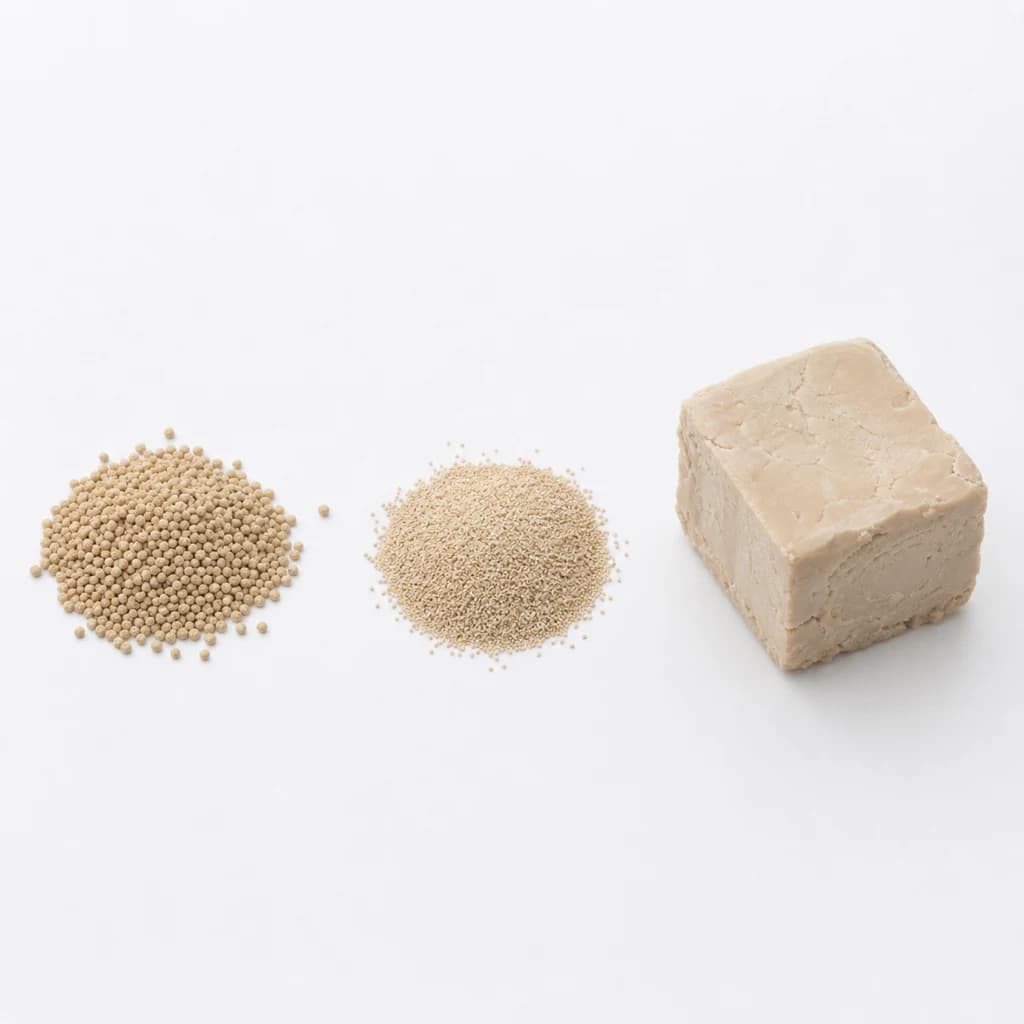
Yeast
Living leaven that makes bread rise and dough come alive