Heat & Fire
Dry-Frying
Frying with little or no oil to drive off moisture and concentrate flavor.
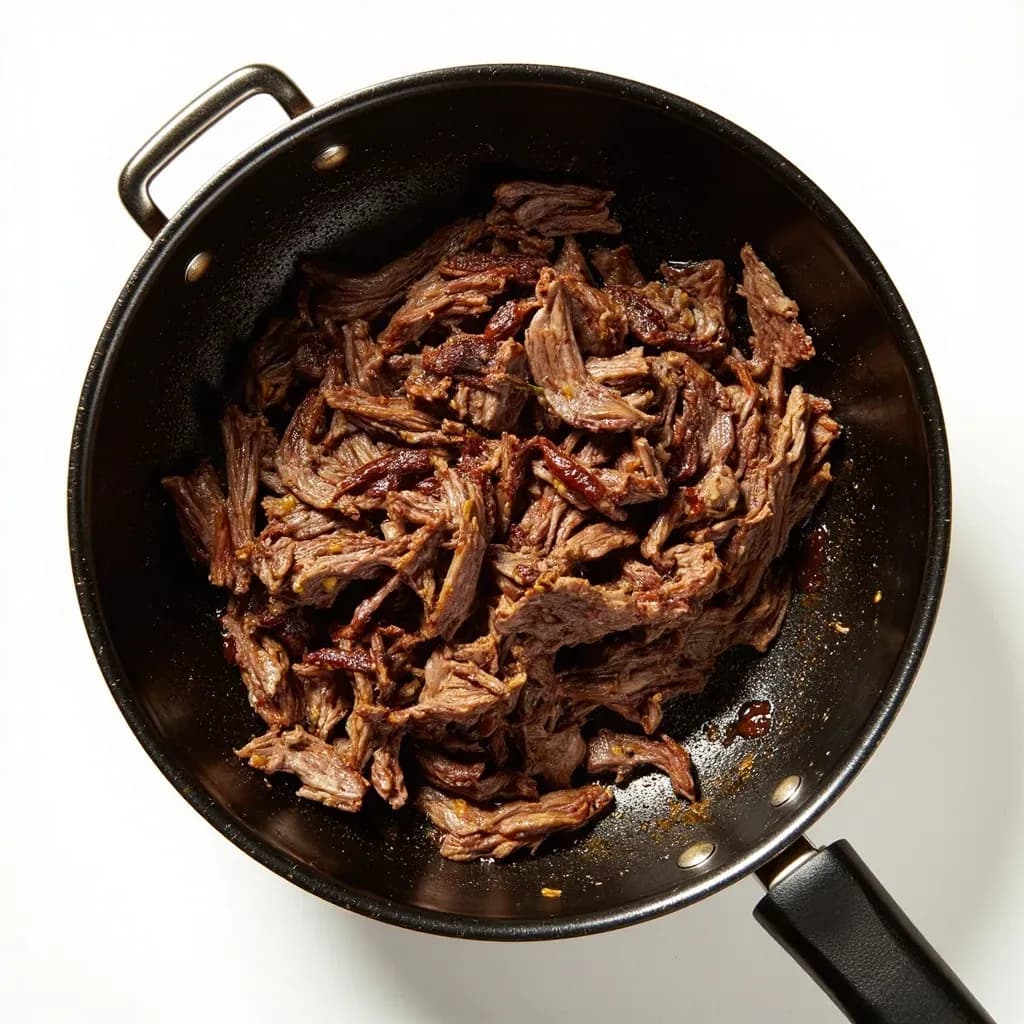
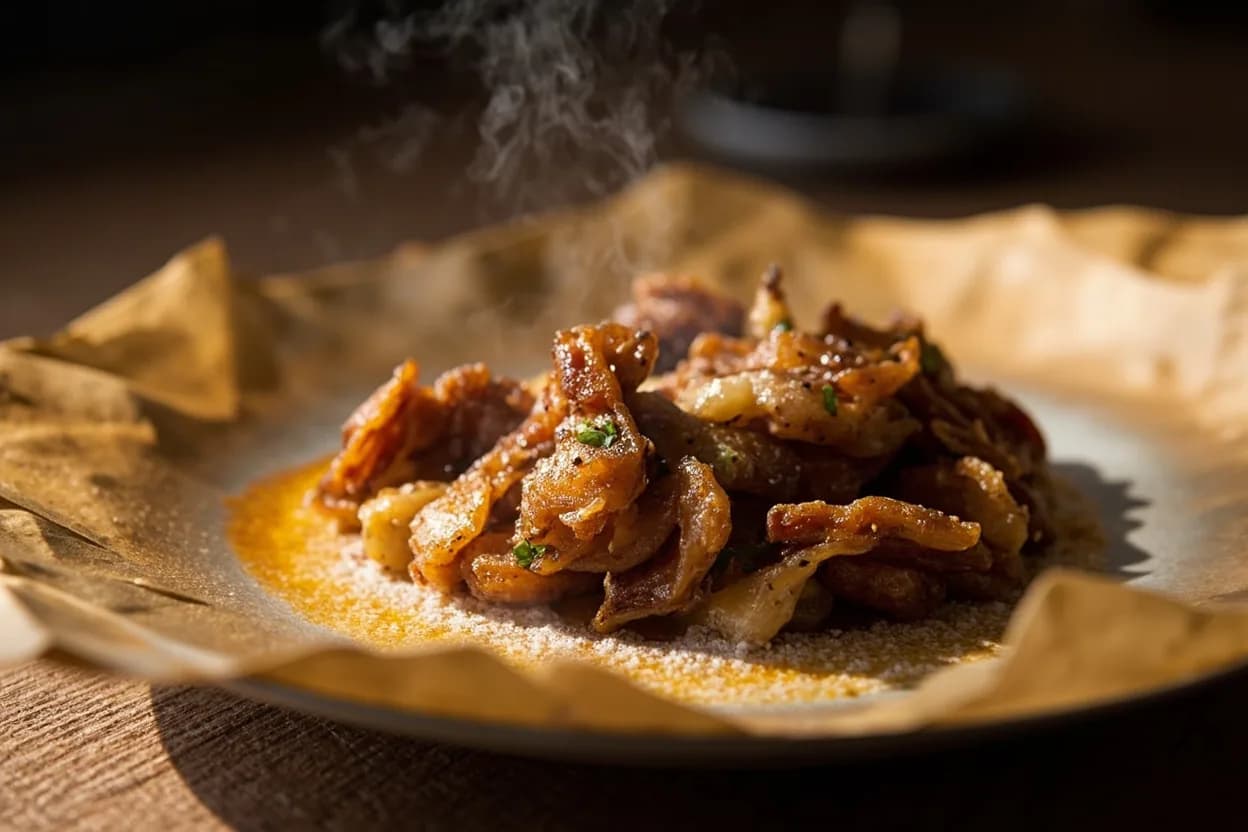
Dry-frying cooks food in a hot pan or wok with minimal or no added oil, evaporating its moisture so the texture chewes up and flavors intensify. The Sichuan technique (干煸) dry-fries shredded meat or beans until they shrivel and crisp before saucing, and small dried fish like omena are dry-fried until crunchy. The lack of oil and long contact with heat give a distinctive concentrated, slightly toasty character.
Dry-frying is a stovetop technique in which food is cooked in an ungreased, heavy pan, leaning on direct conductive heat — and, for meats, the food's own fat — to do the work that oil normally does. With no protective film between the food and the metal, surface moisture flashes off quickly and the Maillard reactions that build deep, nutty color and flavor get a clear runway. The result is a more intense, often slightly shriveled, character: spices release their volatile oils, nuts and seeds turn golden and aromatic, cured pork yields up its fat, and sturdy vegetables blister and wrinkle at the edges.
This is one of the most ancient cooking methods — a heated stone or clay vessel over a fire is, mechanically speaking, the same idea — and it shows up across cuisines whenever cooks needed to make a little food go a long way. Indian bhuna, Sichuan gan bian, Italian pancetta rendering for carbonara, and the simple act of toasting cumin seeds in a skillet are all members of the same family.
The catch is the margin of error. Without a protective film of oil, the distance between toasted and burnt can be five or ten seconds, especially with small particles. Success depends on three things: the right pan, the right heat, and constant attention. Get those right and dry-frying is among the highest-reward, lowest-fuss techniques in the kitchen.
- Difficulty
- Medium
Types & varieties
Whole or ground spices, seeds, and dried chiles are toasted briefly in a dry pan to release aromatic oils; the foundation of homemade masalas, Chinese five-spice, and Sichuan peppercorn blends.
Almonds, sesame, peanuts, hazelnuts, and coconut are tossed in a dry skillet to deepen flavor before use in sauces, garnishes, and pastes.
Cubes or strips of guanciale, pancetta, or bacon are started in a cold dry pan so their own fat renders gradually, replacing any need for added oil; the rendered fat then cooks the rest of the dish (carbonara, amatriciana).
Used for chorizo, Italian sausage, and keema-style preparations; the meat releases its own fat and browns without added oil.
Vegetables, especially green beans, eggplant, and potatoes, are dry-fried in a hot wok, often pressed flat, until blistered and concentrated, then finished with aromatics and a small amount of sauce.
Tough greens or aromatics like spinach and garlic scapes are briefly tossed in a dry wok to wilt and shed moisture before further cooking.
How to do it
- 1
Choose the right pan
Select a heavy-bottomed skillet, sauté pan, or wok — stainless steel, cast iron, or carbon steel. Avoid nonstick (it can't reach the temperatures needed for proper browning and gives no sear feedback) and avoid thin pans, which create hot spots that burn food.
- 2
Preheat and assess temperature
Warm the empty pan over medium heat for 1–2 minutes. For nuts and seeds, the pan should feel warm when held an inch above the surface; for cured pork, start cold so the fat renders slowly.
- 3
Add ingredients in a single layer
Spread the food out in one even layer with space between pieces. Overcrowding traps steam and prevents browning — work in batches if needed.
- 4
Stir or toss frequently
Use a wooden spoon, spatula, or by tossing the pan itself, keeping ingredients in motion so no spot sits on the heat long enough to scorch. This is especially critical for small items like sesame seeds and ground spices.
- 5
Watch for visual and aromatic cues
Spices darken by a shade or two and smell nutty; nuts turn golden and fragrant; pork cubes curl and turn translucent at the edges before browning; Sichuan vegetables blister and wrinkle. Remove at the first sign, not the second.
- 6
Pull off the heat and spread out
Transfer immediately to a cool plate, sheet pan, or bowl. Residual pan heat continues cooking the food for another 30–60 seconds; what looks perfect in the pan is often over-done a minute later.
- 7
Use or store promptly
Toast spices just before grinding for maximum aroma; use rendered pork fat right away in the same pan; cool toasted nuts fully before storing in an airtight container to preserve crispness.
The Sichuan gan bian method
The most aggressive expression of dry-frying comes from Sichuan, where 干煸 (gān biān) treats the wok like a metal sun: the vegetables are dry-fried, often pressed flat against the hot metal, until their skins blister and wrinkle and the flesh collapses into a soft, intensely savory interior. The wok's high sides keep ingredients in motion while the broad base delivers fierce conductive heat.
- Use a well-seasoned carbon steel wok over the highest practical heat your stove can deliver.
- Add vegetables to a dry, hot wok — no oil until the final sauce stage.
- Press green beans or eggplant flat with a spatula to maximize contact area and encourage blistering.
- Look for wrinkled skins and a collapsing volume as the visual endpoint, not just color.
- Finish with aromatics (garlic, ginger, dried chiles, Sichuan peppercorns) and a small amount of sauce or stock, which then clings to the blistered surface.
Rendering cured pork without added oil
When dry-frying pancetta, guanciale, or thick-cut bacon for dishes like pasta all'amatriciana or carbonara, the rendered fat is the entire cooking medium for the rest of the recipe. Starting cold and rendering slowly produces clear, clean fat and evenly crisped meat; starting hot seizes the fat against the pan and leaves the pieces rubbery.
- Add cured pork to a cold pan, then bring up the heat gradually.
- Stir occasionally as the fat begins to pool; lower the heat once the pieces start to curl.
- Lift the crisped pork out with a slotted spoon when the fat is fully rendered.
- Cook onions, garlic, or tomatoes in the same pan using the fat left behind.
- Reserve 2–3 tablespoons of the rendered fat to toss with hot pasta before adding the egg-and-cheese mixture.
Common uses
Tips & pitfalls
- Use medium heat, not high — high heat scorches long before moisture can escape evenly.
- Keep ingredients moving constantly; spices and seeds can burn in under 10 seconds once they pass the toast point.
- Start cured pork in a cold pan so the fat renders gradually instead of seizing and toughening the meat.
- Work in small batches — overcrowding traps steam, which steams the food instead of dry-frying it.
- Transfer toasted spices and nuts to a cool plate or bowl the moment they finish; carryover heat in a cast-iron pan will keep cooking them.
- Smell is your best indicator: toasted spices shift from raw and dusty to nutty and fragrant right at the edge of burning.
- For seeds like cumin or fennel, listen for the first faint pop — that's the cue to pull the pan off the heat.
- Don't reuse a dry-frying pan for sugar work without washing it first; burnt protein residue ruins caramel.
Good to know
- Also known as
- Dry-roasting, pan-toasting, dry-sautéing; in Sichuan cooking, 干煸 (gān biān); in Indian cooking, bhuna (often finished with a small amount of fat)
- Added fat
- None — cooking relies on the food's own moisture and fat, or on evaporative loss
- Core mechanism
- Direct conductive heat drives off surface and internal moisture, triggering Maillard browning and concentration of flavor compounds
- Best pan material
- Heavy-bottomed stainless steel, cast iron, or carbon steel — thin pans create hot spots and burn the food
- Typical duration
- 30 seconds to 5 minutes for spices and nuts; 5–15 minutes for vegetables and ground meat
- Difficulty
- Easy to learn, but unforgiving — the distance between toasted and burnt is small
- Common in
- Indian spice blends, Sichuan gan bian dishes, Italian cured-pork rendering, Mexican chorizo, and Western pan-toasting of nuts and seeds
- Food safety note
- When dry-frying ground meat, the interior must still reach safe temperatures (160°F/71°C for ground pork, 165°F/74°C for poultry); the lack of oil does not lower the safety bar
Also called
Dry-Frying (干煸) · Gānbiān
Dishes that rely on it
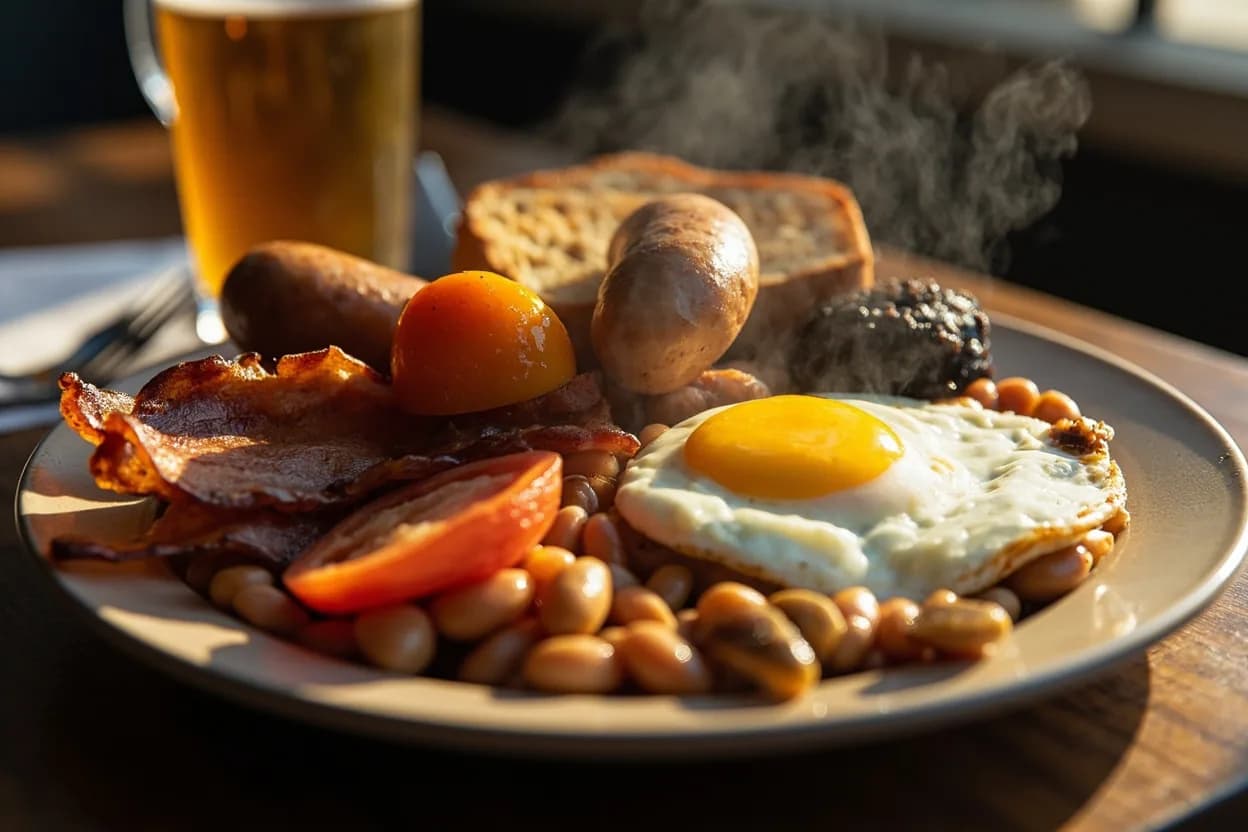
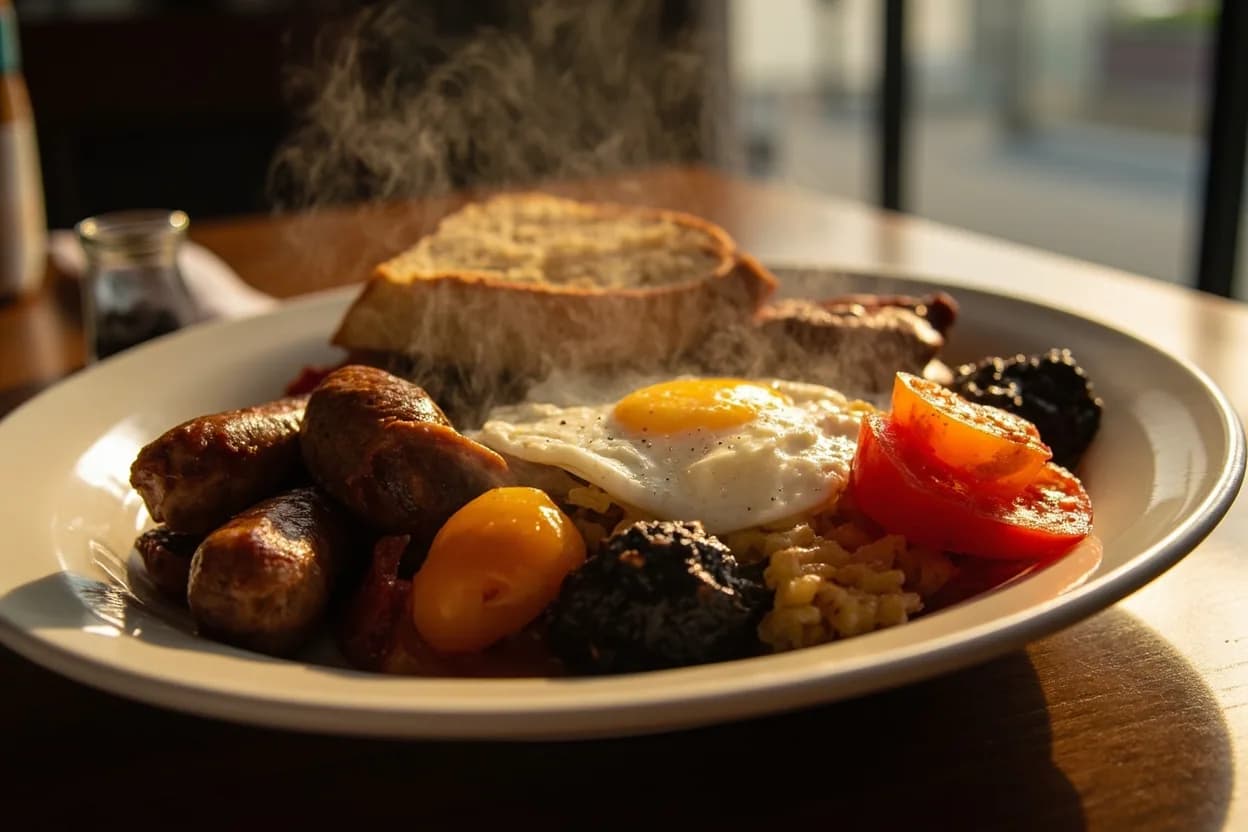
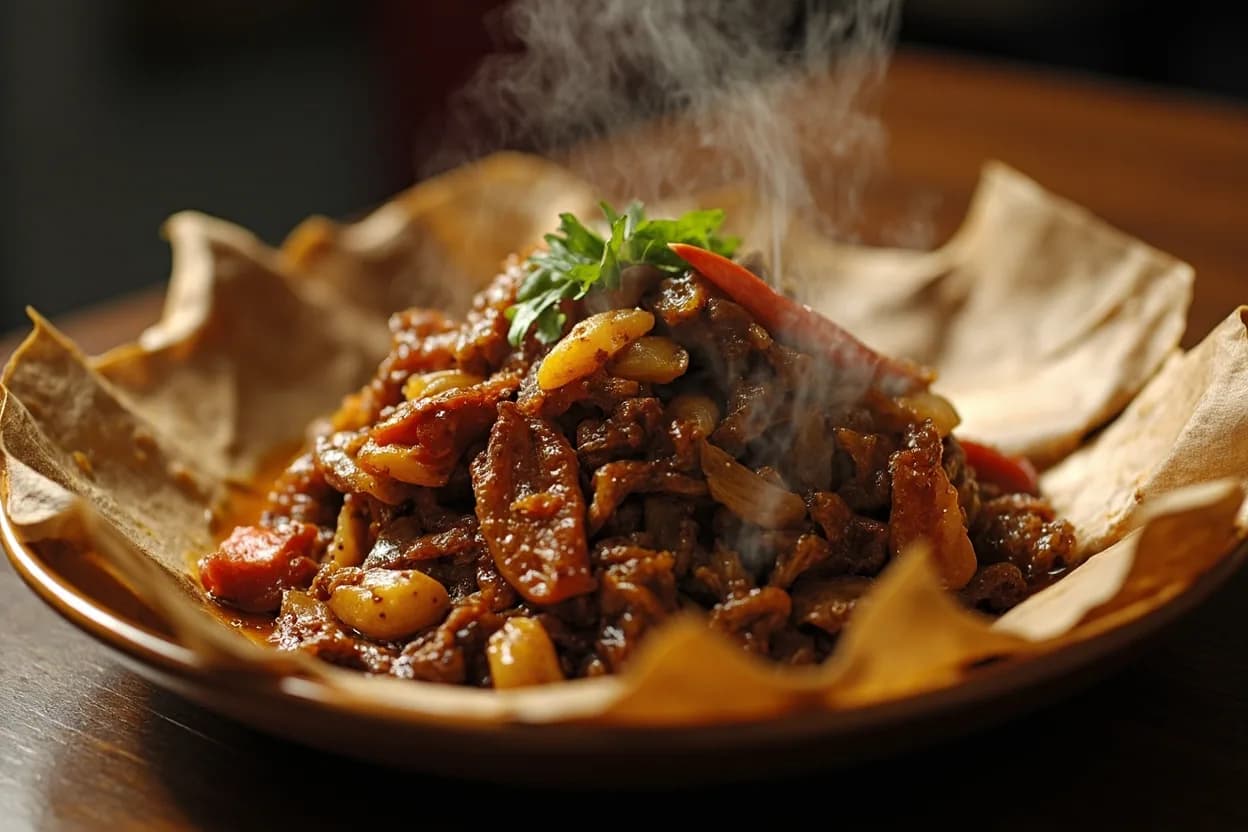
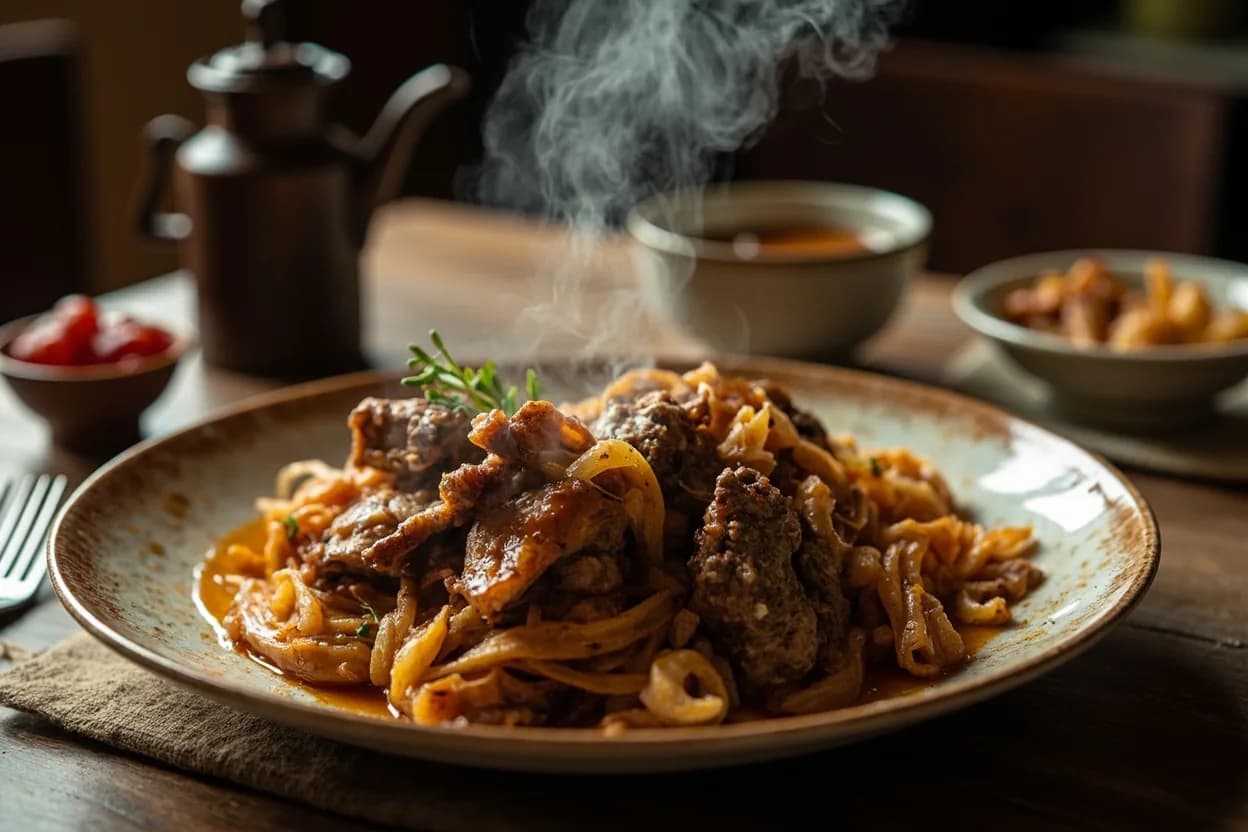
Related

Sear
Blast the surface hot for a deep-browned, savory crust

Sauté
Cook quickly in a little fat over lively heat, tossing as you go

Stir-Fry
Toss bite-sized pieces over roaring heat for fast, smoky cooking

Pan-Fry
Crisp food in a shallow layer of hot fat, turning once or twice

Deep-Fry
Submerge in hot oil for an all-over crackling crust

Roast
Cook uncovered in dry oven heat for browned edges and tender centers

Bake
Cook with steady, surrounding oven heat — the soul of bread and pastry

Broil
Hit food from directly above with fierce overhead heat